
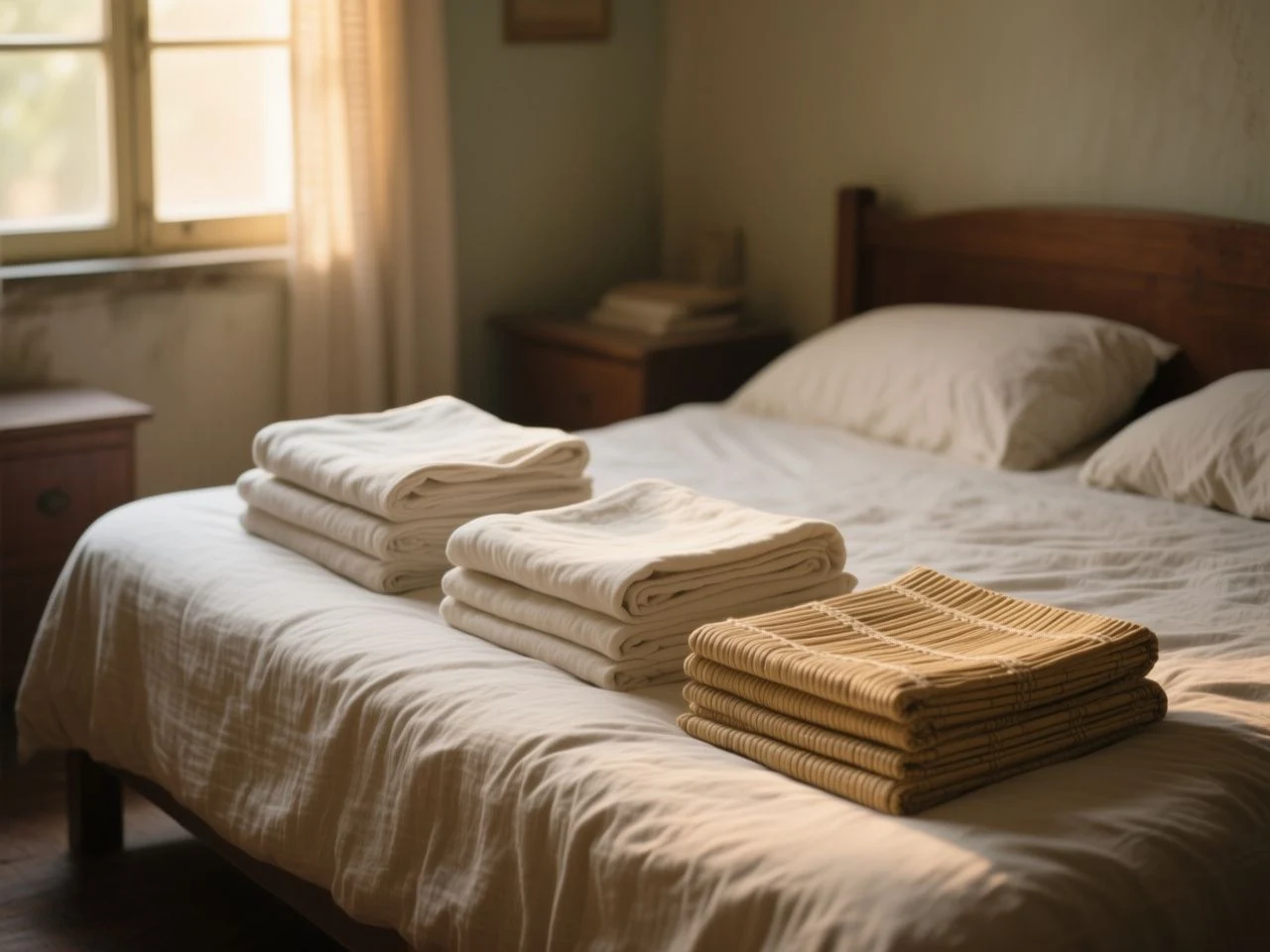
A sheet set can disappoint in a surprisingly ordinary way: the label sounds ideal, but the fabric traps heat, pills after repeated washing, shrinks enough to strain the fitted corners, or feels too slick for the person sleeping on it. The best material for bed sheets depends less on a glamorous fiber name than on how the fiber, weave, finish, and care routine work together.
The useful distinction is between a fiber’s inherent behavior—such as moisture handling, insulation, softness, and strength—and the weave, finish, and laundering that determine how that fiber performs as a sheet. There is no universally best material: the practical choice depends on sleep temperature, humidity, skin sensitivity, preferred texture, washing habits, and willingness to tolerate wrinkles or special care. If a small bedroom leaves little room for spare sets, the right choice also includes reliable fit after washing and storage that does not turn into a linen avalanche.
Key Takeaways
- Cotton is the adaptable everyday option, while linen made from flax is particularly suited to warm, humid rooms and a relaxed texture.
- Percale, sateen, jersey, and other weaves can change the feel of the same fiber as much as the fiber label does.
- Bamboo viscose and TENCEL lyocell are regenerated fibers, not raw plant fibers, so their source does not tell the whole performance story.
- Care instructions, certification details, yarn construction, and fitted-sheet dimensions matter more than thread count alone.
What is the best material for bed sheets for your room?
Start with the sleeper and the bedroom, not the marketing name. A person who sweats at night needs a fabric that does not feel clammy against the skin. Someone in a dry, cool room may prefer a denser, smoother surface. A household that washes sheets frequently needs a material and finish that fit its actual laundry habits, not an idealized care routine.
For hot sleepers and humid bedrooms
Linen made from flax is a strong choice for people who prefer an airy, textured sheet. Its loose, dry character suits warm bedrooms and night sweating, although the surface is visibly rumpled and can feel less smooth than sateen. Cotton percale is another sensible direction because the plain weave creates a crisp, relatively light hand rather than the close, slippery feel associated with sateen.
Linen made from flax is recognized by its textured hand and relaxed drape, which makes it practical for sleepers who dislike a close, polished surface. The label alone cannot tell you how open or heavy the finished cloth feels, so the weave and fabric weight still deserve attention.
Bamboo viscose, also called bamboo rayon, is often described as moisture-wicking and smooth. That description concerns the regenerated fabric, not a sheet woven directly from raw bamboo. The bamboo source does not mean the finished textile retains the properties of raw bamboo fiber. TENCEL lyocell is also a regenerated fiber, and its sheet performance depends on the yarn, weave, finish, and washing instructions.
For a very warm sleeper, I would begin by comparing linen and cotton percale, then consider regenerated fibers if the desired hand is smoother. Polyester microfiber can feel soft and economical, but a synthetic fiber may not suit someone who dislikes a warmer, less natural-feeling sleep surface. The listing needs to state the actual fiber content rather than relying on a name such as cooling or bamboo.
For everyday comfort and flexible laundering
Cotton remains the most adaptable starting point because it can be woven as percale, sateen, jersey, and other constructions. Machine washing is suitable for cotton, but the care label still controls the practical result. A cotton sheet that is washed aggressively, dried too hot, or treated with excess fabric softener may age differently from one washed according to its instructions.
Long-staple cotton refers to the length of the cotton fibers used to make the yarn. That description can matter, but it is not a complete quality verdict. Yarn size, ply, weave, finishing, fabric weight, and the accuracy of the label all affect how a sheet feels and wears.
Cotton percale generally signals a crisp, plain-woven surface, while cotton sateen uses a construction that gives a smoother, more lustrous hand. Cotton jersey is knitted rather than woven, so it tends to feel more like a soft T-shirt than a crisp hotel sheet. The same cotton fiber can therefore produce substantially different bedding.
Cotton is the most flexible sheet fiber because the same material can be made into crisp percale, smooth sateen, or stretchy jersey. That flexibility makes cotton easier to match to changing preferences in a small household with limited linen storage.
For sensitive skin and textile concerns
People with sensitive skin often need to consider more than the fiber name. Dyes, finishes, detergent residue, and fragrance can affect the experience of a fabric, and a smooth surface may feel preferable to a rough or highly textured one. A sheet label cannot diagnose a skin condition, so persistent irritation belongs with a qualified healthcare professional rather than a change in marketing claims.
OEKO-TEX Standard 100 addresses harmful substances in tested textile components; the OEKO-TEX organization explains the scope of that standard. Certification does not guarantee a particular softness, cooling performance, durability, or overall environmental impact. It tells you something specific about the certification criteria, not everything about the finished bed.
GOTS, or the Global Organic Textile Standard, addresses organic textile processing and related production requirements. The Global Organic Textile Standard organization sets the standard’s requirements. GOTS and OEKO-TEX Standard 100 address different concerns, so neither should be treated as a guarantee of a certain feel or a complete environmental assessment.
For a skin-conscious choice, check the full fiber content, the finish information, the care label, and the certification scope. Wash new sheets before use if the care instructions permit it, and avoid assuming that a plant-derived label automatically means the fabric is free of processing chemicals.

Fiber and weave are separate decisions
A fiber is the raw material used to make yarn; a weave or knit describes how that yarn becomes fabric. Confusing those categories is one of the fastest ways to buy a sheet that sounds right but feels wrong. Percale, sateen, jersey, and other constructions can change surface texture, drape, airflow, stretch, and perceived warmth without changing the underlying fiber.
Percale, sateen, and jersey
Percale is associated with a crisp, matte surface and a straightforward woven structure. It is often considered by people who dislike clingy or glossy bedding. Sateen has a smoother, more polished surface and can feel softer at first touch, though the experience depends on the yarn and finish rather than the word sateen alone.
Jersey is a knitted construction with stretch and a casual, T-shirt-like hand. That makes it useful for people who want a soft, flexible bed surface, but it does not create the crisp sensation associated with percale. Other constructions can change the result again, so a fiber comparison without a weave description is incomplete.
Percale, sateen, and jersey are constructions rather than fibers, so a cotton percale sheet and a cotton jersey sheet should not be expected to feel alike. The construction is a primary part of the comfort decision.
Thread count is not a complete quality measure
Thread count describes the number of threads counted within a specified area, but the number does not reveal every part of the cloth. Counting methods, yarn thickness, ply, finishing, and weave all affect the finished result. A higher figure can therefore sound impressive while saying little about whether the sheet will feel breathable, resist pilling, fit after washing, or suit your preferred texture.
Yarn size matters because a thread made from finer yarn is not equivalent to a thread made from a thicker yarn. Ply matters because multiple yarns may be combined before weaving. Those details make thread count an incomplete shorthand rather than a reliable single score.
Labels such as Egyptian cotton can also be too vague when they do not clarify the percentage of that cotton, the weave, or the rest of the construction. A small-space realist reads the complete specification first: fiber content, weave, fabric weight if listed, fitted-sheet depth, care instructions, and certification language.
Why finishes and laundering change the result
Finishing can alter the first impression of a sheet, while laundering determines whether that impression lasts. Washing and drying affect shrinkage, softness, color retention, pilling, wrinkles, and practical lifespan. Fabric softener can also change the hand of textiles, so the care label should take priority over a general laundry habit.
Do not assume that a sheet described as soft will remain soft if it requires careful drying that your household will not follow. The most suitable fabric is partly the one you can maintain without resentment. That is especially important in a small home, where a specialty drying routine may compete with towels, clothing, and limited hanging space.

Material-by-material guide for real sleeping habits
Cotton and long-staple cotton
Cotton is a broad category rather than one fixed experience. Percale can provide a crisp surface, sateen can provide a smoother hand, and jersey can provide stretch. Long-staple cotton is a fiber description that may support a smoother yarn, but the finished sheet still depends on construction and finishing.
Cotton suits households that want familiar care and a wide range of textures. Machine washing is suitable for cotton, yet the label should still be followed for water temperature, drying, and any limits on bleach or other treatments. The exact temperature is not supplied by a universal fiber rule; use the manufacturer’s instruction for the sheet in hand.
Cotton does not automatically mean cool, luxurious, durable, or free from finishing agents. A heavy sateen cotton sheet can feel very different from a light percale sheet, and a high thread count does not erase that distinction.
Linen made from flax
Linen made from flax is valued for its dry, textured appearance and relaxed drape. It is a natural fit for people who accept wrinkles as part of the look and want bedding that feels less polished. Linen may need more patience during laundering because wrinkles are part of its visual character and care instructions should be followed closely.
The practical drawback is not a defect; it is a style and care tradeoff. Someone who wants a smooth bed every morning may find linen demanding, while someone who dislikes a slippery surface may appreciate the texture. The label should state linen content clearly rather than using a vague natural-fiber claim.
Linen’s texture is an inherent part of its appeal, so a rumpled appearance does not by itself show poor care. Fit after washing still matters, particularly for a deep mattress or a fitted sheet with little spare fabric at the corners.
TENCEL lyocell
TENCEL lyocell is a regenerated fiber made into yarn and then fabric. Its smooth hand can appeal to people who dislike rough texture, but the word TENCEL does not replace the need to inspect the weave, finish, and care instructions. A lyocell sheet can be a poor match if the household will not follow the stated laundering routine.
Lyocell deserves more careful handling than a carefree cotton set when the label specifies gentle washing or drying. The exact instructions vary by construction and finish, so the manufacturer’s care label is the authority. Do not assume that every sheet sold under a regenerated-fiber label has the same cooling, softness, or durability characteristics.
Bamboo viscose and bamboo rayon
Bamboo sheets are typically made from regenerated bamboo viscose or bamboo rayon. The bamboo source does not mean the finished fabric retains the properties of raw bamboo fiber. The finished sheet is a regenerated textile, and its feel depends on yarn, weave, finishing, and laundering.
Moisture-wicking properties are characteristic of bamboo, but that phrase should not be stretched into a promise that every bamboo sheet will feel cooler in every bedroom. Humidity, mattress insulation, weave, fabric weight, and the sleeper’s own heat all affect comfort.
Bamboo viscose can suit someone who wants a smooth hand and a plant-source label, provided the buyer understands what the material actually is. Check whether the listing says bamboo viscose or rayon, and look for a clear description of the weave rather than relying on bamboo as a complete performance claim.
Polyester microfiber
Microfiber sheets are made from synthetic fibers, including polyester. They can offer a smooth, uniform surface and straightforward care, but the feel may not satisfy someone looking for the dry texture of linen or the crisp character of cotton percale.
Polyester microfiber is often chosen for its accessible price and easy-care appeal, yet long-term value depends on how the fabric behaves in the household’s laundry routine and how readily the sleeper accepts its hand. A low purchase price is not a saving if the fabric is replaced because it no longer feels comfortable.
Silk
Silk has a smooth, delicate hand and a distinctive drape, but it asks more from the care routine than many everyday cotton sheets. Washing, drying, storage, and exposure to rough hardware all deserve attention. The care label is especially important because the fiber name alone does not tell you how the finished sheet should be handled.
Silk is a specialist choice for a sleeper who values its surface and accepts its care demands. It is less practical for a household that wants every sheet to go through the same simple laundry cycle.
Hemp fiber
Hemp fiber can appear in textile blends or sheet descriptions, but the fiber name does not provide enough information to predict the finished hand. Check the blend percentage, weave, fabric weight, and care label. Hemp-containing fabric may suit someone who likes a more textured natural surface, but the construction remains the deciding detail.
How to choose by climate, skin, care, and cost
Step 1: Match the sheet to bedroom climate
Begin with the room, not the season printed on a product page. A warm, humid bedroom calls for a surface that does not feel heavy or clammy to the sleeper, while a cool room may reward a smoother or denser construction. Linen made from flax and cotton percale are sensible starting points for people who want an airy, textured or crisp feel.
Winter comfort is not determined by fiber alone. A warm duvet, mattress protector, bedroom humidity, and sheet weight all influence the result. Adding a heavy blanket to compensate for a sheet that feels wrong can create bulk in a small bedroom and make bed-making harder.
Step 2: Match texture to skin and sensory preference
A person who dislikes texture may prefer a smooth cotton sateen, TENCEL lyocell, bamboo viscose, or silk surface, subject to the care demands and construction. Someone who dislikes slick bedding may prefer linen or cotton percale. Sensitive skin calls for attention to dyes, finishes, fragrance, and detergent residue, not merely a natural-versus-synthetic label.
OEKO-TEX Standard 100 certification addresses tested substances in textile components, while GOTS addresses organic textile processing and related requirements. Neither certification guarantees that a sheet will feel soft, regulate temperature perfectly, resist pilling, or carry a complete environmental benefit.
Step 3: Audit the laundry routine
Write down what actually happens on laundry day. If sheets are washed with ordinary loads and dried using the household’s usual method, choose a material whose instructions fit that pattern. Linen, silk, and lyocell may require more deliberate handling than cotton, while microfiber may have different preferences around heat and fabric softener.
Care instructions materially affect shrinkage, pilling, softness, color retention, and practical lifespan. A fabric that needs special treatment is not automatically inferior, but the extra work belongs in the decision. Limited storage also makes a reliable wash-and-dry cycle important because there may be no room for a large rotation of backup sets.
Step 4: Check fit before feel
Measure the mattress depth and compare it with the fitted-sheet dimensions, allowing for any topper or mattress protector that remains on the bed. A sheet can have a pleasant fiber and still pull loose if the pocket is too shallow. Shrinkage after washing can make that mismatch more obvious.
Bed size also affects storage and handling. A king-size set takes more room to fold and store than a smaller set, so the material should justify its care and space demands. For broader room-planning decisions, the Bed Sheets Buying Guide: Complete Essentials for 2026 covers the surrounding measurements and setup choices.
Step 5: Judge long-term cost without invented precision
Long-term cost includes the purchase price, replacement frequency, laundering effort, energy used by washing and drying, and the amount of storage required. A precise lifetime calculation is not possible without the fabric’s price, care instructions, household energy rates, and actual replacement history. The honest method is to compare those inputs rather than assign a made-up lifespan.
A lower-cost synthetic sheet may be sensible if its care routine fits and its feel remains acceptable. A more expensive linen, silk, or lyocell sheet may also make sense for a household that values its texture and will care for it properly. The right comparison is the cost of living with the fabric, not the fiber name alone.
Long-term sheet value depends on purchase price, care demands, replacement needs, and storage burden rather than thread count alone. That principle is particularly useful in small homes, where every spare set occupies scarce shelf or drawer space.
Step 6: Read claims with a skeptical eye
Ask what a label actually states. Bamboo should identify viscose or rayon when that is the construction. Organic claims should identify the relevant certification or standard. Egyptian cotton claims should be read alongside fiber percentage and weave. Cooling claims should be compared with the actual construction, fabric weight, and care directions.
Do not treat a certificate as a universal comfort rating. Do not treat thread count as a durability guarantee. Do not treat a plant source as proof that the finished textile has the same behavior as the raw plant.
A careful sheet decision combines climate, skin preference, texture, laundry habits, fit, storage, and certification details. The winning material is the one that continues to suit the room after the novelty of the label has disappeared.
Frequently Asked Questions
What is the best material for bed sheets for cooling?
Linen made from flax and cotton percale are practical starting points for a hot sleeper because they offer textured or crisp surfaces rather than a close, polished hand. Bamboo viscose and TENCEL lyocell may appeal to someone who prefers a smoother fabric, but neither label guarantees cooler sleep. Weave, fabric weight, bedroom humidity, bedding layers, and care all affect the result.
Is cotton or linen better for temperature regulation and everyday comfort?
Neither is universally superior. Linen suits a sleeper who likes a dry, textured surface and accepts wrinkles, while cotton offers more choice through percale, sateen, and jersey constructions. Cotton may be easier for a household seeking familiar machine washing, but the exact care label matters. Compare weave, weight, fit, and texture rather than judging the fiber name alone.
Are bamboo viscose and TENCEL lyocell more breathable than cotton?
The answer depends on the finished fabric, not only the source fiber. Bamboo sheets are generally bamboo viscose or bamboo rayon, and TENCEL lyocell is also regenerated. Yarn, weave, finishing, fabric weight, room humidity, and laundering influence comfort. A clear specification is more useful than a broad promise that any plant-derived sheet will feel cool or breathable.
Which sheet materials are most likely to pill, shrink, wrinkle, or become rough?
No fiber label can predict every result because yarn quality, weave, finishing, washing, drying, and friction all matter. Linen is known for a deliberately rumpled appearance, while cotton can shrink if care instructions are ignored. Pilling and roughness should be assessed through construction and care information rather than a single thread-count figure. Follow the manufacturer’s instructions to protect fit and surface.
How should I compare silk, linen, lyocell, and cotton for care?
Start with the actual care label because each finished fabric may have different requirements. Silk usually demands the most deliberate handling, while linen’s wrinkles are part of its appearance and lyocell may require gentler treatment than a routine cotton load. Cotton is often the easier everyday baseline, but machine washing does not remove the need to follow drying and finishing instructions.