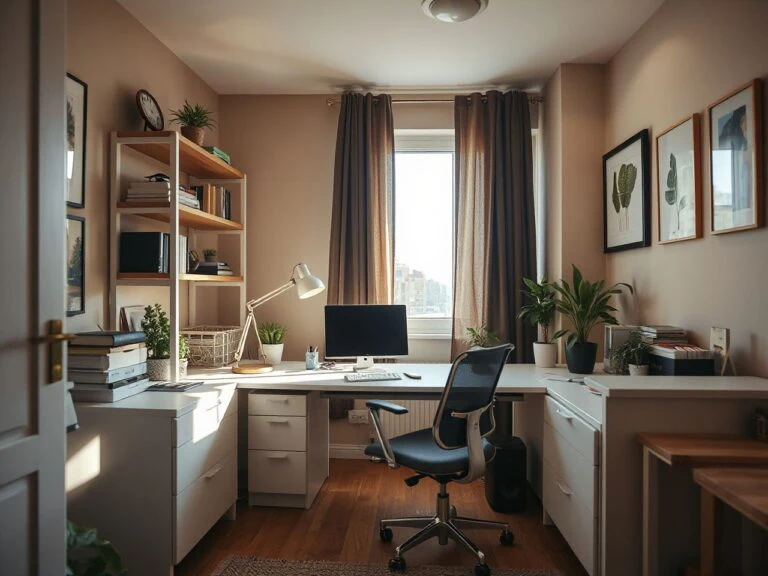
A home office affects the workday more than most people give it credit for — lighting quality, desk setup, and even small amounts of visual clutter play a real role in eye strain, focus, and how tense a person feels by the end of the day. None of it requires a full renovation.
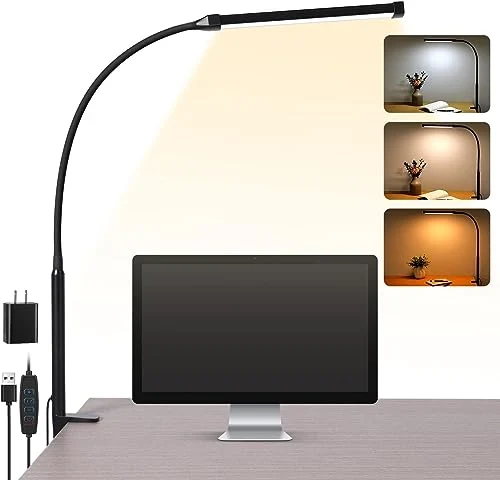
Two details matter more than most decor choices combined: task lighting and monitor position. A dedicated desk lamp in the 450 to 800 lumen range does more for reducing eye strain during screen work than ceiling light alone, and a monitor set with the top of the screen at or slightly below eye level, roughly an arm’s length away, prevents the neck strain that comes from looking down or leaning in all day. Get those two things right first, then use the ideas below to handle the rest — color, lighting layers, plants, storage, and the small details that make a room feel calm rather than merely functional.
1. Embrace Soft, Neutral Color Palettes
Soft neutrals — warm white, light taupe, gentle gray — work well in a home office because they don’t compete with screen brightness the way a saturated color can; a bright or high-contrast wall color near a monitor adds visual noise you process all day without realizing it. Warmer neutrals read as more traditional and cozy, cooler grays lean modern.
A simple way to build a palette without it looking flat: pick one color family and use three shades — lightest on the walls, a medium tone on furniture, darkest reserved for a few accents. Use a matte or eggshell wall finish near the monitor rather than semi-gloss, since a glossier finish can throw reflections onto the screen depending on where your light source sits.
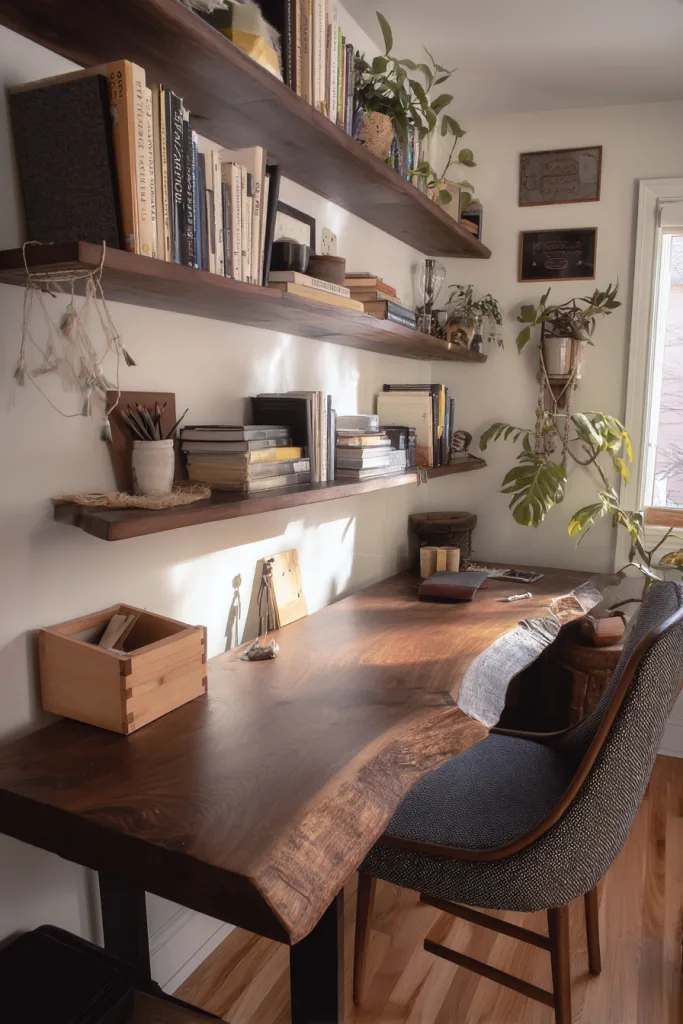
2. Incorporate Natural Wood Elements
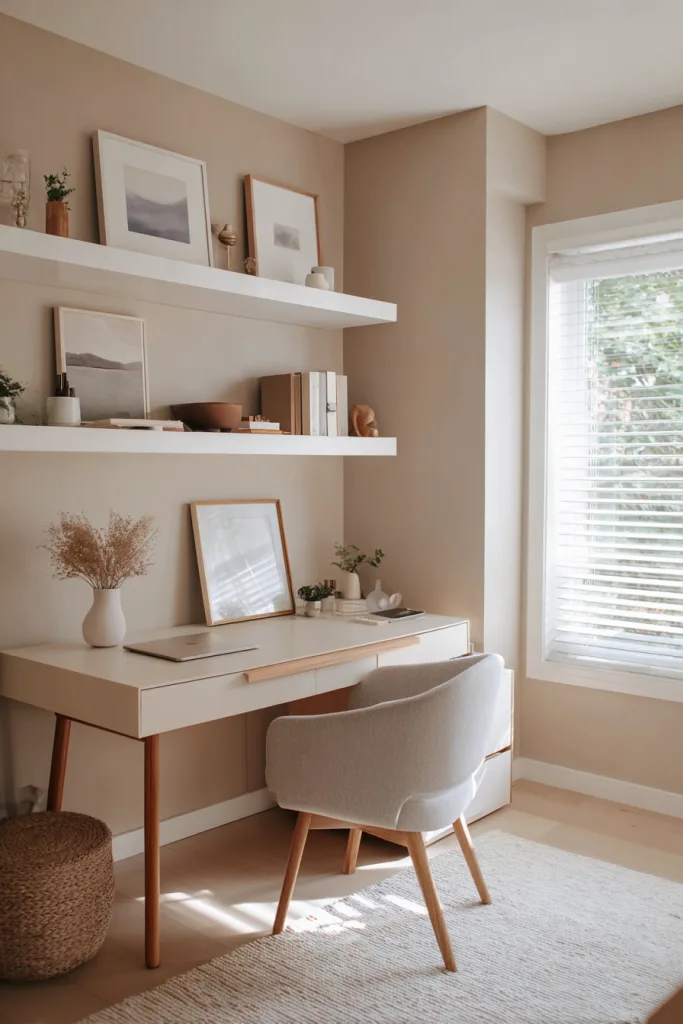
A solid wood desk, shelf, or frame reads warmer than laminate, metal, or plastic, largely because of visible grain and slight color variation — materials that are otherwise uniform (glass, painted MDF, powder-coated metal) tend to feel more clinical by comparison. Oak and walnut are common, durable choices for a desk surface; maple and birch run lighter and generally cheaper.
Light woods (birch, ash, pale oak) make a small office feel more open since they reflect more light; darker woods (walnut, deeper stained finishes) add contrast and a more formal feel but absorb more light, the same trade-off as a dark paint color. If mixing tones, stick to two or three at most and keep undertones (warm or cool) consistent — a yellow-toned pine next to a red-toned cherry tends to look accidental rather than intentional.
3. Maximize Natural Light
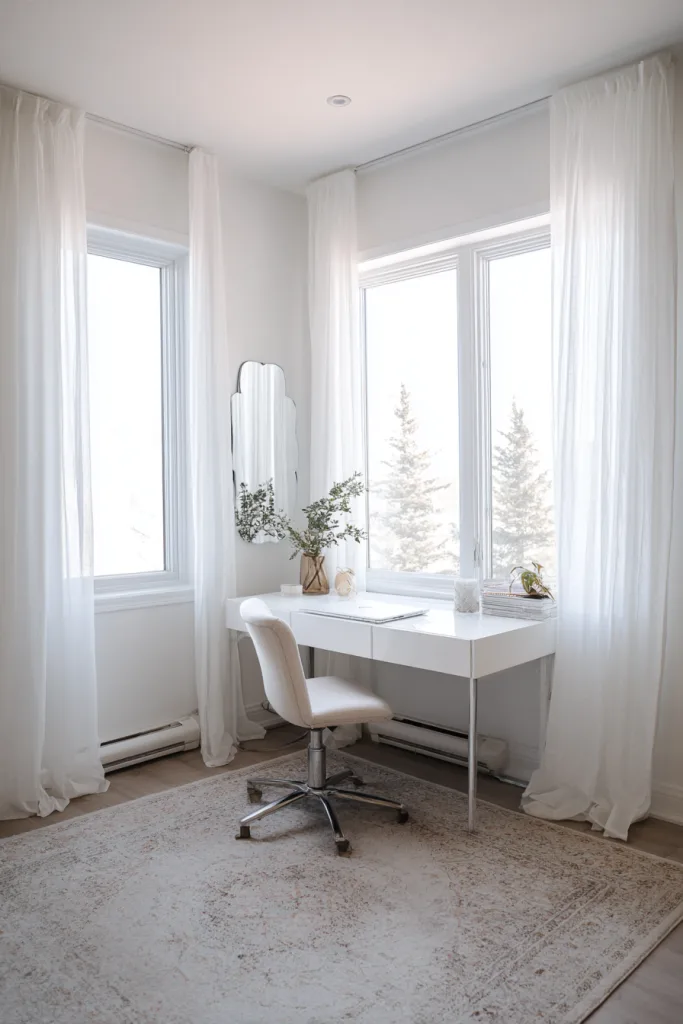
Daylight exposure during the day is broadly linked to better mood and healthy sleep patterns, and a well-lit room reduces how hard your eyes work compared to one lit only by a single overhead fixture. Position the desk perpendicular to a window rather than facing it or sitting with your back to it — facing a window causes glare on the screen, and sitting with your back to it creates the same problem in reverse.
Swap heavy drapes for sheer curtains that filter harsh midday sun without blocking the room, and consider a mirror placed across from the window to bounce light deeper into the space. No windows at all is workable but not ideal — full-spectrum LED bulbs get closer to daylight’s color temperature than a standard warm bulb, and task lighting should be angled to avoid casting your own shadow across the keyboard.
4. Add Layers of Soft Lighting
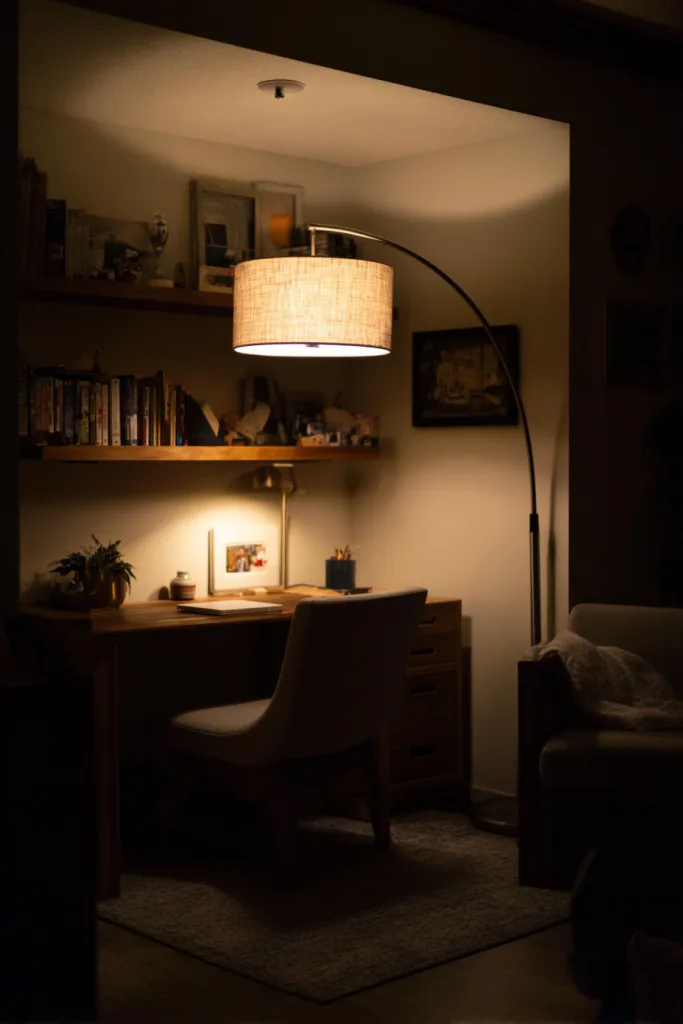
A single harsh overhead light — especially a cool-toned fluorescent or unshaded LED — is one of the more common reasons a home office feels tense rather than calm. Three layers of lighting fix it: ambient (an overhead fixture, ideally dimmable), task (a dedicated desk lamp), and accent (a floor lamp or LED strip lighting a corner).
For task lighting specifically, look for a lamp in the 450 to 800 lumen range — generally the range recommended for close reading and screen work, well above what a small decorative lamp puts out. Warm white bulbs (roughly 2700-3000K) feel cozier than the cooler, bluer light most overhead fixtures ship with by default. A dimmer on the ambient light lets you run brighter for morning tasks and lower it for afternoon focus work.
5. Integrate Living Plants
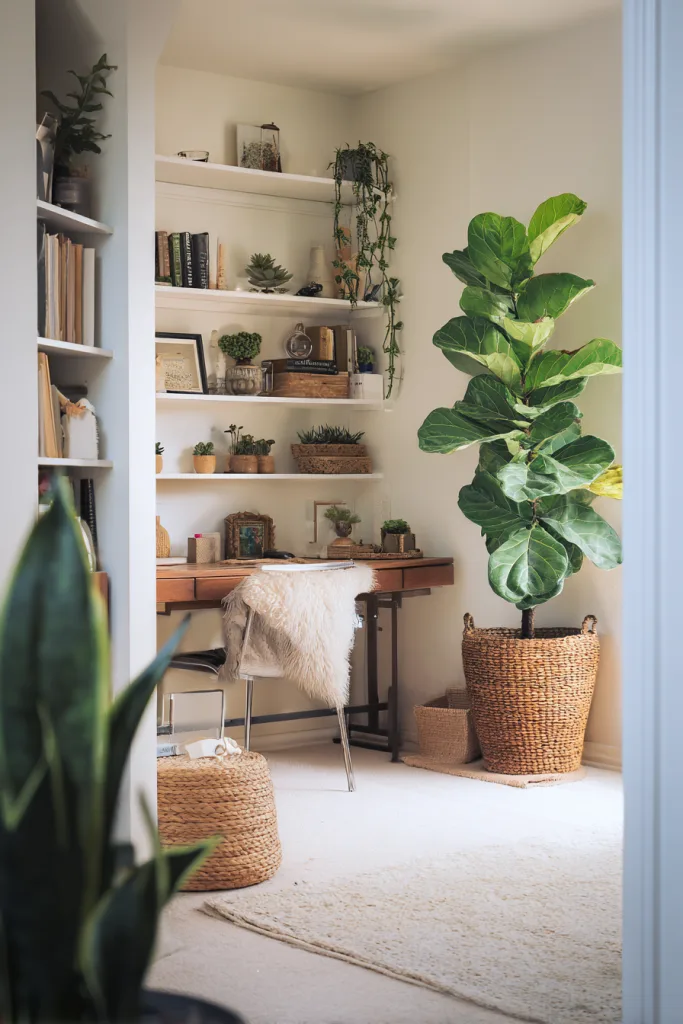
Plants make an office feel calmer mostly through the visual break they give your eyes — a patch of green in a room full of hard edges and screens is genuinely restorative to look at, even though the widely repeated claim that houseplants meaningfully purify indoor air doesn’t hold up well outside sealed lab conditions. Treat them as a mood and texture upgrade, not an air-filtration system.
Snake plants and pothos tolerate low light and irregular watering, which makes them a safe starting point. Fiddle leaf figs need a genuinely bright spot and are less forgiving. Small succulents work well directly on a desk. Whatever you choose, make sure the pot has drainage — a pot without it is the most common way office plants get overwatered, and it risks water damage to a wood desk or shelf underneath.
6. Create a Clutter-Free Desk and Manage Cords
A cluttered desk surface adds low-grade visual noise that’s easy to underestimate until it’s gone. Keep what’s actually in daily use — computer, notebook, a pen holder, maybe one personal item — and move everything else into a drawer, cabinet, or bin. A quick end-of-day reset, a couple of minutes rather than a deep clean, keeps the surface from creeping back to full by the end of the week.
Cord management is one of the most underrated details in a calm office — a cable tray mounted under the desk or a cord channel run along a desk leg keeps power strips, chargers, and monitor cables out of view, and it does more for how tidy a desk looks than almost any decor choice. It’s a low-cost fix, most cable trays and channels run under $20, that’s easy to skip simply because it isn’t visible until it’s done.
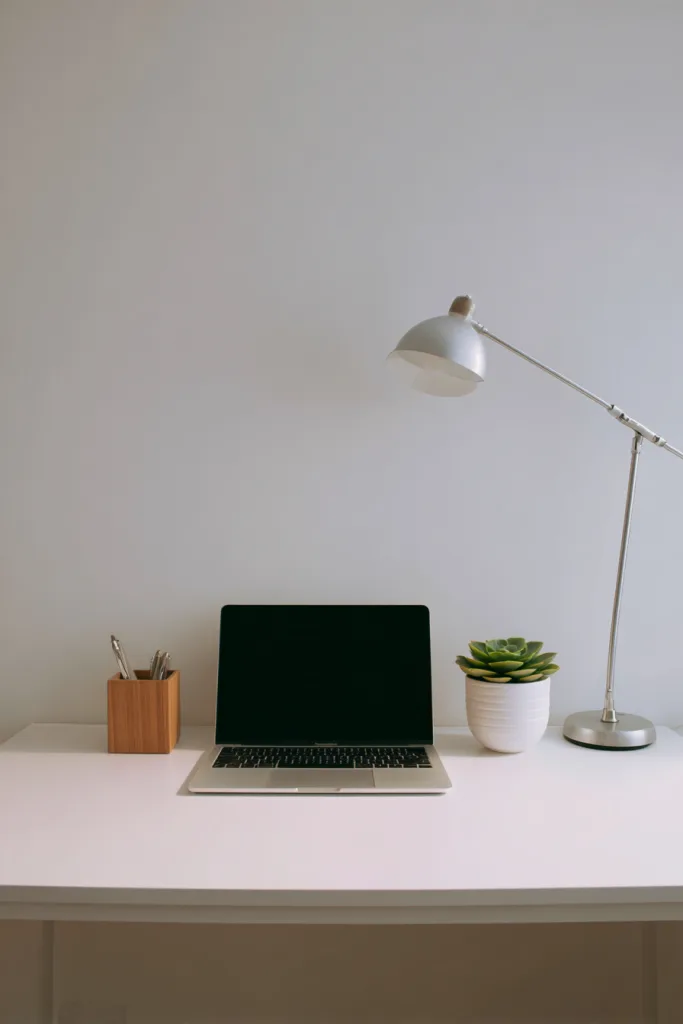
7. Install Floating Shelves for Display and Storage
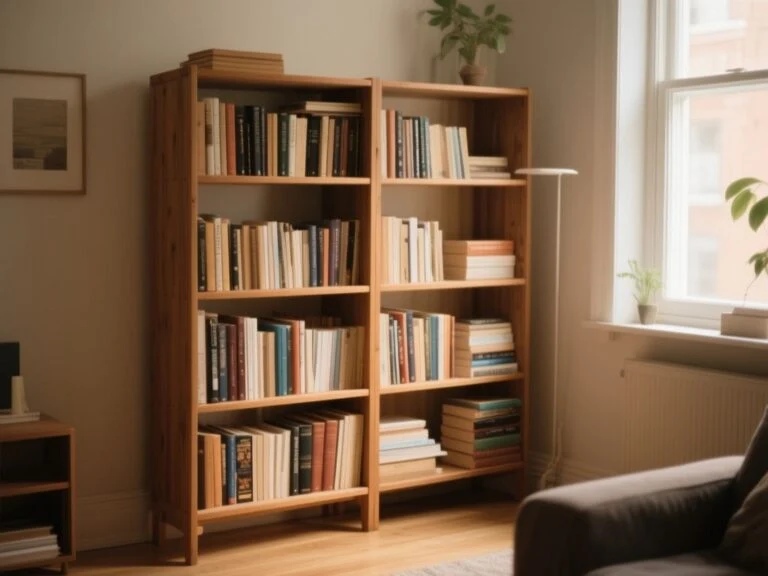
Floating shelves add storage and display space without the visual weight of a full bookcase, since there’s open wall visible around them. They work best organized by height: eye-level shelves for things used often, higher shelves for decorative pieces, lower shelves for heavier items like binders or boxed files.
The detail that gets skipped most often is anchoring — a floating shelf holding anything beyond a few light books or decor pieces needs to be secured into wall studs or use anchors rated for its actual load, not just drywall anchors sized for looks. Style shelves by alternating books with a few objects and leaving visible gaps between groupings; items clustered in threes or fives tends to look more deliberate than an even number spread out evenly.
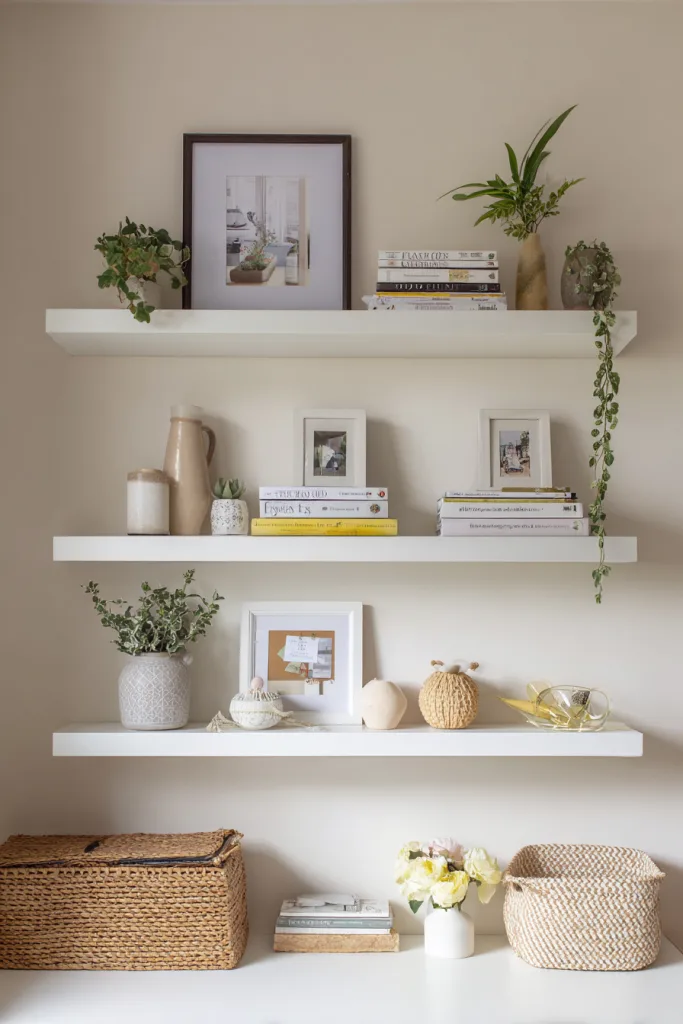
8. Choose an Ergonomic, Comfortable Chair
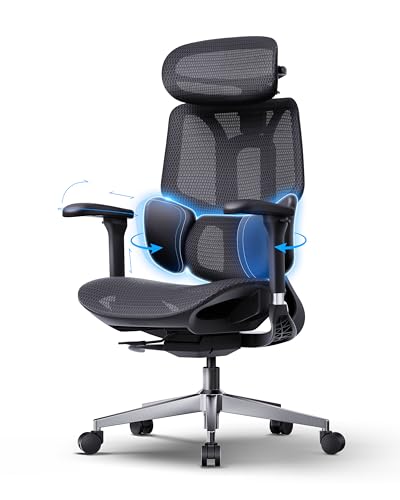
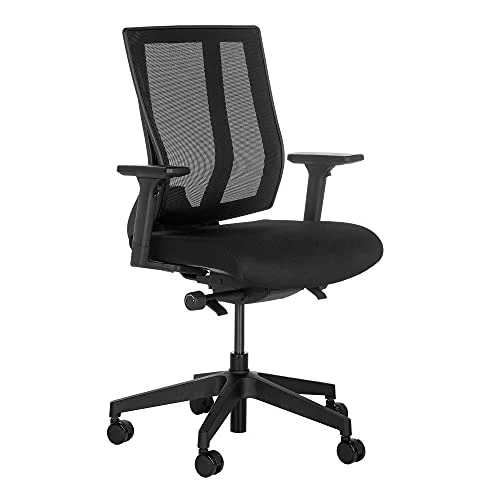
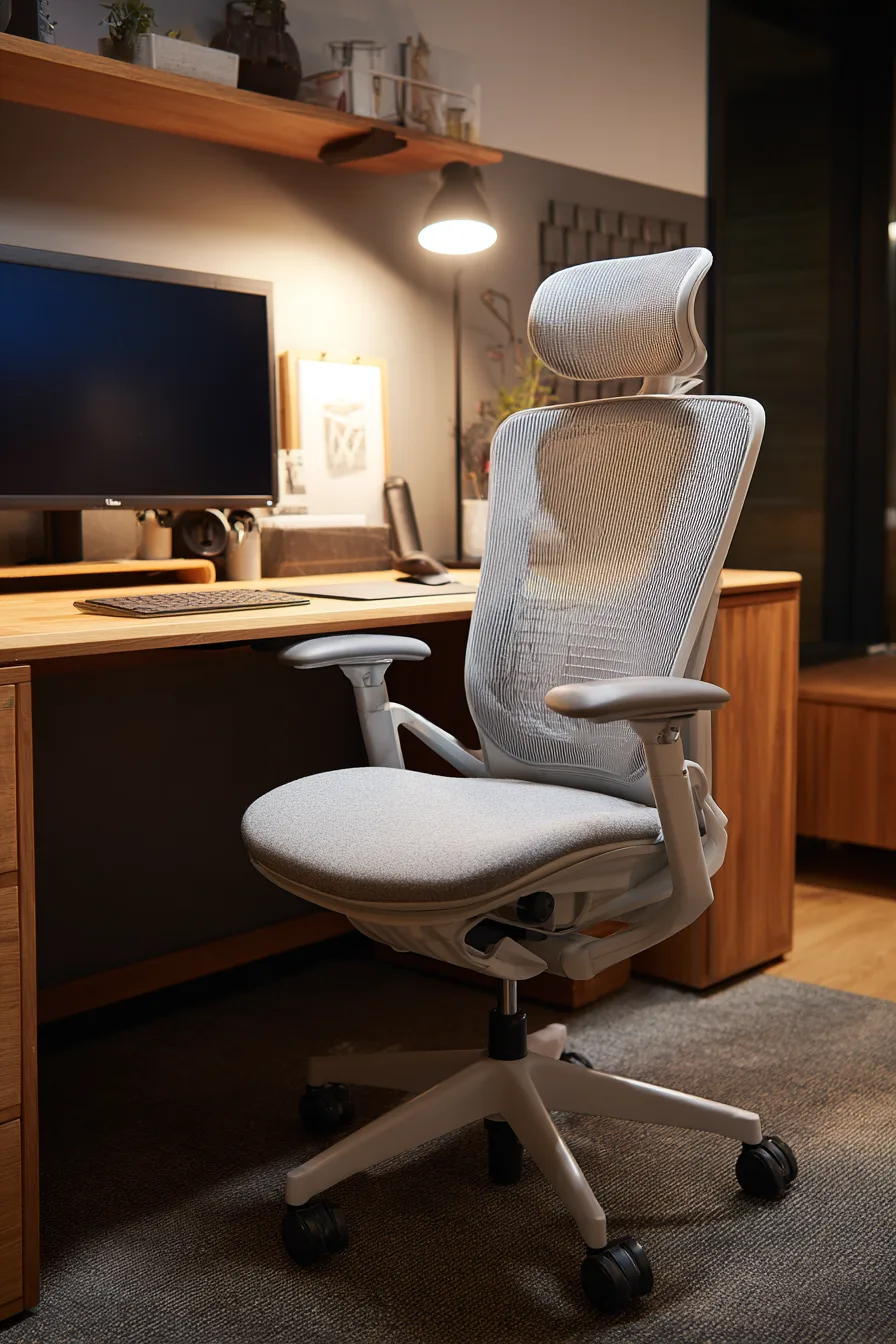
Chair quality affects comfort more directly than almost any other piece of office furniture, since it’s the one thing in constant contact with your body for hours at a stretch. Look for adjustable seat height, real lumbar support rather than just a curved back panel, and breathable upholstery — mesh or a natural woven fabric holds up better than vinyl over long sessions.
Fit matters as much as features: feet flat on the floor, thighs roughly parallel to the ground, armrests supporting your forearms without forcing your shoulders up. Pair the chair with correct monitor placement — top of the screen at or slightly below eye level, about an arm’s length away — since a well-adjusted chair paired with a monitor that’s too low or too close still leads to neck strain. Test a chair in person when possible; fit is genuinely personal.
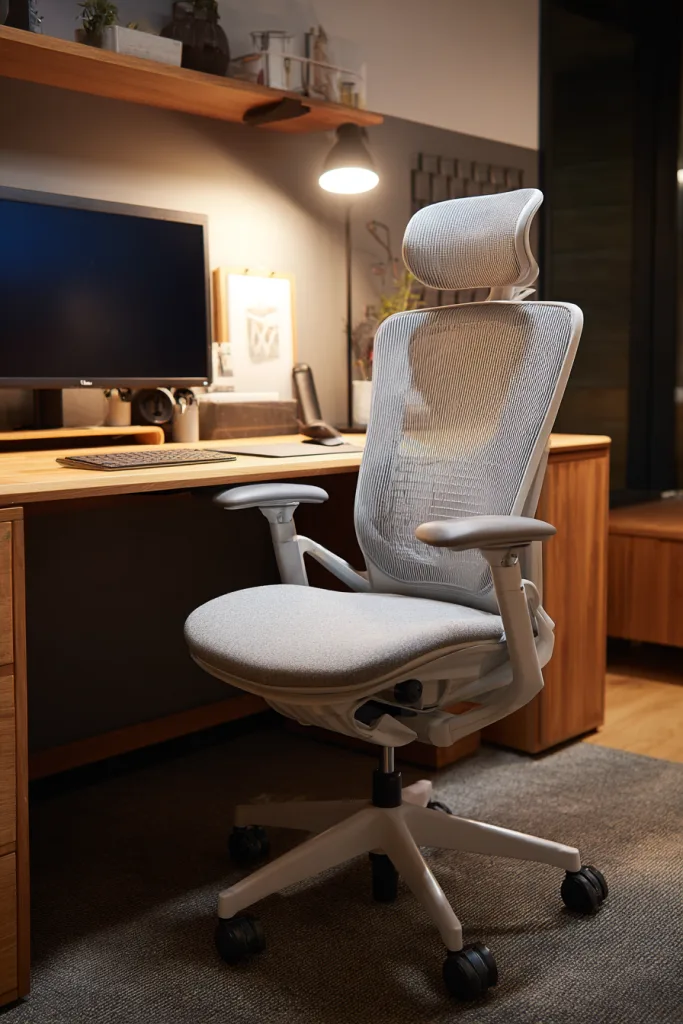
9. Incorporate Soft Textiles and Textures
An office with only hard surfaces — desk, floor, walls, a metal chair frame — tends to feel cold and can develop a noticeable echo in a small room. Textiles soften both the look and the sound: a rug under the desk, curtains, and a throw on the chair all help.
Size the rug generously — it should extend several inches beyond the range your chair rolls, not just sit under the desk itself, or the edge becomes a wear point. Natural fibers (cotton, linen, wool, jute) tend to look and feel less synthetic than polyester blends, though they typically cost more and some, wool and jute especially, need more careful cleaning. Keep the palette neutral or in a subtle pattern so textiles support the room rather than becoming the focal point.
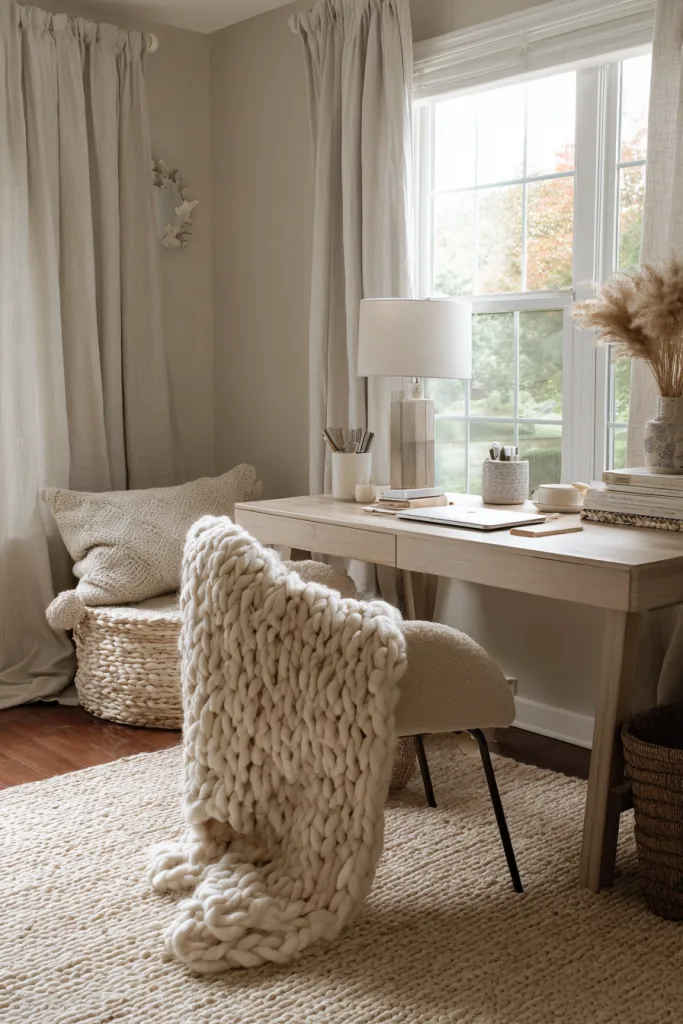
10. Display Calming Artwork
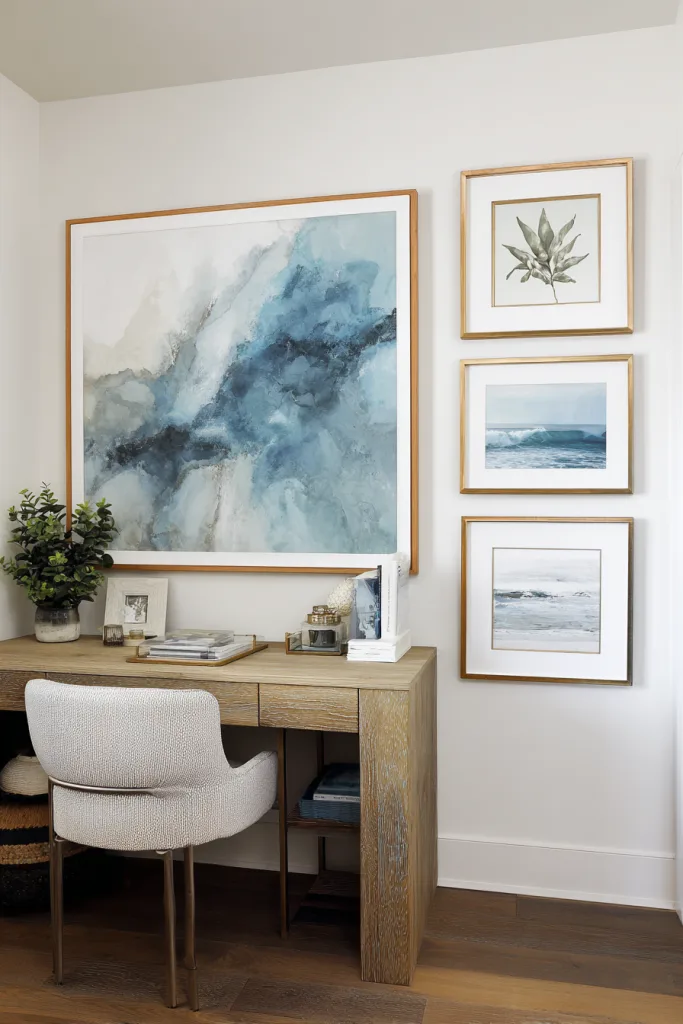
Artwork sets tone more than most people account for — busy patterns and high-contrast or intense imagery add visual stimulation, which works against the goal in a room meant for focus. Nature scenes, abstract minimalism, and gentle color studies are common choices for a calmer effect.
Hang art at eye level from where you actually sit at the desk, not standing eye level — the standard gallery guideline of centering artwork around 57 to 60 inches from the floor assumes a standing viewer, which is usually too high for a seated desk view. One large statement piece, or a small grouping of two or three, tends to work better than covering the wall — leaving visible wall space around artwork generally reads as more intentional than filling every gap.
11. Add a Touch of Scent, Thoughtfully
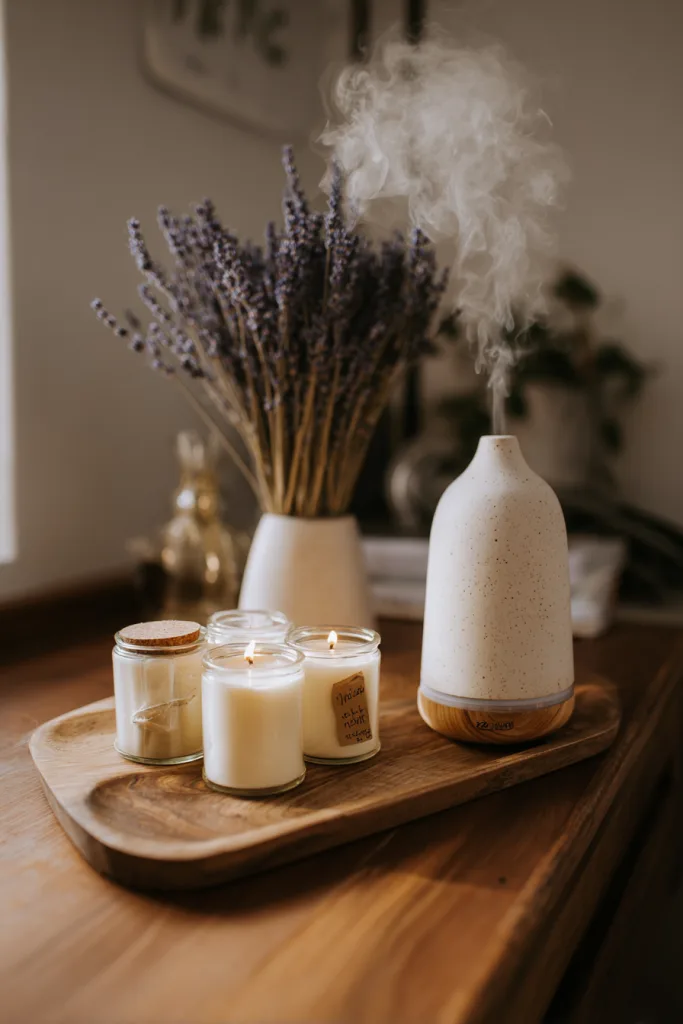
A subtle scent — a reed diffuser, a natural soy candle, or a small essential oil diffuser — can make a room feel more considered, the same way a scented candle does in any other part of a home. Treat it as atmosphere rather than a performance tool: claims that specific scents reliably boost focus or reduce stress are common in decor content but aren’t well established, so pick something you personally find pleasant rather than a scent marketed for “concentration.”
Keep it mild, especially in a small or poorly ventilated room, since strong synthetic fragrances are a common source of headaches for some people. If you share the space or have guests over, an unscented option is worth keeping on hand. Clean a diffuser periodically — oil residue builds up and can affect how it disperses scent.
12. Organize with Closed Storage
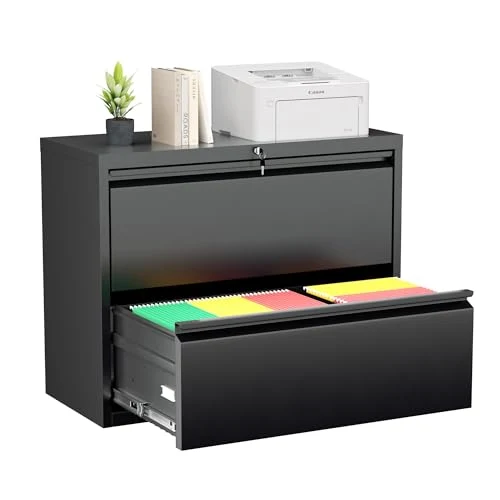
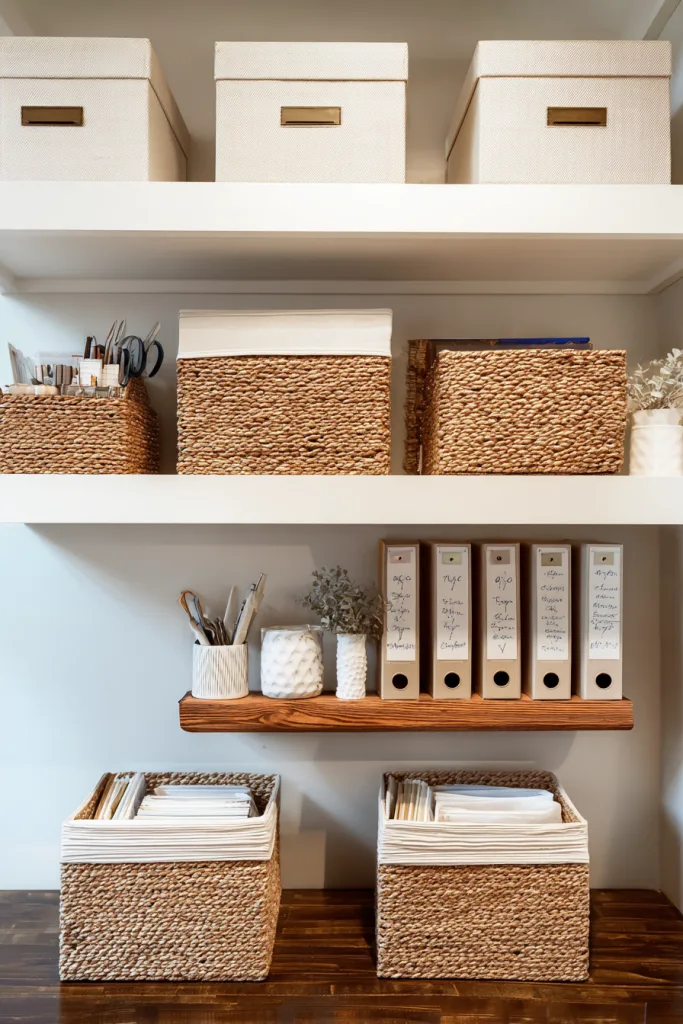
Not everything needs to be on display — items used occasionally rather than daily are better kept in closed storage than stacked in view. Woven baskets work well for cords, loose papers, and general supplies; drawer organizers keep smaller items from becoming a single junk drawer; matching bins in a neutral color read as more intentional than a mismatched assortment of leftover boxes.
Organize by frequency of use: daily items within arm’s reach, occasional items in a cabinet or closet, rarely used backup supplies stored out of the way entirely. Labeling helps, but keep the labels visually consistent — same font, same material — so the storage looks organized rather than like a warehouse system.
13. Add a Small Personal Sanctuary Corner
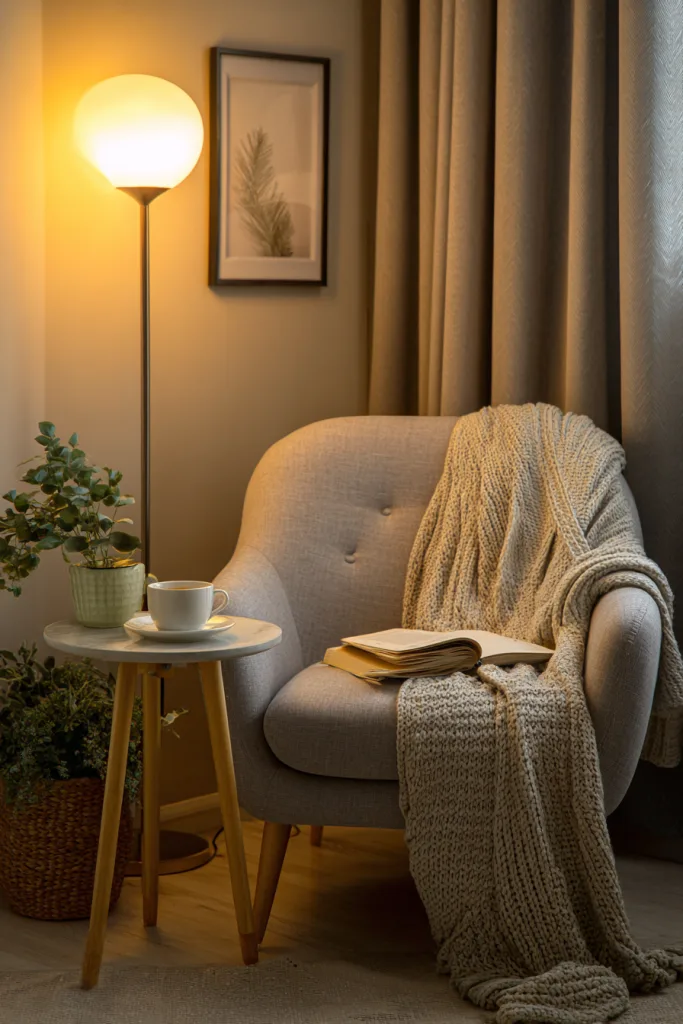
A small seating area separate from the desk gives you somewhere to take an actual break — a phone call, a few minutes of reading, or just a pause — without staying in the same chair and sightline all day. Even a compact setup, an armchair or floor cushion plus a small side table, fits in roughly 25 to 30 square feet, which is often enough for an unused corner.
Physically leaving the desk for a break, even a short one, is a genuinely useful habit for avoiding the fatigue that comes from staying in one position and one visual field for hours. Add a soft throw and a small plant to distinguish it from the workspace visually, reinforcing that it’s a different kind of space rather than an extension of the desk.
14. Manage Sound
Hard, flat surfaces reflect sound and can create a noticeable echo in a small room, while soft materials absorb it — this is why an office with a rug, curtains, and upholstered furniture generally sounds calmer than one with bare floors and walls. Acoustic panels, including ones styled to look like wall art, add more absorption if echo is a persistent issue, particularly in a room with hard flooring.
Position the desk away from hallways or other high-traffic areas of the home where possible, since consistent background noise is more fatiguing over a full workday than the same noise would be if intermittent. A white noise machine can help mask inconsistent background sound, and noise-canceling headphones are worth the investment for calls or deep-focus work in a shared or noisy home.
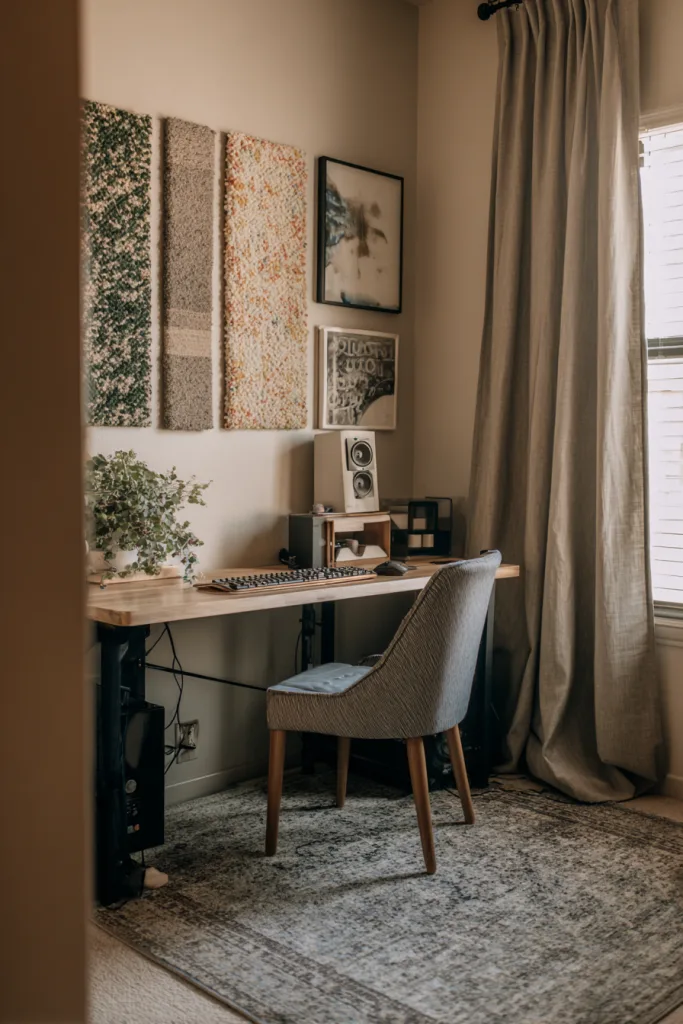
15. Bring in Small Natural Accents
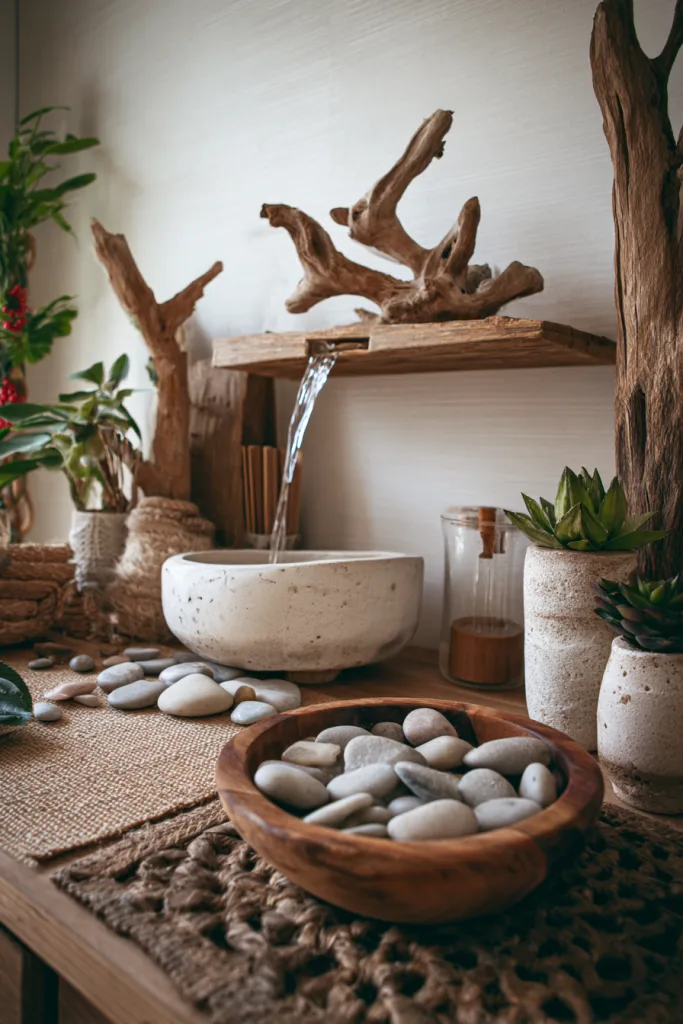
Beyond furniture-scale wood and plants, small natural materials — river stones in a bowl, a piece of driftwood, a ceramic or clay planter instead of plastic — add tactile variety to a desk or shelf without taking up much space or budget. These materials age visibly over time, patina on stone, weathering on driftwood, which is part of what makes them read as more considered than a uniform, mass-produced accessory.
A small desktop fountain is another option for anyone who likes ambient sound at their desk, though it’s worth trying before buying — the trickling sound some people find calming, others find distracting during focused work. Combine two or three natural materials rather than just one; a single stone or piece of driftwood can look like an afterthought, while a small grouping reads as intentional styling.
Building a Calmer Office
None of this requires a full renovation or a large budget. Start with the two changes that affect daily comfort the most — task lighting in the 450 to 800 lumen range and a monitor set at or slightly below eye level, about an arm’s length away — then work through color, storage, and the smaller texture and comfort details as time and budget allow.
Small, consistent changes compound: decluttering the desk and adding one plant is a reasonable weekend project; a full lighting layer, a rug, and a proper chair might be a longer-term goal. There’s no single correct setup — the right combination depends on the room’s light, size, and how you actually use it day to day.
Frequently Asked Questions
How much does it cost to create a calming home office?
It depends entirely on the starting point. Decluttering, rearranging furniture for better natural light, and reorganizing what’s already in the room costs nothing beyond time.
Budget-friendly upgrades: plants typically run $10 to $30 each; a throw blanket or small rug runs $30 to $100; simple artwork or prints run $20 to $50.
Mid-range investments: a quality ergonomic chair generally runs $200 to $500; a good desk lamp or floor lamp runs $50 to $150; a set of floating shelves runs $30 to $80.
Larger projects, custom built-ins, premium furniture, a full repaint, cost more and are worth treating as a separate, later phase. A reasonable approach is to prioritize daily-use items like the chair and lighting before decorative ones.
What colors work best for a calm home office?
Soft neutrals and muted earth tones are the standard recommendation: warm whites, beiges, and light grays; soft sage green; dusty blue; warm taupe and cream. These read as calmer than bright, highly saturated colors like electric blue or vibrant red simply because there’s less visual stimulation competing for attention.
Cooler colors like blue and green are commonly described as calming in design writing, and warmer tones like red and orange as more energizing — this is a design convention rather than a medical claim, but it’s a reasonable starting point. One neutral base color with two complementary accent shades is usually enough to create visual interest without overwhelm. Always test a paint sample in the room’s actual lighting before committing to a full gallon — natural light reveals undertones that store or artificial lighting can hide.
How can I make a small home office feel calmer?
Light, neutral wall colors make a small room read larger since they reflect more available light. Floating shelves instead of a bulky bookcase, furniture with visible legs rather than a solid base, sheer curtains, and a strategically placed mirror all help a compact room feel more open. Keeping the desk surface minimal reduces visual clutter, which matters more in a small room where everything is closer together and more visible at once.
Vertical storage draws the eye upward, which reads as more spacious than a room with everything stacked at eye level. One or two small plants add life without crowding the space — more than that in a genuinely small room tends to read as cluttered rather than calm.
What’s the best layout for a calm home office?
Position the desk perpendicular to windows where possible — this maximizes natural light while avoiding the screen glare that comes from facing a window directly or working with a window straight behind you. Keep frequently used items within easy reach to reduce unnecessary movement during the workday.
Where space allows, separate the room into rough zones: the primary desk area, a small break corner with comfortable seating, and storage that keeps supplies out of sight rather than stacked in the open. Leave at least 36 inches of clearance around furniture for comfortable movement — a cramped layout tends to feel more stressful regardless of how the room is decorated. Positioning a desk to face the doorway rather than having your back to it is a common preference, largely because it avoids the mild unease of not seeing who’s approaching.