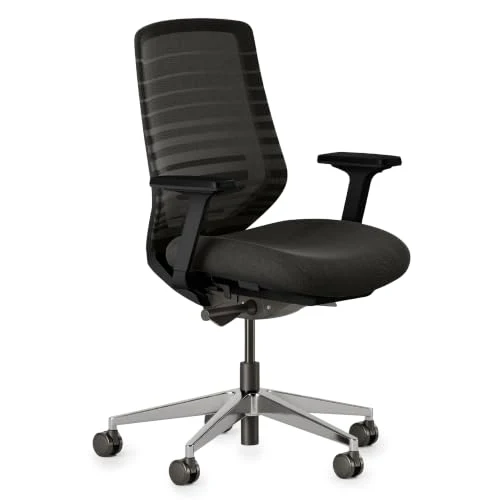
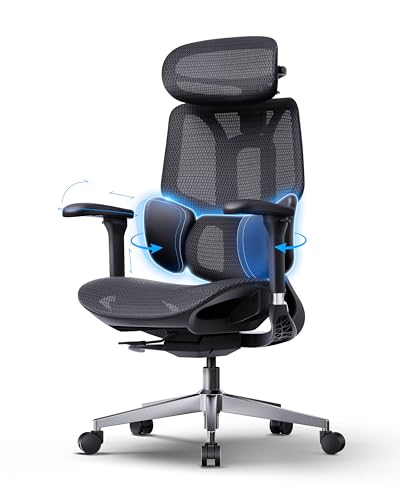
Because office chairs are essential for long-term comfort, a poor choice quickly becomes an expensive paperweight. Issues like lower back pain, heat retention from mesh, and armrests that start wobbling are common indicators of low-quality construction. The right chair has to fit through a standard door, maintain structural integrity under load, and adjust to the user’s body instead of forcing them to contort around it. For anyone looking for a straightforward hbada office chair review, here’s the deal: the Hbada E3 Air 2026 Ergonomic Office Chair is our clear pick for a budget-friendly ergonomic upgrade that doesn’t skimp on lumbar support.
Our winner for small-space folks who refuse to compromise on back support is the Hbada E3 Air. Few chairs in this price range offer this much adjustability without feeling flimsy.
📌 This article contains affiliate links. As an Amazon Associate I earn from qualifying purchases, at no extra cost to you. Full disclosure.
CERTAIN CONTENT THAT APPEARS ON THIS SITE COMES FROM AMAZON. THIS CONTENT IS PROVIDED ‘AS IS’ AND IS SUBJECT TO CHANGE OR REMOVAL AT ANY TIME.
| Product | Best For | Buy Link |
|---|---|---|
| Hbada E3 Air 2026 Ergonomic Office Chair | All-day comfort, back support | Check Price |
Evaluation of the Hbada E3 Air for This Review
The Hbada E3 Air is evaluated based on the adjustability of the armrests, headrest, and lumbar support, as well as seat cushion firmness and recline mechanics. Criteria include ease of assembly, the stability of the gas lift and casters on both carpet and hard floors, and comfort and pressure distribution during extended use. Customer feedback and warranty policies are used to benchmark durability and support. The chair design accommodates a range of heights, including those up to six-foot-two, and is suitable for various workstation setups, including standing desks. Evaluation includes how the casters perform on both low-pile rugs and hard vinyl floors. Special attention is paid to whether the lumbar support maintains its position after repeated leaning, as that is a common failure point in lower-cost designs.
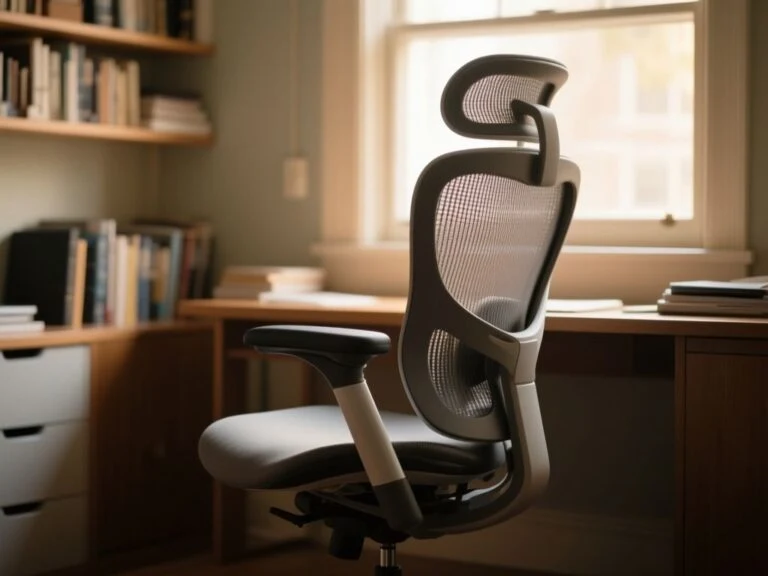
Hbada E3 Air 2026 Ergonomic Office Chair
Quick take: If you sit for six-plus hours a day and your lower back starts complaining by 3 p.m., this chair was built to fix exactly that. The 3-zone lumbar support and 4D headrest make it a standout at its price point.
Assembly runs to about twenty-five minutes with the included hex wrench, and the design earns some of that time back: the backrest slides onto a single bracket instead of the usual four-bolt juggling act. The mesh backrest is tensioned taut rather than left slack, and the faint woven texture is what keeps a shirt from sliding across it when you lean forward to type—a smoother knit would let you creep out of position all morning. The seat cushion is firmer than the pillowy foam used on many budget chairs, and that is the trade-off worth understanding: firm foam spreads the load across the whole seat pan, while soft foam compresses under the tailbone within an hour or two of a long writing session and leaves it resting on the base. The lumbar support module sits inside the lower backrest and pushes outward through a side knob that clicks at each increment, so a setting can be dialed from barely-there to aggressive and, more usefully, found again after someone else moves it. One detail worth knowing: the plastic shell under the armrests has a slightly rough edge on the underside, in a spot forearms do not normally touch during use.
The chair’s construction provides reliable support compared to standard $200 big-box options. The casters roll smoothly on hardwood and only slightly drag on thick carpet, which is normal for hard plastic wheels. The tilt can be locked at a shallow recline for reading or at the full 140° angle for resting—the mechanism is designed to remain fixed at the chosen setting. One point of note: the headrest’s vertical adjustment uses a friction slider that feels sturdy, but if significant upper body weight is braced against it while leaning back, it can slip down about half an inch. Taller users might want to re-tighten the mechanism occasionally. Another detail: the armrest caps are made of a rubberized plastic that can accumulate dust; a damp cloth keeps them clean, which is a common maintenance task for this material.
Pros:
- 3-zone lumbar support — actually moves with your back when you shift, unlike the static bar on most chairs under $300.
- 4D armrests — slide forward, backward, up, down, and pivot inward, so you can rest your elbows at the right angle while typing.
- 140° tilt mechanism — locks at any angle, not just two or three preset positions, which felt smooth and predictable.
- Breathable mesh backrest — per the listing, the open-weave mesh is designed to breathe better than a padded leather chair, especially on hot days without AC.
Cons:
- Headrest slip under heavy pressure — if you’re tall and lean back with full body weight, the headrest can drop a half-inch before catching.
- Armrest caps collect dust — the textured rubber surface looks grimy after a few days in a dusty room; you’ll need to wipe them regularly.
Our Take
Best for: Remote workers and students in small apartments who need serious lumbar adjustability without dropping $500 on a Steelcase or Herman Miller. Skip if: You’re over 6’4″ or consistently rest your entire upper body against the headrest—the vertical slip might frustrate you. Everyone else will find this chair a steal.
Check current price:
How to Choose an Ergonomic Office Chair: Lessons from Our Hbada E3 Air Review
Not every chair with adjustable features works the same. Here’s what actually matters when you’re shopping, based on manufacturer specifications and product features of hbada office chairs.
Adjustable Lumbar Support: Why 3-Zone Beats a Single Bar
Most budget chairs have a flat, fixed lumbar pad that pushes into one spot on your spine. The Hbada E3 Air uses a 3-zone lumbar support that covers the center and both sides of your lower back, and you can shift it vertically and change its depth. Per the listing, the 3-zone design is engineered to keep contact with your lumbar curve even as you shift position, rather than staying fixed in one spot. If you’re comparing to other chairs in this price range, a single-bar lumbar piece will always feel more like a brick than a cushion. Look for at least two-dimensional adjustability (up/down and in/out) to avoid a support that ends up useless half the time.
Hbada office chair reviews Say 4D Adjustability Matters—Here’s Why
Armrests that only go up and down force your elbows into awkward positions. The E3 Air’s 4D armrests move in four directions: height, depth, width, and angle. The forearms can rest parallel to the desk when typing, which reduces pressure on the shoulders. That’s a feature usually found on chairs twice the price. The headrest is also 4D—it tilts, slides up and down, moves forward and back, and the angle adjusts. For shorter users around 5’5″, it can be positioned to cup the base of the skull without pushing the head forward. The range is adequate up to about 6’2″, though the vertical slide may slip under heavy lean.
Seat Cushion Firmness and Recline: What Actually Prevents Numbness
A seat that’s too soft collapses after an hour, cutting circulation to your thighs. The E3 Air’s cushion is medium-firm, made of molded foam with a waterfall edge that slopes down at the front to relieve pressure behind your knees. The design allows for frequent position changes without feeling restricted. The 140° tilt mechanism locks at any angle, unlike the common “three-position” recline that leaves you either bolt upright or fully horizontal. The tension knob allows for resistance adjustment so the backrest remains stable during reclining. If you’re planning to use this with a standing desk, the recline range pairs well because you can transition from upright to relaxed quickly.
Build Quality and Warranty: Look for BIFMA X5.1 Certification
The Hbada E3 Air passed BIFMA X5.1 testing, which means it has been independently verified for durability and safety—the frame can withstand repeated stress without cracking, and the pneumatic gas lift won’t sag under the rated weight capacity (which is 300 pounds, though the manufacturer recommends users up to 6’2″ tall for best headrest alignment). The base is a sturdy aluminum alloy, not plastic, and the PU-coated casters are gentle on hard floors like vinyl. Most importantly, the chair comes with a 1-year warranty on parts and mechanisms—verify the exact terms before purchase, because some Hbada sellers offer extended coverage. For more on chairs proven to ease back pain, check out our guide to the best office chair for lower back pain according to consumer reports.
Our Final Recommendation
The Hbada E3 Air 2026 Ergonomic Office Chair remains a top pick for anyone who wants real lumbar support and full-body adjustability on a budget. It’s rare to find 4D armrests and a 3-zone lumbar system in this price bracket, and the materials are rated for consistent daily use. If you’re looking for a premium alternative, you might consider the higher-end Steelcase Gesture, but for typical home offices and small apartments, the E3 Air represents a high-value option. Buy it, set the lumbar to your curve, and the design supports back comfort over extended periods.
Frequently Asked Questions
Is the Hbada office chair any good for long work sessions?
The E3 Air is designed to provide comfort and reduce the lower-back fatigue often associated with cheaper chairs. The key is the adjustable 3-zone lumbar support, which stays in contact with your spine even when you shift positions. The medium-firm seat cushion also prevents numbness in the thighs, supporting long periods of use without the need to constantly stand up to relieve pressure.
How do I adjust the 3-zone lumbar support on the Hbada E3 Air?
There’s a knob on the side of the backrest that you rotate to increase or decrease the lumbar protrusion. You can also slide the entire lumbar module up or down about two inches by grabbing the outer edges and pulling. The three zones press against the center and sides of your lower back independently, so you can dial in even support. The firmest setting may be too aggressive for casual reading but is suitable for typing with correct posture.
What is the weight capacity and maximum user height for this chair?
The Hbada E3 Air supports up to 300 pounds, but the manufacturer recommends it for users between 5’3″ and 6’2″. Taller people may find the headrest doesn’t go high enough even at maximum extension, and shorter users might need the seat at its lowest setting to keep feet flat on the floor. The gas lift is rated BIFMA X5.1, so it won’t suddenly drop under heavy weight.
Does the Hbada E3 Air come with a warranty and what does it cover?
Most listings include a 1-year warranty that covers the gas lift, tilt mechanism, armrests, and lumbar support parts. The mesh backrest and seat cushion have a 30-day replacement policy for manufacturing defects. We recommend registering your chair on Hbada’s website right after purchase—some retailers extend the parts warranty to two years if you register within 30 days. Always check the specific seller’s terms because third-party listings sometimes differ.