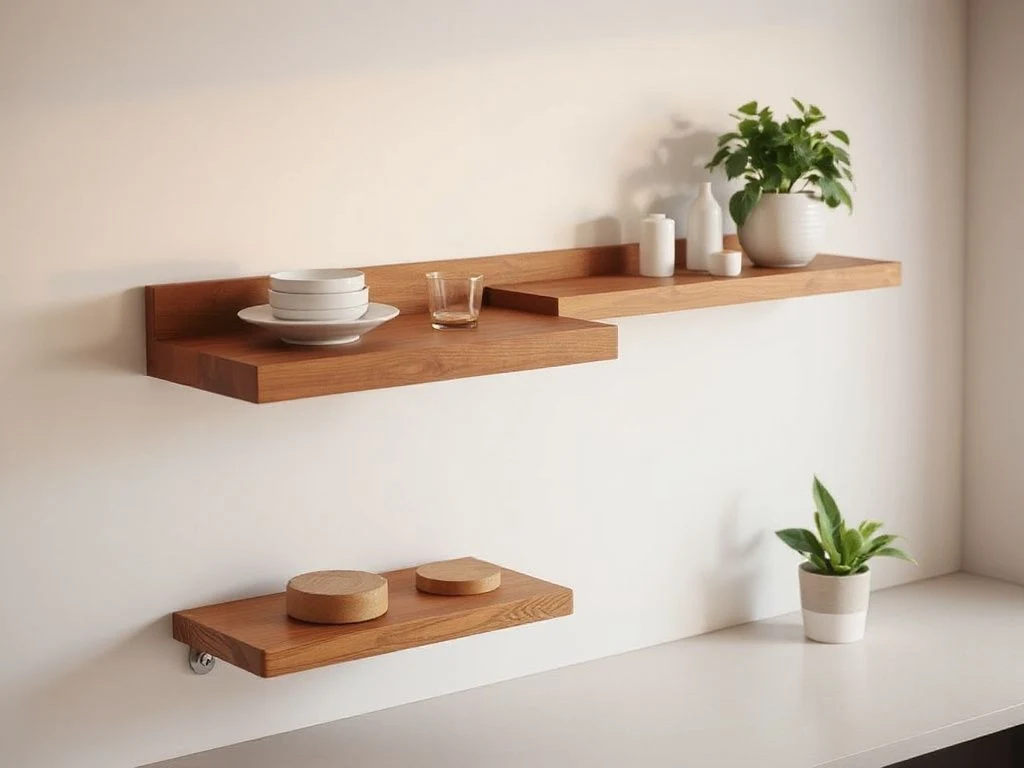
You bought the shelf, drilled the holes, hung it level, and stacked a few books on it. A week later there is a slight droop at the front, or worse, a sad little pile of drywall dust on the floor and a shelf hanging by one anchor. The frustrating part is that the box promised a number, you stayed under it, and the thing still let you down.
The reason is simple once you see it. The question of how much weight a floating shelf can hold has almost nothing to do with the shelf itself and almost everything to do with what sits behind the wall and where you put the load. The number that matters is not the shelf’s strength but the pull-out and shear resistance of whatever the bracket is fastened into, combined with the leverage created by how far the weight sits from the wall.
Treat capacity as a system: substrate, fastener, bracket geometry, and load placement. That system, not a single printed figure, decides whether your shelf holds a stack of hardcovers or a single reading lamp before it complains.
Key Takeaways
- Capacity is set by the weakest link, which is almost always the wall anchor and substrate, not the shelf board.
- The same shelf anchored into a wood stud can hold several times more than one toggled into bare drywall.
- Weight at the front edge creates far more leverage than weight held close to the wall, so load placement changes the real limit.
- Box ratings assume correct installation into a suitable substrate; they are best-case figures, not a promise for your wall.
Why the Printed Rating Is the Least Useful Number on the Box
A floating shelf hides its supports inside the board, so the whole load has to travel through the fastener and into the wall. That handoff is where things break. The shelf board can be rock solid and still come down if the anchor cannot resist being pulled straight out of the wall.
Engineers split this into two forces. Shear is the downward drag trying to slide the fastener out of the hole, and pull-out (or tension) is the load trying to lever the top of the bracket away from the wall. A cantilevered shelf loads its top fasteners heavily in pull-out, which is the failure most people never see coming.
The manufacturer’s rated static load capacity is measured under ideal conditions, usually into solid material with the weight centered. Those labeling numbers follow general performance-test logic like the material standards published by ASTM International, but the rating travels with the bracket, not with your particular wall. Change the substrate and you change the answer entirely.
The Shelf Board Rarely Fails First
A solid hardwood core or a quality plywood shelf will bow long before it snaps. A cheap medium-density fiberboard (MDF) shelf is different, because MDF has poor internal grip and its concealed bracket rods can loosen inside the board over time. Even then, the wall usually gives up before the wood does.
So when you read a rating, mentally file it as “the most this bracket could ever manage in a lab.” Your job is to figure out how much of that potential your wall will actually let you keep.
How Much More Weight Can a Floating Shelf Hold in a Stud Versus Drywall
This is the single biggest variable, and it is worth being blunt about the gap. Anchoring into a wood stud versus relying on drywall alone is often the difference between a shelf that carries a real load and one that carries decoration.
Anchored Into a Wood Stud
Studs in a typical interior wall sit at 16 inches on-center, sometimes 24. When your fastener bites into that solid softwood, the load spreads through the wood fibers rather than crumbling a thin gypsum panel.
A single structural wood screw or lag screw driven properly into a stud can hold well over 100 pounds in shear, and lines like GRK or SPAX are engineered specifically for that kind of grip. Two fasteners into two studs, and a modest floating shelf comfortably handles a run of books it would never survive on drywall. The stud is the reason a shelf goes from “holds a candle” to “holds the whole shelf’s worth of hardcovers.”
Drywall Only, With No Stud Behind It
Standard half-inch drywall is roughly the strength of packed chalk. On its own it will not hold much of anything screwed directly into it, which is why bare drywall screws tear loose so easily.
With good anchors you can claw back some capacity, but the honest ceiling here is low. A drywall-only floating shelf should be treated as a light-duty mount, suitable for a framed photo, a small plant, or a single lamp, not a library. If the shelf will carry anything with weight, you find a stud or you change your plan.
Where Toggle Bolts Fit In
Spring or snap toggles, such as the widely used Snaptoggle, work by spreading a metal bar across the back of the drywall, so the load pulls against a much larger area instead of a single crumbling hole. They are the best drywall-only option by a wide margin.
They still do not match a stud. A quality toggle in half-inch drywall might hold a useful amount in shear, but pull-out is its weakness, and pull-out is exactly what a cantilevered shelf generates. Use toggles when you have no stud, respect that the ceiling is lower, and keep the load light and close to the wall.
Load Placement and Leverage: Why the Front Edge Feels Like It Is Ripping Out
Set a heavy book at the front edge of a deep shelf and you can almost feel the wall straining. That feeling is real, and it has a name: bending moment. It is the physics of a lever.
The force on your top anchors equals the weight multiplied by how far it sits from the wall. Move a book from 2 inches out to 10 inches out, and you have roughly multiplied the pull-out force on those fasteners fivefold without adding a single ounce.
Weight held near the wall loads the shelf gently; the same weight at the outer edge multiplies the strain on the anchors. This is why two identical shelves with identical loads can behave completely differently based only on where the load sits.
Does Shelf Length Change Capacity, or Just the Bracket?
Length mostly changes how many anchor points you get and how the load spreads. A longer shelf spanning two or three studs distributes weight across more fasteners, which is good. But a long shelf also tempts you to load the far ends, where a single anchor may be doing most of the work.
The bracket rating and the substrate set the ceiling. Length just decides how evenly you get to spread the load underneath that ceiling.
Will a Deeper Shelf Hold More or Less?
A deeper shelf almost always holds less at the same rated load, because depth invites you to place weight farther from the wall. Shelf depth increases the leverage arm, so a 10-inch-deep shelf stresses its anchors harder than a 6-inch shelf carrying the identical object.
Deep shelves look generous and photograph beautifully. Just remember that every extra inch of depth is an extra inch of lever working against your wall anchors.
Concealed Rod Brackets Versus Visible L-Brackets
The hidden-support look is the whole appeal of a floating shelf, but that concealment costs you capacity. Understanding the trade is how you pick the right one.
Concealed Floating Shelf Bracket Rods
A blind shelf support is a steel plate with rods that slide into holes drilled in the back of the shelf. All the load transfers through those thin rods and the plate’s fasteners, so everything depends on the plate being anchored into studs.
These give you the clean, unsupported look, and into studs they can carry real weight. Into drywall alone they are the riskiest choice, because the concealed geometry concentrates pull-out force on a small plate.
Visible L-Brackets and When to Switch
A visible L-bracket under the shelf carries load in a much more forgiving way, because the vertical leg transfers weight almost straight down into the wall in shear rather than prying outward. For heavy loads, that is simply better mechanics.
When a load is genuinely heavy, a visible bracket into studs will outperform a concealed rod system every time. If you are hanging something serious, this is the moment to trade a little visual purity for a lot of security.
Why a Floating Shelf Sags Over Time Even If It Did Not Fall
A shelf can pass its first loading and still fail slowly, weeks or months later. Two separate mechanisms cause this, and both are quiet until they are not.
The first is creep in the shelf material. Wood and especially MDF deform gradually under constant load, so a shelf that looked level on day one develops a permanent front-edge droop under a heavy, static weight it technically “passed.”
The second is gradual anchor pull-out. Each time you bump the shelf or add and remove items, a marginal drywall anchor works its way a hair looser, and the pull-out force from the cantilever keeps prying. Static load capacity and long-term load capacity are not the same number, which is why a shelf that held fine at first can quietly loosen and fail later.
Warning Signs a Shelf Is Near Its Limit
- A visible downward tilt at the front edge that was not there at install.
- A hairline gap opening at the top of the shelf where it meets the wall, which signals pull-out beginning.
- Fine drywall dust or paint cracking around the top fasteners.
- Any movement, flex, or creak when you press down on the front edge.
Catch any of these and unload the shelf before you go looking for the cause. A gap at the top is the anchor telling you it is losing the fight.
Reinforcing an Existing Shelf and Spreading the Load
You do not always have to rip a shelf off the wall to make it safer. A few moves buy real margin.
Reinforcing Without a Full Reinstall
- Relocate the heavy items toward the wall and the light ones to the front edge. This alone cuts pull-out force dramatically at zero cost.
- If one bracket fastener missed a stud, add a fastener that hits one, even slightly off from the original hole.
- Swap plastic drywall plugs for spring toggles at any anchor point stuck in bare drywall.
- For a heavy application, add a discreet L-bracket or a wall cleat under the shelf that reaches a stud.
Distributing Weight So No Single Anchor Is Overloaded
Spread the heaviest objects over the anchor points rather than clustering them between two supports or out at an unsupported end. Think of each anchor as carrying its own zone, and keep the densest items sitting directly above framing.
The same cantilever thinking applies to floating desks, wall-mounted cabinets, and TV mounts, which is worth remembering the next time you mount anything that sticks out from a wall. Keep mass low, near the wall, and above studs, and you are working with the mechanics instead of against them.
How to Tell What Kind of Wall You Are Drilling Into
You cannot pick the right fastener until you know the substrate, and guessing wrong is how anchors fail. Most interior walls are one of three things.
- Drywall sounds hollow when tapped, and a pushpin presses in easily leaving white or grey dust. This is the most common modern wall.
- Plaster and lath, common in older homes, feels harder and denser, resists a pushpin, and often produces grittier debris. It can hold weight but cracks unpredictably, so drill slowly and never hammer an anchor in.
- Masonry or concrete will not take a pushpin at all and needs masonry anchors, not drywall hardware.
If you are ever unsure whether a wall is safe to drill, or you suspect it hides electrical, plumbing, or a load-bearing element, treat that uncertainty as a stop sign. The U.S. Consumer Product Safety Commission tracks tip-over and furniture-anchoring incidents precisely because underestimated wall mounts cause real injuries, and a shelf that comes down loaded is no small thing near a child or a walkway.
Confirm the wall, confirm the studs, and match the fastener to what you actually have. That sequence, done in that order, is what turns a printed rating into a shelf you can trust with more than a lamp.
Frequently Asked Questions
How much weight can a floating shelf hold on drywall with no stud behind it?
Treat it as light-duty only. Directly into bare half-inch drywall, screws hold almost nothing. Good spring toggles like a Snaptoggle claw back some capacity, but pull-out remains the weak point on a cantilevered shelf, so a photo, a small plant, or a single lamp is realistic. Anything heavier needs a stud or a visible bracket anchored into framing.
How much more weight can a floating shelf hold if I hit a stud?
Several times more, often the difference between decorative and functional. A structural wood screw or lag screw into a wood stud can hold well over 100 pounds in shear, versus a fraction of that on drywall alone. Two fasteners into two studs let a modest shelf carry a full run of hardcover books that would tear straight out of gypsum.
Are the weight ratings printed on the box realistic?
They are best-case lab figures, not a promise for your wall. Manufacturer static load ratings assume correct installation into a suitable substrate with the weight centered, following performance-test logic similar to ASTM material standards. Your real limit depends on your substrate, your fasteners, and where you place the load, so read the rating as a ceiling you may not reach, not a guarantee.
Why does a heavy book at the front edge feel like it is ripping the shelf out?
Because of leverage, called bending moment. The pull-out force on your top anchors equals the weight times its distance from the wall, so moving a book from 2 inches out to 10 inches out multiplies the strain roughly fivefold with no added weight. Keep dense items pushed toward the wall and light items at the front edge.