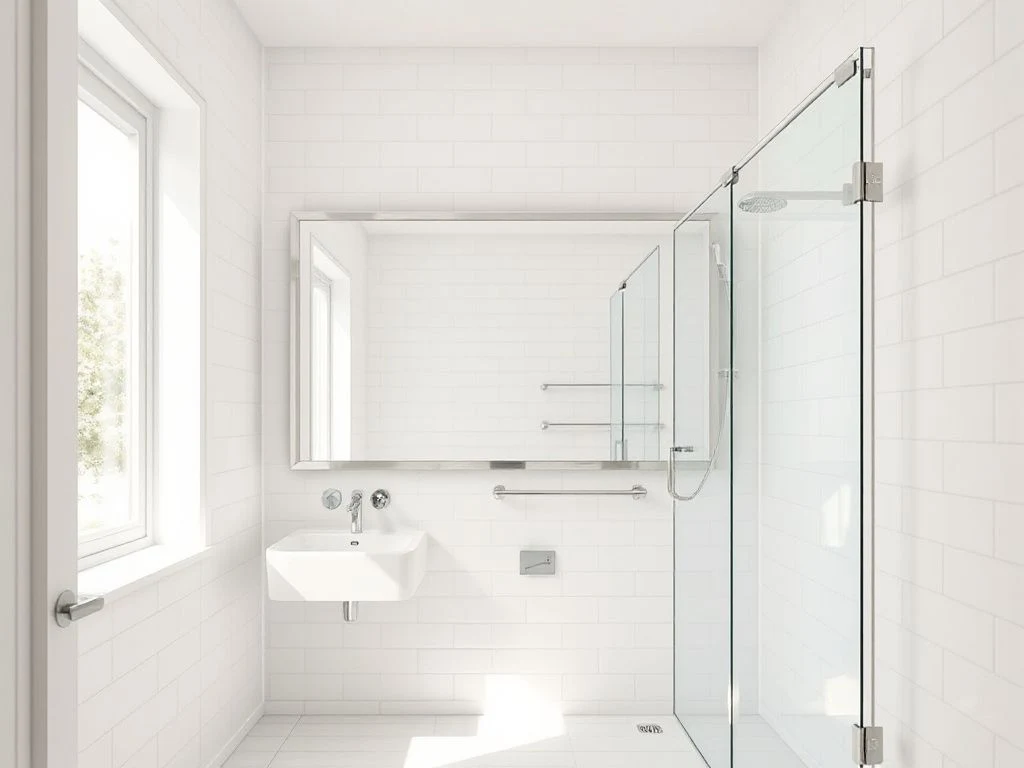
In a cramped 5-by-7-foot bathroom in an old house, the change that matters is not the paint chip. It arrives the moment you stop choosing colors and start watching where the eye lands first, because that is what decides whether a small room reads as small. I focus on the visual hierarchy of the room: what the eye sees first. Most guides list paint colors and mirrors, but the real trick is to eliminate visual clutter at the sink area and coordinate the floor and wall tile lines to make the room read as one continuous surface. The distinction is that you’re not just adding light, you’re directing the eye. That shift in thinking is what separates a bathroom that feels larger from one that just looks freshly painted.
Learning how to make a small bathroom look bigger is less about buying more stuff and more about deciding what deserves attention. Every change should be judged by its hardware before considering its finish. A floating vanity with flimsy brackets will sag and reveal its secret within a year, no matter how beautiful the drawer front. That principle guides every suggestion below: if you’re going to install something, the mounting system matters more than the surface.
If you’re also juggling laundry in the same tight footprint, our small bathroom with laundry designs that maximize space walks through layouts that don’t sacrifice either function.
Key Takeaways
- Decluttering the sink area and coordinating floor and wall tile lines creates visual continuity, not just brightness.
- Large-format tiles reduce grout lines, while a floating vanity and wall-mounted toilet free up visible floor space.
- A clear glass shower door with quality hinges beats a shower curtain for unobstructed sightlines, but hardware gauge matters more than glass thickness.
- Proper ventilation prevents the mold that quickly makes any small bathroom feel even smaller.
Step 1: Strip the Visual Clutter Before You Paint
The first move in any small bathroom is not paint. It’s removal. Every bottle on the counter, every bath mat with a busy pattern, every towel slung over a bar adds a visual stop that breaks the room into fragments. The eye registers clutter before it registers color.
Start at the sink. Clear everything except a single soap dispenser and one hand towel. Even the soap dispenser should be simple — no labels, no bright plastic. A cluttered vanity top is the fastest way to shrink a bathroom because it pulls the eye downward and inward. Wall-mounted storage helps, but only if it’s shallow and closed. Open shelves with folded towels can look curated, but in a bathroom under 40 square feet they usually end up as drop zones for half-empty bottles.
Self-contained statement: A clear sink deck with a single matte soap pump makes any bathroom read larger than a counter crowded with matching amenity bottles.
For renters who cannot rip out a bulky vanity, our guide on how to add storage to a rented bathroom covers adhesive shelves, over-the-toilet units, and tension rods that create order without damage.
Step 2: Control the Surfaces — Tile, Paint, and Grout
Once clutter is gone, you can direct the eye with surface treatment. The goal is continuity: fewer seams, fewer color breaks, fewer places for the eye to stop.
Use the Largest Tile You Can Afford
Small tiles — mosaic, penny tile, 3-inch squares — create dozens of grout lines per square foot. Each line acts as a visual boundary. Large-format tiles, 12 by 24 inches or larger, reduce those boundaries dramatically. In a 5-by-7-foot bathroom, a 24-by-48-inch porcelain tile on the floor and lower walls can cut grout lines by 70% compared to 6-inch squares.
Do large tiles make a small bathroom look bigger than small tiles? The answer depends on layout more than tile size. A large tile with a busy vein pattern will still look busy. Choose large tiles with a subtle, low-contrast pattern and match the grout color to the tile as closely as possible. Grout contrast is the enemy of visual expansion.
For a truly continuous look, run the same tile from the floor up the lower half of the walls with a matching grout. That floor-to-wall line blur makes the room read as a single surface. The trim between floor and wall tile — usually a metal edge or a quarter-round — must match the tile tone, not stand out. Schluter Systems makes edge profiles that disappear against porcelain tile if you choose the right color.
Pick Paint with a High Light Reflectance Value
Light Reflectance Value (LRV) measures how much light a paint color reflects, on a scale from 0 (absolute black) to 100 (pure white). For small bathrooms, aim for an LRV of 60 or higher. Most paint brands publish LRV numbers; Benjamin Moore lists them for every color. Colors like Chantilly Lace (LRV 92) or Simply White (LRV 91) bounce light around the room, but note that high LRV alone won’t fix a dark, windowless bathroom. You still need actual light sources.
What colors reflect the most light in a bathroom? In order: white, pale warm neutrals, and very light cool grays. Avoid anything with yellow undertones if your lighting is warm; it can make the room feel dingy. If you have a window, use the same pale color on the ceiling as the walls — that removes another stopping line.
Step 3: Float the Fixtures and Open the Floor
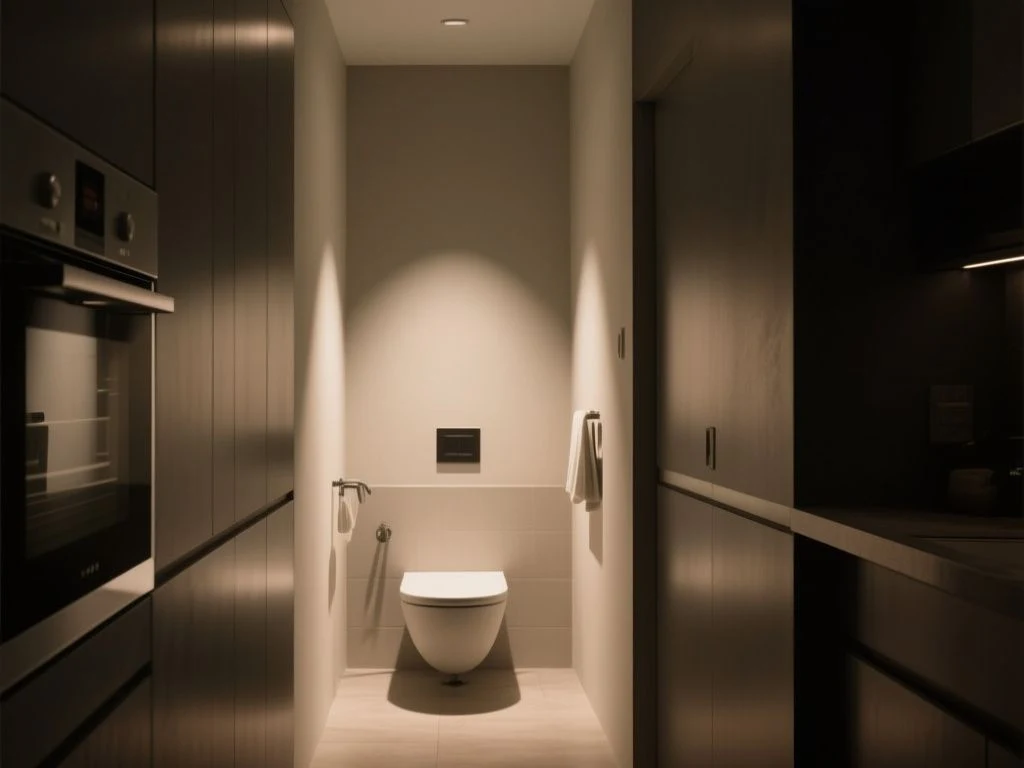
Visible floor space is the strongest signal of room size. Anything that touches the floor stops the eye and makes the room feel shorter. Two changes account for most of the gain in a small bathroom: a floating vanity and a wall-mounted toilet.
How a Floating Vanity Adds Perceived Square Footage
A floor-standing vanity with a toe kick still reads as a box. A floating vanity, mounted 6 to 8 inches off the finished floor, reveals the floor beneath it. That visible strip of floor makes the room feel longer because the eye travels underneath the cabinet. The effect is strongest with a light-colored floor tile and a vanity with a dark or medium finish, but even all-white works.
From an assembly standpoint, the vanity is only as good as its mounting hardware. Look for brackets made of 14-gauge or thicker steel, with at least two mounting points into wall studs. The cheap L-brackets sold with flat-pack vanities often bend under a full drawer of toiletries. If you’re buying a floating vanity from IKEA, the Godmorgon and Hemnes lines include a steel rail system, but you still must anchor into studs, not drywall anchors. A properly installed floating vanity can hold 200 pounds, but only if the wall can take it.
Wall-Mounted Toilets: Space and Plumbing Reality
A wall-mounted toilet frees up about 4 to 6 inches of floor depth compared to a standard floor-standing model, because the tank sits inside the wall cavity. That may sound small, but in a bathroom where your knees nearly touch the door, 6 inches is the difference between comfortable and cramped.
Can I install a wall-mounted toilet in an old bathroom? Sometimes. The in-wall carrier frame needs a wall depth of at least 6 inches for the tank, and mounting to a slab foundation requires either opening the slab or building a false wall. In most older homes with wood framing, a carpenter can fur out the wall and install a carrier like those from Toto or Geberit. But check local plumbing codes first: the waste pipe must be rerouted through the wall, and that work is not DIY for most people. Expect to pay a licensed plumber for the rough-in.
Glass Shower Doors Over Curtains
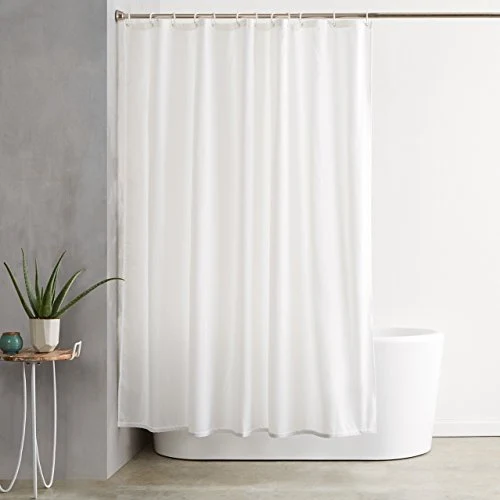
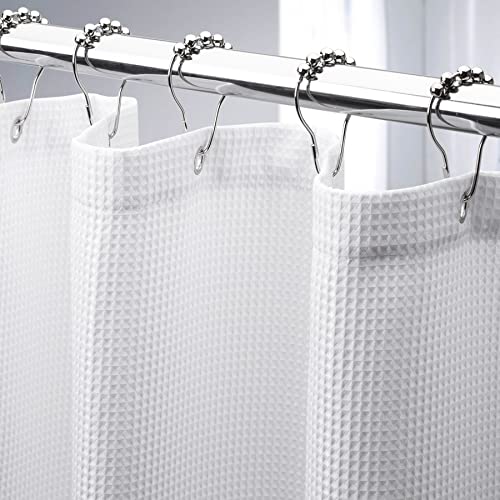
Is a glass shower door better than a shower curtain for making the room look larger? Yes, with conditions. A clear frameless glass door lets the eye travel through the shower to the wall beyond. A shower curtain, even a white one, creates a vertical stop. But the hinge hardware matters more than the glass thickness. Choose continuous stainless-steel hinges, not small pivots. A door that sags on cheap hinges will scar the tile and look worse than a curtain. Kohler and Moen sell frameless door kits with heavy-duty hinges, but installation is unforgiving — if the door is off by 1/8 inch, it will bind or leak.
For renters or those not renovating, a clear vinyl shower curtain with a straight rod mounted high can mimic some of the effect, but you must keep it spotless. A mildewed clear curtain is worse than a solid one.
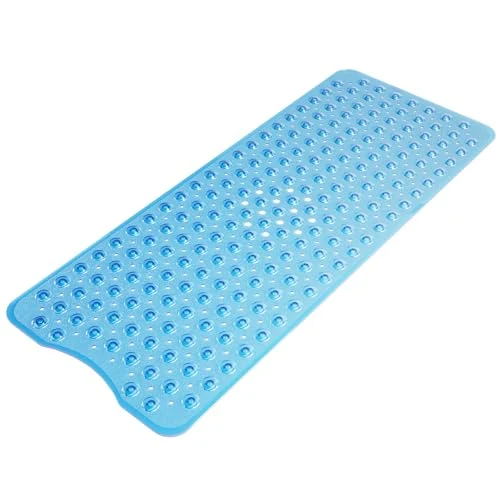
If your small bathroom is also your laundry spot, check our best bath mats for small bathrooms — the right mat can either anchor the room or add clutter, depending on its pattern and pile height.
Step 4: Direct Light and Reflection Without Tackiness
Lighting in a small bathroom fails in two ways: not enough of it, or too much glare from the wrong source. The most common mistake is installing a single ceiling fixture and expecting it to fill the room. It doesn’t.
What’s the most common mistake when using lighting to make a bathroom feel bigger? Relying on one overhead light. A single fixture creates shadows under the chin and in corners, making the room feel smaller. Instead, layer light: a ceiling fixture for general illumination, a wall sconce or two at face height for grooming, and a small light inside the shower if the glass is opaque.
LED strips under a floating vanity add a soft glow that lifts the floor visually, but choose warm white (2700K to 3000K) for a spa feel. Cool white (4000K) makes a bathroom feel sterile and clinical.
Mirror Placement That Doubles Space
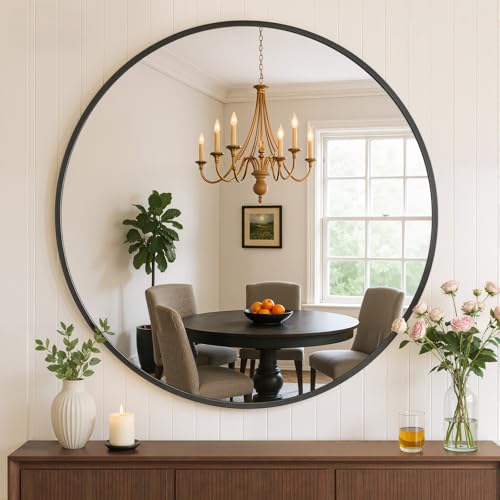
Mirrors work only when they reflect light. Place a mirror opposite a window or a light source, not opposite a dark wall. In a windowless bathroom, a mirror across from a bright sconce will bounce light back and deepen the room. Avoid a mirror directly opposite the door — the reflection of a dark hallway adds nothing.
How do I avoid my recessed medicine cabinet looking old-fashioned? Skip the traditional framed box with a mirrored door that swings on plastic hinges. Choose a surface-mounted cabinet with a frameless mirror front and soft-close hinges. If you must recess, get one with a flush face and no visible trim. The Kohler Verdera line and IKEA Lillangen have clean profiles, but check the hinge mechanism — steel ball-bearing hinges, not plastic clips.
Step 5: Ventilation Is the Invisible Backbone
A small sealed bathroom without a window will trap humidity, and within months you’ll see mold on the ceiling and grout. Mold darkens the room, creates odor, and makes every surface look dirty. Ventilation is the single most overlooked factor in making a small bathroom feel larger, because a moldy bathroom feels cramped no matter how white the paint.
Install an exhaust fan rated for at least 50 CFM (cubic feet per minute) for a bathroom up to 50 square feet. If your bathroom has a shower, go to 80 CFM. Run the fan during showers and for 20 minutes after. The EPA recommends maintaining indoor humidity between 30% and 50% to prevent mold growth.
How do I clean a frameless glass shower without water spots? After every shower, use a squeegee on the glass — that 30 seconds prevents mineral deposits from hard water. For existing spots, a paste of baking soda and white vinegar, left for 15 minutes, then rinsed and squeegeed, will remove most buildup. Never use abrasive pads on glass, even if the coating says it’s scratch-resistant.
Step 6: Choose a Door That Disappears
What’s the difference between a pocket door and a regular door for space? A regular swing door eats about 9 square feet of floor space when open. In a small bathroom, that means the door swing can block the vanity or the toilet. A pocket door slides into the wall and frees that swing area entirely. The catch: pocket doors require a wall cavity with no plumbing or electrical lines, and the hardware must be high quality or the door will jump its track. Look for ball-bearing rollers and an aluminum track — Moen and Johnson Hardware make reliable kits.
If a pocket door isn’t possible, a barn door mounted on the outside of the bathroom works, but it leaves a gap at the edge that lets sound and humidity escape. A standard swing door with a towel bar and a low-profile hinge still works if you reverse the swing so it opens outward instead of inward.
Frequently Asked Questions
How can I make a small bathroom look bigger without any renovation?
Clear the sink deck, replace a patterned bath mat with a solid low-pile one, swap a shower curtain for a clear vinyl panel, and add a large mirror opposite the window or light source. Paint the ceiling the same pale color as the walls. These changes cost under $100 and instantly change how the room reads.
Do large tiles make a small bathroom look bigger than small tiles?
Large-format tiles reduce grout lines, which cuts visual fragmentation, but only if the tile pattern is subtle and the grout color closely matches the tile. A large tile with high contrast veining can look busier than a small solid tile. The continuity of surface — floor to wall, same tile and same grout — matters more than tile size alone.
What is the most effective way to add storage without making the bathroom feel cramped?
Use recessed niches in the shower for toiletries, a shallow wall-mounted cabinet above the toilet, and a floating vanity with drawers instead of a bulky cabinet. Keep all storage behind closed doors with minimal hardware. The goal is closed storage that reads as wall surface, not open shelves that collect visual clutter.