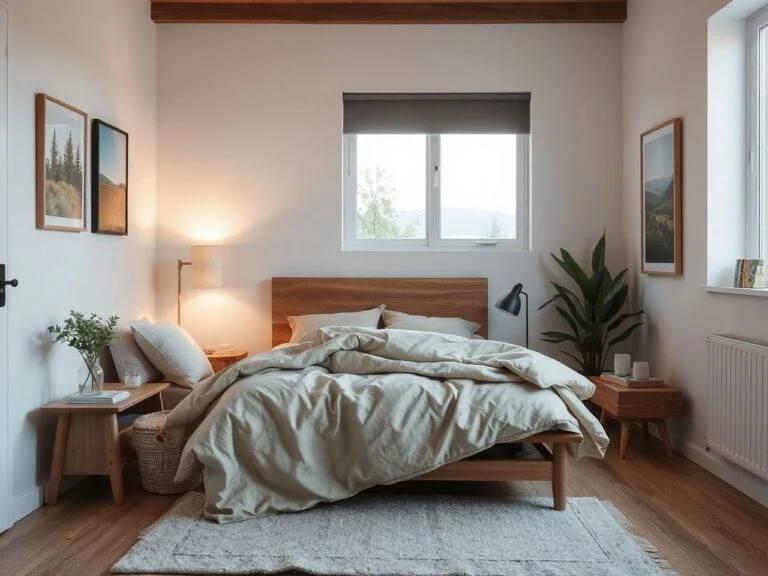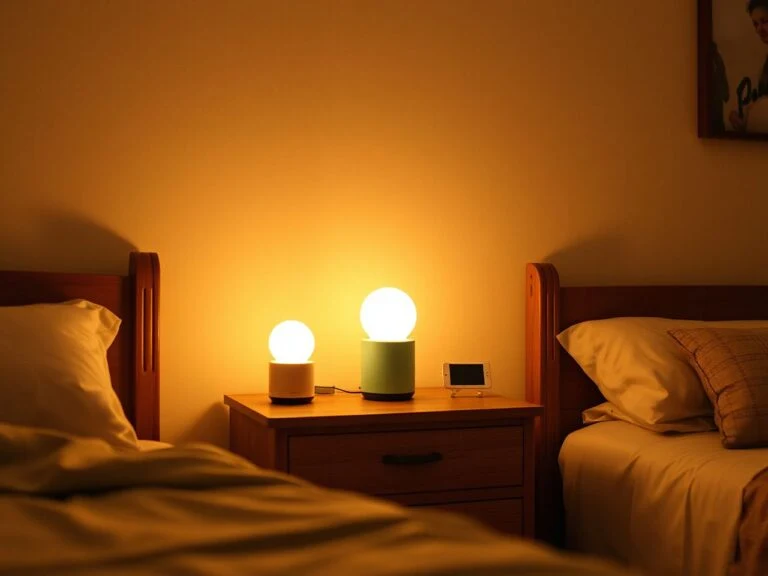
Two beds in one room for adults is a different job from a kids’ room or a guest room that sleeps someone for a weekend. Two grown-ups sharing a room every night, whether they are roommates, adult siblings, a parent and a grown child, or a couple who sleep better apart, need full-length beds, their own light, their own storage and some way to go to bed at different times without waking each other. A room that gives each person those four things feels calm. A room that skips them feels like a dormitory however good the bedding looks.
This guide covers the bed sizes and room sizes that work for adults, then eleven ideas that make a shared room feel grown-up, each with the measurements behind it. If you are still choosing a basic layout, start with our main guide to two beds in one room, then come back here for the adult details.
What Two Adults Need From a Shared Room
Children will put up with a short bed, a shared lamp and one drawer each. Adults will not, and the shortfalls show up quickly as lost sleep and clutter. Plan for these five things before choosing colors or furniture:
- A bed long enough to sleep in. A standard twin mattress is 38 by 75 inches. Anyone much over about 5 feet 9 inches runs out of length on it, which is why adult rooms work better with a twin XL (38 by 80 inches) or a full (54 by 75 inches) for a shorter sleeper who wants width.
- A walkway on at least one long side of each bed. 24 inches is the minimum to get in and out; 30 inches lets one person pass while the other is sitting on the edge of the bed.
- Light that one person can use without waking the other. That means a separate, aimed reading light and a switch within reach of each pillow.
- A power outlet on each side. Adults charge phones, watches and sometimes CPAP machines overnight. A shared outlet between the beds means a cable across the walkway.
- Storage that is clearly split in two. Two equal halves of the drawers and the hanging space prevent most of the friction in a shared room.
Bed and Room Sizes for Two Adults
Frames add about 2 to 4 inches to each side of the mattress, so the floor numbers below use typical frame sizes. Room sizes are wall to wall.
| Two beds | Mattress each | Frame width each | Smallest comfortable room |
|---|---|---|---|
| Two twins | 38 x 75 in | about 41 in | 10 x 10 ft, beds against the side walls, 38 in aisle |
| Two twin XLs | 38 x 80 in | about 41 in | 10 x 11 ft, the extra 5 inches of length needs the extra foot |
| A full and a twin XL | 54 x 75 and 38 x 80 in | about 57 and 41 in | 11 x 11 ft, 34 in aisle |
| Two fulls | 54 x 75 in | about 57 in | 12 x 12 ft, 30 in aisle |
| Two queens | 60 x 80 in | about 63 in | 13 x 13 ft at the very least; 14 x 14 ft is comfortable |
With two beds in one room for adults, length matters as much as width. A twin XL frame is about 84 inches long, so a 10 foot (120 inch) wall leaves 36 inches at the foot, enough for a walkway or a narrow bench but not both. For a room under these sizes, our guide to two beds in a small room gives a plan for each size from 8 by 8 feet up.
11 Ideas for Two Beds in One Room for Adults
1. Choose Twin XL Beds Instead of Standard Twins
The single most useful change in an adult twin room is five inches of mattress. A twin XL is the same 38 inch width as a twin, so it takes no more wall, but its 80 inch length is the same as a queen or king. Taller sleepers stop hanging their feet off the end, and duvets designed for twin XL beds hang evenly on both sides instead of riding up.
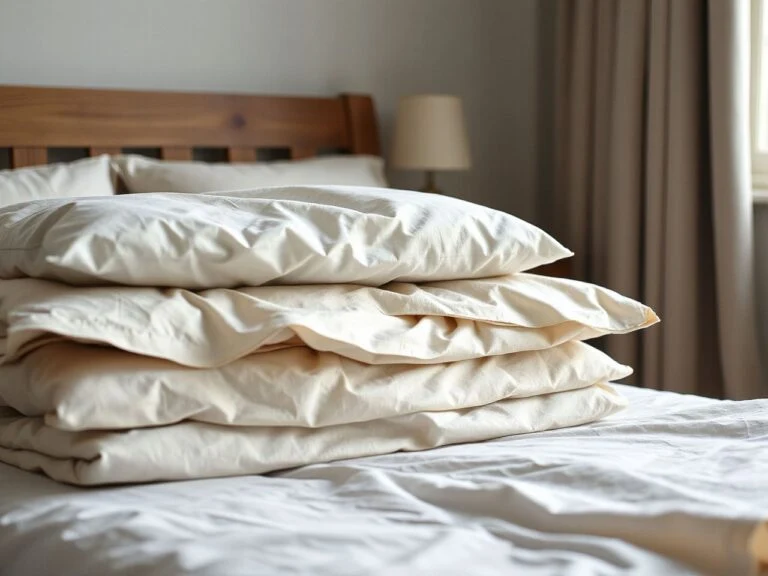
The trade-off is bedding. Standard twin fitted sheets will not stretch over an 80 inch mattress, so buy twin XL sets, which are easy to find because college dorms use the size. The bed sheet dimensions chart lists the flat and fitted sizes for each mattress.
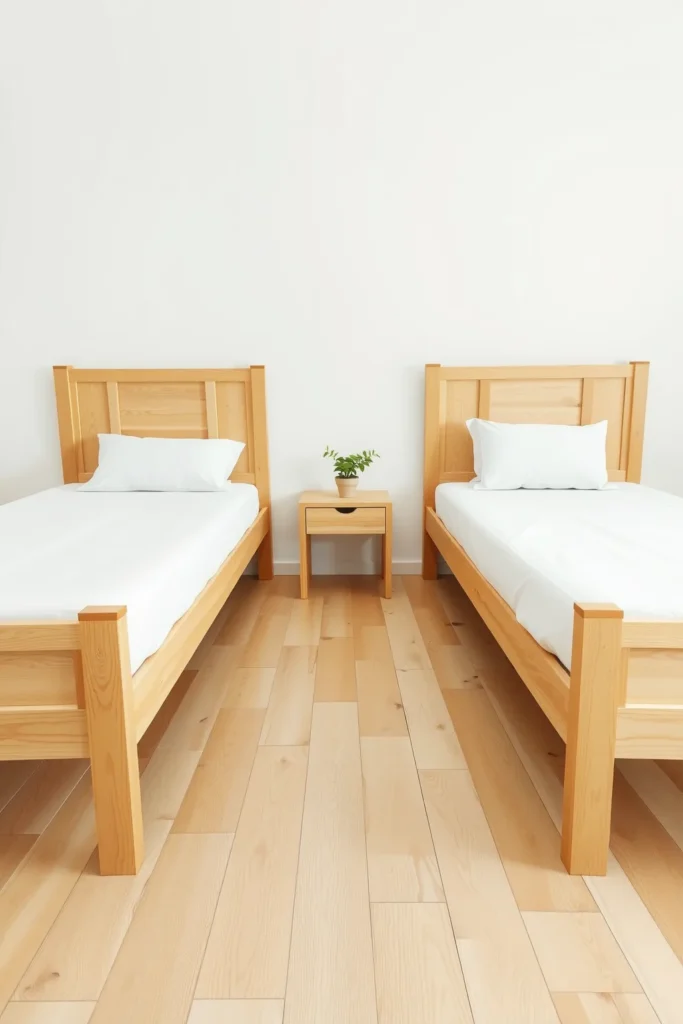
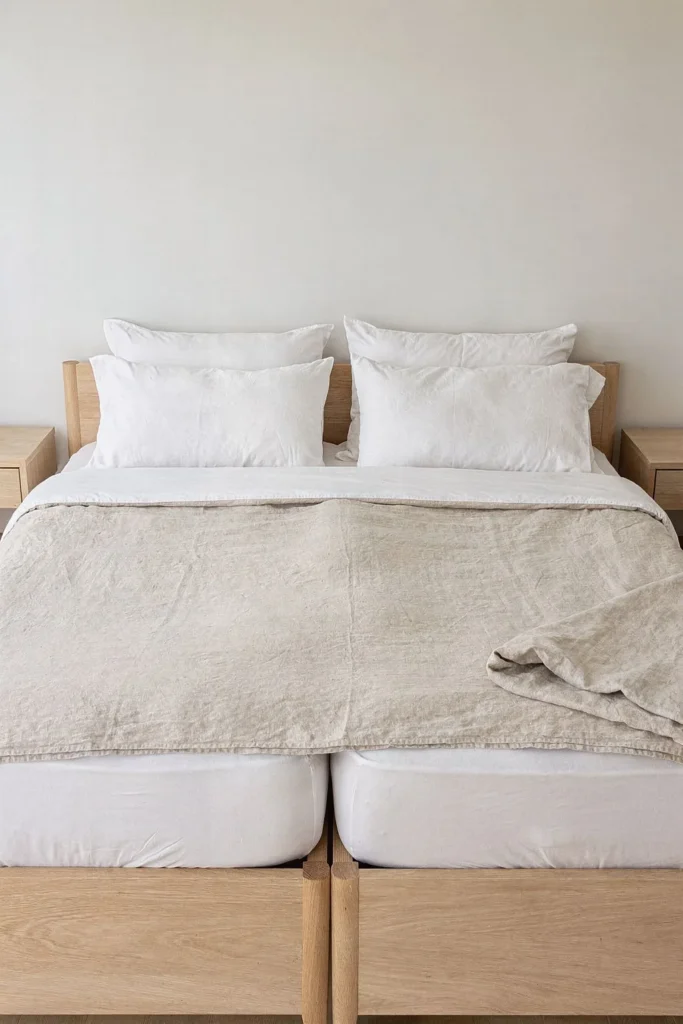
2. Push Two Twin XLs Together for a Couple
Two twin XL mattresses side by side measure 76 by 80 inches, exactly the size of a standard king. That makes the room flexible: the beds stand apart for two roommates or two guests, and slide together into a king for a couple. This setup is often called a split king, and couples who sleep differently use it on purpose, because each mattress can have its own firmness and one partner turning over barely moves the other.
Three details make it work. Join the two frames with a bed connector bracket or strap so they cannot drift apart. Lay a foam bridge, a narrow wedge that fills the dip, along the seam if the joint is noticeable. Then dress the pair in king-size bedding over the twin XL fitted sheets, so it reads as one bed. Our guide to a guest room with two twin beds covers the apart-or-together decision for occasional guests.
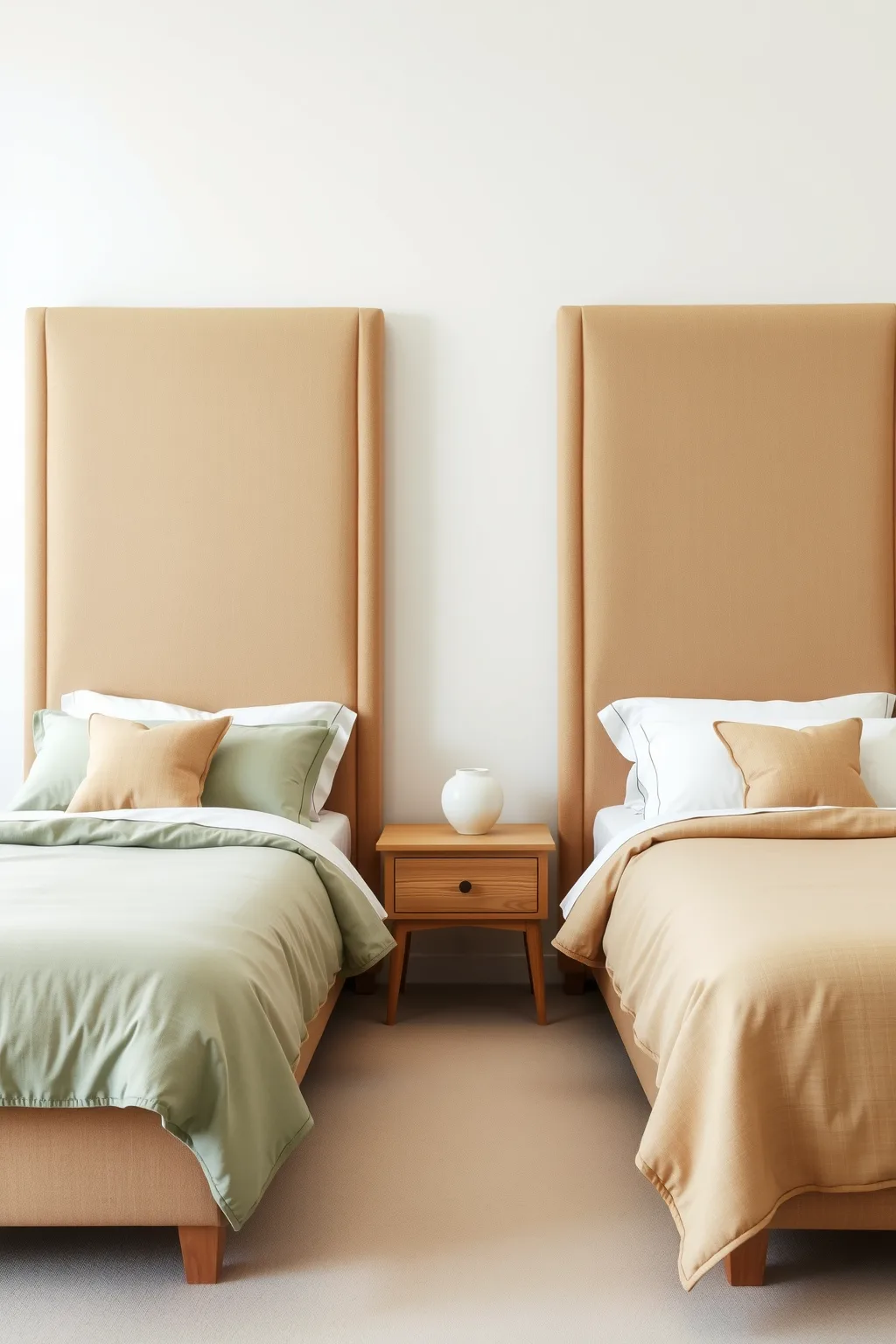
3. Give Each Bed a Real Headboard
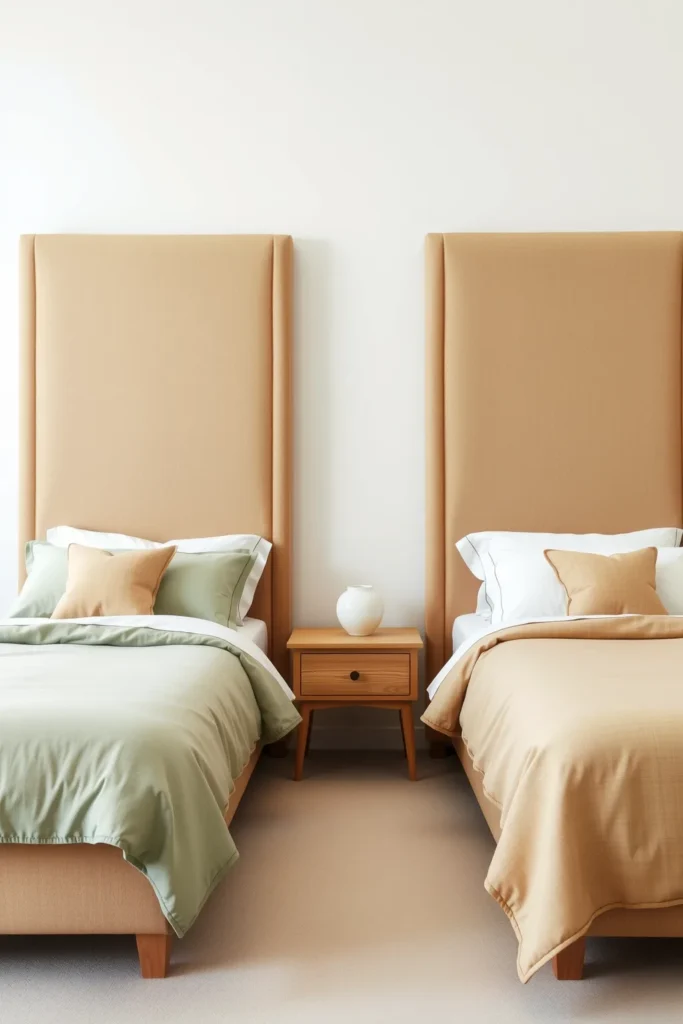
A bare frame against a wall is what makes a twin room look like a dorm. A headboard per bed fixes that and does a practical job too: adults sit up in bed to read or use a laptop, and a padded headboard gives them something to lean on that is not cold plaster.
Choose two identical upholstered headboards in linen or a woven fabric, tall enough to rise about 20 to 24 inches above the mattress top. Set them at the same height on the same wall so the pair reads as one deliberate design. If the beds share one wall, a single wall-mounted panel that spans both beds and the nightstand between them gives the same effect with one fixing job.
4. Mount a Separate Reading Light Over Each Pillow
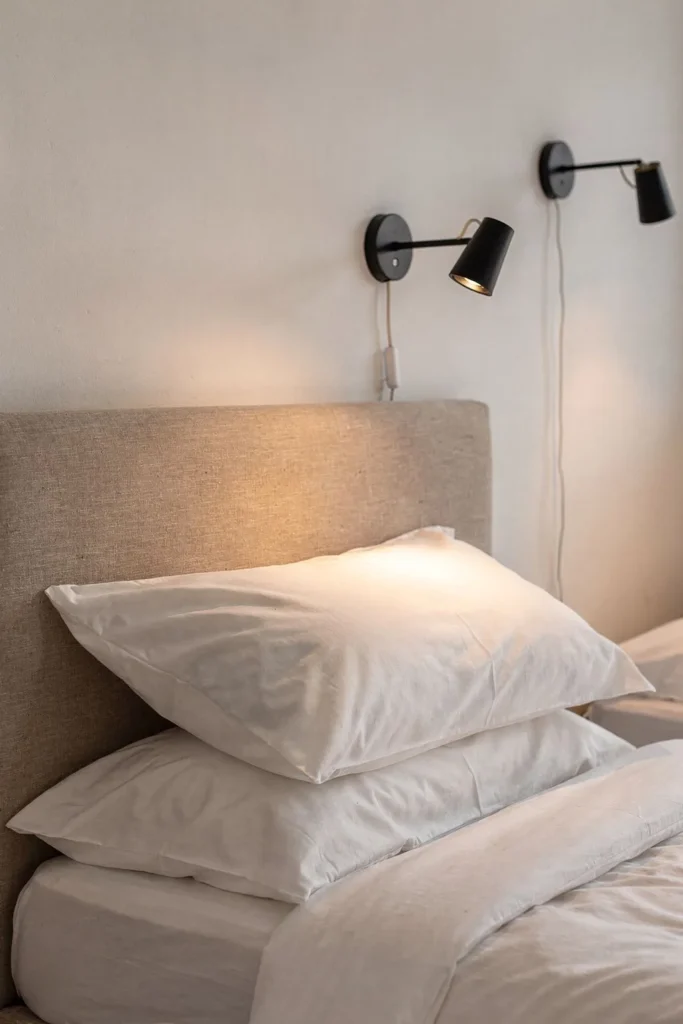
Shared lighting is the most common source of friction between two adults in one room. One person wants to read at midnight; the other wants dark. A table lamp lights the whole room. A wall-mounted reading light with a narrow, adjustable head lights a page and very little else.
Mount each light about 30 inches above the top of the mattress and slightly to the outer side of the pillow, so the beam falls over the shoulder rather than into the neighbor’s eyes. Choose a model with its own switch on the light or the cord, within reach of a person lying down. A plug-in light with a cord cover avoids rewiring, which matters in a rented room. Warm white at 2700 to 3000K is easier on a sleeping roommate than cool white.
5. Give Each Person a Nightstand With a Drawer
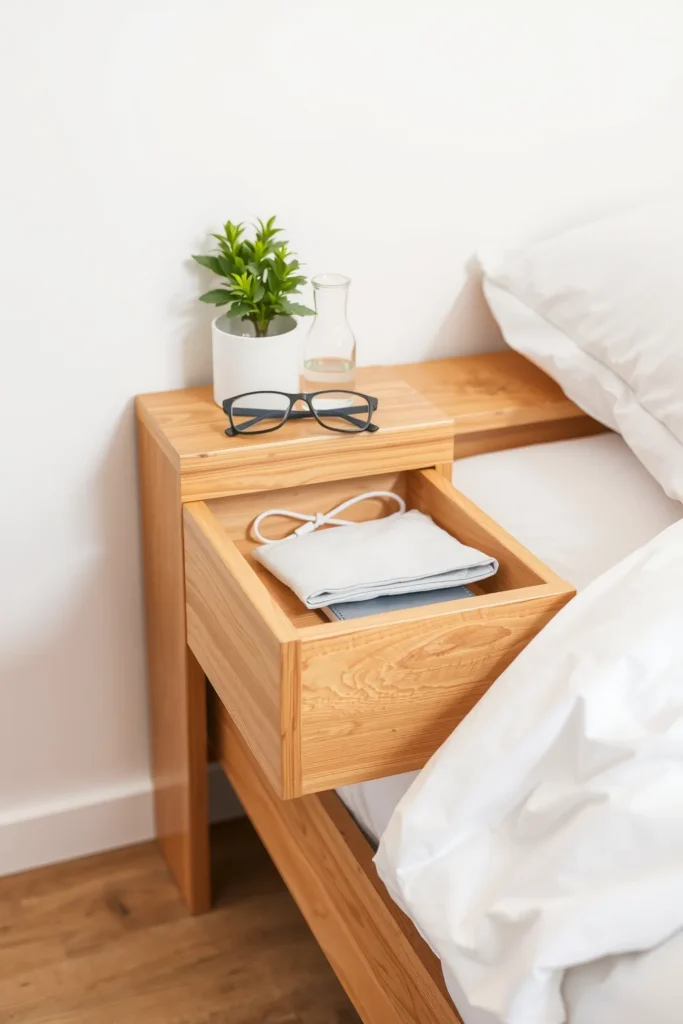
One nightstand shared between two beds is a good space saver for children. For adults, a nightstand each is worth the wall space, because the drawer is the one private storage spot that sits within arm’s reach: glasses, medication, earplugs, a phone charger, a book.
Size them to the beds. A nightstand top should sit within about 2 inches of the mattress top, which for most adult beds means 24 to 28 inches tall, and 16 to 20 inches wide is enough. Pick one with a drawer rather than open shelves only, so the clutter stays out of sight, and one with a built-in charging port if the outlet is awkward to reach. In a narrow room, a wall-mounted shelf of the same height does the job and leaves the floor clear.
6. Let Each Bed Have Its Own Duvet Weight
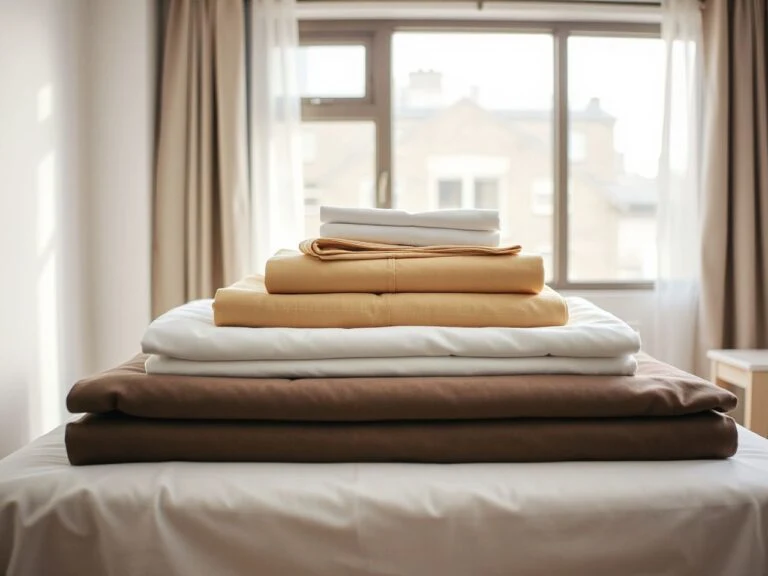
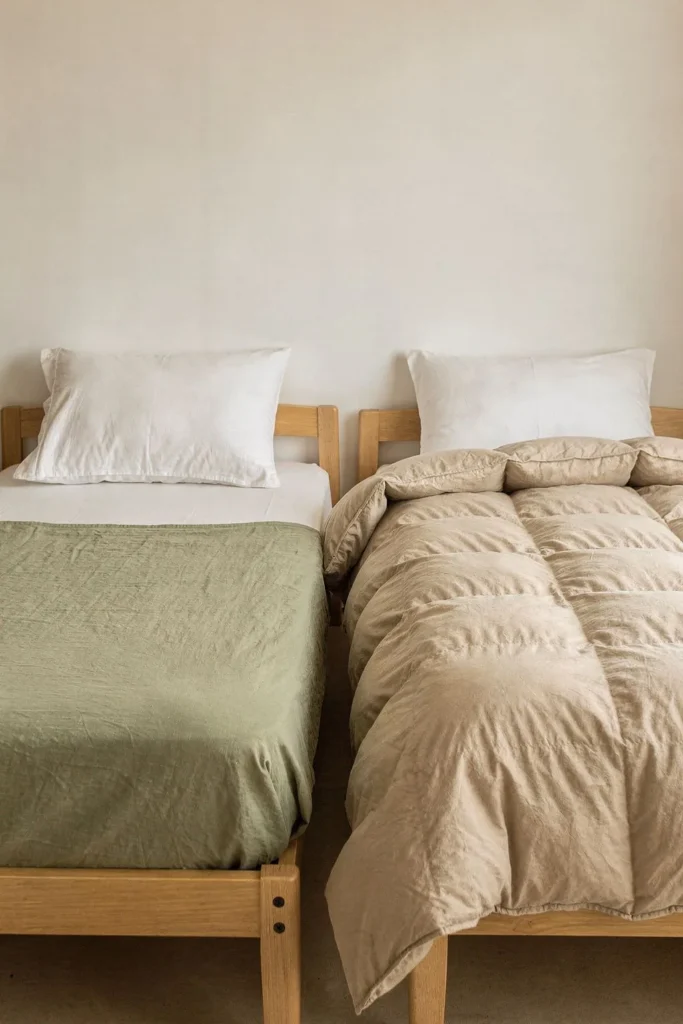
Two adults rarely sleep at the same temperature. Matching bedding is a decorating habit, not a rule, and an adult twin room is the place to drop it. Give each bed the duvet weight its sleeper wants, and keep the room looking planned by choosing covers in two colors from one palette: sage and oatmeal, navy and stone, rust and cream.
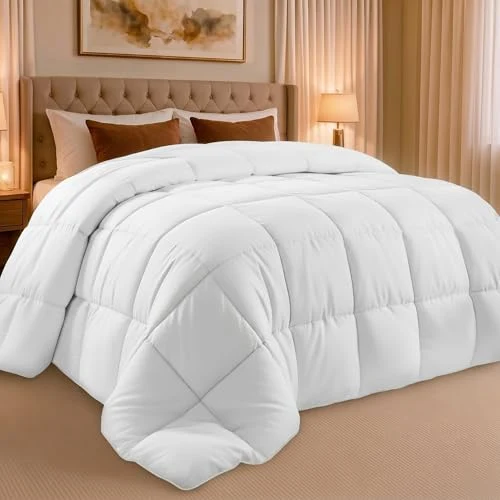
Duvet warmth is measured in tog. A 4.5 tog duvet suits a warm sleeper in summer, 10.5 tog an average sleeper in spring and autumn, and 13.5 tog someone who always feels cold. Our guide to tog ratings for duvets explains the scale. Matching pillowcases in a neutral color across both beds keeps the pair tied together.
7. Split the Storage Exactly in Half
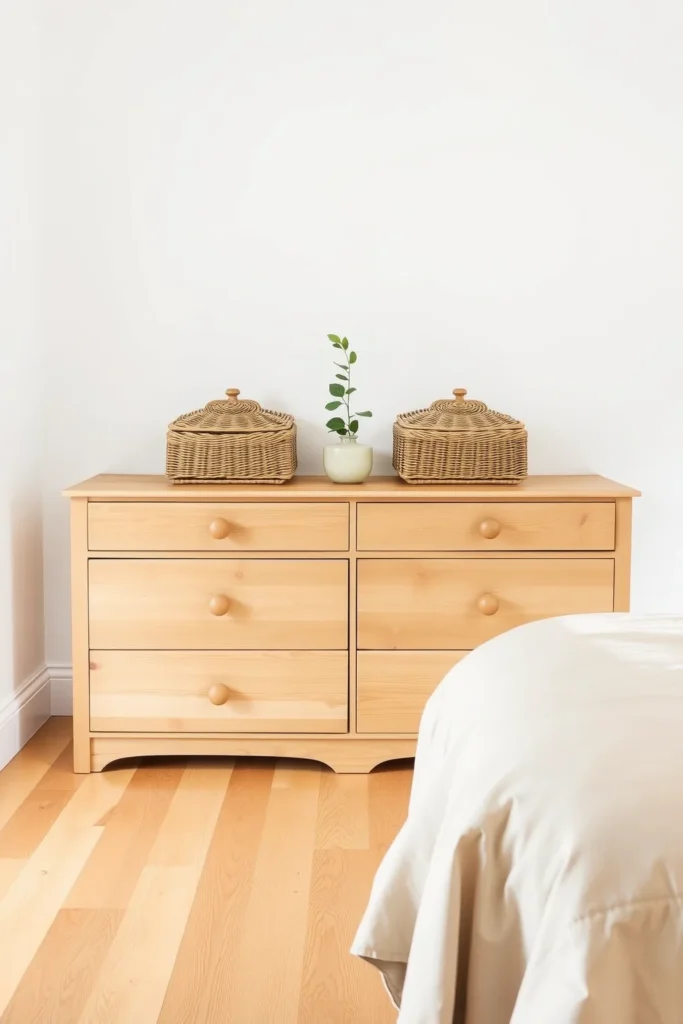
Adults own more clothes than children and care more about whose they are. The cleanest arrangement is two identical pieces, one per person: two narrow dressers, or a wardrobe whose hanging rail is split down the middle with a shelf divider. Where only one long dresser fits, give each person a column of drawers rather than alternating rows, so nobody reaches across the other’s things.
Under-bed storage doubles the capacity without taking floor. Most frames with 12 to 14 inches of clearance take rolling drawers or lidded bins, and a bed frame with drawers built in keeps dust out. If the choice is between a dresser and a wardrobe for a small room, our comparison of a dresser vs wardrobe sets out what each holds per foot of wall.
8. Put a Bench or Storage Ottoman at the Foot of Each Bed
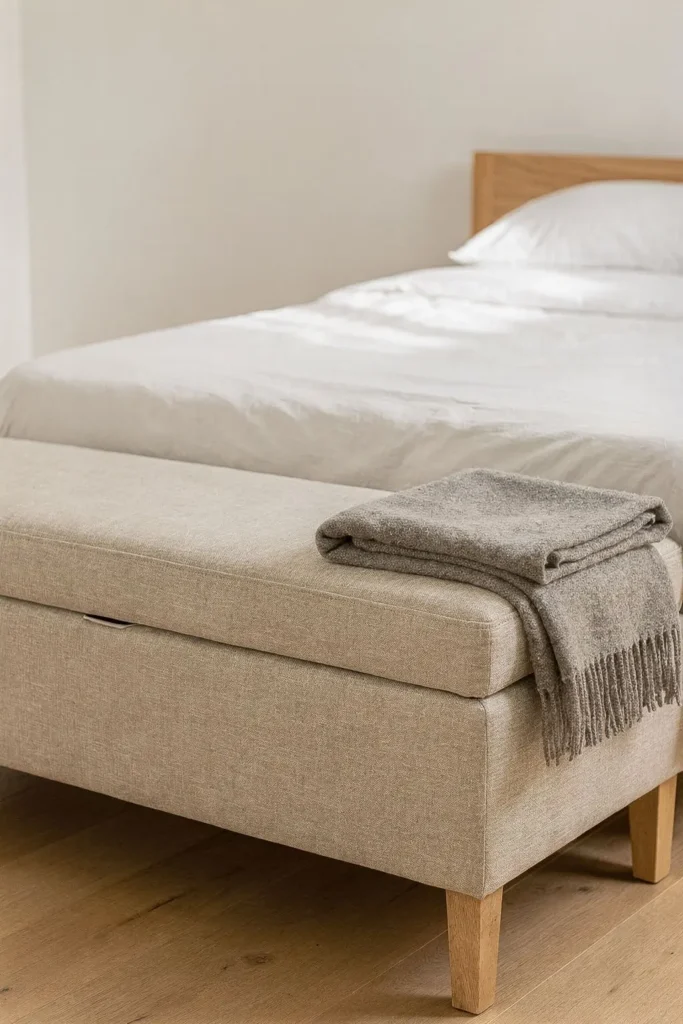
Adults sit down to put on shoes and need somewhere to put tomorrow’s clothes. Without a seat, both end up on the bed. A bench or storage ottoman at the foot of each bed solves both and adds a second storage spot for spare blankets.
Check the length of the room first. A bench is usually 14 to 18 inches deep, and you still want about 24 inches of walkway past it. With twin XL frames about 84 inches long, that adds up to 122 to 126 inches from the headboard wall, so a bench at each foot needs a room about 10 feet 6 inches long. In a shorter room, one bench under the window or a slim stool beside each nightstand does the same job.
9. Plan for Different Bedtimes
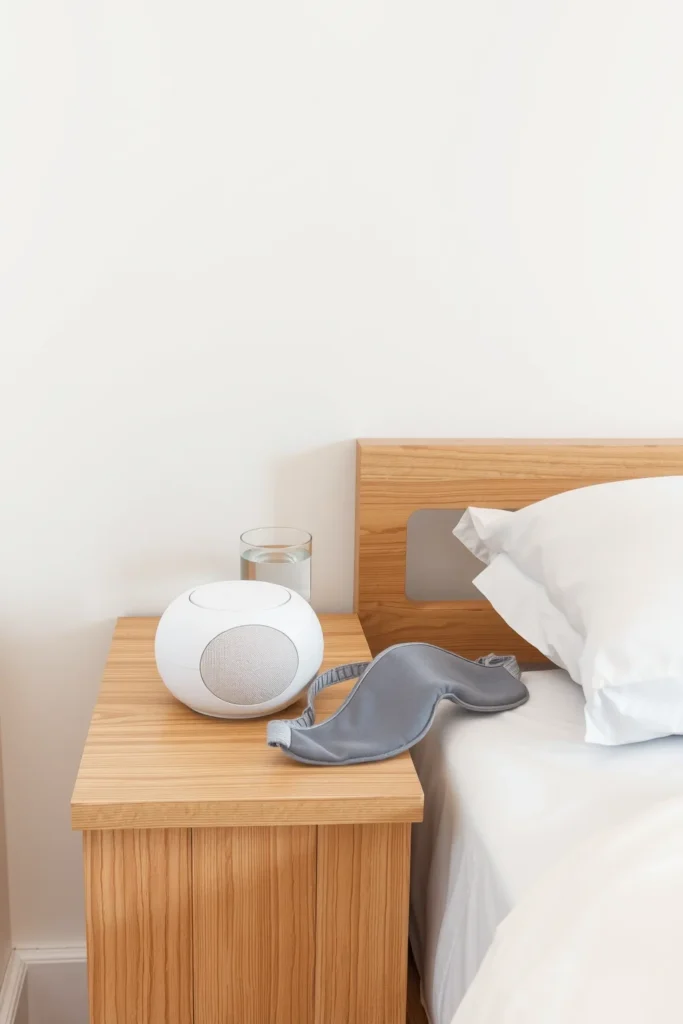
Two adults sharing a room almost never go to sleep and wake up at the same time. The room can absorb most of the difference if it is set up for it. Give each nightstand a small fan or white-noise machine for the person who sleeps first, and a sleep mask for the one who sleeps later. Keep the overhead light on a dimmer so an early riser can dress by a low light. Put the alarm on a phone or watch that vibrates rather than a clock that rings.
If the two schedules are very different, add a soft division between the beds. A ceiling-track curtain or a low open shelf unit between them blocks a reading light without closing the room in. Our guide on how to divide a room with two beds covers curtains, screens and furniture dividers in detail.
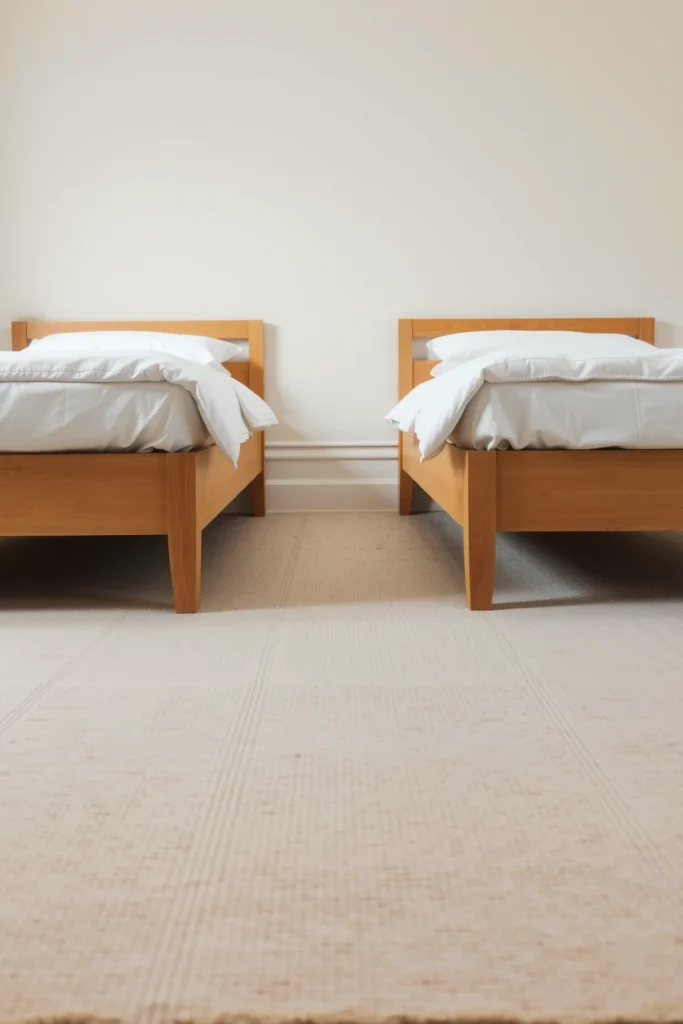
10. Anchor Both Beds on One Large Rug
Two separate small rugs make a twin room look busy and split it in two. One large rug under both beds ties them into one design and gives bare feet something warm in the morning. The rule of thumb for adult rooms is that the rug should run under the lower two-thirds of both beds and show at least 12 to 18 inches on the outer sides.
With two 41 inch frames and a 30 inch aisle, the beds span about 112 inches. A 9 by 12 foot rug turned so the 12 feet run across both beds leaves 16 inches showing on each side. In a narrower room, skip the large rug and lay a runner, 2.5 by 8 feet, down the aisle between the beds instead. Choose wool, jute or a low flatweave in a quiet pattern; deep shag is hard to keep clean and catches the bed legs.
11. Add a Chair So the Bed Is Not the Only Seat
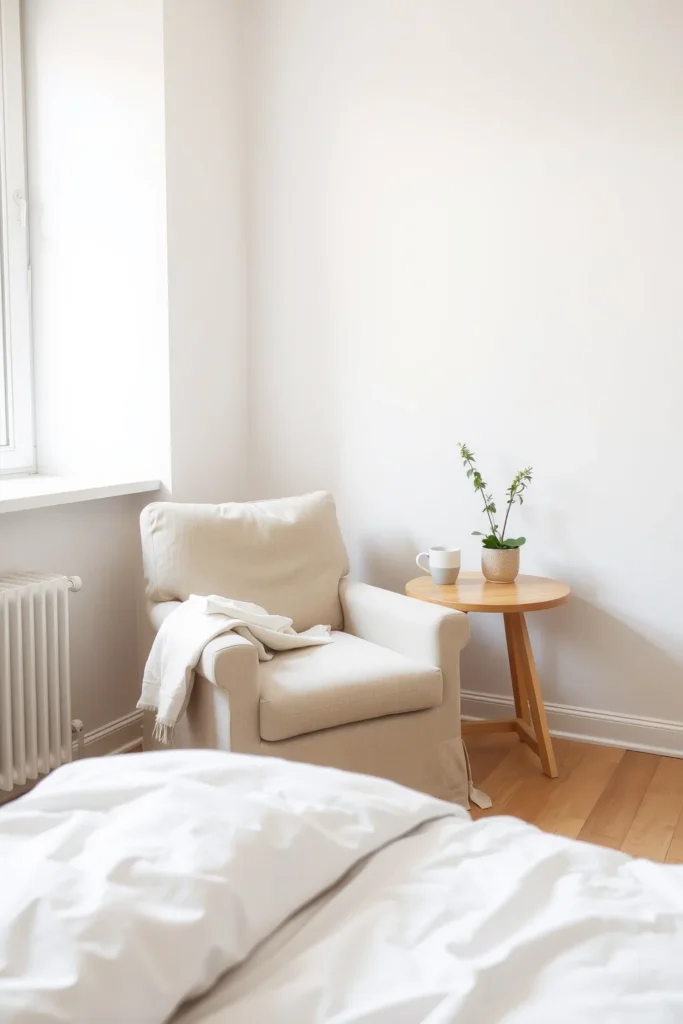
The detail that most separates an adult shared room from a kids’ room is a place to sit that is not a bed. A small armchair with a side table, or a narrow desk with a chair, gives one person somewhere to read, work or take a call while the other is resting.
An armchair needs about 30 by 32 inches of floor plus 18 inches in front for legs, so look for a corner that the walkways do not cross. A chair beside the window, opposite the foot of the beds, is the usual spot. If floor space is too tight for a chair, a wall-mounted fold-down desk 20 inches deep with a stool tucked under it gives the same second zone and closes flat when it is not in use.
How to Make a Shared Room Feel Grown-Up
The ideas above are mostly about comfort. The look of an adult twin room comes down to a few choices that keep it from reading as a child’s room or a hostel:
- Materials over motifs. Wood, linen, wool and cotton in plain weaves look adult. Character prints, bright primary colors and novelty shapes do not.
- Symmetry around the center line. Matching headboards, matching nightstands and lights at the same height make two beds look like one plan. The bedding can then differ without looking random.
- Fewer, larger pieces. One large rug, one long dresser, one wide headboard panel. Lots of small pieces make the room feel crowded faster than a few big ones.
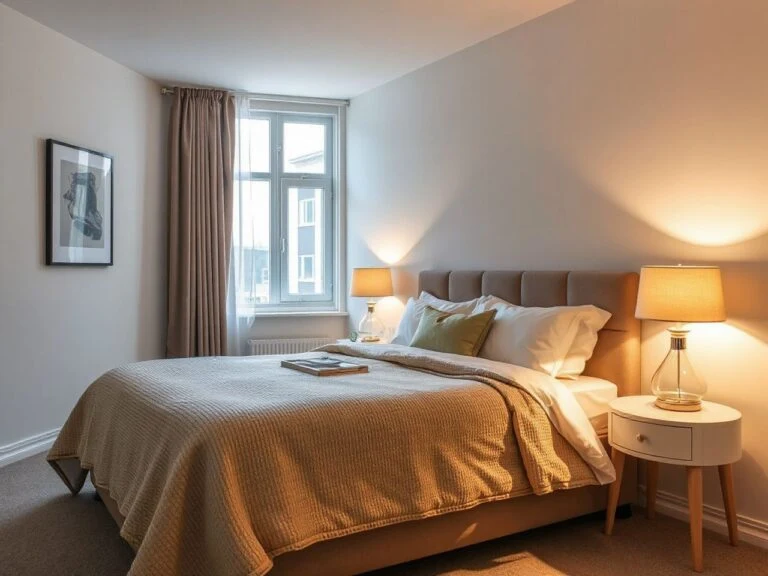
- A quiet wall color. Warm whites, greige, soft sage or a muted blue suit a shared room because they flatter both sets of bedding. Our guide to two single beds in one room shows how different palettes look with two beds.
Common Mistakes With Two Beds in One Room for Adults
- Buying standard twins for tall sleepers. A 75 inch mattress is short for anyone near 6 feet. A twin XL costs a little more and takes no more width.
- One lamp, one outlet and one nightstand for two people. These three are the source of most nightly friction. Double them.
- Pushing the beds together without a connector. Two frames on a hard floor drift apart within a week and leave a gap down the middle.
- Too little walkway. Squeezing in a dresser that leaves 18 inches between it and the bed means nobody can open a drawer while the other person is standing there. Keep at least 30 inches in front of drawers.
- Different bed heights. A low platform next to a tall frame looks unplanned and makes a shared nightstand impossible to use from both sides. Keep the mattress tops within an inch or two of each other.
Frequently Asked Questions
What size beds are best for two adults sharing a room?
Twin XL beds are the best fit for most shared adult rooms. They are the same 38 inch width as a twin, so they fit the same wall, but they are 80 inches long instead of 75, which suits sleepers over about 5 feet 9 inches. Two twin XLs pushed together also make a king.
How big does a room need to be for two adult beds?
Two twin or twin XL beds fit comfortably in a room of about 10 by 11 feet with the beds against the side walls and a 30 to 38 inch aisle between them. Two full beds need about 12 by 12 feet, and two queens need at least 13 by 13 feet.
Can two twin beds be pushed together to make a king?
Two twin XL mattresses side by side measure 76 by 80 inches, the same as a standard king. Two standard twins make 76 by 75 inches, which is 5 inches short. Join the frames with a connector so they do not drift, and use a foam bridge over the seam if it is noticeable.
How do you give two adults privacy in one bedroom?
Give each bed its own wall-mounted reading light, nightstand and outlet, so one person can read or charge a phone without lighting the other side. For more separation, add a ceiling-track curtain or a low open shelf unit between the beds, and keep a sleep mask and a white-noise machine within reach.
How do you make a twin bedroom look grown-up?
Use matching headboards and nightstands, set the lights at the same height and lay one large rug under both beds. Choose wood, linen and wool in a quiet palette, and avoid bright primaries and novelty prints. The bedding can differ between the beds as long as both colors come from the same palette.