A bedroom can look polished but still feel hard, echoing, and uncomfortable if you mistake visual simplicity for removing all softening layers. Modern bedroom interior design ideas are about balancing visual restraint with sensory comfort, not just creating bare surfaces. Keep in mind, it’s about reducing unnecessary visual elements without stripping away texture, lighting layers, storage, and acoustic softness that make a bedroom restful.
The cleanest room is also the one judged most strictly at the wall. Artwork, sconces, shelves, televisions, and built-in storage should be planned early. A poor fixing can leave more than just a visible hole behind. A modern bedroom with fewer distractions still needs every surface to earn its place.
Key Takeaways
- Plan furniture scale, circulation, window access, and door swings as one layout problem.
- Use general, task, and ambient lighting so the room stays comfortable after dark.
- Keep minimal rooms warm with natural-fiber textiles, upholstery, controlled acoustics, and concealed storage.
What modern bedroom design is really trying to achieve
Modern design often gets reduced to pale walls, straight furniture, and an empty bedside table. That might look tidy in photos, but a bedroom is experienced through touch, sound, light, and movement as well as sight. Too many hard surfaces can make a room feel stark and echoing, while too many decorative objects can take away the calm that made the restrained look appealing.
Minimalist and contemporary are not the same
A minimalist bedroom limits objects, finishes, and visual interruptions. A contemporary bedroom can include more pattern, color, curved shapes, or expressive materials while still feeling current and organized. The key isn’t strict furniture categories; it’s how much visual editing is done.
A minimalist bedroom focuses on absence, while a contemporary one emphasizes a coherent relationship between modern forms and the people using the space. A platform bed, built-in wardrobe, and neutral paint can work for either style. Styling choices determine whether the room feels spare, layered, soft, or dramatic.
Modern bedroom design depends on proportion and circulation, so furniture scale, door swings, window access, and walking paths must be considered together. Measure the opening first. That sentence should guide the plan before a colour card or decorative object enters the room.
How to keep a simple room from feeling cold
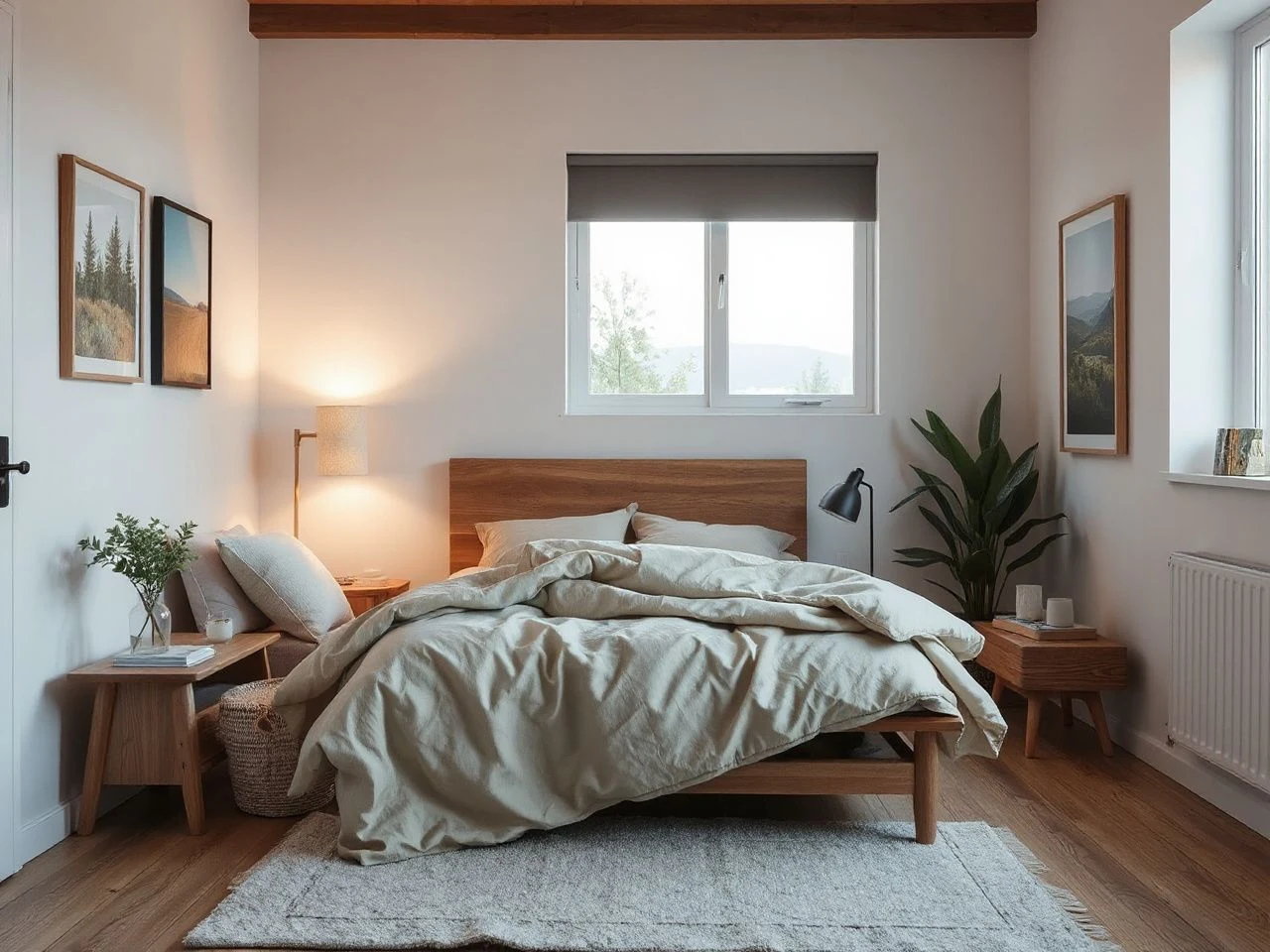
Start with a simple, quiet foundation, then add variation through texture instead of lots of accent colors. Natural-fiber bedding, an upholstered headboard, a rug, and curtains can soften the space without making it look busy. Pale wood tones or a herringbone floor can add movement while keeping the walls calm.
- Pair a smooth platform bed with a visibly tactile headboard.
- Use one or two related neutral tones instead of making every surface the same shade.
- Break up hard flooring with a textile that softens both the appearance and the sound of footsteps.
- Choose organic shapes sparingly so the room has a gentle counterpoint to straight cabinetry.
- Keep personal pieces that have meaning, but give each one enough surrounding space to be read clearly.
Scandinavian bedroom design often shows this balance through pale timber, restrained decoration, and softness. Japandi interiors take a similar approach but may use darker timber, quieter contrasts, and more deliberate asymmetry. The lesson isn’t copying a label; it’s letting texture carry some of the warmth that decoration would normally give.
For a broader approach to blending rustic material cues with contemporary structure, the modern farmhouse living room guidance offers a helpful visual link between relaxed finishes and clean design.

Modern bedroom interior design ideas for colour, materials, and texture
Choose colour from the room’s natural light
Natural light really changes how a colour looks throughout the day. A neutral that looks crisp next to a bright window may seem muted on a shaded wall. A warm neutral can become more vivid in strong afternoon light. Check large sample areas on different walls and see how they look in daylight and with the room’s lamps on.
North-facing or shaded rooms usually need careful attention to undertones. But a simple rule isn’t always helpful. A neutral paint with a warm cast can stop a dim bedroom from feeling too severe. In a bright room, a softened neutral can cut glare without making the space feel heavy.
Natural light is the best starting point for a bedroom colour palette because paint looks different as the light shifts. The palette should support the room’s light instead of fighting it.
- Light foundation: Use a restrained wall colour, then introduce depth through timber, upholstery, or woven textiles.
- Earthy direction: Combine muted clay, sand, olive, or warm grey notes with natural materials.
- High contrast: Add charcoal, deep brown, or black in small areas such as handles, frames, or a lamp base.
- Soft colour: Use dusty blue, gentle green, or muted rose where a neutral-only scheme feels impersonal.
White walls can highlight furniture, but pure brightness isn’t always the goal. A slightly warmer tone may better complement an upholstered headboard and natural-fiber bedding. Metallic details can add some controlled drama, but too much reflective surface might make the room feel sharper at night.
Use flooring and wall coverings as quiet structure
Engineered wood flooring can give a modern bedroom a continuous, ordered base. A herringbone pattern can be used for bleached white oak flooring, adding direction without a strong wall feature. The pattern should support the furniture arrangement rather than compete with it.
Wall coverings can add texture behind a bed, especially if the furniture is deliberately plain. A woven or subtly patterned finish has more staying power than a busy motif that dominates every view from the doorway. Keep the strongest surface in one zone, then let the other walls rest.
Hard flooring, painted walls, glass, and metal can make a bedroom echo if there are no soft surfaces. Adding a rug, upholstered headboard, curtains, or fabric window treatments creates a gentler sound and touch.
Choose materials that remain easy to live with
Ease of cleaning is part of modern design because a room loses its calm when its surfaces demand complicated care. Painted walls, smooth cabinetry, engineered wood flooring, removable textile layers, and accessible lighting all support a simpler routine. The material itself matters, but so does the gap around it: furniture that sits tightly against a wall can be harder to dust and harder to inspect.
Upholstered furniture needs regular surface care suited to its fabric. Follow the maker’s cleaning instructions, remove loose dust gently, and deal with marks before they become embedded. Natural-fiber bedding benefits from the care method listed on its label, while blackout curtains should be handled according to their construction and cleaning instructions rather than treated as ordinary lightweight curtains.
Upholstered headboards, curtains, and bedding add comfort, but removable or accessible textile layers are easier to maintain than decorative surfaces that cannot be reached. That is a practical reason to resist excessive built-in padding and complicated ledges.
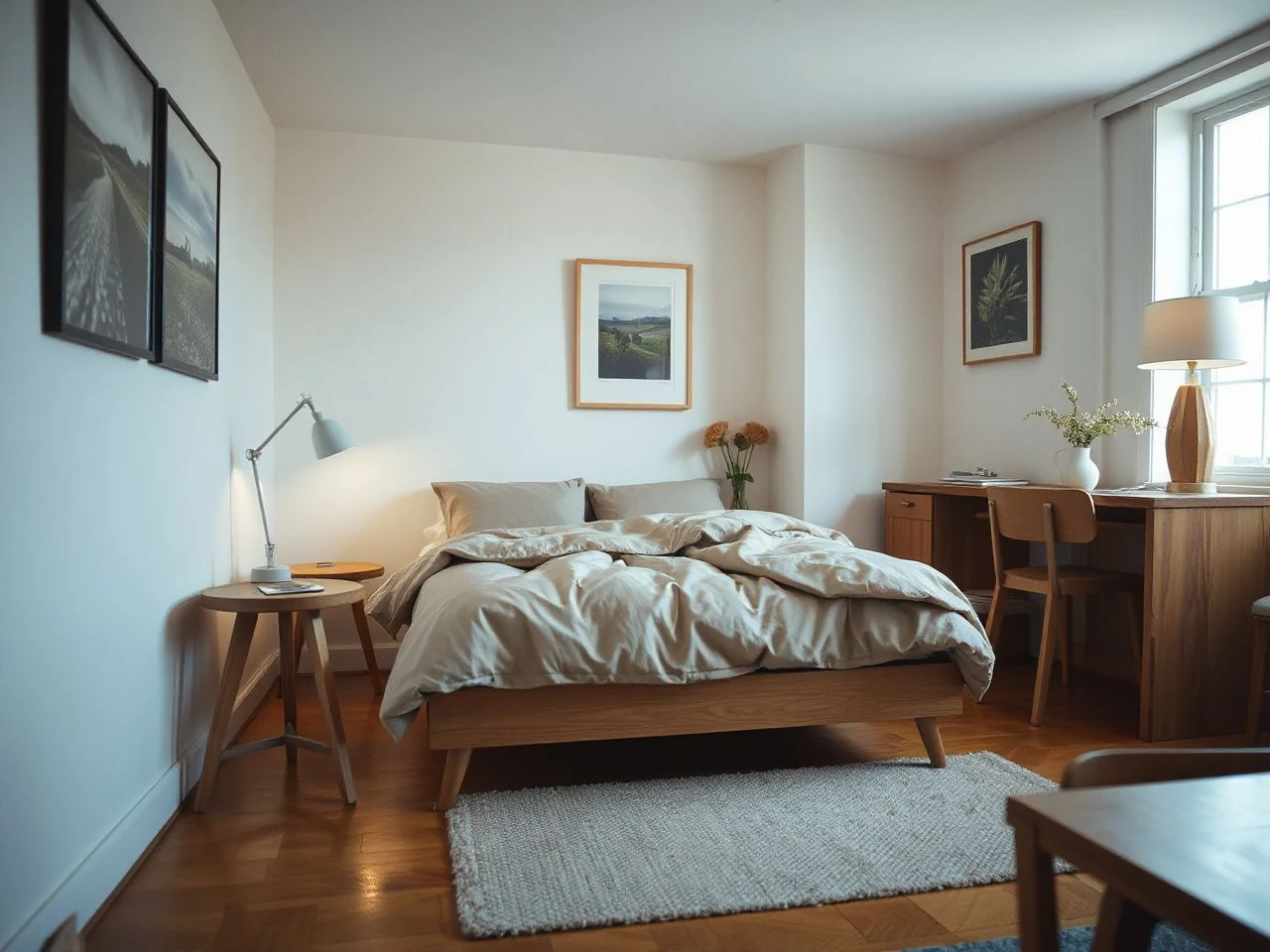
Plan furniture scale, circulation, and storage together
Start with movement, not the bed frame
The bed is usually the visual anchor, but it should not consume every route through the room. Mark the door swing, wardrobe doors, window access, and the path between the bed and the exit before deciding on bedside pieces. A large bed in a small room can make every other decision feel like a compromise.
Furniture that is too large creates more than a cramped appearance. It can obstruct drawers, interrupt window access, force awkward walking paths, and make a carefully chosen lighting plan difficult to use. A modern bedroom needs breathing room around its main forms because proportion is part of the style.
Door swings and window access are fixed constraints, while freestanding furniture can move. Plan around the fixed elements first, then select the bed, wardrobe, and storage pieces that fit the remaining routes.
- Record where the bedroom door opens and where the wardrobe doors need clearance.
- Keep the window reachable for cleaning, ventilation, and ordinary use.
- Check that bedside storage does not block a wall socket, switch, or curtain movement.
- View the arrangement from the entrance, from the bed, and from the window.
- Leave enough visual breathing space for the floor and walls to remain part of the composition.
Built-in wardrobe or freestanding storage?
A built-in wardrobe can make a room look quieter because the storage reads as part of the architecture. Matching doors and a controlled front reduce the number of separate shapes in view. The trade-off is permanence: electrical routes, skirting details, wall condition, and future access need to be resolved before installation.
Freestanding storage gives more flexibility if the layout may change. It can also create useful contrast through timber, colour, or a different surface finish. The room will look less streamlined if several unrelated pieces are grouped together, so visual consistency matters more than the label attached to the storage.
Fitted wardrobes aren’t automatically better than freestanding storage. The right choice depends on the room’s fixed features, how long you’ll keep the setup, and how much visible variation the design can hold comfortably.
Add storage without making the room look cluttered
Use storage to remove visual noise, not to create another display wall. Under-bed storage works best when containers or drawers can be reached easily without moving half the room. Closed bedside storage keeps small daily objects out of sight, while a shallow shelf can display a thoughtful group rather than unrelated items.
Vertical storage can save floor space, but wall-mounted shelving needs proper support. The fixing method should match the wall, the shelf’s construction, and the load the manufacturer describes. A shelf that is attached yet visibly sagging can ruin the calm of the whole room.
Small bedroom storage ideas often focus on using every spare corner, but a corner filled with boxes isn’t always efficient. A cleaner plan might use fewer, well-placed zones and leave some wall visible. Negative space is part of the storage because it prevents the room from feeling like a collection of containers.
For connected planning in compact homes, these small-space design basics show how circulation and access can stay visible even when storage needs are high.
Build a layered bedroom lighting plan
Combine general, task, and ambient light
Layered lighting should include general, task, and ambient lighting, with controls placed so you don’t have to cross a dark room at bedside. General lighting helps with movement and dressing. Task lighting is for reading or other focused activities. Ambient lighting softens the room when the main light is too bright.
Dimmable LED lighting is useful because the bedroom serves different purposes across the day. A brighter general setting may help with dressing or cleaning, while a lower setting can keep the room visually calm before sleep. Wall-mounted bedside sconces free the bedside surface, but their position and cable route must be resolved before the wall is finished.
Light controls should be part of the furniture plan. A switch hidden behind a headboard or blocked by a bedside table can be annoying every day, even if the fixture looks nice.
- General: Provide even illumination for entering, dressing, and finding items.
- Task: Place focused light where reading or other close work occurs.
- Ambient: Add a softer layer through a shaded source or indirect glow.
- Control: Keep essential bedside controls reachable without crossing a dark floor.
Plan wall-mounted lighting before finishes
Wall-mounted fixtures, shelving, and televisions need proper wall support. You should plan electrical connections before finishing the walls. This is especially important in a bedroom because the bed can hide weak fixings or make access difficult later.
Use the wall construction and fitting instructions to determine the right support. Electrical work should be planned and done by a qualified person if local rules require it. The goal is a neat result that doesn’t depend on improvised cables, overloaded surfaces, or uncertain fixings.
Check the wall after removing a fixture. Small repairs are easier when the installation hasn’t been surrounded by permanent cabinetry or layered with hard-to-match finishes.
Reduce lighting and heating waste without losing comfort
Use lighting only in the zones that need it, and turn off layers not used for the current activity. Dimming can reduce visual intensity, while curtains and window treatments help the room feel settled without needing every light on.
Blackout curtains can improve sleep, but they shouldn’t block ventilation, emergency egress, or safe window access. Make sure the treatment opens fully and the window remains usable before choosing a full-width or heavy curtain.
Heating comfort depends on the room, the building, and the heating system. A responsible plan avoids claiming false savings. Keep heating controls accessible and avoid hiding heat sources behind bulky furniture. Use the settings and guidance provided for your specific system.
Finish the room with softness, restraint, and personal character
Layer neutral rooms through texture
A neutral bedroom doesn’t need an array of accent objects. It benefits from differences in touch and reflectance. Pair a matte wall with a woven textile, a smooth cabinet with an upholstered headboard, and a grounded floor with curtains that move softly at the window.
Natural-fiber textiles can make simple furniture feel more considered by adding irregularity without clutter. Texture should appear at more than one height: bedding near the bed, curtains at the window, and a rug or floor covering below. This stops the room from feeling decorated only at eye level.
Low-clutter styling still needs softness, texture, and acoustic control. Hard surfaces can make a bedroom feel stark and echoing. The room sounds hard, so add a textile layer before decorating further. Measure the opening first.
Use focal points carefully
A headboard wall, textured curtain, distinctive floor pattern, or a locally inspired object can anchor the room. Competitor-style schemes often pile several focal points together, making it harder to rest. Pick the feature that should be noticed first from the doorway, then let surrounding surfaces support it.
Retro details can work in a modern room when their shape or colour is repeated subtly elsewhere. Metals can add a small dramatic note, while organic forms can soften a rectilinear plan. Rustic elements also fit, if their finish relates to the rest of the room rather than looking like an unrelated theme.
A personal object has more impact when it’s given room around it. The strongest modern bedrooms don’t remove character; they just edit the number of competing messages. Check the warranty length.
Check furniture and upholstery standards before installation
Where seating furniture is part of a bedroom, the procedures for testing its durability and strength are provided by the European standards system through EN 1728:2014. This reference helps when assessing documented furniture information, but it doesn’t replace checking the actual fitting, care instructions, or suitability for the intended location.
High beds and bunk beds need special attention to strength, stability, and durability. EN 747 establishes testing protocols for those features, as described through the European standards system. A bedroom layout should keep access clear and not treat a high sleeping surface as just decorative furniture.
For upholstered seating, ignitability test methods are described by BS 5852: 2006 through the British Standards Institution. Standards information can help inform a careful decision, but always read the label, manufacturer instructions, and local requirements together.
These references matter because attractive materials aren’t the whole story. A clean wall installation, accessible cable routes, sound furniture support, and a maintainable textile layer all help keep a bedroom orderly after the design photo shoot.
Frequently Asked Questions
How do I make a modern bedroom feel warm rather than cold?
Start with a simple foundation. Add softness with an upholstered headboard, natural-fiber bedding, curtains, a rug, and matte textures. Warmth comes from proportion and personal meaning, not just colour. Hard surfaces shouldn’t dominate every wall. Make sure artwork or objects have enough space to be appreciated. A modern bedroom feels personal when clutter is minimized but evidence of the person who sleeps there remains.
Are fitted wardrobes better than freestanding storage for a streamlined bedroom?
Neither option is always better. Fitted wardrobes can reduce visible variation and make the room feel more architectural. Freestanding storage allows for layout changes and can add useful material contrast. Choose fitted storage when the room’s fixed features and long-term plan support permanence. Opt for freestanding pieces when flexibility, access, or future rearrangement are more important. Always inspect door swings, window access, and wall condition first.
How should lighting be planned in a contemporary bedroom?
Use three layers: general light for movement, task light for focused activities, and ambient light for a softer evening setting. Dimmable LED lighting can support these changes, while wall-mounted bedside sconces can keep bedside surfaces clear. Place controls where they can be reached from the bed, and plan support and electrical connections before finishes are installed. Blackout curtains should preserve ventilation, emergency egress, and safe window access.
What are practical modern bedroom interior design ideas for a small room?
Start by mapping circulation, door swings, wardrobe access, and window use before picking furniture. A platform bed with under-bed storage can cut down on extra cabinets. Built-in wardrobes can make a crowded wall quieter. Keep the colour palette restrained. Add texture through upholstery and natural-fiber textiles so the room doesn’t feel empty. Leave some wall or floor space visible; empty space makes the furniture look intentional.
How can I maintain upholstery, blackout curtains, and natural-fiber bedding?
Follow each maker’s care label since textile construction and finishes vary. Gently remove loose dust, treat marks with the recommended method, and don’t treat blackout curtains like lightweight fabric unless allowed. Wash natural-fiber bedding according to its label and dry each layer as instructed. Accessible textiles are easier to clean than upholstery behind fixed furniture. Make sure cleaning access is part of the original layout.
For a larger bedroom that connects storage, furniture, and finishing choices, these master bedroom decorating rules offer good guidance. A modern room works best when its restraint is practical: walls stay neat, lighting works after dark, storage handles daily clutter, and softness remains where the body and ear need it.