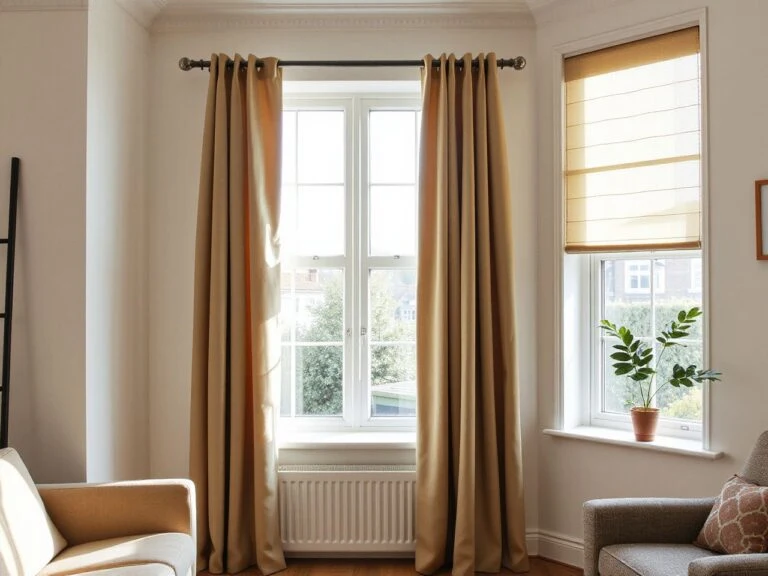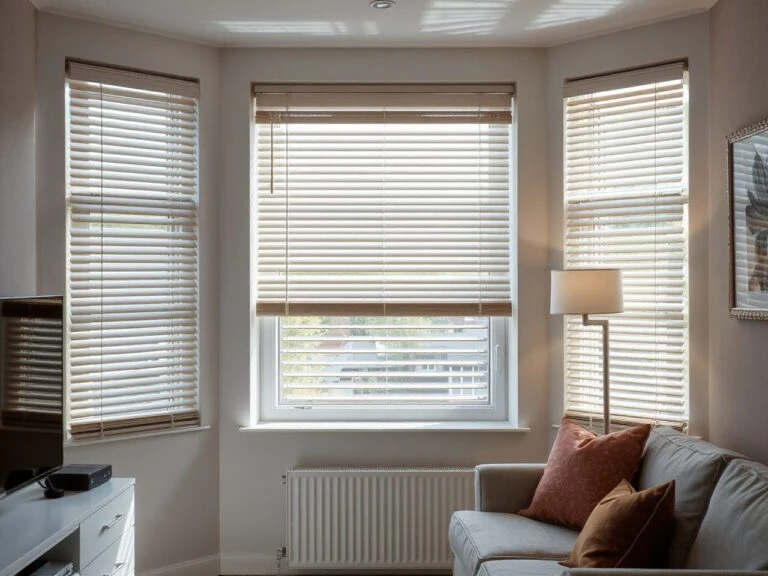
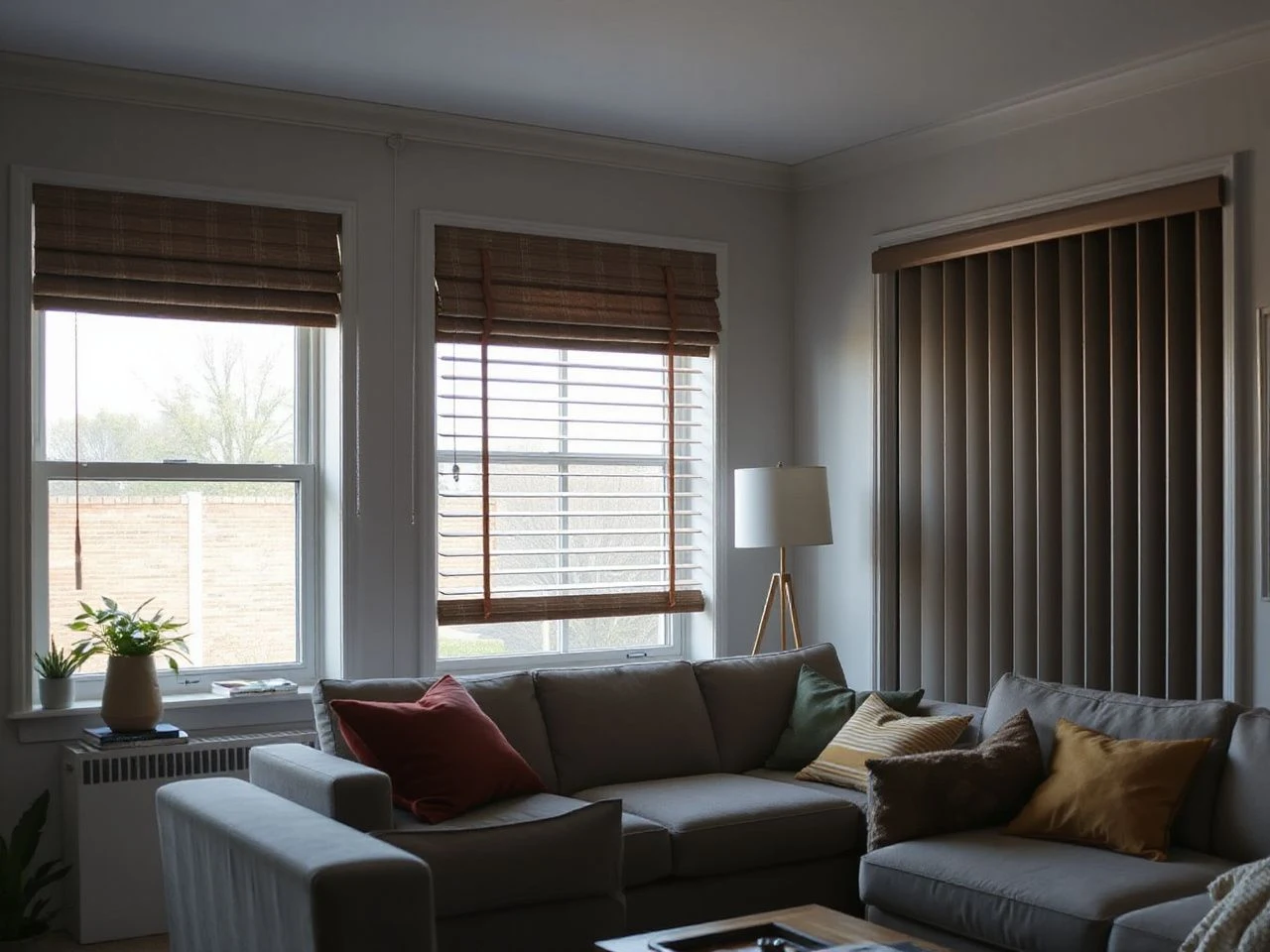
A blind made entirely from 100% basswood represents one end of the window-covering spectrum: a material-led choice with visible slats and a defined surface. At the other end are shades made from an unbroken panel of fabric or woven material. The useful distinction is not simply between named styles, but between operating mechanisms: adjustable slats redirect light and preserve views, while continuous shades raise, lower, filter, or block light as a surface. Each type should be compared against the window’s location, moisture exposure, opening pattern, control access, cleaning demands, and the specific balance of privacy and daylight the room needs.
That is the practical way to sort through window blind types. Most rooms are fixed with lamps before the furniture is touched, and window coverings decide how much work those lamps must do. A covering that leaves a room dim during the day may create a lighting problem that furniture cannot solve.
Key Takeaways
- Blinds use adjustable slats, while shades generally use a continuous fabric or woven surface.
- Privacy, daylight, moisture, cleaning, access, and repairability should be judged separately.
- Window shape, handles, vents, recess depth, and operating clearance can rule out an otherwise suitable style.
- Cordless or inaccessible controls deserve particular attention in homes with children or pets.
Window Blind Types Begin With the Mechanism
Names help identify a covering, but the movement of the covering explains how it behaves. Blinds usually use horizontal or vertical slats that tilt, stack, or slide. Shades generally use a continuous surface that rolls, folds, gathers, or compresses as the covering moves.
The terms overlap in everyday speech. A person may call a roller shade a blind, while another may use “shade” for almost any fabric window treatment. That vocabulary is understandable, but the mechanical difference still matters when light direction, cleaning, or access is the deciding issue.
Slatted blinds redirect light
Venetian blinds use horizontal slats. The slats can be angled to change the path of daylight while keeping part of the window visually open. Wood blinds, faux-wood blinds, and metal blinds belong to this broad family, although their surfaces and care requirements differ.
A slatted covering gives the room several intermediate positions between an open window and a fully covered window. That makes it useful where daylight matters but direct views into the room need to be interrupted. The trade-off is that every slat creates a surface that can collect dust and a mechanism that must remain aligned.
Venetian blinds redirect daylight by changing the angle of their slats. This makes slatted blinds useful for rooms that need privacy without surrendering every view or ray of natural light.
Continuous shades change light as a surface
Roller shades move as one panel. The material rolls up when the shade opens and descends as a continuous screen when privacy or reduced daylight is needed. The panel may be chosen as part of a blackout or light-filtering treatment, but the key characteristic is the uninterrupted surface rather than a set of adjustable slats.
Roman shades also use a continuous fabric or woven surface, but the fabric folds into horizontal pleats as the shade rises. That folding movement gives the window a softer appearance than a flat roller shade while still treating daylight as a broad surface rather than separate slats.
Cellular shades use folded sections that create either single-cell or double-cell construction options. Pleated shades use a fabric surface arranged in pleats. These styles need to be judged by how their folds occupy the window, how accessible the control is, and how easily the material can be kept free of dust.
Roller, Roman, cellular, and pleated shades control daylight with a continuous surface rather than adjustable slats. That difference affects the kind of view, privacy, and cleaning routine a room can support.
How to Match Window Blind Types to the Room
A living room, kitchen, bathroom, bedroom, and hallway do not ask the same questions of a window covering. Light control may lead in one space, while moisture, handle clearance, or cleaning takes priority in another. A room-by-room decision is more reliable than choosing one style for the entire home.
Living rooms and sitting areas
Living rooms often need daylight during the day and privacy after dark. Venetian blinds can preserve an adjustable view, while roller shades provide a quieter visual field across the glass. Roman shades bring a folded textile surface that can sit comfortably beside curtains and drapes, but the folds should be considered alongside dusting access and the way the shade occupies the window when raised.
Cellular shades may suit a room where the window’s changing daylight makes the space feel uneven, because their construction presents a structured, folded surface rather than separate slats. The important comparison is not a label such as “modern” or “traditional.” Compare the amount of visible glass, the desired privacy, the ease of reaching the control, and the effect on the lamps already in the room.
A living-room window covering should be assessed by its daytime light, evening privacy, and effect on the room’s existing lamps. Furniture placement cannot correct a covering that leaves the main seating area visually flat or excessively dark.
Kitchens and bathrooms
Kitchens and bathrooms require attention to moisture, condensation, ventilation, and material suitability. Wood-based products can warp or deteriorate when their environment is unsuitable, so genuine wood blinds deserve careful scrutiny in places where water vapour and splashes are routine.
Faux-wood blinds may be considered where a slatted appearance is wanted but the room raises more concern about moisture exposure. That statement does not remove the need to read the product’s care and suitability information. A covering positioned beside a sink, shower, cooking area, or vent faces a different routine from one installed in a dry bedroom.
Roller shades can offer a simple surface in a kitchen or bathroom, but the material still needs to suit the location and remain clear of handles, taps, vents, and opening parts. Ventilation matters because condensation can affect the surrounding window area even when the covering itself is not directly splashed.
Bathrooms and kitchens need a moisture-aware choice because wood-based window coverings can warp or deteriorate in unsuitable conditions. The safest decision starts with the room’s condensation and ventilation pattern rather than with colour or finish.
Bedrooms and private rooms
Bedrooms commonly require privacy and controlled daylight at the same time. A continuous shade can create a broad private surface, while a slatted blind allows the occupant to alter the angle of daylight without opening the window covering completely.
Cellular shades, Roman shades, roller shades, and Venetian blinds can all be assessed here, but they should not be treated as equal simply because each can cover the glass. Ask whether the room needs a filtered glow, a darker surface, a partial view, or a covering that can be adjusted without reaching across furniture.
Hallways and rooms with difficult access
A narrow hallway, high window, or opening blocked by a desk changes the importance of control access. Cordless lift systems and other inaccessible control arrangements may be more practical where a hanging cord would be hard to reach or could interfere with movement.
Corded window coverings can create child and pet safety hazards. The U.S. Consumer Product Safety Commission provides safety information on household products, including risks associated with accessible cords, so control placement should be considered part of the room plan rather than an afterthought.
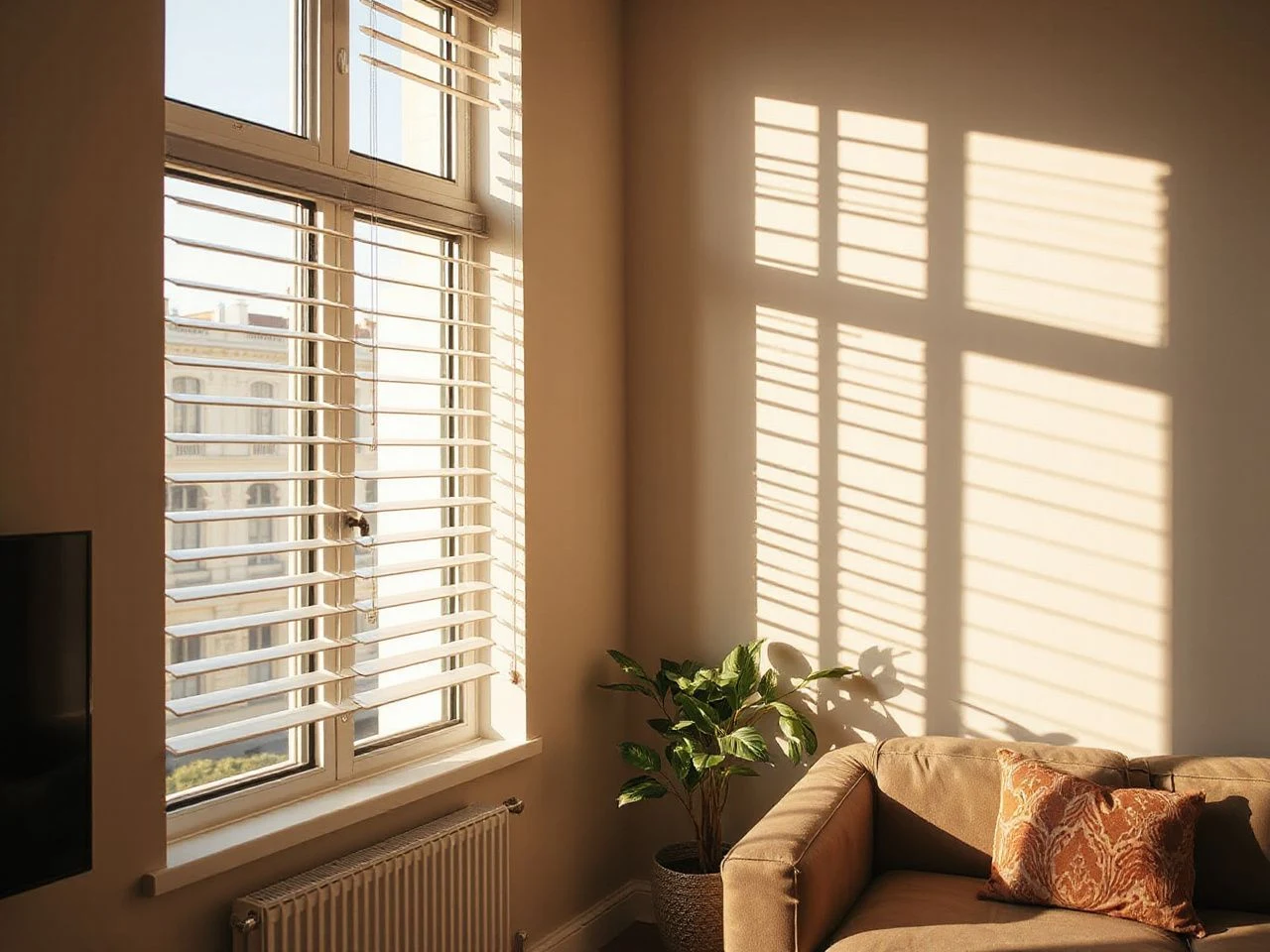
Choosing for Window Shape, Width, and Installation Position
Window shape and operating clearance can make an otherwise suitable covering impractical. A standard rectangle, a sliding door, a tall narrow opening, and an unusually shaped window each place different demands on the way the covering moves and rests.
Inside-mount and outside-mount decisions
An inside mount sits within the window recess. It can give the covering a contained appearance, but the recess must provide enough room for the chosen operating mechanism and the window’s handles or vents. If those parts compete for the same space, the covering may rub, sit unevenly, or limit access.
An outside mount sits beyond the recess and can work where the opening is shallow or where the frame cannot accommodate the covering. It changes the visual boundary of the window and may require careful attention to nearby walls, trim, handles, and furniture.
Inside-mount and outside-mount installation affect clearance, appearance, and access before the blind material is even considered. Measure the opening and inspect the hardware location instead of assuming that every style can use either mounting position.
Wide windows and sliding doors
Wide windows and sliding doors need a covering that works with the opening pattern. Panel-track blinds use broad panels that move across the window or door area, making their operating direction part of the design. The panels must have room to move without colliding with door handles, nearby walls, or furniture.
Vertical blinds use vertical slats and are often considered for broad openings because their movement follows the width of the window or door. They can preserve a route through a sliding door when the control side and panel stack are planned correctly.
Roller shades can also cover broad glass as a continuous surface, but the control position, raised roll, and door movement still need to be checked. No covering should be chosen for a sliding door solely because the glass is wide.
Sliding-door coverings must clear the door’s handle and opening path while leaving the panel stack usable. The direction of movement is as important as the material or colour.
Unusually shaped windows
Arched, angled, narrow, or irregular windows can restrict the use of standard horizontal slats and continuous shades. The first question is not which style photographs well; it is whether the covering can follow the opening while preserving access to the window and nearby ventilation.
Where the shape makes a moving blind impractical, plantation shutters or a fixed treatment may deserve consideration, although those options change how much the window can be opened and how daylight is adjusted. Curtains and drapes may solve a clearance problem in one room but create a different issue around handles, radiators, or furniture.
Privacy, Daylight, Cleaning, and Long-Term Care
Privacy and daylight are separate properties. A covering can provide strong privacy while leaving a room gloomy, or it can admit plenty of daylight while exposing the room to outside views. Evaluate those outcomes independently.
Privacy and natural light
Slatted blinds give the user a way to alter the angle of light and the angle of the view. That flexibility can provide a useful balance in rooms facing a street, walkway, neighbouring property, or bright outdoor area.
Roller shades and other continuous shades create more consistent coverage across the glass. A light-filtering surface may soften daylight without making the window appear completely closed, while a blackout surface is intended to block more of the visible light. The exact result depends on the fabric, the fit, the mounting position, and the gaps around the covering.
Cellular shades, pleated shades, and Roman shades should be considered by the quality of their surface as it appears across the window, not just by the way they fold when raised. A broad continuous surface can calm a room, but it offers less direct control over individual bands of light than adjustable slats.
Adjustable slats offer more directional control of daylight, while continuous shades offer a more uniform privacy surface. The stronger choice depends on whether the room needs changing light angles or consistent coverage.
Cleaning and maintenance
Slats create repeated edges that can be dusted individually. Horizontal Venetian slats, vertical slats, and the panels of panel-track blinds each require attention to their movement surfaces and control hardware. The more parts a covering has, the more important it becomes to keep the operating path clear.
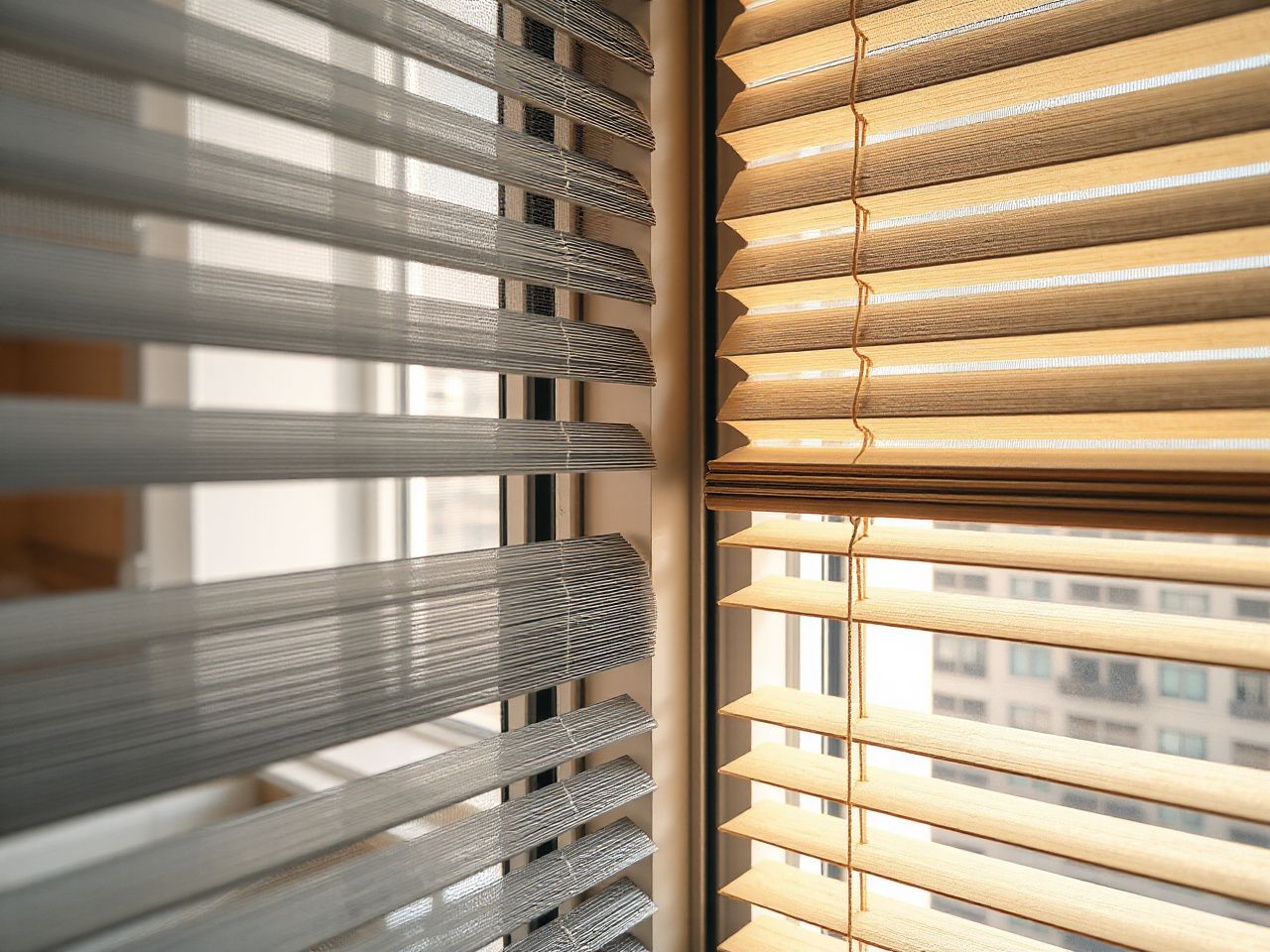
Continuous shades have fewer exposed slat edges, but fabric and woven surfaces still need suitable care. Roman folds can hold dust along their creases, while pleated and cellular surfaces require a gentle approach that does not crush their form. Bamboo shades use woven panels made from natural substances such as reeds, grasses, jute, and bamboo, so their texture should be treated as part of the material rather than scrubbed as if it were a hard slat.
Window coverings last more comfortably in use when dust, moisture, and operating strain are addressed before they become visible problems. A simple cleaning routine is useful only if it matches the material and does not interfere with the folds, slats, cords, chains, or lift system.
Repairability and replacement decisions
Long-term maintenance costs cannot be reduced to the initial material choice because a covering contains both a surface and an operating system. A damaged slat may be a smaller visual problem than a failed lift mechanism, while a stained or torn continuous fabric may require attention to the entire panel.
Wood blinds, faux-wood blinds, metal blinds, roller shades, Roman shades, cellular shades, and panel-track blinds all present different repair questions. Before choosing, inspect how the control is attached, whether the surface can be cleaned without specialist care, and whether a damaged section can be addressed without replacing the full covering.
The manufacturer’s instructions should settle any question about cleaning agents, removable parts, and repair procedures. Avoid forcing a control that catches, allowing a slat to twist against a handle, or continuing to operate a covering that no longer travels evenly.
For information about window-covering safety and relevant standards work, consult the ASTM International website and the safety guidance of the U.S. Consumer Product Safety Commission. Those organisations address safety information and standards activity; they should be consulted rather than replaced with assumptions about a cord, chain, or lift mechanism.
Controls, Cords, Chains, and Everyday Access
The control system deserves as much attention as the visible covering. A corded blind may be difficult to operate safely in a child’s room or near a pet’s usual path. A chain or loop may sit within reach, while a cordless lift system removes that particular hanging control from the visible area.
Cordless does not mean every window becomes easy to operate. A high window, a heavy covering, a door that must open repeatedly, or furniture positioned directly below the glass can still make access inconvenient. Motorized window treatments may address a reach problem in some settings, but the control method, power arrangement, and manual instructions must be understood before installation.
Cordless or inaccessible controls should be considered wherever children or pets could reach a hanging cord or loop. Control safety is part of selecting the covering, not a decorative detail added later.
Common operating problems include slats that no longer tilt evenly, cords that catch, chains that pull against an obstruction, and lift systems that stop before the covering reaches the intended position. Those symptoms often point to a mismatch between the control path and the window’s hardware, furniture, or accumulated dust.
Keep controls clear of handles and vents. Do not use a covering as a place to hang objects, and do not pull harder when the movement feels blocked. The correct remedy may be repositioning, cleaning according to the instructions, or arranging a repair rather than applying more force.
Different types of window blinds can involve very different control and installation problems, so a room-by-room check is more useful than choosing by appearance alone.
Making the Decision Without Treating One Property as Everything
A useful comparison separates the questions. Light control asks how precisely the covering changes daylight. Privacy asks what can be seen through or around it. Insulation, where relevant to the chosen construction, should be considered separately from cleaning and repair. Operating access is another question entirely.
Use the following sequence for each window:
- Read the opening: Identify whether the window slides, swings, lifts, or remains fixed, then note handles, vents, locks, and nearby furniture.
- Check the environment: Record whether the room is dry, humid, exposed to condensation, or close to splashes from cooking and washing.
- Define the daylight: Decide whether the room needs redirected light through slats, a softened glow, a broad private surface, or a darker covering.
- Test access: Stand where the control will be used and check whether a cord, chain, cordless handle, or motorized control can be reached without interfering with the window.
- Plan care: Look at the surface, folds, slats, panels, and hardware, then decide whether their cleaning demands fit the room.
- Review the mount: Compare inside-mount and outside-mount placement after checking recess depth, trim, handles, and the space needed when the covering is raised.
This process keeps the choice grounded in the window rather than in a catalogue label. It also makes clear why there is no universal answer for every living room, kitchen, bathroom, or sliding door.
The right window covering is the one whose mechanism, material, control, and mounting position suit the specific opening. A visually attractive style can still fail if it blocks a handle, collects moisture, creates a control hazard, or leaves the room dependent on artificial light during the day.
Most rooms benefit from a lighting-first review. Check where daylight lands, where lamps are needed, and where privacy changes after dark. Then choose between adjustable slats and continuous shades with the room’s actual behaviour in mind.
Frequently Asked Questions About Window Blind Types
What are the main types of window blinds and shades?
Venetian blinds, vertical blinds, wood blinds, faux-wood blinds, and metal blinds use slats that tilt, stack, or move across the opening. Roller shades, Roman shades, cellular shades, and pleated shades use continuous fabric or woven surfaces that roll, fold, compress, or gather. Panel-track blinds use broad panels suited to wide openings and sliding doors. The mechanism matters more than the name because it determines light control, privacy, cleaning, and access.
Which type gives the strongest balance of privacy and natural light?
Adjustable slatted blinds provide a direct way to redirect daylight while limiting views, so they can suit a room that needs both qualities at different times. A light-filtering continuous shade can provide a calmer privacy surface, but it offers less control over individual light angles. Check the window’s direction, surrounding views, furniture, and lamp positions before deciding which balance the room actually needs.
Which window coverings suit kitchens and bathrooms?
Begin with moisture, condensation, ventilation, and the covering’s material suitability. Wood-based products can warp or deteriorate in unsuitable damp conditions, so genuine wood blinds need careful consideration near sinks, showers, and cooking areas. Faux-wood blinds or a suitable roller shade may fit a moisture-aware plan, but the manufacturer’s care instructions remain decisive. Handles, vents, and opening clearance must also remain accessible.
Are cordless or motorized controls practical for every window?
No control suits every opening automatically. Cordless lift systems can reduce the concern created by accessible hanging cords, while motorized window treatments may help where the window is high or difficult to reach. The window’s height, opening pattern, furniture, control location, and power arrangement still matter. Homes with children or pets should treat cord access as a safety issue and consult guidance from the U.S. Consumer Product Safety Commission.