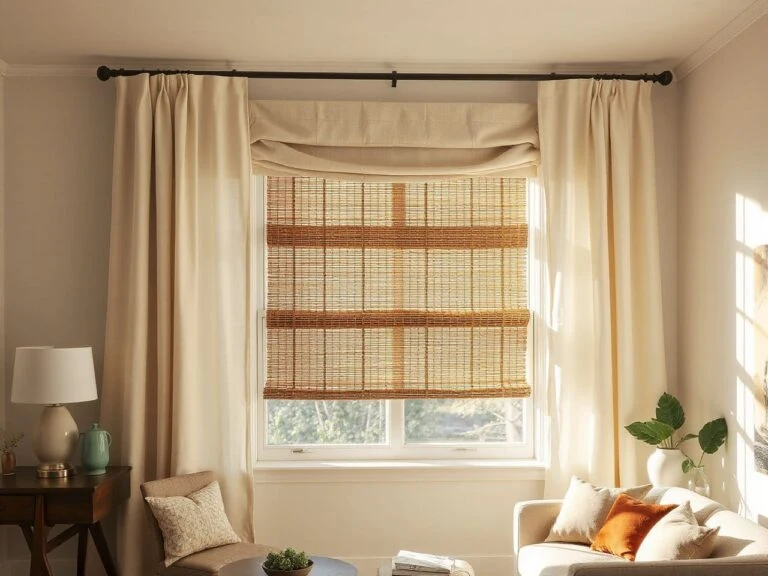
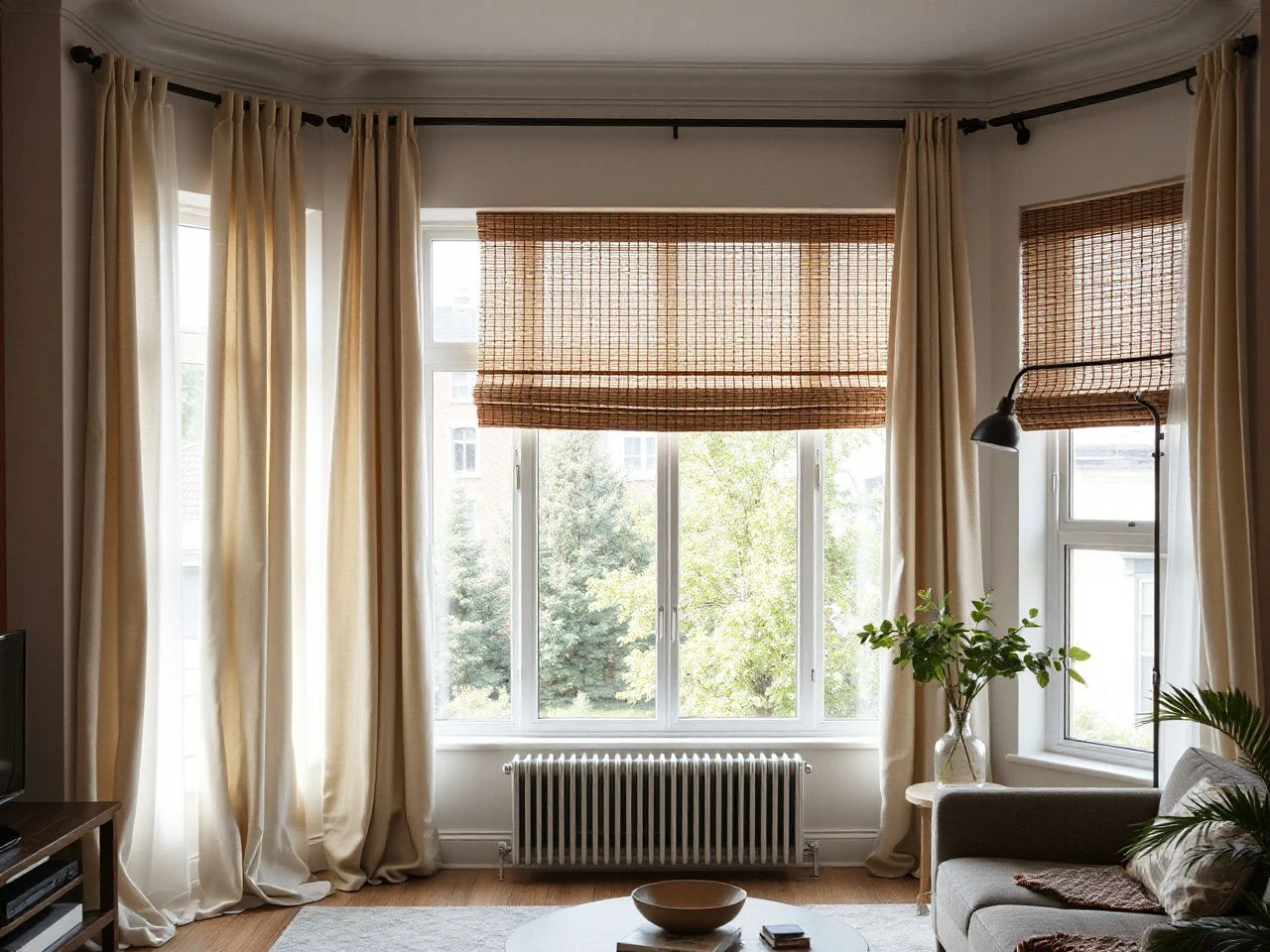
A treatment that looks graceful across a wide opening can become difficult to raise, hard to secure, or damaging to the wall if the supporting details are ignored. The practical distinction is between covering a large opening and supporting a large moving load: the treatment, operating method, hardware, and mounting surface all have to work together.
For large window treatment options, a useful guide should compare continuous coverage with divided sections, then explain how span, stacking space, light gaps, access, and operating effort affect the choice. As someone who checks the lamps before rearranging the furniture, I also start with daylight: glare, reflection, and evening privacy often matter more than the fabric sample.
Key Takeaways
- Divide very wide treatments when operating effort, sagging, or hardware span becomes a concern.
- Mount brackets into suitable structural support rather than relying only on drywall anchors.
- Choose coverage for glare, heat, privacy, and light gaps as well as appearance.
- Plan cords, controls, ventilation, doors, and escape routes before installation.
Large window treatment options begin with the opening
A wide window, a sliding glass door, and an entire wall of glass may all look like large openings, yet they place different demands on a treatment. A fixed picture window may need glare control and privacy, while a door requires clear passage and hardware that does not obstruct movement. A room with several connected windows may need a visual line across the wall but separate operating sections.
Large window treatments place more load on mounting hardware because the covering, operating parts, and brackets all work across a broader span. Structural mounting brackets must attach to suitable support in the wall, ceiling, or framing; drywall anchors alone may not provide the support a heavy moving treatment needs.
Measure the opening and the room around it
Start by recording the width and height of each opening, then note the position of the frame, nearby walls, ceiling, handles, vents, doors, and furniture. The measurement is only one part of the decision. The space beside the window determines where a fabric treatment can stack, while the space above it affects the height of a rod, headrail, or shade cassette.
A large opening should be measured at more than one point so you can identify an uneven frame or wall. If the measurements differ, do not hide the difference inside a guessed installation position. Decide whether the treatment will sit inside the opening or extend beyond it, and record the intended mounting surface before any hardware is ordered.
A mounting surface must support the treatment and its movement, not merely hold a screw head. That sentence is worth keeping beside the tape measure.
Continuous coverage or divided sections?
One uninterrupted treatment creates a clean visual field and can reduce the number of visible gaps. The drawback is mechanical: a single wide shade or blind can become heavy to raise, difficult to guide, and prone to sagging or bowing. A long drapery span can also need stronger support and more room for its panels to stack.
Divided sections spread the operating effort across separate treatments. They can also let one part of the window remain covered while another admits daylight, which is useful when the sun reaches different areas of a room at different times. The trade-off is the presence of meeting points, brackets, seams, or small gaps that need to be planned rather than discovered afterward.
- Choose continuous coverage when a clear uninterrupted view and simple visual line matter most, and the mounting surface can support the required hardware.
- Choose divided coverage when the opening is broad, operation feels demanding, or separate control of glare and privacy would help.
- Choose a mix when fixed sections, doors, and ventilation points do not behave in the same way.
Compare the main treatment families
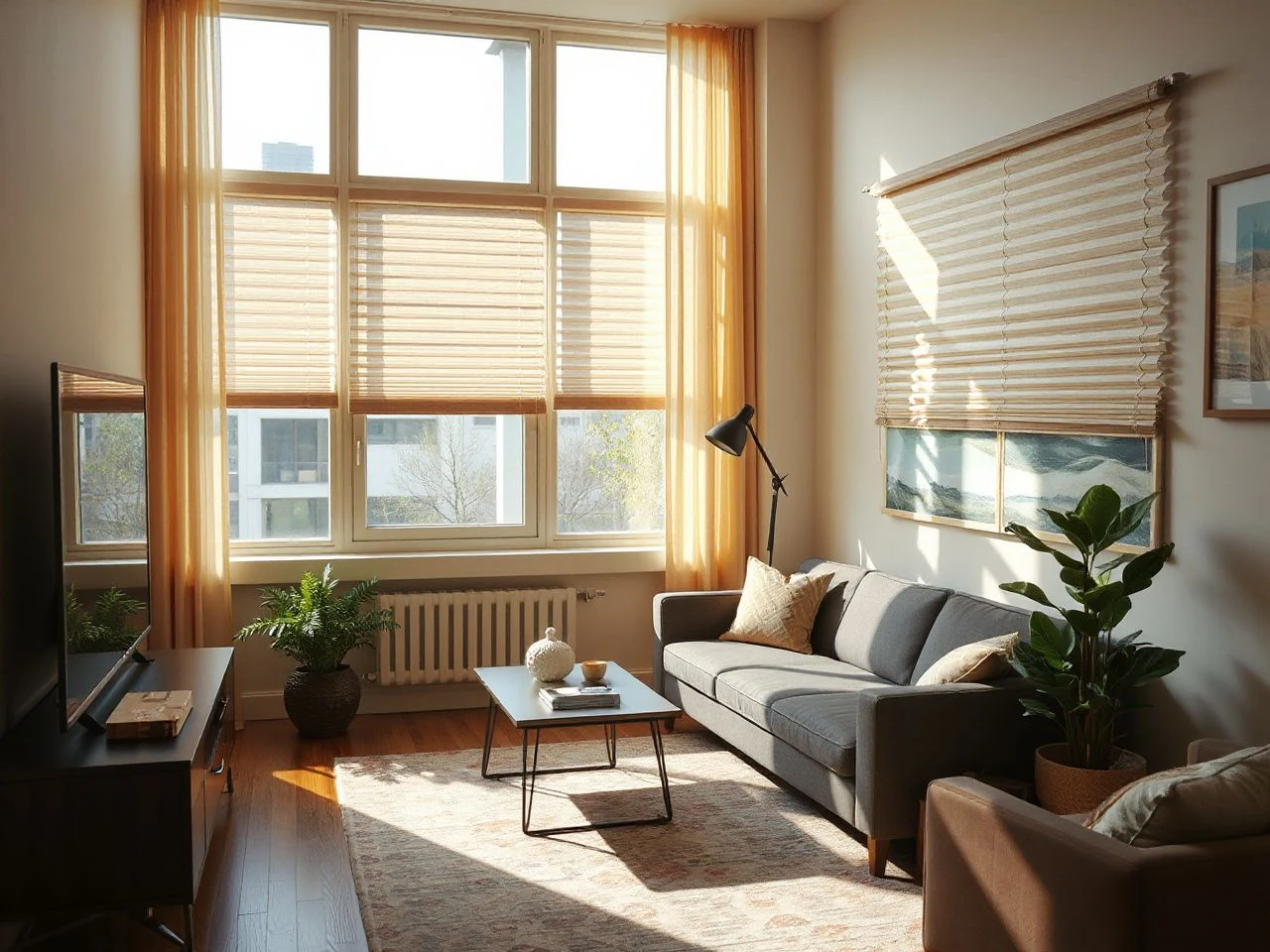
No single covering suits every broad window. The right category depends on how much of the glass must remain visible, how often the treatment will move, and how much effort the room can tolerate. Fabric, slats, panels, and shades each change the way light enters and leaves the room.
Drapery panels and curtain panels
Drapery panels are usually lined, while curtain panels typically lack a lining. That distinction affects the appearance of the window from the room, the way the fabric hangs, and the degree of light control available from the treatment itself. Fabric also varies in fire resistance, noise absorption, oil and dust retention, ultraviolet light deterioration, cleanability, and expected life span, so the face fabric is only part of the decision.
Drapery suits a broad wall when the room benefits from softness, texture, or a strong vertical line. Panels can be divided across a long opening and drawn toward the sides, leaving the central view clear when open. They need enough stacking space beside the glass, and a traverse rod can make repeated opening and closing easier across a broad run.
Do not assume that a darker fabric automatically solves glare. Room-darkening or lined fabrics can reduce incoming light, but gaps at the sides, center, bottom, and top can still admit bright strips. A careful installation position and an appropriate overlap matter as much as the textile.
Roller shades and cellular shades
Roller shades offer a clean plane across the glass and can be divided into separate sections when a single shade would be unwieldy. Their surface can provide privacy and glare control without taking up the same side space as drapery, though the roll and mounting hardware still need room above the opening.
Cellular shades use individual pockets to sequester air, which gives them a different construction from a flat roller shade. That structure can make them relevant where insulating window coverings are part of the plan, especially in a room with strong solar exposure or uncomfortable temperature changes near the glass.
A shade that is too wide for its operating method may sag, bow, or become hard to lift. Dividing the opening or using motorized shade systems can reduce the effort placed on one control, but the decision should be made before the mounting layout is fixed.
Roman shades, blinds, and panel systems
Roman shades bring folded fabric to a broad window and can give a room a tailored appearance. Their folds need clear space as the shade rises, and the fabric should be kept away from door swings, handles, and ventilation points. A divided arrangement can make a long window easier to use and can give each section its own privacy setting.
Vertical blinds and panel track blinds move across the opening rather than rolling or folding upward. That direction can suit a wide glass wall or a sliding door because the treatment can move toward one side, though the stack must not block a walkway or the operating edge of a door.
Budget-friendlier blinds commonly use polyester, aluminum, or PVC. Faux wood combines natural wood particles with man-made materials, and faux wood blinds resist warping in settings exposed to significant moisture or strong temperature changes. These materials can be practical for a broad opening, but the weight, slat movement, cleaning access, and support still need attention.
UV ratings reaching as high as 500 can be found in faux wood window blinds. That figure should be treated as a product-specific claim to verify on the item itself, not as a promise that every faux wood blind carries the same rating.
Shutters and fixed architectural treatments
Shutters create a more permanent visual frame and can divide a large opening into manageable panels. Their solid construction may suit privacy-focused rooms, but the panels need clearance to open and fold. A shutter that interferes with a handle, door, vent, or escape route is a poor fit regardless of its appearance.
Fixed panels, layered treatments, and combinations of shades with drapery can solve different problems at once. A shade can handle direct glare during the day while side panels add evening privacy and soften the room after dark. This layered approach also lets a lighting plan respond to the window instead of forcing every condition through one covering.

Plan light, heat, privacy, and view control
Large glass areas bring abundant daylight, but daylight is not always comfortable daylight. Reflections can interfere with a television or monitor, direct sun can make a seating area unpleasant, and evening interiors become visible from outside when the glass turns dark.
Window coverings can affect a home’s heating and cooling load because approximately 30% of the energy used for heating or cooling a residence may escape through windows. The practical response depends on window orientation, solar exposure, season, and the room’s use, so select the control method before choosing only by color or pattern.
Glare control without losing all daylight
Sheer or light-filtering layers can soften incoming light while retaining a brighter room. A cellular shade, roller shade, or divided blind can provide a more targeted response when one part of the glass receives direct sun and another does not.
Use the room itself as the test. Look at the screen, glossy table, artwork, and seating positions at different points in the day, then mark which surfaces need protection. A treatment that blocks every ray may solve reflection but leave the room dependent on electric light, which changes the atmosphere and the lamp plan.
Privacy and light gaps
Privacy depends on the view from outside, the height of nearby buildings, and the time of day. A treatment can appear closed from inside while leaving a bright slit at the center meeting point or along the sides. Divided sections therefore need planned overlaps and carefully positioned brackets.
Light gaps are often created by the installation rather than the fabric. An inside-mounted treatment follows the opening closely but may leave more exposed glass at the edges; an outside-mounted treatment can cover more of the frame but requires enough wall or ceiling space. Decide which result the room needs before measuring the final hardware position.
Heat gain and insulating layers
Cellular shades use pockets that hold air, while lined drapery adds a fabric layer between the room and the glass. Neither choice should be treated as a substitute for repairing a damaged window or correcting a poorly fitted frame, but both can form part of a broader plan for comfort near the opening.
Keep the treatment position compatible with ventilation. A shade or curtain that covers a vent can change airflow in the room, while a panel in front of a heat source may become a maintenance and safety concern. The same check applies to doors and required escape routes.
Make hardware and installation carry their share
A large window treatment is a small structural project as well as a decorating decision. The rod, headrail, track, brackets, screws, and mounting surface must work as a system. If the hardware flexes, the treatment may drag, sit unevenly, bind during operation, or pull away from the wall.
Find suitable structural support
Locate framing, a solid header, or another suitable structural surface before fixing the brackets. A drywall anchor may be appropriate for a light decorative element, but large moving coverings place repeated load on the fixing points. The wall material and the hardware instructions should determine the attachment method.
Structural mounting brackets need even placement across the span so the rod or headrail does not bow under load. A wide opening may require a support point that changes how the treatment stacks or how the panels pass across the window, so draw the hardware layout before drilling.
Hardware that flexes can make a treatment difficult to operate and can worsen uneven stacking. A secure mounting surface is part of the treatment, not an afterthought.
Install shades and blinds with movement in mind
For roller shades, cellular shades, Roman shades, and blinds, check the path from fully closed to fully open. The material should not rub against handles, neighboring sections, or the frame. If a shade bows toward the center or the control becomes unusually difficult to use, the span, support, or operating method may be unsuitable.
Separate sections can reduce the size and weight of each moving part. Motorization can reduce manual effort, but it adds a power source or rechargeable components, control setup, and moving parts that need ongoing maintenance. A motorized system still needs accessible controls and a clear travel path.
Use traverse rods and tracks thoughtfully
Traverse rods let drapery panels open through a control rather than requiring the fabric to be pulled across by hand. Across a wide opening, that can reduce handling of the fabric and keep the movement more consistent. The rod still needs adequate support, and the panels need enough side room to stack without hiding a doorway or vent.
Panel track blinds use broad panels that travel along a track. Check the track’s mounting surface, the direction of the stack, and the relationship between the open panels and the room’s circulation path. A treatment that clears the glass but blocks the route beside it has solved only half the problem.
Account for child safety
Cords and chains can create strangulation hazards for small children. The U.S. Consumer Product Safety Commission provides window-covering safety information at cpsc.gov, and cordless blinds can lower the hazard associated with accessible operating cords.
Keep cords and chains away from areas where children sleep, play, or climb. Motorized controls can remove some hanging cords, but they do not remove the need to secure control devices, inspect moving parts, and keep furniture from creating an easy climbing route.
Choose manual or motorized operation
Manual operation remains straightforward for treatments that move occasionally and can be reached without stretching. It becomes less appealing when a single wide shade is heavy, when several sections need to move together, or when the window is high and difficult to access.
Motorized shade systems use an electric connection or rechargeable components and respond through a control. Smart home controls and automation may allow scheduled or grouped movement, but the system still needs a power plan, control access, and maintenance of the battery or moving mechanism.
When motorization makes sense
- A treatment is too wide or heavy to raise comfortably by hand.
- The window is high, behind furniture, or difficult to reach.
- Several sections need coordinated movement for glare or privacy control.
- Daily light changes make repeated manual adjustment inconvenient.
Motorization does not remove the need to divide a large opening. Separate motorized sections may provide more precise control than one oversized unit, especially when different parts of the room receive different light.
Plan for ongoing upkeep
Motorized treatments have ongoing needs that manual treatments do not. Access to a power source or rechargeable components must remain practical, and controls, wiring, batteries, and moving parts need periodic inspection. The manufacturer’s care instructions should govern charging, cleaning around the mechanism, and any service procedure.
Manual systems need their own checks. Look for a rod that has shifted, a bracket that loosens, a chain that drags, or fabric that no longer stacks evenly. A small change in movement can signal that a support point, track, or operating part needs attention.
Clean and maintain a broad surface
Large coverings collect more visible dust simply because they occupy more surface area. Fabric treatments can retain dust and oil, while slats and panels show buildup along edges and joints. Cleaning instructions vary by material, lining, finish, and operating mechanism.
Fabric treatments
Read the care label before using a vacuum attachment, brush, or damp cloth. A low-suction upholstery tool may suit some fabric, while delicate folds, lining, trim, and motorized components need a gentler approach. Do not saturate a treatment unless its care instructions permit it.
Drapery panels should be checked at the top edge, hems, folds, and return sides because those areas can collect dust differently. Keep cleaning consistent across the full run so one panel does not appear darker than its neighbor.
Blinds, shutters, and shades
Close slats in one direction, clean the accessible surface, and then address the reverse side if the care instructions allow it. Faux wood and other moisture-resistant materials may tolerate a different cleaning method from fabric, but water should not be allowed near electrical components or control housings.
Do not force a shade or blind through resistance. Binding, bowing, scraping, and uneven lifting are signs to stop and inspect the alignment, brackets, control, or surrounding clearance.
Inspect the room as well as the treatment
Maintenance includes the surrounding wall, sill, floor, vents, handles, and doors. Look for moisture, dust accumulation, blocked airflow, and furniture that has moved into the treatment’s path. A broad window covering remains easier to use when the room around it remains clear.
Prevent measuring and installation mistakes
Large-window errors are usually planning errors rather than decorating errors. A beautiful fabric or finish cannot correct a rod that stops short, a shade that hits a handle, or a bracket attached only to weak wall material.
Common mistakes to catch before ordering
- Measuring only the glass: Include the frame, trim, handles, sill, and the space needed for movement.
- Ignoring the stack: Record where open panels or folded fabric will sit and whether that area covers the view.
- Using one oversized section automatically: Consider operating effort, sagging, bowing, and the value of independent light control.
- Forgetting the center gap: Plan how divided sections meet and where overlap can reduce unwanted brightness.
- Fixing brackets into unsuitable material: Identify structural support before choosing the screw and anchor arrangement.
- Blocking a door or vent: Trace the full swing, slide, airflow path, and required escape route.
- Placing controls out of reach: Keep manual controls and motorized controls accessible without unsafe stretching.
A written measurement sheet should include the opening, mounting surface, treatment movement, stack position, control side, and nearby obstructions. Photographing the wall and marking the intended bracket positions can also expose a problem before installation begins.
The U.S. Consumer Product Safety Commission identifies window-covering cords as a child-safety concern, so installation planning should include cord placement and furniture position; consult the agency’s official site for current safety guidance.
Use lighting to judge the final effect
Check the window at morning, afternoon, and evening light rather than judging the treatment only under room lamps. A surface that looks calm in the showroom may show glare, reflect a screen, or create a strong edge of brightness once installed.
I would position lamps after the window treatment plan is clear. A shaded window can make a room feel flat at night, while a controlled daylight layer can let table lamps and floor lamps do their intended work without competing with direct sun.
Frequently Asked Questions
Which large window treatment options suit a wall of glass?
Drapery panels, divided roller shades, cellular shades, vertical blinds, and panel track blinds can all suit a wall of glass, depending on the room’s movement and light needs. Start with the span, stack space, door clearance, glare, privacy, and mounting surface. A divided treatment often makes operation and independent daylight control easier than one oversized section.
Should a very wide window use one treatment or several?
One treatment gives a continuous visual line, but a wide shade or blind can become heavy, difficult to raise, or prone to sagging. Several sections spread the moving load and can control separate areas of glare or privacy. Select the arrangement after checking the hardware span, structural support, center gaps, stack locations, and the effort required for daily use.
Do motorized treatments need maintenance?
Yes. Motorized treatments require access to a power source or rechargeable components, and their controls and moving parts need ongoing attention. Keep the travel path clear, follow the manufacturer’s care instructions, inspect the treatment for binding or uneven movement, and make sure the controls remain accessible. Motorization reduces manual effort; it does not remove planning or upkeep.
Can room-darkening fabric cover a large window?
Room-darkening fabric can reduce incoming light across a broad opening, but the installation still determines how much brightness enters at the sides, top, bottom, and center. Divided panels may create more meeting points, while one wide treatment may be harder to operate. Plan overlaps, mounting position, and stack space before selecting the fabric.
What should be checked before installing a large shade?
Check the opening at several points, the frame and trim, the wall or ceiling material, nearby handles, vents, doors, furniture, and the shade’s full movement. Structural brackets must attach to suitable support rather than relying only on drywall anchors. Stop if the shade rubs, bows, binds, or moves unevenly, because those signs indicate a clearance or support problem.
For broader room planning, Window Treatments for Living Room: What to Know First can help connect the opening with seating, circulation, and evening lighting. A wider overview of window treatment ideas for every room can also help compare privacy, glare, and fabric decisions before hardware is selected.