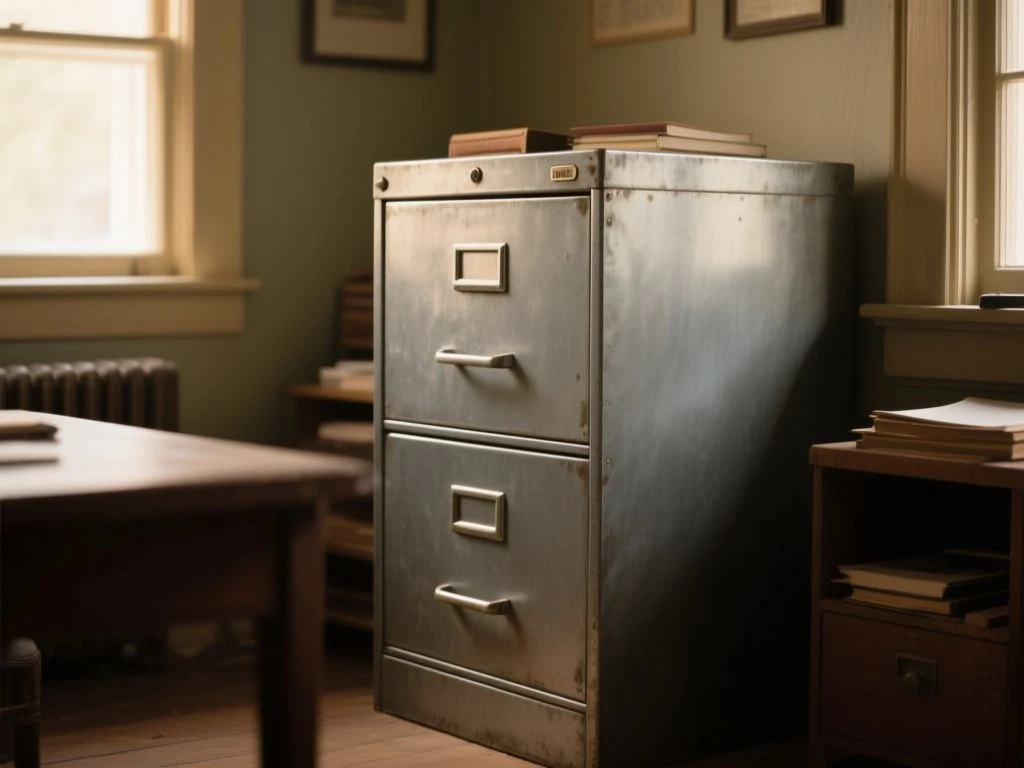
A filing cabinet can fit its stated footprint and still fail the doorway, the drawer clearance, or the paperwork it was meant to hold. The useful distinction is between external cabinet size and usable filing capacity: drawer depth, folder orientation, paper format, slide travel, and obstruction from the locking or anti-tip mechanism determine what actually fits. A sound filing cabinet buying guide also separates ordinary document storage from certified fire protection and security, because a heavier or lockable cabinet is not automatically fire-rated, media-safe, or resistant to forced entry.
Key Takeaways
- Measure the doorway, wall, drawer opening, and walking route before choosing a cabinet.
- Check clear internal drawer dimensions against A4, US Letter, or Legal-size folders.
- Review slide travel, load ratings, anti-tip interlocks, leveling, and anchoring instructions.
- Treat locks, fire ratings, rust protection, and ongoing maintenance as separate decisions.
Beginner: Start With the Room and the Paper
Why a filing cabinet still earns floor space
Paper storage earns its place when documents must remain easy to retrieve, protected from casual access, or organized under a records-management system. A cabinet can also keep paperwork out of bookcases, open shelving, and desk piles, leaving the work surface available for daily tasks. The useful test is simple: identify the records that must remain on paper, decide how often they are needed, and give those records a defined home.
Digital scanning and paperless storage may reduce the volume of active files, but scanning does not remove the need to decide what must be retained, what can be shredded, and what requires secure disposal. A paper shredder belongs near the filing routine, not as an afterthought beside an overflowing cabinet.
A filing cabinet supports a records system only when the drawer labels, retention decisions, and storage location match the way documents are actually used. A cabinet that is difficult to reach will encourage loose piles, even if its listed capacity looks generous.
Measure the route before admiring the finish
Start with the cabinet’s external width, height, and depth, then measure the doorway, hall, turns, and final position. Record baseboards, trim, radiators, desk legs, electrical outlets, and any door that must open beside the cabinet. The cabinet needs more than a vacant rectangle on a floor plan; the drawers need room to extend, and you need standing space to use them without blocking the room.
Small rooms punish deep furniture. A cabinet that leaves a narrow passage may technically fit yet make the home office awkward every day. Mark the footprint on the floor with painter’s tape. Open the imagined drawers into that taped area and check the reach zone from the desk, chair, and doorway.
Finish matters after fit. Powder-coated steel suits a practical office and can be wiped clean, while wood-look finishes may sit more comfortably beside shelving or a bookcase. A plain cabinet that leaves a workable passage is preferable to a handsome one that turns the filing area into a bottleneck.
Choose vertical or lateral storage by movement, not habit
A vertical filing cabinet stores paperwork from front to back. Its drawers usually occupy less wall width than lateral furniture, making that format useful where the available footprint is narrow but the room has enough depth. Vertical cabinets commonly appear with two to five drawers, although the drawer count alone says nothing about usable capacity.
A lateral filing cabinet organizes hanging folders side to side. Its wider drawer shape can make categories visible across a run, but the cabinet may consume more wall width and can create a larger obstruction when opened. Lateral storage may suit a long wall; it is less forgiving beside a desk, door, or tight circulation route.
Mobile filing cabinets add flexibility near a desk, though wheels do not erase the need to check stability, drawer extension, and the surface beneath them. Open-shelf filing cabinets provide fast visual access but do not offer the same enclosed storage or access restriction as a drawer cabinet. Shelving and bookcases remain useful for binders and supplies; filing drawers are intended for a different kind of retrieval.
Intermediate: Translate Paper Labels Into Usable Capacity
Check A4, US Letter, and Legal-size clearance
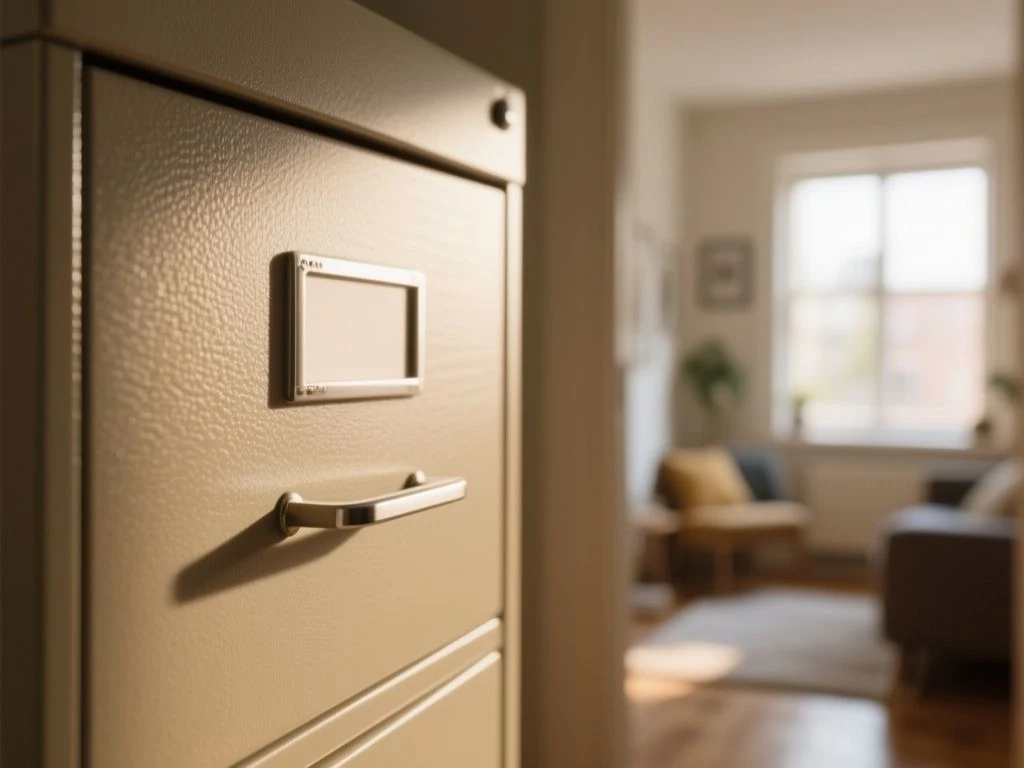
Nominal labels such as Letter, A4, and Legal do not guarantee usable filing space. Document dimensions must be checked against the actual drawer dimensions, including the clearance required by hanging file folders. Ask for the clear interior width, depth, and height, not only the cabinet’s outside measurements.
US Letter paper and A4 paper are close enough in everyday appearance to cause careless assumptions, but their different dimensions affect folder position and available clearance. Legal-size paper needs a longer filing path, so a drawer labeled for Letter or A4 should not be treated as Legal-compatible without a clear interior measurement.
Check whether the folder rails are fixed, adjustable, or absent. A drawer may be physically deep enough for a document while its rails place folders in the wrong orientation. Also check the space lost to the drawer front, rear stop, suspension hardware, lock housing, and anti-tip mechanism. That space is not available for files.
The listing may state a paper format but omit the actual clear dimensions. When that happens, the manufacturer does not provide enough information to confirm hanging-folder capacity. Pause the purchase rather than infer fit from a photograph or a marketing label.
How much room do hanging file folders need?
Hanging file folders need clearance for their supporting rails, the folder tabs, and the documents inside them. They also need enough breathing room to move across the drawer without catching on the sides or front. A packed drawer may hold more sheets on paper, but compressed folders are harder to move and place more stress on slides and handles.
Use the actual folders intended for the cabinet when possible. Place one folder in the drawer, check that its hooks sit fully on the rails, and verify that the drawer closes without the folder rubbing the lock area or rear stop. Repeat the check with the format you use most: A4, Letter, or Legal.
Hanging file folders require clear drawer dimensions and rail compatibility; an external cabinet label cannot establish usable filing capacity. This is the measurement that matters most for a paper-heavy home office.
Understand drawer suspension and extension
Drawer suspension is the hardware that carries the loaded drawer and guides its movement. The listing should identify the slide construction, drawer load rating, and extension range. A drawer that opens only partway hides folders at the back, while a drawer that extends farther changes how much open space the cabinet needs in front.
Load ratings matter because paper weight accumulates quickly across several folders. The rating should be read for the drawer, not casually assumed from the cabinet’s total weight. The number of drawers that may open at once also matters: an interlock may restrict simultaneous opening, while a cabinet without that feature may require more care during use.
Drawers commonly jam when folders are overfilled, rails are misaligned, the cabinet is not level, or contents press against the rear or side hardware. Sagging can follow excessive loading or damaged suspension. A drawer that stops short may be meeting its extension limit or an obstruction inside the cabinet; forcing the handle only transfers stress to the hardware.
Plan for the cabinet’s weight and finish
Powder-coated steel is a common practical finish for office storage because the coating forms the visible surface over the steel body. The listing should still identify how the cabinet is protected against corrosion and what cleaning instructions apply. Do not treat a painted finish as proof that a cabinet can tolerate damp floors, condensation, or harsh chemicals.
Weight affects delivery, placement, and floor planning. A heavy cabinet may be difficult to move through a small home, especially after loading. On the other hand, weight alone does not establish fire protection, forced-entry resistance, or safe stability.
Advanced: Evaluate Safety, Locks, and Special Protection
Why loaded drawers can make a cabinet tip
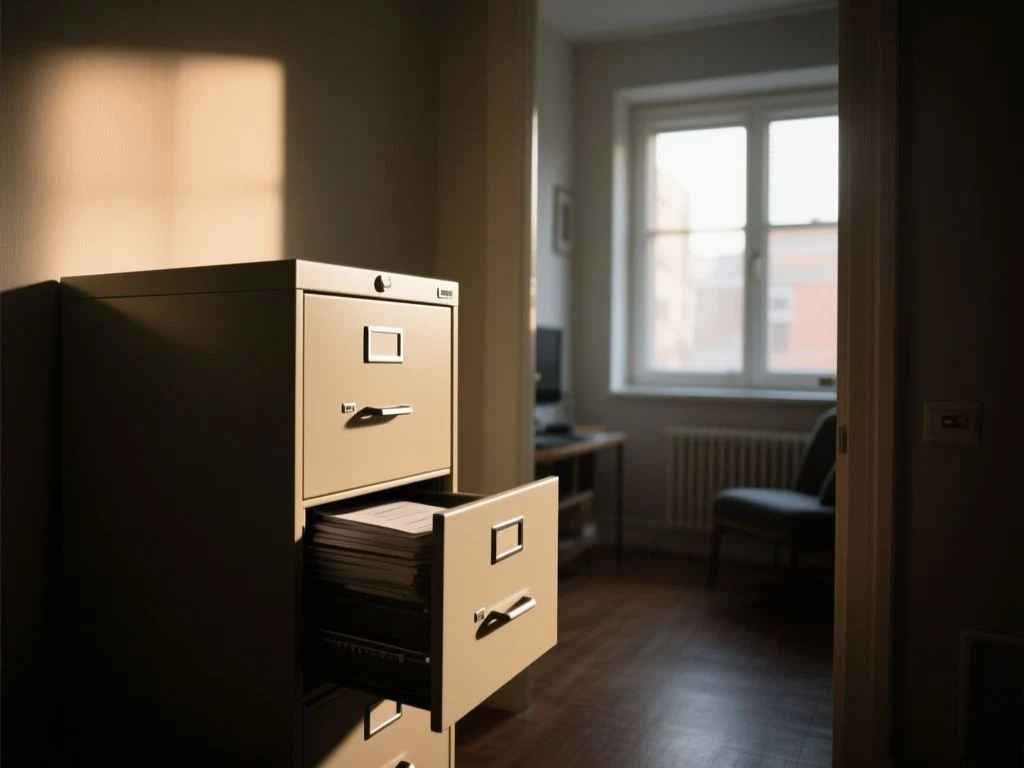
A fully extended loaded drawer shifts the cabinet’s center of gravity toward the open side. The risk increases when more than one drawer opens, when the floor is uneven, or when the cabinet is tall and not secured. The cabinet should stand level, and the manufacturer’s anti-tip instructions should be followed rather than improvised.
An anti-tip interlock is designed to limit which drawers can open together. That restriction reduces the chance that several extended loads shift the cabinet forward at once, but an interlock does not replace correct leveling or anchoring where anchoring is specified. Check the installation instructions for wall or floor fixing, especially for a tall cabinet, a cabinet used in a busy passage, or a location where children may pull a drawer.
A fully extended loaded drawer can shift a cabinet’s center of gravity, so anti-tip interlocks, leveling, and suitable anchoring are central safety checks. The room layout matters as much as the cabinet hardware.
Know what each lock actually does
A keyed lock requires a physical key and is straightforward for a household with a controlled number of users. A combination lock removes the need to store a key, though the combination itself must be managed. A central locking system controls several drawers from one locking point, which can be convenient when one action needs to restrict access throughout the cabinet.
These systems restrict ordinary access; they do not automatically provide certified burglary resistance, privacy compliance, or protection from fire and water. A lock also cannot correct an unsecured cabinet that can be carried away or opened through a weak body, hinge, or drawer construction. Match the lock to the privacy problem instead of treating any lock as a complete security specification.
Separate fire resistance from ordinary storage
Fire-resistive equipment is tested for defined contents and conditions. The UL 72 fire-resistive equipment standard addresses classified protection for records and other contents under its test conditions, while EN 15659 covers light fire storage classifications. A listing should state the applicable standard, classification, and protected contents; the words fire-resistant or fireproof alone are not enough.
Protection for paper documents does not automatically protect photographs, USB drives, optical media, magnetic media, or electronics. Paper and digital media have different protection needs, so a cabinet certified for paper records should not be assumed suitable for a mixed archive. Store irreplaceable photographs and digital files according to the protection class named by the manufacturer.
A fire-resistant cabinet certified for paper documents is not automatically suitable for USB drives, photographs, optical media, or other electronics. Fire safety and document storage are related decisions, not interchangeable labels.
Use office-storage standards as a check, not a shortcut
The ANSI/BIFMA X5.9 office storage standard provides a recognized framework for evaluating office storage products. A manufacturer’s reference to the standard is more useful when the listing explains what was assessed and for which configuration. A vague claim of compliance should prompt a request for the exact scope of the claim.
Safety information should also cover drawer load ratings, slide construction, the number of drawers permitted to open at once, anti-tip behavior, and anchoring. If those details are absent, the cabinet may still be useful for light storage, but the buyer cannot make a fully informed decision about a heavily loaded filing system.
Advanced: Plan Maintenance, Cost, and Long-Term Use
Keep the cabinet clean and dry
Clean powder-coated steel with a soft cloth and a mild cleaner suitable for the finish, then dry the surface. Keep moisture away from drawer seams, lock openings, and the floor beneath the cabinet. Do not use abrasive pads that can scratch the coating or leave residues that attract dust.
Lubrication should follow the manufacturer’s instructions because different slide and lock designs require different products. Do not spray an unknown lubricant into a lock or onto a slide and assume that more product will solve a jam. First remove loose paper, inspect for a bent rail or displaced folder, confirm that the cabinet is level, and then use only the specified lubricant if maintenance calls for one.
Rust protection begins with controlling moisture and dealing with chips or scratches before corrosion spreads. Check the underside, drawer edges, and areas near a damp wall. A cabinet in a dry office has a different maintenance burden from one placed beside a utility area or on a floor that is regularly wet-cleaned.
Count the ongoing costs before choosing a format
The initial cabinet price is only one part of ownership. Allow for hanging file folders, labels, replacement keys or lock components, delivery into the room, assembly, anchoring hardware if specified, and the time required to sort existing papers. A deep cabinet can also demand more floor space and make future room changes harder.
Used filing cabinets can offer sound storage, but inspect the drawer fronts, rails, lock, anti-tip parts, finish, and mounting points before committing. Missing keys, bent suspension hardware, rust, and unavailable replacement parts can erase the apparent saving. New furniture may provide clearer documentation, but a new label still does not replace checking the actual interior dimensions and safety information.
Environmental impact deserves a practical reading. A durable steel cabinet that remains useful for years may avoid premature replacement, while a damaged used cabinet may need parts that are difficult to source. Reuse is sensible when the structure, drawers, and safety features are complete.
Make the cabinet work with the rest of the office
Place active files inside the ergonomic reach zone and archive material farther away. Keep the drawer path clear of the chair, paper shredder, and desk pedestal. A cabinet should support the work pattern rather than force the user to twist around furniture each time a document is needed.
Visual balance matters in a small office. Coordinate the cabinet’s colour with the desk and storage around it, but do not hide a drawer behind a decorative screen or a large plant. The same room-first discipline applies to other wall and task elements; for example, the Wall Mirror Buying Guide covers placement decisions where wall clearance and circulation affect the result.
Lighting deserves attention as well. A dark drawer interior and a poorly lit filing corner make labels harder to read, so review the practical difference between task lighting and overhead lighting for a home office before finalizing the cabinet position.
Use a final purchase checklist
- Measure the narrowest doorway, the route into the room, and the cabinet’s final footprint.
- Measure the open drawer path and confirm that desk, chair, doors, and walkways remain usable.
- Match clear internal dimensions and folder rails to A4, US Letter, or Legal-size documents.
- Check drawer load ratings, slide construction, extension, and permitted simultaneous openings.
- Confirm the anti-tip interlock, leveling method, and any wall or floor anchoring instructions.
- Separate ordinary locking from certified burglary resistance and separate both from fire protection.
- For fire storage, identify the standard, classification, test conditions, and contents covered.
- Review cleaning, lubrication, rust prevention, replacement-key, and parts information.
The correct filing cabinet is the one whose clear drawer capacity, opening path, safety system, and protection claims match the room and the records. A polished finish comes after those checks.
Frequently Asked Questions
How do I confirm that a filing cabinet fits A4, Letter-size, or Legal-size files?
Ask for the clear internal drawer width, depth, and height, then compare those measurements with the required folder format and rail position. Do not rely on the outside dimensions or a drawer label alone. Check for space lost to the drawer front, rear stop, lock housing, slides, and anti-tip hardware. Test the actual hanging folders if the seller provides enough information to do so.
Is a lockable filing cabinet suitable for confidential or fire-sensitive records?
A lock restricts ordinary access, but a keyed, combination, or central locking system does not by itself establish burglary resistance, privacy compliance, fire protection, or water protection. Paper protection should not be assumed to cover USB drives or electronics.
When should a filing cabinet be anchored to a wall or floor?
Follow the manufacturer’s anchoring instructions whenever they specify fixing, particularly for a tall cabinet, a heavily loaded unit, an uneven floor, or a position near a busy route. A fully extended drawer moves the load toward the front, and opening several drawers can increase instability. Leveling and an anti-tip interlock are important, but they do not cancel an anchoring requirement.
Why do filing cabinet drawers jam, sag, or stop opening fully?
Overfilled folders, displaced contents, misaligned rails, an unlevel cabinet, damaged slides, and a rear or side obstruction can all limit drawer movement. Start by removing excess files and checking that folders sit correctly on the rails. Inspect the suspension hardware without forcing the handle. If the drawer remains distorted or the manufacturer lists a load limit that has been exceeded, use the approved repair or replacement route.
A careful filing cabinet buying guide should leave you with measurements, not guesses. Measure the route, inspect the clear drawer space, separate access control from fire and burglary claims, and choose a format that supports the room you actually have.