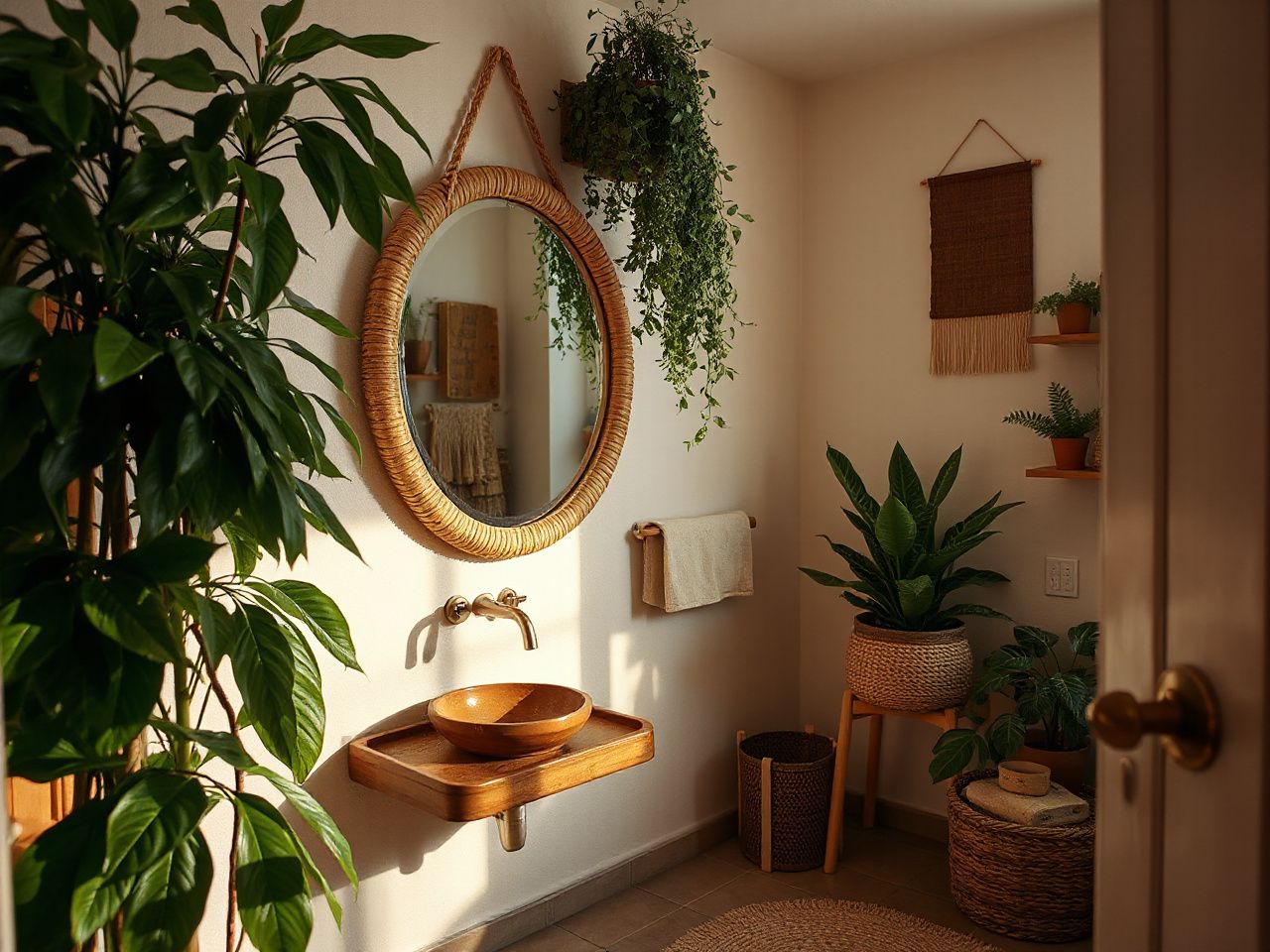
Boho bathroom design layers natural materials, warm patterns, and vintage or handmade pieces into a room that most style guides push toward stark and minimal. The tradeoff is upkeep: natural fibers, unsealed wood, and porous tile all behave differently in a humid bathroom than they do in a living room, so getting this look to last means knowing which materials tolerate a wet room and which need to be kept out of direct spray.
None of this requires a full renovation. The thirteen ideas below range from a single wall hanging to a full material overhaul, with notes on what holds up long-term and what needs a bit of maintenance to stay looking intentional rather than worn out.
1. Macramé Wall Hangings for Artisan Charm
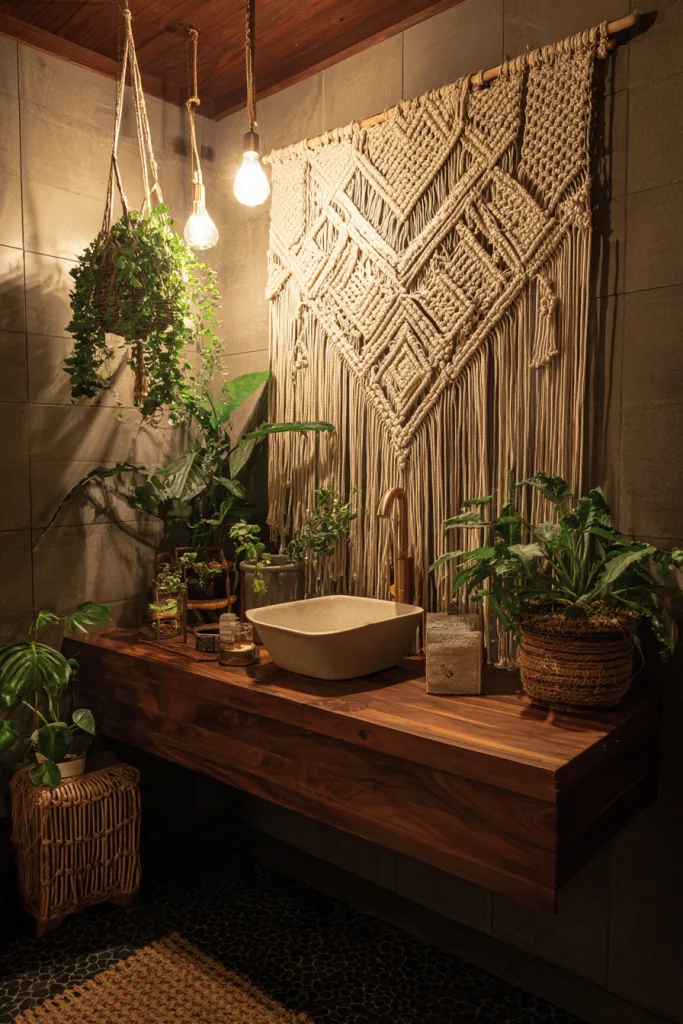
A macramé hanging above the toilet or beside the mirror adds texture to a plain wall without needing a nail pattern more complex than a single hook. Natural cotton cord holds up reasonably well in a bathroom’s humidity swings compared to some other fiber crafts, but it’s still a textile — keep it away from the direct line of shower spray, and expect it to need an occasional gentle vacuum or shake-out as dust and moisture combine over time. A large single piece makes more impact on an open wall than several small ones scattered around.
Practical note: Hang macramé away from the shower’s steam path and make sure the bathroom fan actually vents to the outside, not just into the attic — that matters more for textile longevity than the hardware you hang it with.
2. Terracotta and Earth-Toned Tiles
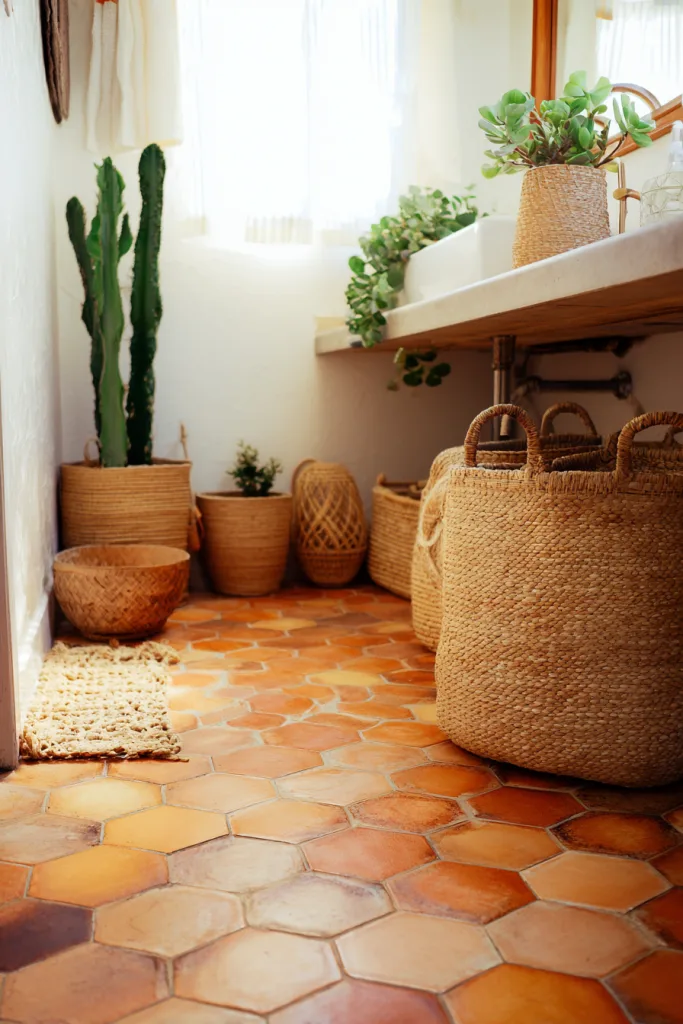
Terracotta’s warm, slightly uneven color is a genuine feature, not a defect — kiln variation means no two tiles look identical, which is part of the appeal. It works well as flooring or as an accent wall behind a vanity, paired with white fixtures and natural wood. Because terracotta is a fired clay body, it’s more porous than porcelain and needs a penetrating sealer at installation, then resealing every couple of years in a bathroom, more often on the floor than the walls. Skipping that step is the main reason terracotta bathrooms end up staining or developing water marks faster than people expect.
Practical note: Pair terracotta with plain white subway tile rather than another patterned tile, so the two don’t compete for attention in a small room.
3. Rattan and Wicker Storage Solutions
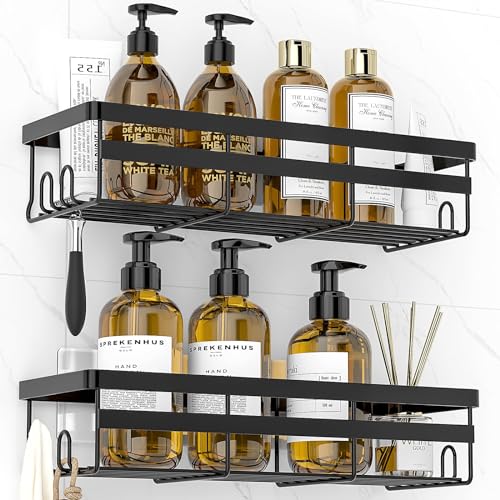
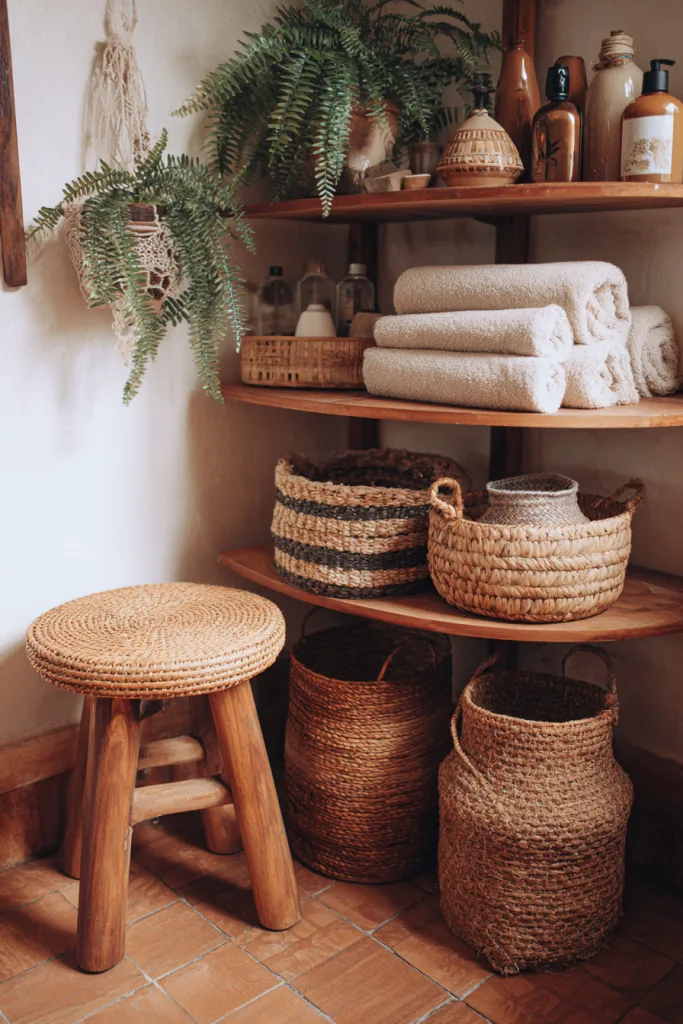
Rattan ladder shelves, floating rattan shelves, and woven baskets organize toiletries with a warmth that plastic bins don’t offer. Mixing weave patterns and stain tones adds dimension, but rattan and wicker are still plant fiber — they should stay away from a shower’s direct spray zone and get wiped dry rather than left damp, since sustained moisture is what causes mildew spotting and eventual weakening of the weave. A darker stain reads more dramatic against white walls; a natural, unstained finish keeps the room feeling lighter.
Practical note: Line baskets with a washable fabric liner so small items don’t fall through the weave, and so the liner (not the rattan itself) takes the brunt of daily spills.
4. Vintage Persian Rugs
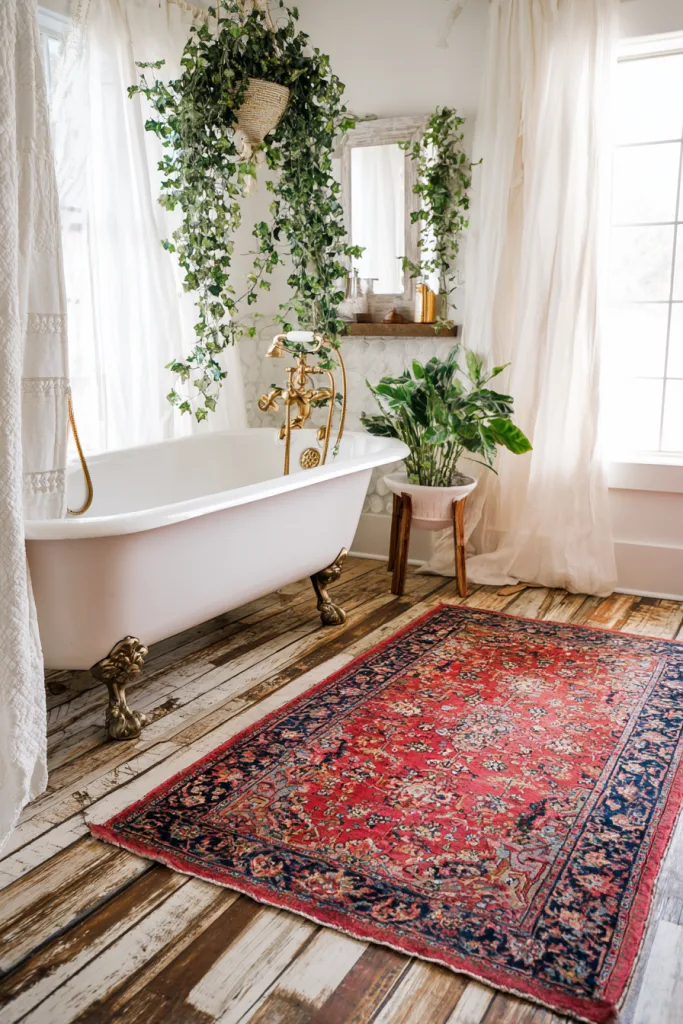
A vintage or vintage-style Persian rug or runner, layered over a plain bath mat, adds pattern and color at floor level that most bathrooms never get. Look for smaller rugs at thrift stores, estate sales, or rug outlets rather than paying full price for a large one, since the bathroom is a demanding environment for any textile. A flatter, lower-pile weave is the more practical choice here — it dries faster and traps less moisture than a thick pile rug, which matters directly next to a tub or sink where splashing is routine.
Practical note: Use a rug pad for grip and rotate the rug periodically so wear and any fading from bathroom light happens evenly rather than in one spot.
5. Hanging Plants and Greenery
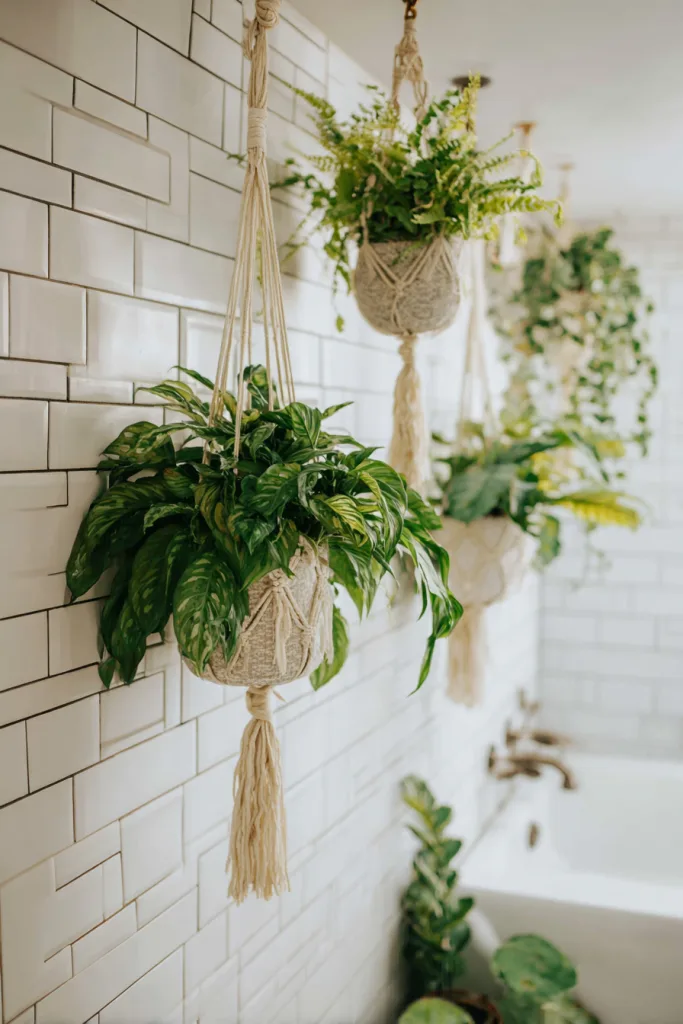
Bathrooms with a window offer a genuinely good environment for humidity-tolerant houseplants. Pothos, snake plant, and ZZ plant are commonly recommended for bathrooms specifically because they tolerate lower light and higher humidity better than most houseplants — though “tolerant” isn’t a guarantee, and a bathroom with no window at all will struggle to keep most plants alive long-term regardless of species. Macramé hangers near a window make use of vertical space a shelf can’t. Mixing a few plant sizes — a small one on the sill, a trailing one hung higher — reads more natural than a single uniform row.
Practical note: Start with one low-maintenance plant before committing to a full hanging garden; it’s easier to learn your bathroom’s actual light and humidity pattern with a single plant than to troubleshoot five at once.
6. Moroccan-Inspired Lighting Fixtures
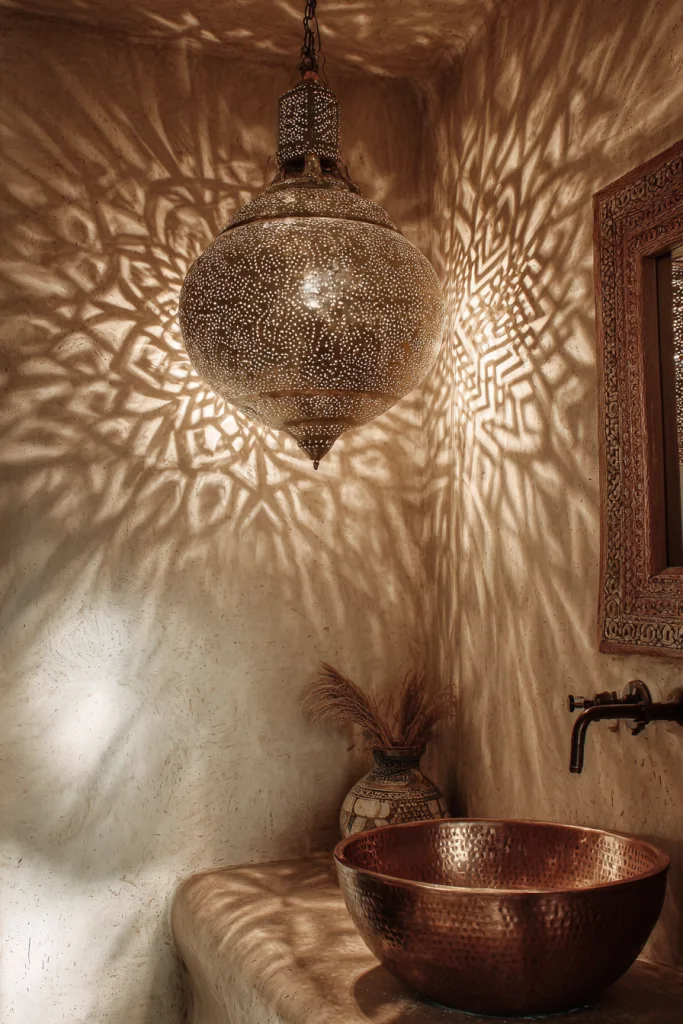
Pierced metal lanterns work as art as much as light sources: because the metal blocks most of the light and only lets it escape through the cutouts, they throw a shadow pattern across the walls and ceiling that a plain fixture never would. Brass, copper, or brushed gold finishes tie into warm hardware elsewhere in the room. A pendant works well over a freestanding tub; wall sconces flanking a mirror give more even light for grooming than a single pierced fixture would on its own, since the cutouts scatter light rather than directing it evenly.
Practical note: If a pierced fixture is your only light source at the mirror, add a plain, fully-lit sconce or two nearby — the pattern is beautiful but it’s not built for even task lighting on its own.
7. Freestanding Wooden Bathtubs
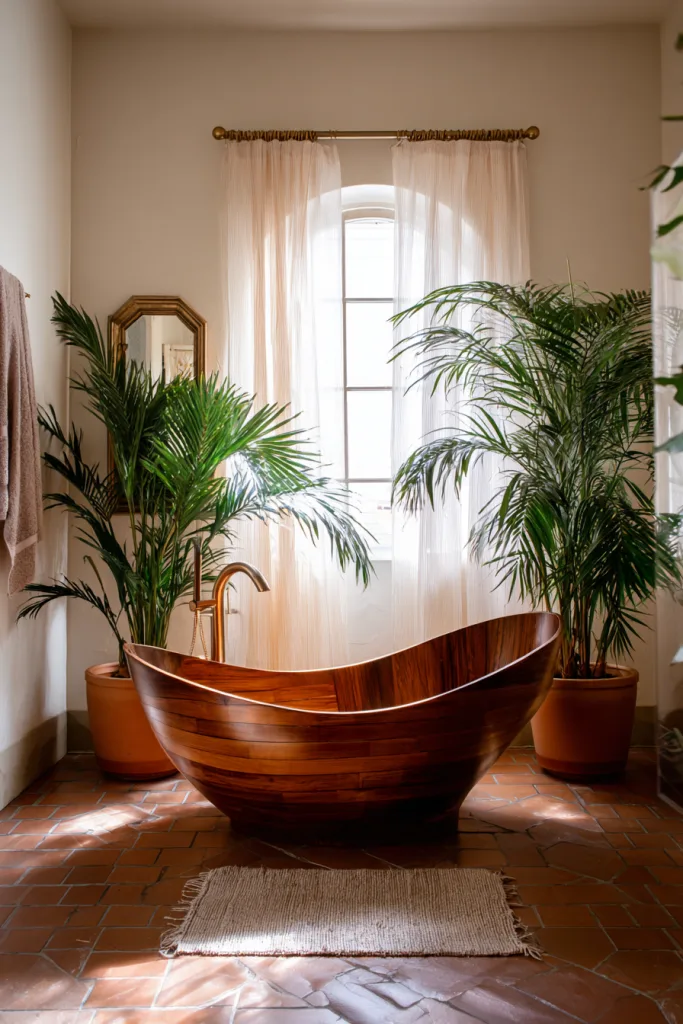
A tub shaped from staved or carved timber reads as furniture rather than plumbing, which is exactly the effect that makes it a strong focal point. Teak and cedar are the common choices because of their natural water resistance and the patina they develop with age, but “water-resistant” isn’t “waterproof” — these tubs are typically sealed or lined and need periodic re-oiling to stay watertight, the same maintenance an outdoor teak bench needs. They’re also heavy, so floor support is worth confirming before installation, especially on an upper floor. This is a large-bathroom idea; a wooden tub needs clearance on multiple sides to be appreciated rather than just stepped around.
Practical note: Position the tub away from direct shower spray and make sure the room ventilates well — the wood’s finish is what’s protecting it, and constant dampness will outpace any sealant.
8. Patterned Cement Tiles
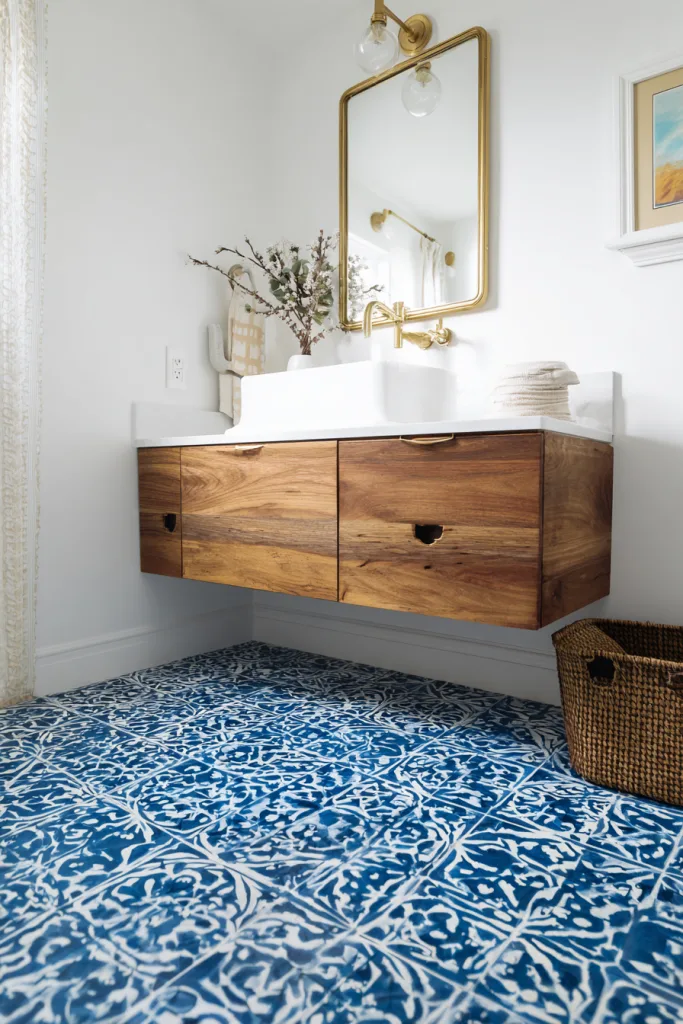
Handmade cement tiles get their pattern from pigment pressed into a thick top layer rather than a glaze fired onto the surface, which is why the pattern doesn’t wear through underfoot the way a printed vinyl tile eventually would. They work on feature walls, shower floors, and backsplashes. Moroccan, Spanish, and Portuguese pattern traditions are the usual reference points; black-and-white combinations read graphic and dramatic, while blues, greens, and terracotta tones stay warmer. Because each tile is pressed individually, slight variation between tiles is normal and part of the handmade look, not a defect.
Practical note: Use patterned cement tile in one contained area — a shower niche or a single accent wall — rather than throughout, both for cost and so it stays a focal point instead of visual noise.
9. Bamboo and Natural Fiber Accessories
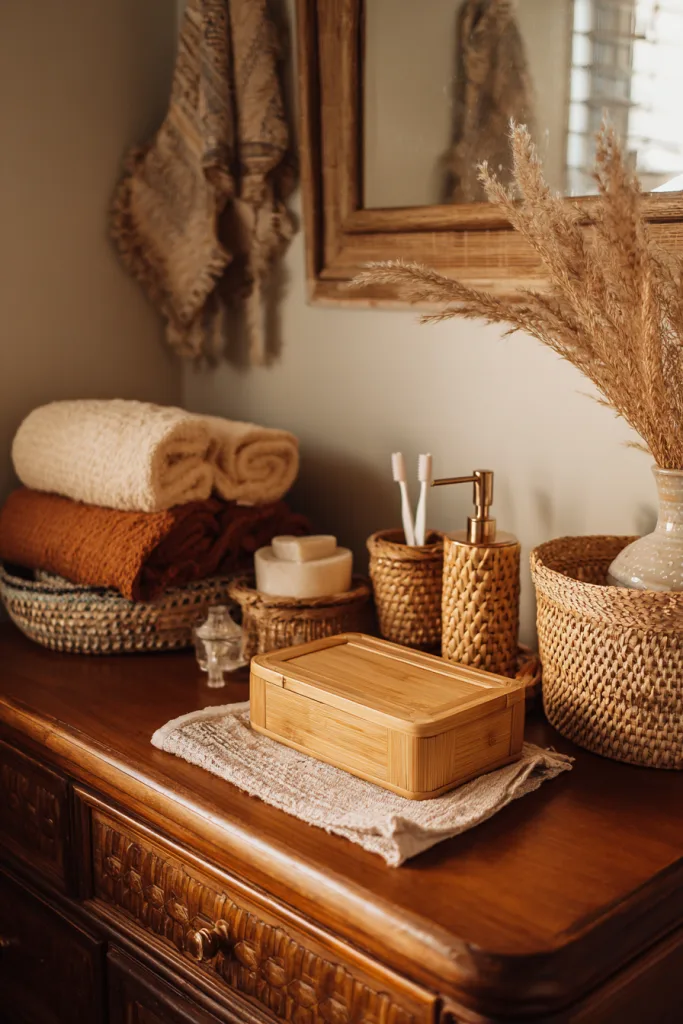
Swapping plastic soap dishes, toothbrush holders, and bath caddies for bamboo is a low-cost way to bring natural texture into daily-use items. Bamboo is a fast-growing grass rather than a hardwood, so it regenerates in a few years rather than the decades a hardwood tree needs — part of why it’s a common “sustainable” material choice. It’s naturally more water-tolerant than most woods, develops an attractive honey tone with age, and needs little upkeep beyond the occasional wipe-down. Jute and seagrass baskets add a different fiber texture alongside it.
Practical note: Mix bamboo with a darker wood tone like walnut for contrast, or keep all the wood tones light for a more coastal-leaning version of the same look.
10. Vintage Brass Hardware and Fixtures
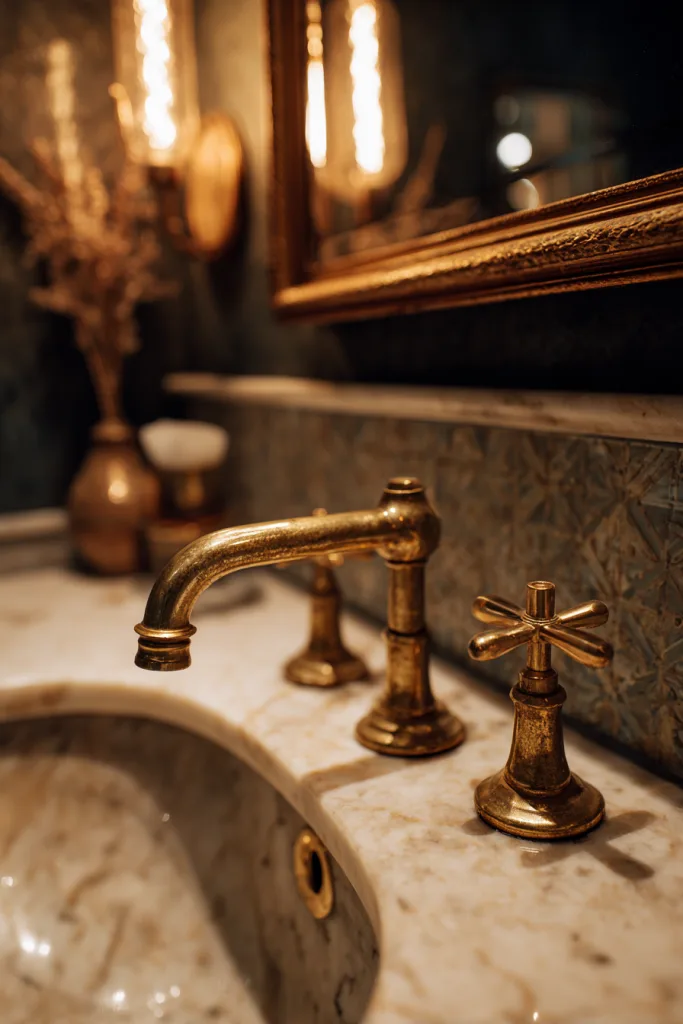
Swapping chrome for brass on faucets, drawer pulls, and towel bars is one of the more affordable full-room updates, since it doesn’t require replacing the fixtures themselves in every case. Unlacquered brass develops a natural patina over months and years of handling and water exposure — a look many boho and vintage-leaning rooms specifically want — while lacquered brass keeps a consistent bright finish and won’t patina at all. Neither is wrong; it’s a maintenance and aesthetic choice made up front, since lacquer isn’t something you can easily add later to already-patinated brass.
Practical note: If mixing metals, three finishes is a reasonable ceiling for one room — brass, plus maybe black and one more — beyond that the room starts to look uncoordinated rather than eclectic.
11. Textured Plaster Walls
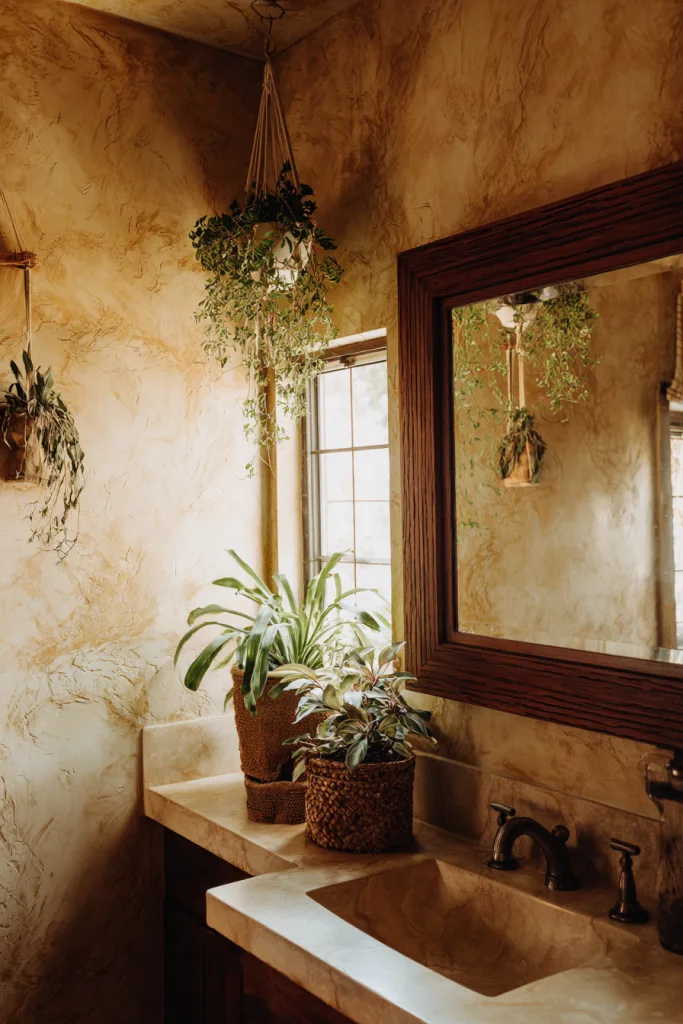
Venetian plaster, tadelakt, and lime wash are applied in thin coats built up by hand, which is why they catch light differently from one patch of wall to the next instead of reading as one flat sheen. Tadelakt in particular is a traditional Moroccan plaster finish that, when properly applied and burnished, is water-resistant enough for wet areas — it’s a specialized skill, though, and worth hiring an experienced plasterer for rather than a first DIY attempt in a shower. Warm neutrals (cream, beige, soft terracotta) suit the material best. Because the texture is hand-applied, no two walls turn out identical, which is the appeal and also why sample panels are worth requesting before committing to a full room.
Practical note: If a full room feels like too much cost or commitment, one accent wall gets most of the visual effect for a fraction of the material and labor.
12. Eclectic Artwork and Gallery Walls
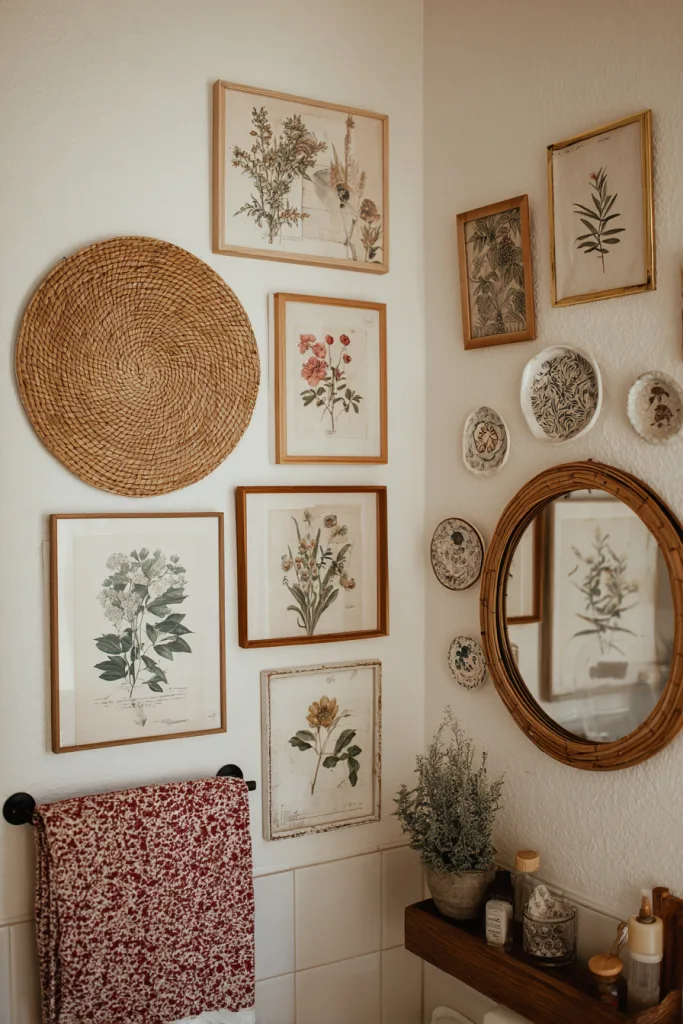
A gallery wall mixing botanical prints, abstract pieces, vintage photographs, and small textile hangings works when the frames share some connective thread — wood tones, or a limited color palette — even if the art styles themselves vary widely. Mixing frame materials (wood, metal, an ornate vintage find) reads as curated; mixing them at random sizes with no plan reads as cluttered. Adding a few three-dimensional pieces, like a small woven basket or a ceramic plate, breaks up an all-flat arrangement.
Practical note: Lay the arrangement out on the floor first and photograph it from above before putting any holes in the wall — it’s far easier to adjust spacing on the floor than to patch and repaint.
13. Colorful Textiles and Layered Towels
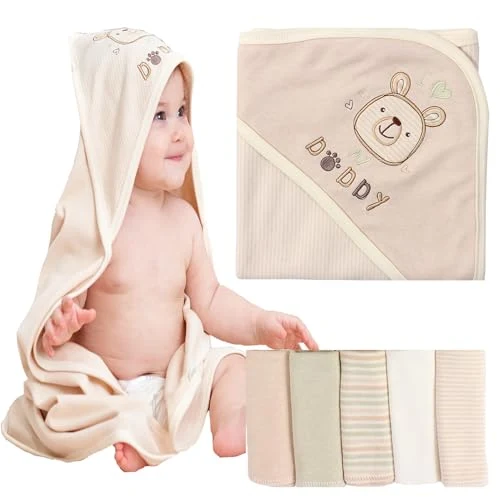
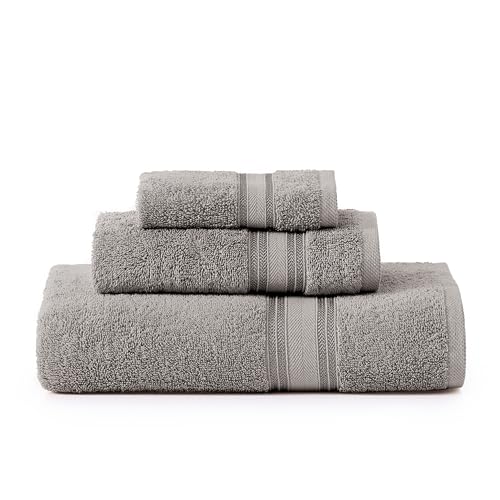
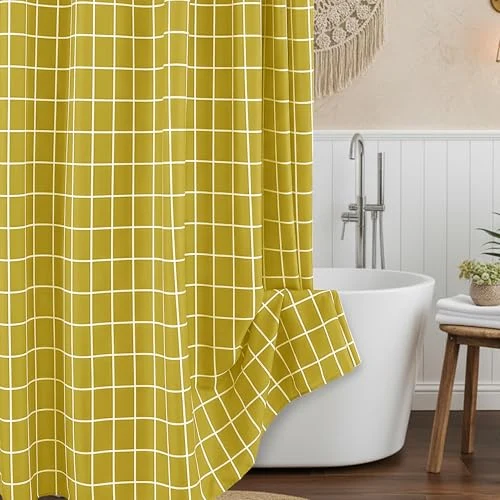
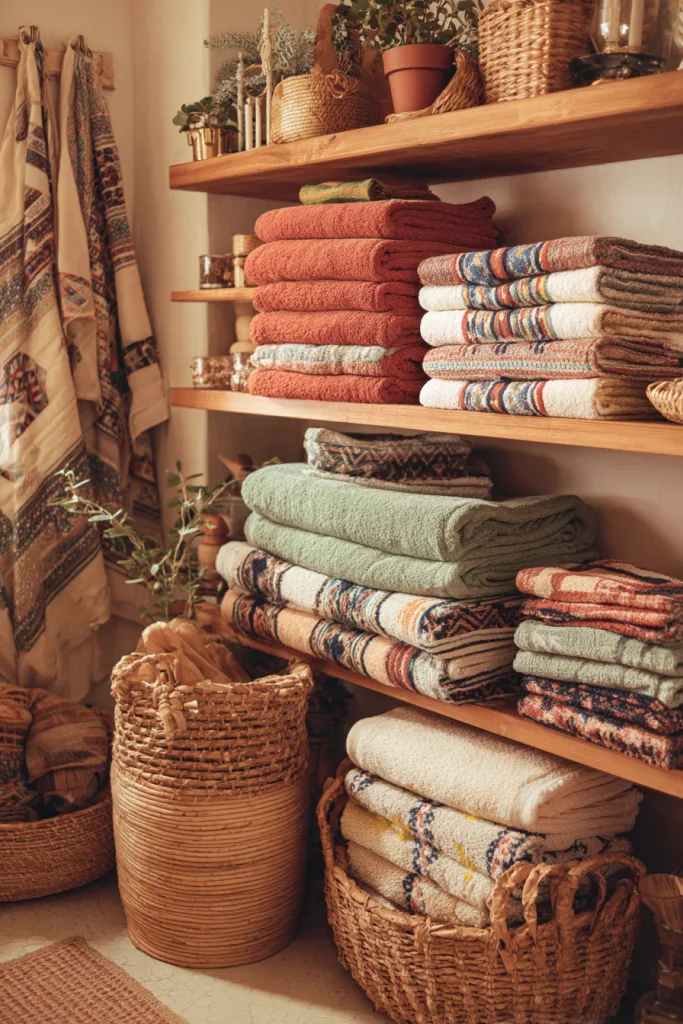
Layering Turkish towels, fringed hand towels, and embroidered washcloths in different patterns and colors is one of the cheapest ways to bring boho pattern into a bathroom, since none of it requires a material change. Cotton and linen are the practical fiber choices — they hold up to repeated washing better than most novelty blends. Display folded towels on open shelving or rolled in a basket rather than only on a single bar, so more of the pattern is visible. Coordinate shower curtains and bath mats to the towel palette loosely (matching colors, not matching patterns) for a layered rather than matchy look.
Practical note: Turkish and linen towels tend to soften with repeated washing rather than wearing out, which is a real reason they’re worth the higher upfront cost over a standard cotton set.
Putting a Boho Bathroom Together
Boho works through layering, not a single statement piece, and it’s genuinely flexible on budget: a few plants, a thrifted rug, and swapped hardware get you most of the way there without any construction. Start with whichever element appeals most — a rug, a light fixture, a wall of art — and add from there rather than trying to source everything at once.
The one rule worth keeping in mind throughout is moisture. Natural fibers, unsealed wood, and porous tile all need either distance from direct water, a sealant, or better ventilation than a synthetic alternative would require. None of that rules the materials out — it just means factoring maintenance into the choice up front rather than being surprised by it later.
Frequently Asked Questions
How much does it typically cost to create a boho bathroom?
It scales from very low to high-end depending on approach. Plants, textiles, and thrifted vintage accessories can update a bathroom for well under $300. A mid-range refresh with new fixtures, tile work, and a few custom elements is more commonly in the $2,000–$5,000 range. A full renovation with a wooden tub, custom tilework, and designer lighting can run $10,000 or more. Because boho leans on found and vintage objects rather than uniformly new ones, it’s one of the more flexible styles to scale to a smaller budget.
What colors work best for boho bathroom designs?
Warm neutrals as a base — cream, beige, terracotta, warm white — with jewel-toned or earthy accents layered on top: rust, sage green, mustard, deep teal, burgundy. Natural wood tones, brass metal, and plant greens round it out. The style tolerates mixing several accent colors more than most, but it still reads best when there’s one dominant neutral base holding the room together.
Can I create a boho bathroom in a small space?
Yes. Lean on vertical space — hanging plants, wall-mounted storage — rather than floor-based pieces. Pick one statement element (a patterned tile niche, a vintage mirror) rather than several competing ones, and keep the rest of the palette light so the statement piece has room to stand out. Smaller accessories like bamboo organizers and one woven basket bring in natural material without eating floor space.
How do I maintain natural materials in a humid bathroom?
Run the exhaust fan during and after showers, and confirm it vents to the outside rather than into an attic or crawlspace. Seal wood surfaces with a water-resistant finish and expect to reapply it periodically. Wipe rattan and bamboo dry rather than letting them air-dry damp. Keep wooden tubs and furniture out of direct spray. Reseal cement and terracotta tile every couple of years. Choose plants that are commonly recommended for bathroom conditions rather than assuming any houseplant will adapt.