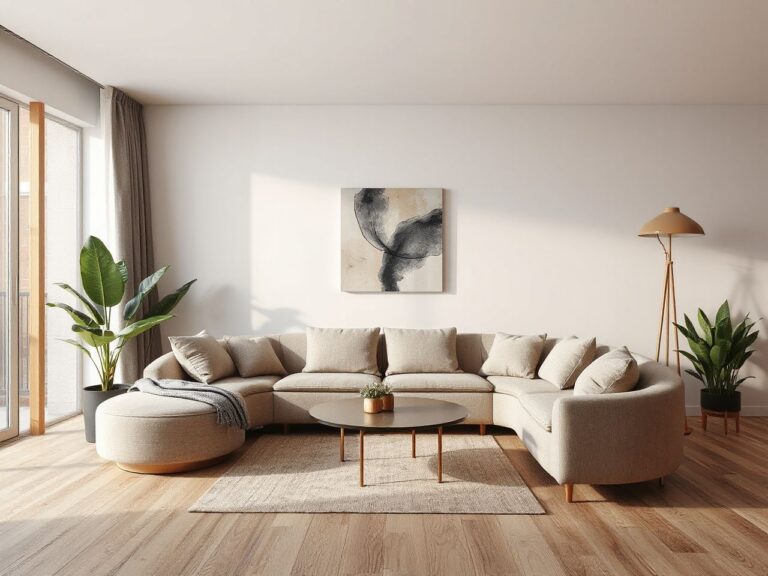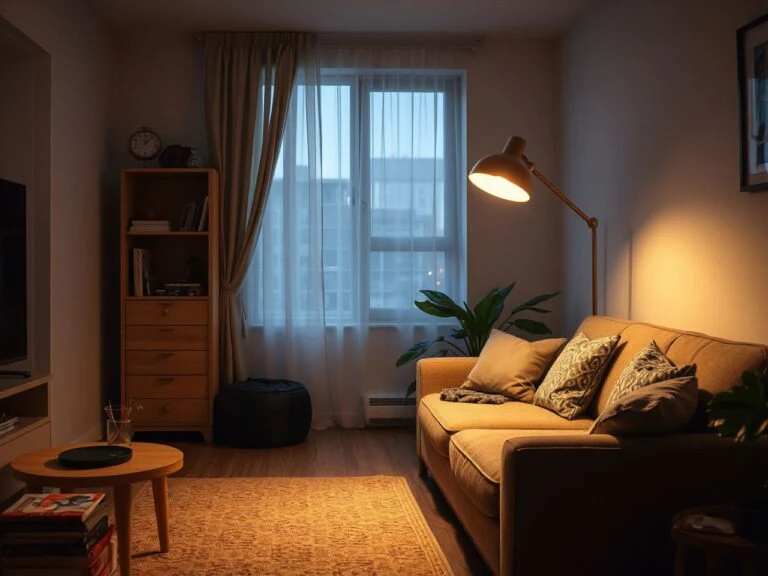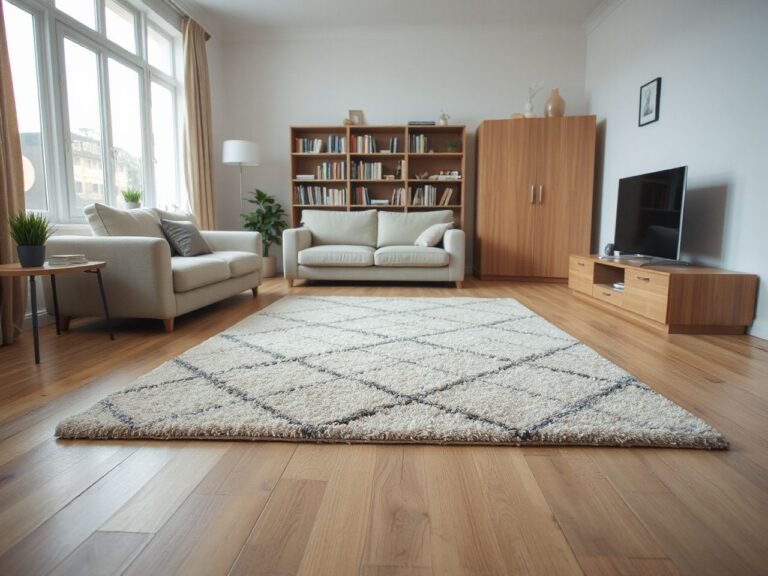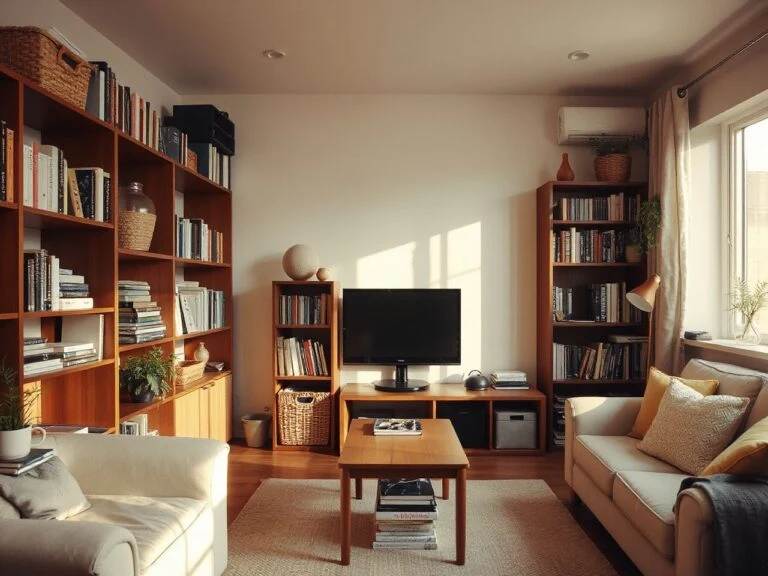
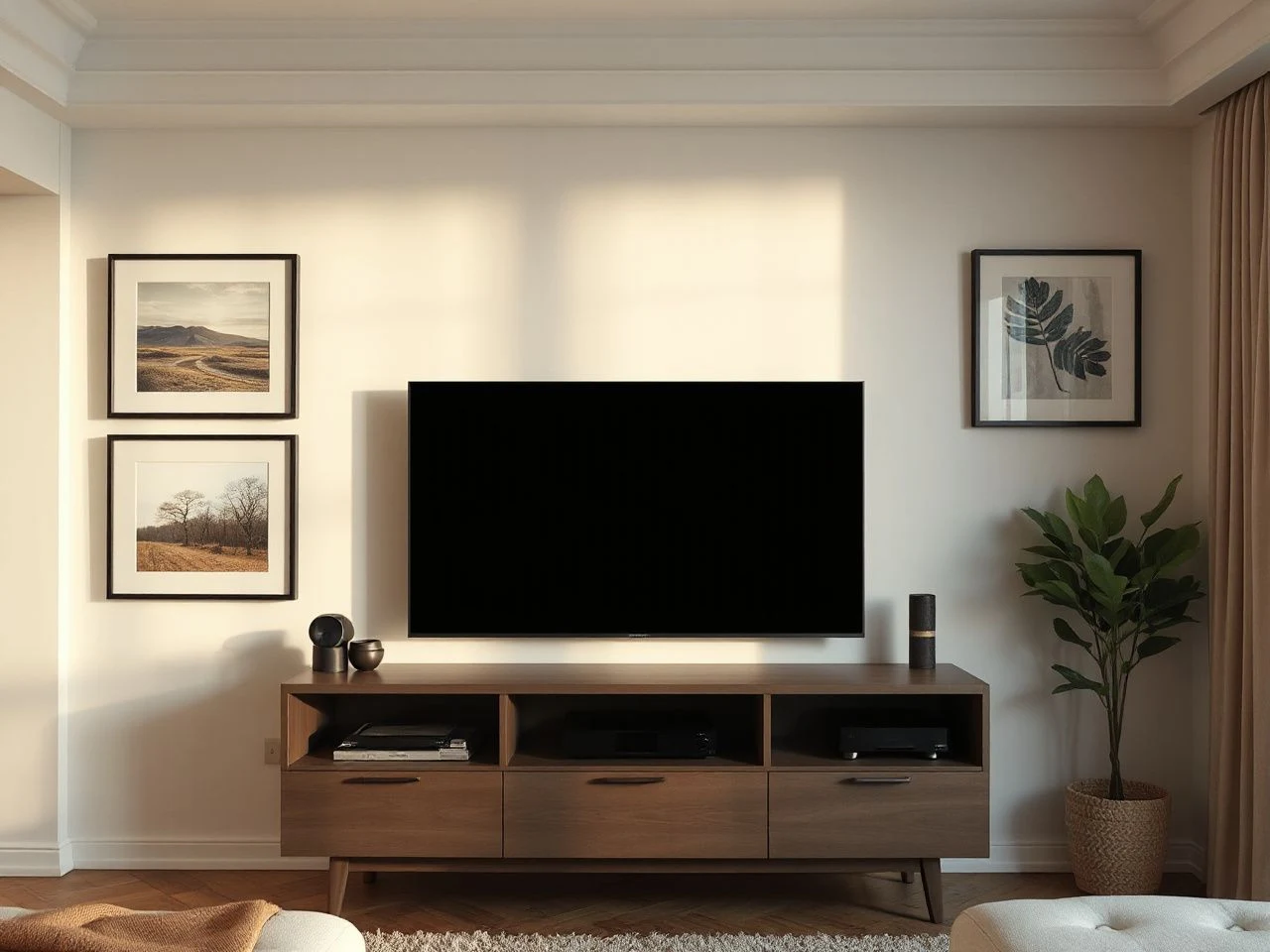
The middle of the wall is rarely the right place for a television. The practical reference point is the seated viewer’s eye line, not the wall’s midpoint or the TV’s bottom edge. Screen size and seating height shift where the center of the screen should land. An experienced approach also separates viewing height from installation constraints, such as stud locations, bracket movement, fireplace heat, cable access, and soundbar clearance. That distinction is the key to deciding how high a TV should be mounted in a real living room.
A television should serve the seating position first. The wall, bracket, cables, and surrounding furniture then have to support that decision. Flat-pack is best judged by its hardware rather than its finish, and the same principle applies here: a beautifully arranged TV wall is only successful if the fixing method is sound, the screen stays level, and the setup remains usable after installation.
Key Takeaways
- Use the seated viewer’s eye line as the main reference point for the screen’s center.
- Screen size, seating height, soundbar clearance, and fireplace position can change the final height.
- Check wall studs, suitable drywall anchors, bracket compatibility, cables, and the power outlet before drilling.
- Use a spirit level and secure fixings because a tilted or loose TV is distracting and potentially unsafe.
How High Should a TV Be Mounted? Start With the Seated Eye Line
The best mounting height begins with the person who will watch the television most often. Sit in the main viewing seat in a natural posture, then identify the height of your eyes from the floor. The center of the screen should be planned around that line, with room for the TV’s size, the bracket’s position, and any equipment beneath it.
The seated viewer’s eye line is the primary reference for TV mounting height because the viewing position determines comfort more directly than the wall’s dimensions. A wall-mounted television that is centered on a wall can still sit too high for the sofa in front of it.
Should the middle of the TV line up with seated eyes?
Use the middle of the screen as the starting point rather than the lower edge of the television. The screen’s center gives you a more useful target because a large display extends both above and below that point. If you plan from the bottom edge alone, the final position can drift upward as the screen size changes.
Ask another person to hold a paper outline, cardboard panel, or the empty bracket position against the wall while you sit down. Look straight ahead, not upward toward the proposed screen. Check the position from the seats that matter most, especially if the living room seating layout includes a sofa and lower chairs at different heights.
- Place the main seat in its normal position.
- Adopt the posture used for watching television rather than sitting unusually upright.
- Mark the seated eye line on the wall with removable tape.
- Position the screen’s center near that line, then check the edges and connected equipment.
Do not treat a perfectly level eye-line match as a rigid rule if it creates another problem. A soundbar, power outlet, cabinet, or low shelf may need space beneath the screen. The final choice should balance viewing comfort with safe access and a clean cable route.
How screen size changes the answer
A larger screen occupies more wall area above and below its center. That means the screen can have the same center point as a smaller television while its bottom edge sits closer to the furniture beneath it and its top edge reaches higher on the wall. Screen size changes the edges more visibly than it changes the basic reference point.
Flat-panel displays are typically under 10 centimetres (3.9 in) deep, but the television still needs clearance for its bracket, cables, ventilation openings, and nearby equipment. A shallow display can look close to the wall while its connections still require careful planning.
Measure the actual television first, including where the mounting holes and cable connections are. Don’t rely on the screen’s diagonal size to guess where the lower edge will land. The manufacturer’s dimensions and the bracket’s adjustment range are more helpful for the installation.
Step 1: Plan the Wall Before Drilling
The correct height is only useful if the wall can safely carry the bracket and television. Begin with the wall structure, then confirm the bracket and cable plan before making a hole.
Locate wall studs and suitable fixing points
A wall-mounted television depends on a secure connection between the wall-mount bracket and the wall structure. Use a stud finder to locate wall studs, then confirm the positions with careful measuring and a small inspection method permitted by the wall’s construction.
Wall studs provide a different fixing point from drywall alone. If the bracket cannot align with suitable studs, use drywall anchors only when the anchor type, placement, and load rating match the bracket and television installation requirements. An anchor is not automatically suitable because it fits through the bracket hole.
Read the bracket instructions and television manual together. Compatibility includes the mounting-hole pattern, the bracket’s permitted load, the fixing hardware, and the range of movement needed for the chosen position. The bracket and television must be compatible before either is attached to the wall.
A wall structure that cannot accept the bracket’s fixing method should be corrected before the television is lifted into place. If the wall type or hidden services are unclear, ask a qualified installer to assess the site rather than guessing from the surface.
Check hidden services, the outlet, and cable access
Inspect the proposed drilling area for the power outlet, cables, pipes, and other hidden services. The television should be positioned so that its power cable and signal cables can reach their destinations without sharp bends, strain, or an inaccessible connection.
The power outlet needs to be part of the height plan from the start. It shouldn’t be an afterthought. A screen can look perfectly placed but still be hard to service if the outlet is behind the bracket or if the cable runs across an exposed wall section.
Plan for all devices connected to the TV as well. Streaming gear, game consoles, receivers, and other components need a route that doesn’t pull on the TV’s connections. Cable management should support easy access. A hidden cable that’s unreachable turns a simple fix into a wall-mounting problem.
The U.S. Consumer Product Safety Commission provides general consumer-product safety information at CPSC.gov, which is a useful reference when reviewing household installation risks before work begins. For technical material and voluntary consensus standards related to products and installation components, consult ASTM International rather than treating an unverified online claim as a standard.
Allow space for a soundbar and connected equipment
A soundbar can change the apparent height of the television because it occupies the area beneath the screen. Measure the soundbar’s actual position and check whether the bracket, power cable, remote sensor, and screen controls remain accessible.
Plan soundbar placement at the same time as the TV. Installing the TV first can leave an awkward gap below or force the soundbar into a spot that blocks furniture or cable access.
Furniture choice also matters. A media console, mantel, floating shelf, or cabinet can make a screen seem higher than it really is. Check the full TV wall design from the main sofa rather than just looking at the wall alone.
Step 2: Choose the Mounting Height for the Room
Compare a wall mount with a TV stand
A television on a stand has a fixed relationship with the furniture beneath it. The stand determines the screen’s lower edge, while the seating and furniture height determine how the screen feels in the room. A wall-mounted television allows more freedom to set the center around the seated eye line, but that freedom comes with installation and service responsibilities.
A television stand is easier to reposition because the screen can move with the furniture. A wall-mounted television requires a planned fixing point, cable route, and accessible connection area. The difference is less about appearance than about how much of the room’s structure must be considered before placement.
A TV on a stand leaves the wall free for future changes to the seating arrangement. Mounting with a bracket creates holes and fixes the screen in one spot, so any change in furniture or seating might make the original height less suitable.
Maintenance is not automatically more expensive for a wall-mounted television, but access can be more complicated. A stand lets you reach the rear connections by moving the set, while a wall mount may require careful release of the bracket or professional help if the connections are tight or the television is large.
Account for viewing distance and seating position
Viewing distance affects how the screen feels, even though it does not establish a universal mounting height. A screen that looks comfortable from the main sofa may feel too high or too low from a side chair because the viewer’s eye line and angle change.
Check the television from every important seat before committing to the bracket location. A living room used for conversation may need a compromise between the main sofa and occasional seating, while a dedicated viewing arrangement can be planned more closely around one eye line.
The wall should support the seating layout rather than dictate it. If the sofa has to be moved far from the wall to accommodate a television mounted above a fireplace or cabinet, the room may feel less comfortable even if the screen appears centered.
Understand the problems caused by an incorrect height
A television mounted too high can make the viewer look upward for long periods and can dominate the wall above the furniture. A television mounted too low may collide visually with a console, soundbar, or decorative objects and can leave insufficient room for cables.
How uncomfortable a mount feels depends on your seating, the screen, the room, and your viewing habits. The best check is simple: sit in the main seat, look at the screen’s center, and see if the position feels natural without tilting your head or slouching.
A tilted television remains noticeable because horizontal lines in the picture and room expose the error. A loose bracket creates a more serious concern because the screen can shift after installation. A spirit level and secure fixing method are essential parts of the installation, not finishing touches.
Step 3: Handle Fireplace Mounting Carefully
Why a fireplace changes the decision
Mounting a television above a fireplace can force the screen higher than the seated eye line. The fireplace also exposes the television, cables, and bracket area to heat, so the arrangement must be checked against the fireplace and television manufacturers’ instructions.
A fireplace can make a TV mounting position uncomfortably high because the mantel and firebox take up the space where a lower screen would normally sit. The wall might look balanced, but the seated viewer could be required to look upward.
Do not treat the fireplace as a decorative base for the screen. Check the heat conditions at the intended television position, the clearance required by the fireplace instructions, and the access needed for power and signal cables. If the fireplace forces the television well above a comfortable eye line, another wall may be the better choice.
Check the mantel, bracket, and heat path
A mantel can redirect heat toward the television or limit the bracket’s movement. The bracket may need space for installation and later adjustment, while the television may require a clear route for ventilation and cable connections.
Never rely on the fireplace’s visual center as a substitute for a viewing assessment. Sit down, look at the marked screen center, and check how it appears from the main seating. If you only get a good view when leaning back or raising your chin, the screen could be too high for that room.
For installation and fire-safety questions, follow the fireplace manufacturer’s instructions and seek qualified advice when the heat path or wall construction is uncertain. General household safety information is also available through the U.S. Consumer Product Safety Commission; its guidance should not replace instructions specific to the fireplace and television.
Step 4: Install the Bracket Level and Keep It Secure
Confirm bracket compatibility before lifting the TV
Match the wall-mount bracket to the television’s mounting points and the wall’s fixing method before starting the installation. The bracket should support the television as specified by its manufacturer, and every fixing should be installed according to the bracket instructions.
Bracket compatibility is a hardware question, not a finish question. A bracket that looks sturdy can still be unsuitable if its mounting pattern, fixing method, movement, or load information does not match the television and wall.
Keep the mounting hardware together while checking it. Separate screws, spacers, washers, and anchors can look similar while serving different purposes. Use only the hardware identified for the television, bracket, and wall construction, and stop if the instructions do not clearly match the installation.
Use a spirit level and check the final position
Place a spirit level on the bracket during installation, then check the television again after it is attached. Small movement in the bracket or fixing points can alter the final position, especially when the screen is adjusted for glare or cable access.
A spirit level helps prevent a tilted television, but it can’t fix an unsuitable wall fixing. Level alignment and secure attachment are separate checks. Both are important.
After mounting the television, check the bracket for any movement and make sure cables aren’t pulling against the screen. Look at the setup from the main seat and from the side. A small tilt can be easier to spot from an angle than straight on.
Plan service access after installation
Leave a practical way to reach the power cable, signal cables, and connected equipment. A wall-mounted television should not need to be removed for every minor connection change if the layout can provide access from below, beside, or behind the screen.
Keep cable routes tidy without pinching them behind the bracket. A cable that is too short can pull on a connection, while an exposed loop can distract from the room’s design. Good cable management follows the bracket’s movement and leaves the television serviceable.
Flat-pack furniture shows that the visible panel might look finished, but the hardware determines if the structure stays dependable. Treat the wall-mount bracket, fixings, studs, anchors, and level checks as the foundation of the TV wall.
Practical Checks Before You Commit to the Height
Use this final inspection before drilling or tightening the bracket permanently:
- Is the main seating position established and used for the eye-line check?
- Does the screen center sit comfortably in the seated field of view?
- Has the television’s full height and depth been checked rather than estimated?
- Are wall studs or correctly selected drywall anchors available at the bracket fixing points?
- Does the bracket match the television and the wall construction?
- Are the power outlet, signal cables, and connected devices reachable?
- Is there enough room for the soundbar without making the screen appear too high?
- Has a fireplace’s heat and required clearance been considered?
- Can the bracket be leveled and checked after the television is attached?
- Can the television be serviced without damaging the wall or straining its connections?
For room planning, the principles in this guide to hanging art above a sofa also apply to the relationship between wall space, furniture, and seated eye level. The TV should fit the room’s proportions without being forced into the wall’s geometric center.
Window treatments can affect the same wall decisions, especially in a compact living room where curtains, furniture, and the television share limited space. A separate guide on choosing curtain length without common mistakes can help keep the full wall composition consistent.
Frequently Asked Questions
How high should a tv be mounted for a seated viewer?
Use the seated viewer’s eye line as the main reference point and plan around the center of the screen. Sit in the main viewing position, mark the eye line, and test the television’s full outline before drilling. Then adjust for the bracket, soundbar, cables, furniture, and wall structure. The correct position is the one that supports comfortable viewing and a secure, serviceable installation.
Does a larger TV need to be mounted higher?
A larger television does not automatically need a higher center point. Screen size mainly changes how far the top and bottom edges extend from the center. Measure the actual screen and mounting points, then check the lower edge against the soundbar, console, and cable route. A bigger display might reach closer to the floor or ceiling without changing the seated eye-line reference.
Can I mount a TV above a fireplace?
A television can be mounted above a fireplace only when the heat, clearance, wall structure, bracket, and viewing angle all work together. Fireplaces often force the screen higher than a comfortable seated eye line, and heat can affect the television and cables. Follow the fireplace and television instructions, check the proposed position from the sofa, and choose another wall if the arrangement requires an awkward upward gaze.
How do I know if a wall can support the TV and bracket?
Check the wall construction, locate suitable studs with a stud finder, and match the bracket’s fixing method to the wall. Use drywall anchors only when the anchors are appropriate for the wall, bracket, and television installation. Confirm compatibility before drilling, and ask a qualified installer for help if the wall structure or hidden services are unclear. A level bracket is not secure unless its fixings are suitable.
What happens if the TV is mounted too high or too low?
A television mounted too high can make the viewer look upward and can feel disconnected from the seating. A television mounted too low may conflict with the console, soundbar, or cable route. Test the proposed screen outline while sitting naturally in the main seat. The viewer’s posture, the screen center, and the surrounding equipment reveal more than the wall’s midpoint.
Is a wall-mounted television harder to maintain than one on a stand?
A wall-mounted television can be harder to access because the connections and bracket are fixed in place. A stand allows the screen to move with the furniture, while a wall mount requires more planning for cables and service access. Maintenance depends on the installation layout rather than the mounting style alone. Leave a practical route to the power outlet and connected equipment before final tightening.