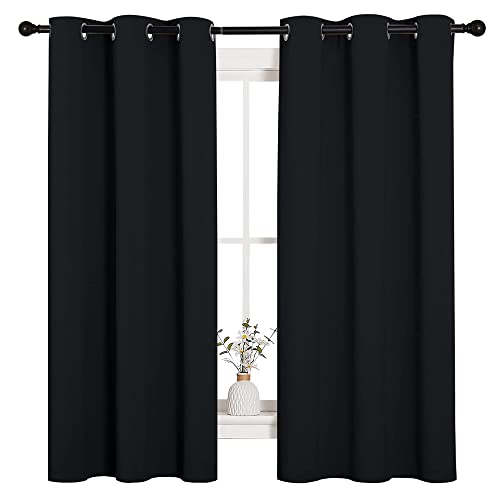
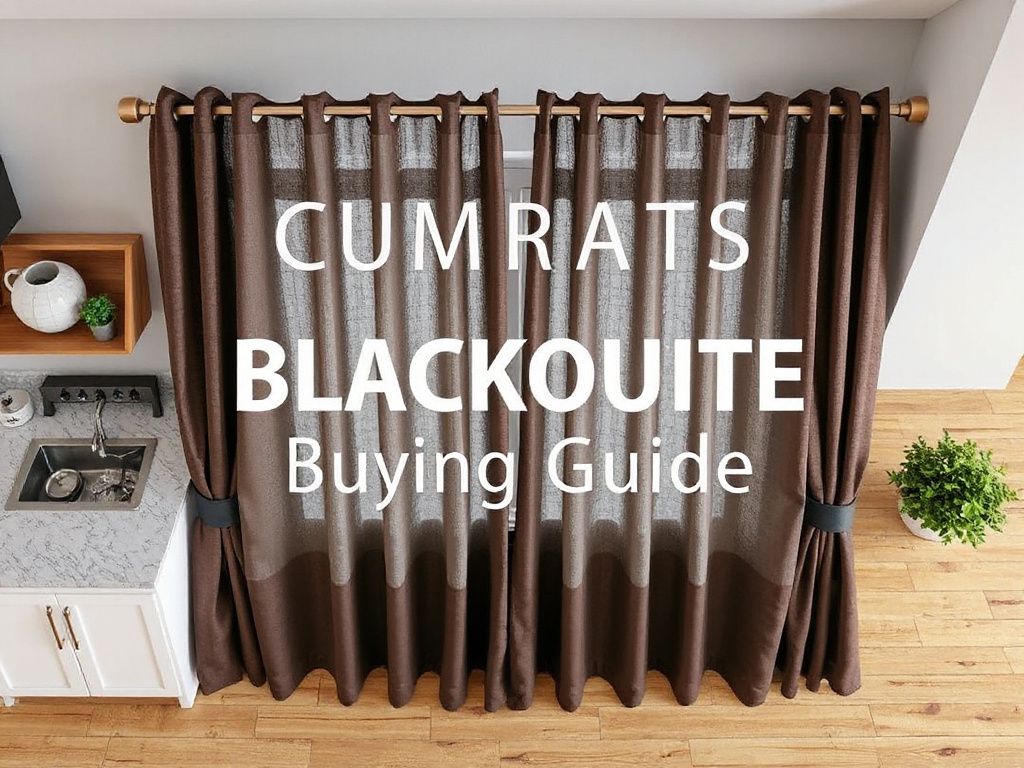
Most blackout curtains fail at the edges. The fabric can be perfect, the coating thick, and still a sliver of light along the top or sides will fill the room at 6 a.m. This blackout curtains buying guide focuses on what actually separates a dark room from a dim one: construction, mounting, and fit.
While you are comparing window treatments, also consider how the rest of the room responds to light and shadow. A heavy dark curtain against a busy wall can make a small bedroom feel closed in, so you might pair it with wall art that reflects a bit of light back. Our Umbra wall art review covers pieces that work well in compact spaces.
Key Takeaways
- A true blackout curtain blocks at least 99% of light, but only if the fabric has a dense weave plus a coated or foam lining and the curtain seals against the window frame.
- Mount the rod 4 to 6 inches above the window and extend it 3 to 6 inches on each side; otherwise light will leak around the edges no matter what fabric you buy.
- Many blackout curtains have a chemical coating that can off-gas or degrade with improper washing, so check the care label and look for Oeko-Tex or Greenguard certifications.
- Corded blackout curtains pose a strangulation hazard for children and pets, so choose cordless designs or install safety devices as recommended by the CPSC.
The Beginner’s Guide: What Blackout Curtains Actually Do
Blackout curtains are window treatments designed to block nearly all incoming light. That definition sounds simple, but the practical distinction that separates a beginner from an experienced installer is this: blackout performance depends as much on the curtain’s construction and mounting as on the fabric’s density. A tightly woven, coated fabric can block light more effectively than a thick, loosely woven one, but if the curtain doesn’t seal against the window frame with proper sizing and mounting, light will seep around the edges. Focus on the weave, the lining, and the way the curtain covers the entire window, not just on what the label claims.
Blackout vs Room Darkening: Know the Difference
The terms are not interchangeable. Room darkening curtains typically block between 50% and 85% of light, while a true blackout curtain blocks 99% or more. The difference comes from the backing. Room darkening fabrics rely on a dense weave alone, but blackout curtains add a layer of foam, acrylic, or a coated liner that physically stops photons from passing through. If you need darkness for a shift worker sleeping during the day or a home theater, buy a curtain labeled “blackout,” not “room darkening.”
How Much Light Can a Curtain Block?
By design, a properly fitted blackout curtain can reduce light levels to near zero. That means no visible glow around the edges, no faint outline of the window frame. In practice, most installations get 95% to 99% blockage because tiny gaps remain where the curtain meets the wall or ceiling. Those gaps are a mounting problem, not a fabric problem, and we’ll cover how to fix them later.
Intermediate: Choosing Fabric and Measuring for a Proper Fit
Fabric choice is where most shoppers get misled. Labels like “thermal” or “energy-saving” do not guarantee light blockage. You need to look at three things: the weave density, the backing type, and the total thickness.
What to Look For in the Fabric
A blackout curtain typically has three layers: a decorative face fabric, a dense middle layer that blocks light, and a backing that adds insulation. The middle layer is the workhorse. It is usually a tightly woven polyester or a foam-coated lining. Polyester with a high thread count works because the fibers are packed closely enough to prevent light transmission. For maximum darkness, look for curtains that specify a triple-weave construction or that list a foam or acrylic coating on the back.
How to Measure to Avoid Light Gaps
Measurement errors cause more light leakage than any fabric defect. The rod must extend beyond the window frame on all sides so the curtain can cover the opening completely. A standard rule is to mount the rod 4 to 6 inches above the top of the window frame and 3 to 6 inches beyond each side. For the curtain width, buy panels that are at least twice the width of the window. That fullness lets the fabric stack back neatly when open and still cover the edges when closed.
If you have a small bedroom, you might worry that extra fabric eats floor space. It doesn’t. The rod extension is horizontal, not vertical, and the curtain stack sits outside the window opening, not in the middle of the room. In fact, a tight-fitting curtain that barely covers the glass is the one that makes a room feel cramped because it leaves visible gaps and draws attention to the window edges.
Lining Options: Foam, Coated, or Thermal?
Foam-backed blackout curtains are the most common and the thickest. The foam layer adds insulation, which helps with both heat and sound. Coated curtains, often labeled “acrylic coated” or “rubber backed,” are thinner and less bulky, but the coating can crack or peel over time, especially if washed in hot water. Thermal linings are designed for energy efficiency rather than light blockage, though many blackout curtains combine both functions.
For a small space, a coated lining is preferable over foam. Foam adds bulk, and in a narrow room with a bed pushed against the wall, a thick curtain can bunch up and interfere with the headboard or nightstand. A coated curtain hangs flatter and still blocks the light. If you are also thinking about the floor, our Ruggable area rug review covers washable rugs that pair well with tight window treatments in compact bedrooms.
Advanced: Mounting Strategies for Total Light Block
Installation is where the difference between 95% and 100% darkness happens. You can buy the most expensive blackout curtain on the market, but if the mounting hardware lets light sneak around the edges, you will still wake up at sunrise.
Rod vs Track: Which Works Better?
A traditional curtain rod works fine for blackout curtains, but a ceiling-mounted track gives you more control. Tracks allow the curtain to wrap around the sides of the window, creating a tighter seal against the wall. With a rod, the curtains hang straight down from the brackets, leaving a small gap at the top unless you add a valance or install the rod very close to the ceiling. A track also lets you mount the curtain flush against the ceiling, which is critical for blocking light that comes from above.
If you rent and cannot drill into the ceiling, use a tension rod placed as high as possible inside the window frame, but accept that light will leak at the top. Alternatively, look for wrap-around rods that curve back to the wall, reducing side gaps. These are widely available and cost about the same as standard rods.
Why Do My Curtains Still Leak Light at the Edges?
Light leaks at the top, sides, or bottom for one of four reasons: the rod is too narrow, the rod is mounted too low, the curtain panels are too short, or there is no side seal. Fix the top leak by raising the rod until the curtain just brushes the ceiling. Fix side leaks by extending the rod 6 inches or more beyond the frame and using wrap-around brackets. Fix bottom leaks by choosing curtains long enough to puddle on the floor by 1 to 2 inches, or add a weighted hem that keeps the fabric tight against the sill.
For a fully sealed look, consider adding side channels or magnetic tape. Side channels are small tracks mounted to the wall on each side of the window; the curtain edge slides into them. Magnetic tape works if you have a metal window frame: attach one strip to the curtain edge and the other to the frame, and they snap together, closing the gap.
Weatherstripping and Sealing Tricks for Renters
You don’t need to drill holes to improve light blockage. Self-adhesive weatherstripping applied along the top of the window frame can fill the gap between the curtain and the wall. Foam strips or rubber gaskets pressed into the side recesses do the same job. These are removable and leave no damage, which matters if you are in a rental. The same principle applies to energy savings: a tight curtain seal reduces drafts, which is why the Department of Energy recommends window coverings as one of the cheapest insulation upgrades.
Care, Safety, and Longevity
Blackout curtains need more care than regular drapes because of their coatings. The wrong wash cycle can delaminate the backing, causing the curtain to lose its light-blocking ability entirely.
Washing Blackout Curtains Without Ruining the Coating
Always check the care label first. Many blackout curtains are machine washable on a gentle cold cycle, but some are dry clean only. Foam-backed curtains can go through a washing machine, but do not use hot water or high heat in the dryer; the foam will break down or melt. Coated curtains, especially rubber or acrylic backings, should be hand washed or wiped with a damp cloth because machine agitation cracks the coating. If the label is missing, treat the curtain as dry clean only. A dedicated blackout curtain will typically last 3 to 5 years before the coating degrades and light starts to show through as pinholes.
Cord Safety for Kids and Pets
This point is non-negotiable. Corded window coverings, including blackout curtains with pull cords, are a strangulation hazard for young children and pets. The Consumer Product Safety Commission has documented deaths and injuries from corded window coverings, which is why safety standards now require cordless designs or tension devices that keep cords taut. If you have kids or pets, buy cordless blackout curtains or a motorized track. Even a simple wand control is safer than a dangling cord.
How Long Do Blackout Curtains Last?
With proper care, a quality blackout curtain will block light effectively for 5 to 7 years. The face fabric may fade or pill before the backing fails, but once you see tiny pinpoints of light coming through the fabric, the coating has started to crack. That is the time to replace them. Cheaper curtains with thin foam backings may start degrading in as little as 2 years, especially in sunny rooms where heat accelerates breakdown.
Blackout Curtains vs Shades vs Blinds
Blackout curtains beat shades and blinds for light blockage because they cover a larger area, including the frame and wall around the window. Blackout roller shades can seal tightly if mounted inside the frame, but they usually leave a gap at the sides unless you add side channels. Blinds, even those marketed as blackout, have slats that allow light through the cracks. If total darkness is your goal, curtains are the most reliable option, and they add a layer of insulation that blinds lack. For a compact room where a bulky curtain feels overwhelming, a fitted blackout shade mounted inside the frame might be the better space-saving choice, but accept that it will never be as dark as a curtain with proper side coverage.
Frequently Asked Questions
Do blackout curtains also help with noise and insulation?
Yes. The dense, multi-layer fabric absorbs sound and reduces heat transfer. Foam-backed blackout curtains can lower outside noise by a few decibels, enough to soften traffic or neighbor sounds. For insulation, they add a layer of trapped air between the window and the room, which slows heat loss in winter and heat gain in summer. The effect is measurable but not dramatic; expect a 10% to 25% reduction in energy loss through the window depending on the curtain’s thickness and fit.
Can I wash blackout curtains without ruining the coating?
Only if the care label allows machine washing. Use cold water and a gentle cycle with mild detergent, then line dry or tumble dry on low. Never use hot water or high heat, because the foam or acrylic coating will delaminate. If the label says dry clean only, follow that instruction. When in doubt, spot clean with a damp cloth and mild soap, avoiding the backing altogether.
Are blackout curtains safer than blinds for homes with kids and pets?
They can be, but only if you choose a cordless design. Traditional corded blackout curtains pose the same strangulation risk as corded blinds. Cordless blackout curtains or motorized tracks eliminate that hazard entirely. If you already have corded curtains, install cord stops or tension devices as recommended by the CPSC, and keep cords well out of reach. For a home office with a child or pet nearby, a cordless blackout shade combined with a comfortable chair like the ones in our Vari office chair review makes the room both safe and focused.