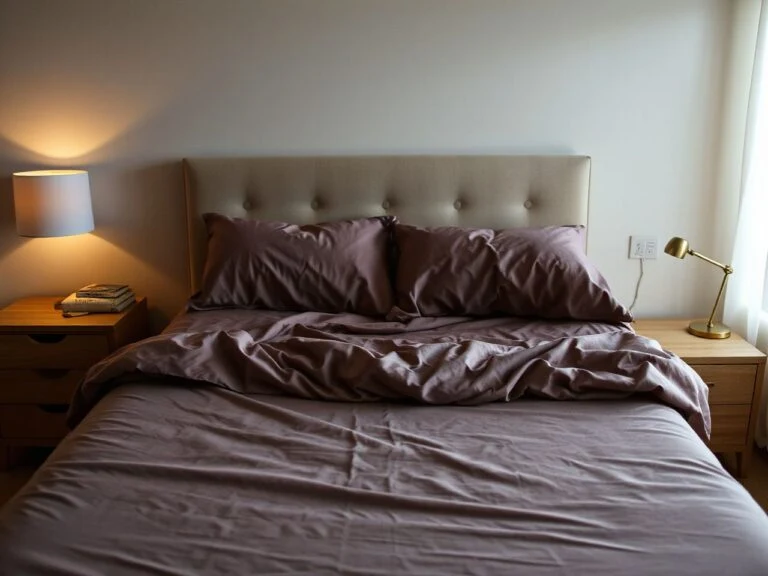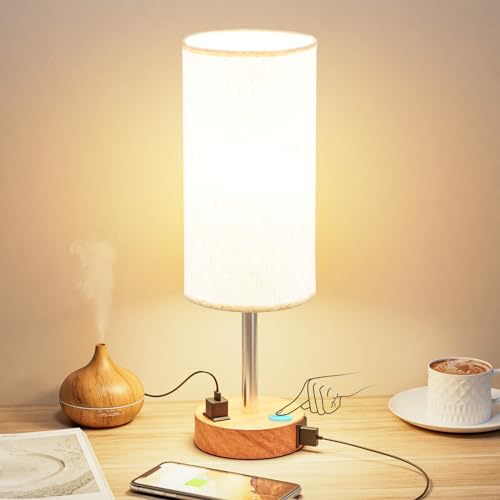
Here’s the consequence of buying the wrong bedside lamp: at 11 p.m., you’re either squinting through a harsh pool of glare that makes your eyes water, or the lamp you chose requires a hardwired electrical box, a licensed electrician, and a security deposit you’ll never see again. Then there’s the flicker from a non-dimmable LED on a dimmer switch. All of these are avoidable. This bedside lamp buying guide lays out the non-negotiables before you spend a dollar.
Key Takeaways
- A plug-in lamp with a translucent shade at eye level solves 80% of bedside lighting problems without touching the wall.
- For reading in bed, aim for 450–600 lumens at 2700K–3000K with a CRI of 90 or higher.
- Dimmable LED bulbs and UL certification are not optional extras; they prevent flicker, premature failure, and fire risk.
Beginner: The Four Decisions That Eliminate Most Mistakes
Before picking a color or a shape, lock in the functional basics. These four choices determine whether your lamp works on night one or becomes a return.
Plug-In vs Hardwired: Why Renters Should Default to Plug-In
Hardwired bedside lamps connect directly to your wall’s electrical wiring, which means cutting holes, running cable, and getting landlord permission. If you rent, that permission is almost never worth the ask. A plug-in lamp uses a standard outlet and requires no permanent alteration. You unplug it when you leave, and the wall looks untouched. That’s the whole argument.
Even homeowners who plan to stay put often prefer a plug-in for one simple reason: you can move it to the other side of the bed without calling an electrician. A plug-in bedside lamp uses a standard wall outlet and requires no permanent alteration to the room, which is why it remains the default choice for anyone renting or planning to rearrange furniture later.
Lumen Output: How Bright Is Too Bright?
Lumens measure total light output. Forget watts—that’s energy use, not brightness. For a bedside lamp used as the room’s main light while you wind down, 200–400 lumens is comfortable. For reading in bed, you need 450–600 lumens directed at the page. Anything over 800 lumens on a nightstand starts to feel like a security floodlight at midnight.
Here’s a quick reference: a 60-watt incandescent bulb produced about 800 lumens. A modern LED that gives you 450 lumens draws only 5–7 watts. So when you see a lamp spec that says ’60W equivalent,’ know that it’s brighter than most bedside tasks require unless you dim it.
Color Temperature: Warm Light Tells Your Brain It’s Night
Color temperature is measured in Kelvin. 2700K gives a warm, amber glow like candlelight. 3000K is soft white with a hint of warmth. 4000K is cool white that starts to read as office lighting. For a bedroom, stick to 2700K–3000K. Cooler light contains more blue wavelengths, which suppress melatonin and make falling asleep harder. This is not a matter of taste; it’s a biological response.
The Lighting Research Center has published extensively on how evening light exposure shifts circadian timing. Warm light in the bedroom is not a style choice—it’s a sleep hygiene decision.
Shade Material and Size: Stopping Glare Before It Starts
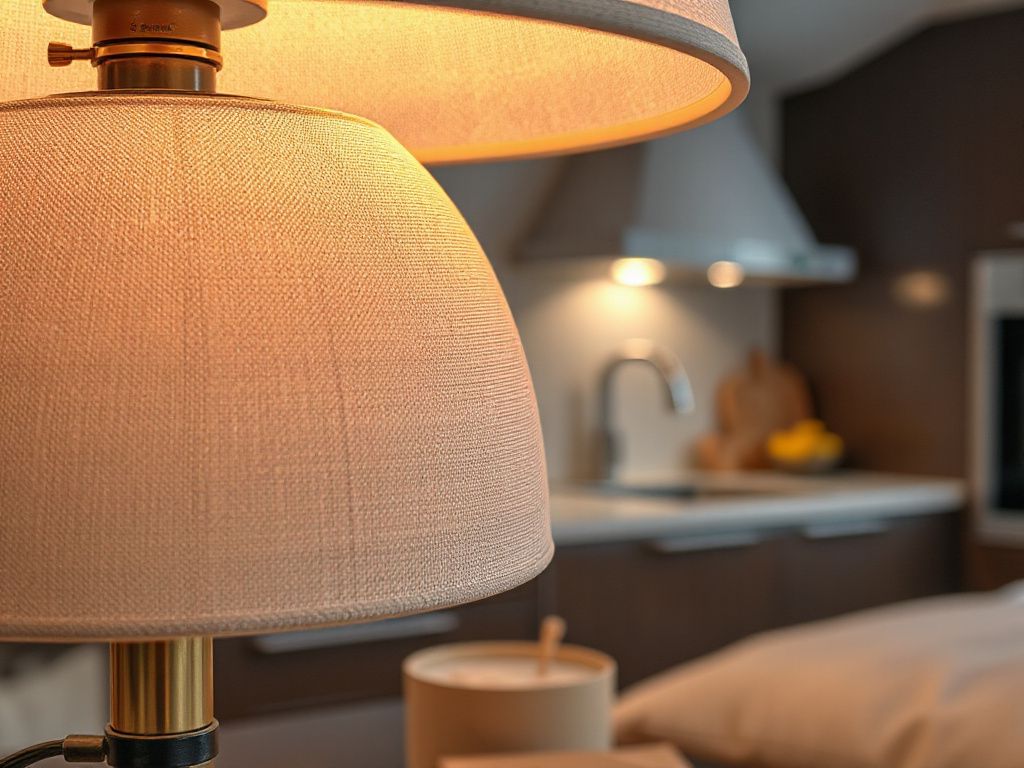
Translucent shades—linen, fabric, frosted glass—soften and spread light evenly. Opaque shades—metal, ceramic, dark paper—force all light up or down, creating a spotlight effect. For general bedside ambience, a translucent shade is almost always better because it removes harsh shadows.
Size matters just as much as material. The bottom edge of a bedside lamp shade should sit at or slightly below your eye level when you are sitting up in bed, because a visible bulb above that line becomes a direct glare source. If you’re lying down and you can see the bulb itself, the lamp is either too short or the shade is too small. That’s the single most common cause of ‘I hate this lamp’ after dark.
While you’re measuring the lamp, consider how light bounces off surfaces. If you’re also updating the floor under your bed, our West Elm area rug review covers options that absorb or reflect light, which changes the room’s overall brightness.
Nightstand Clearance and Cord Management
Measure the space before you click ‘add to cart.’ A bedside lamp with a base wider than your nightstand will hang over the edge, inviting a topple onto your phone or water glass. Leave at least four inches of clearance on all sides of the lamp’s footprint. The cord also matters: a lamp with a 6-foot cord gives you flexibility to reach an outlet without stretching; anything shorter forces you to rearrange furniture around the plug.
For renters, a tidy cord cover that adheres with removable adhesive is the difference between a lamp that looks installed and one that looks like a trip hazard. You can run the cord along the back of the nightstand leg and down to the baseboard, then tuck it under a cord channel for a clean line. No nails, no holes, and the wall stays pristine when you move out.
A bedside lamp with a cord shorter than 6 feet will either force you to use an extension cord or move the nightstand closer to the outlet, both of which create clutter you don’t need in a bedroom.
Intermediate: Quality of Light and the Controls You’ll Actually Use
The next tier separates lamps that look good on a shelf from lamps that work in real life. These factors are invisible until you know to look for them.
CRI: Why Color Accuracy Matters More Than Brightness
CRI—Color Rendering Index—measures how accurately a light source reveals the true colors of objects compared to natural sunlight. A CRI of 80 is the minimum for acceptable indoor use. A CRI of 90 or above is what you want on a nightstand, especially if you read in bed or look at your own skin while getting ready. Cheap LEDs often score in the 70s, making everything look flat and slightly gray, which strains your eyes over time even when the light feels bright.
ENERGY STAR recommends a CRI of at least 80 for residential lighting, but for close work like reading, bump that to 90. The spec sheet on the bulb or lamp lists CRI; if it doesn’t, find one that does.
Dimmability: Not All LED Bulbs Get Along with Dimmers
If your lamp has a built-in dimmer—a touch dimmer, a rotary switch, or a slide—you must use dimmable LED bulbs. A non-dimmable LED on a dimmer will flicker, buzz, or fail prematurely. The same applies to a lamp plugged into a wall outlet controlled by a dimmer switch. Check the bulb packaging for the word ‘dimmable.’ Skip it if absent.
Also check the lamp socket’s wattage rating. Most bedside lamps are rated for a 60-watt incandescent bulb. An LED that produces the same light uses 6–9 watts, so you’re nowhere near the limit. But if you’re using an older lamp or a high-output bulb, the wattage printed on a lamp socket is a maximum, not a suggestion: exceeding it can melt wiring insulation and create a fire hazard, even with a bulb that fits physically.
For safety certification, look for the UL certification mark on the lamp or its power cord. UL-listed products meet fire and electrical safety standards; unlisted lamps from bargain sites often skimp on internal wiring insulation.
Dimmer switches come in two main types: leading edge (triac) and trailing edge (ELV). Most modern LED-compatible dimmers use trailing edge because it reduces buzzing. If you’re pairing a lamp with an existing wall dimmer, check whether the dimmer is rated for LED bulbs. Older leading-edge dimmers often require a minimum load of 25–40 watts, but a 6-watt LED falls below that, causing the light to stay on even at the lowest setting or flicker erratically. In that case, either replace the wall dimmer or use a lamp with its own built-in dimming.
Bulb Bases and the E26 Standard
Nearly every bedside lamp sold in North America uses an E26 screw base—the standard medium base you see on household bulbs. Some smaller decorative lamps use an E12 candelabra base, which is much narrower and requires a different bulb. Check the lamp’s listing; if it says ‘E26,’ you can walk into any hardware store and find bulbs. If it says ‘E12,’ your bulb options drop dramatically, especially for high-CRI or dimmable models.
A smart bulb with an E26 base will fit any standard lamp, but read the fine print on the bulb’s operating temperature. Some smart bulbs have internal electronics that generate heat; in a fully enclosed shade, that heat can build up and shorten the bulb’s life. Look for bulbs rated for enclosed fixtures if your lamp has a closed-top shade.
An E26 base means a bulb will fit any standard North American light socket; an E12 candelabra base limits your choices to a small selection of decorative bulbs, many of which are not dimmable.
Smart Bulbs and Touch Lamps: Separating Useful from Gimmicky
Touch lamps use a capacitive sensor in the base. Tap the metal and the light cycles through brightness levels. They work well in theory, but they have two common problems. First, they can trigger accidentally if you place a phone, keys, or a metal water bottle near the base. Second, they sometimes lose sensitivity when the base gets dusty. Clean the sensor area with a dry cloth, and keep the lamp at least six inches away from other electronics.
Smart bulbs let you change color temperature, set schedules, and control the lamp with a phone or voice assistant. If you only need on/off and dimming, a smart bulb is overkill—a $12 dimmable bulb does the same job. If you want the lamp to fade on gradually at 6 a.m. or shift to warm light at 9 p.m., a smart bulb earns its price. The key is knowing which camp you’re in before you pay extra.
WiFi smart bulbs connect directly to your router and work with voice assistants without a hub, but they depend on a stable 2.4 GHz signal. Zigbee or Z-wave bulbs require a hub but are more responsive for multi-bulb rooms. Bluetooth bulbs only work within about 30 feet and have no scheduling when you’re away. Most bedroom users are fine with WiFi; hardcore automators will want a hub-based protocol.
USB Ports and Power Features: Convenience vs Clutter
A USB port on the lamp base is genuinely useful because it frees up an outlet. But check the output rating. Many lamp USB ports deliver only 5 watts (1 amp), which charges a modern phone painfully slowly. Look for 15W or higher if you want an overnight charge that actually finishes. Also confirm whether the port stays live when the lamp is switched off; if not, you’ll have to leave the lamp on to charge, which defeats the purpose.
Look for a USB-C port with Power Delivery if you have a modern phone. USB-C PD can deliver up to 20 watts or more, which fast-charges a phone from dead to 50% in about 30 minutes. An older USB-A port at 5W will take two hours or more for the same charge. The port label or product description should state the wattage; if it only says ‘USB charging port,’ assume 5W.
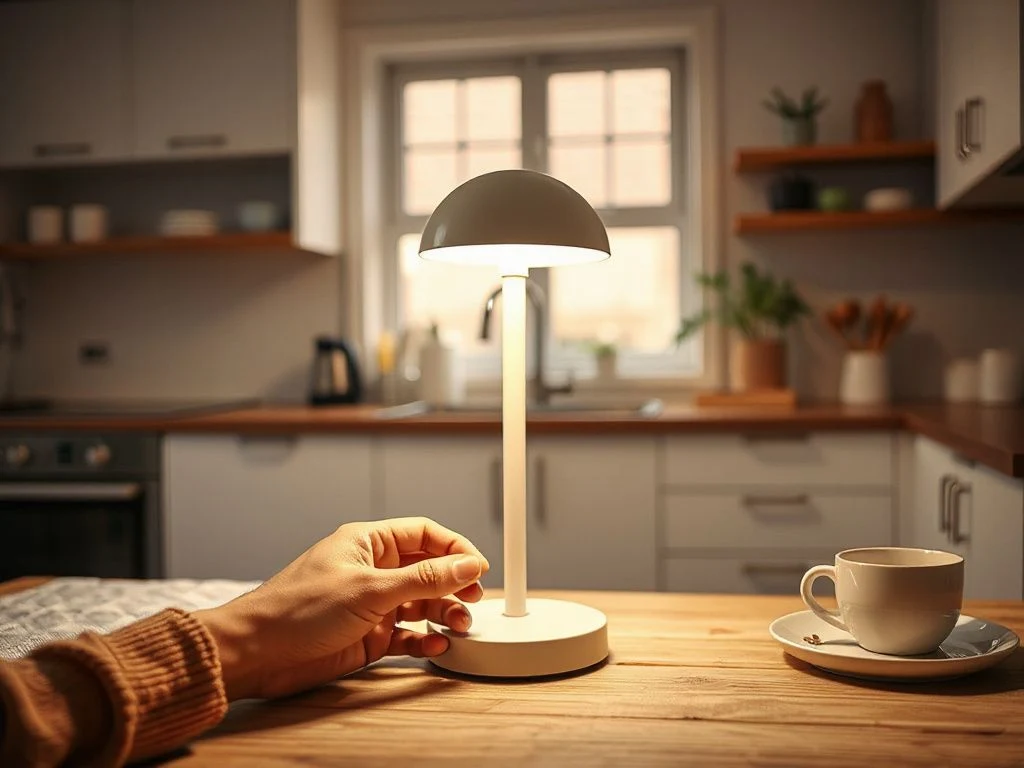
A plug-in lamp with a USB port is convenient for renters: when it’s time to move, you unplug one cord and the lamp carries its own charging station with it. No wall plate to patch, no landlord walkthrough anxiety.
Advanced: Building a Restful Bedroom Lighting System
Once the basics are handled, the last layer is how your bedside lamp fits into the whole room. Most people stop at one lamp and wonder why the bedroom still feels off.
Task vs Ambient Lighting: Why One Lamp Is Not a Full Solution
Ambient lighting fills the room with a soft glow for winding down. Task lighting puts a focused beam on a specific activity—reading, writing, applying makeup. A single bedside lamp rarely does both well. If you read in bed, you need either an adjustable-arm lamp that can point down at your book, or a separate small reading light mounted on the wall or clipped to the headboard.
Task lighting in the bedroom means a focused beam of 450 to 600 lumens aimed at your book, while ambient lighting stays closer to 200 to 300 lumens to keep the room from feeling like a cave. It’s a layering strategy, the same way a living room needs both a ceiling fixture and a floor lamp.
If your bedroom floor is getting a refresh alongside the lighting, our Ruggable area rug review looks at washable rugs that keep dust down, which matters because dust on a lampshade dims the light output over time.
Linen Shades: Cleaning Without Ruining Them
Linen shades diffuse light beautifully, but they’re dust magnets. Vacuum them once a month using the brush attachment on low suction. For fingerprints or small stains, use a barely damp cloth with a drop of mild dish soap, then blot dry. Never submerge a linen shade in water—the fabric can shrink, and the adhesive that holds it to the frame can fail.
A linen lamp shade can be refreshed with a few passes of a vacuum brush attachment, but any liquid cleaner should be tested on an inconspicuous seam first because linen fibers can shrink or water-spot. If the shade is yellowing from years of heat, it’s usually time to replace the shade rather than clean it; the discoloration is often baked into the fabric.
One renter-friendly tip: if your linen shade gets a stubborn stain that won’t lift, swap the shade rather than replacing the whole lamp. Many lamp models use a standard harp and finial, so a new shade costs $15–$25 and slides on in ten seconds. That’s cheaper than a new lamp and keeps the base you already like.
Annual Energy Cost: The Math Most People Skip
Let’s calculate what a bedside lamp costs to run for a year. A 9-watt LED bulb left on for 3 hours per night uses 27 watt-hours per day. Over 365 days, that’s 9.86 kilowatt-hours. At the current U.S. average residential electricity price of about 16 cents per kWh (per the U.S. Energy Information Administration), that lamp costs $1.58 per year to operate.
Swap in a 60-watt incandescent for the same 3 hours nightly, and you’re looking at 65.7 kWh per year—about $10.51 per year. That’s a $9 difference for one lamp. If you have two bedside lamps, the savings double. Dimmers add another layer: running a bulb at 50% brightness cuts energy use roughly in half, though LEDs are less linear than incandescents in that regard.
The Most Common Mistakes When Choosing a Bedside Lamp
After all the technical details, here’s the short list of what actually goes wrong:
- Buying a lamp that’s too tall. If the shade bottom sits above your eye line when you’re sitting up, you get glare. Measure your nightstand height and your sitting position before buying.
- Using 5000K daylight bulbs. Cool white light in a bedroom is the fastest way to make the space feel like a hospital. Stick to 2700K–3000K.
- Forgetting dimmability. A lamp with a dimmer but no dimmable bulb flickers; a lamp without a dimmer but a bright bulb can’t be softened. Match the two.
- Ignoring shade opacity. An opaque shade on a bedside lamp leaves you with a harsh pool of light on the ceiling and no useful reading glow. Translucent wins for bedside.
- Hardwiring without need. A plug-in lamp with a tidy cord cover works in 95% of bedrooms and leaves zero wall damage.
- Using a smart bulb without checking the lamp’s socket type. Most bedside lamps use an E26 base, but some modern lights use a smaller E12 candelabra base. A smart bulb that doesn’t fit is useless.
If you’re also considering a desk chair for a bedroom office corner, our Vari office chair review covers ergonomic choices that pair with good task lighting—but that’s a separate rabbit hole.
The best bedside lamp is the one you never have to think about. It turns on without a click when you’re half asleep, it doesn’t glare, and it unplugs in ten seconds when the lease ends. That’s the bar, and it’s lower than most people set.
Frequently Asked Questions
How many lumens do I need for a bedside lamp?
For ambient light while you wind down, 200–400 lumens works well. If you read in bed, you need 450–600 lumens aimed at the book. Anything over 800 lumens is too bright for a dark bedroom and will cause glare against white sheets and walls. An LED bulb that produces 450 lumens typically draws only 5–7 watts.
Can I use a dimmer switch with LED bulbs?
Yes, but only if the LED bulb is labeled ‘dimmable.’ Non-dimmable LEDs use a driver that expects full voltage; on a dimmer, they flicker, buzz, and may fail within weeks. Also confirm your dimmer is rated for LED loads—older rotary dimmers designed for incandescent bulbs often have a minimum load requirement that a 6-watt LED can’t meet.
Are smart bedside lamps worth the extra cost?
Only if you will use the scheduled or color-changing features. A smart bulb lets you fade the light on gradually in the morning and shift to warm amber at night automatically. If you just need on/off and dimming, a $15 dimmable LED bulb does the same thing without an app. Know your habits before paying for connectivity.