Lamps fix rooms before furniture does.
An effective floor lamp guide separates a lamp’s visual appearance from its light distribution: a sculptural lamp can still create glare, shadows, or poor reading light if the shade and bulb direct light badly. It also treats the base, arm, cord path, socket, and dimmer as a working system, because placement and compatibility matter as much as the lamp’s style. That distinction should guide every floor lamp buying guide, especially for a living room where one fixture may need to support reading, conversation, and general illumination.
Key Takeaways
- Choose the lamp for reading, room lighting, or both before choosing its appearance.
- Match the shade, bulb, socket, permitted electrical load, and dimmer as one system.
- Check the base, arm, cord route, and shade clearance before placing a lamp.
- Layer floor lamps with ceiling fixtures, table lamps, and accent lighting for a balanced room.
Floor Lamp Buying Guide: Start With the Job
A floor lamp works best when its light has a clear assignment. General room lighting should spread broadly, while task lighting should place useful light where reading or another activity happens. A living room may need both, but one shade rarely performs both jobs equally well.
Choose reading light or general room light first
For reading beside a sofa or chair, look for a lamp that directs light downward or across the page. A downward-facing bulb creates more focused task lighting, while an upward-facing bulb sends more ambient illumination into the room. A flexible arc lamp arm can place the light over a seat, but the arm also changes the balance and the space required around the base.
General room lighting needs a wider spread. A shaded lamp with the shade near the upper end of its pole can distribute illumination across the space, while a torchiere sends light upward toward the ceiling. A standard floor lamp usually sits between these roles, depending on its shade opening and bulb direction.
A torchiere directs light upward, while a reading lamp directs light toward the activity. That difference matters more than the finish of the pole.
Layered living room lighting often works better than asking one floor lamp to do everything. Ambient light can come from a ceiling fixture or torchiere, task lighting can sit beside a reading chair, and accent lighting can draw attention to artwork or a textured wall. For a closer comparison of focused and overhead illumination, see this guide to task lamp versus overhead lighting.
Read the light at sofa and chair height
Place the shade at or beneath eye level when using a laptop on the sofa to reduce glare. The same principle helps beside a reading chair: the bright source should not sit directly in the line of sight. A shade that is too high may expose the bulb; one that is too low may block the useful light from reaching the page.
Think about the seat, not the empty corner. A lamp beside a sofa should illuminate the person sitting there without shining into another seat. Beside a chair, the base should remain outside the foot area and away from the path used to enter or leave the room.
Use the room as a lighting system
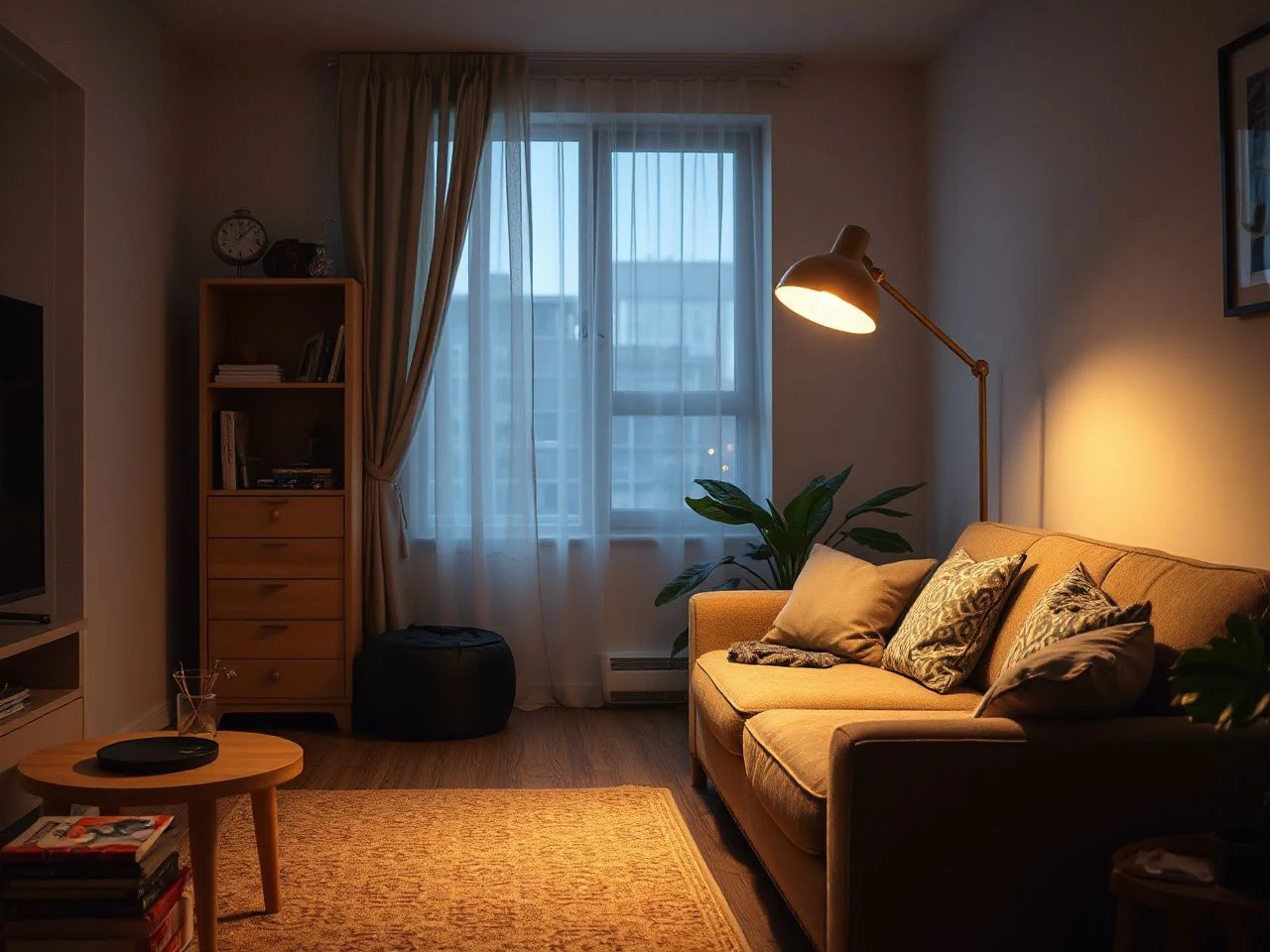
A floor lamp can correct a room before moving furniture becomes necessary. If a corner feels dark, an uplight can send brightness upward and spread it through the room. If a reading seat feels flat, a downlight can add a more useful pool of light without changing the seating arrangement.
Do not place every light around the perimeter by habit. A floor lamp behind a sofa may create a useful wash of light, while a lamp beside a chair can establish a task zone. Table lamps remain useful on consoles and side tables, and ceiling fixtures can carry the broadest share of general room illumination.
Beginner: Check Shape, Height, and Stability
Once the function is clear, judge the lamp as a physical object. Height, shade shape, base width, and arm position determine how the light behaves and how easily the fixture fits into daily movement.
Choose a proportion that belongs in the room
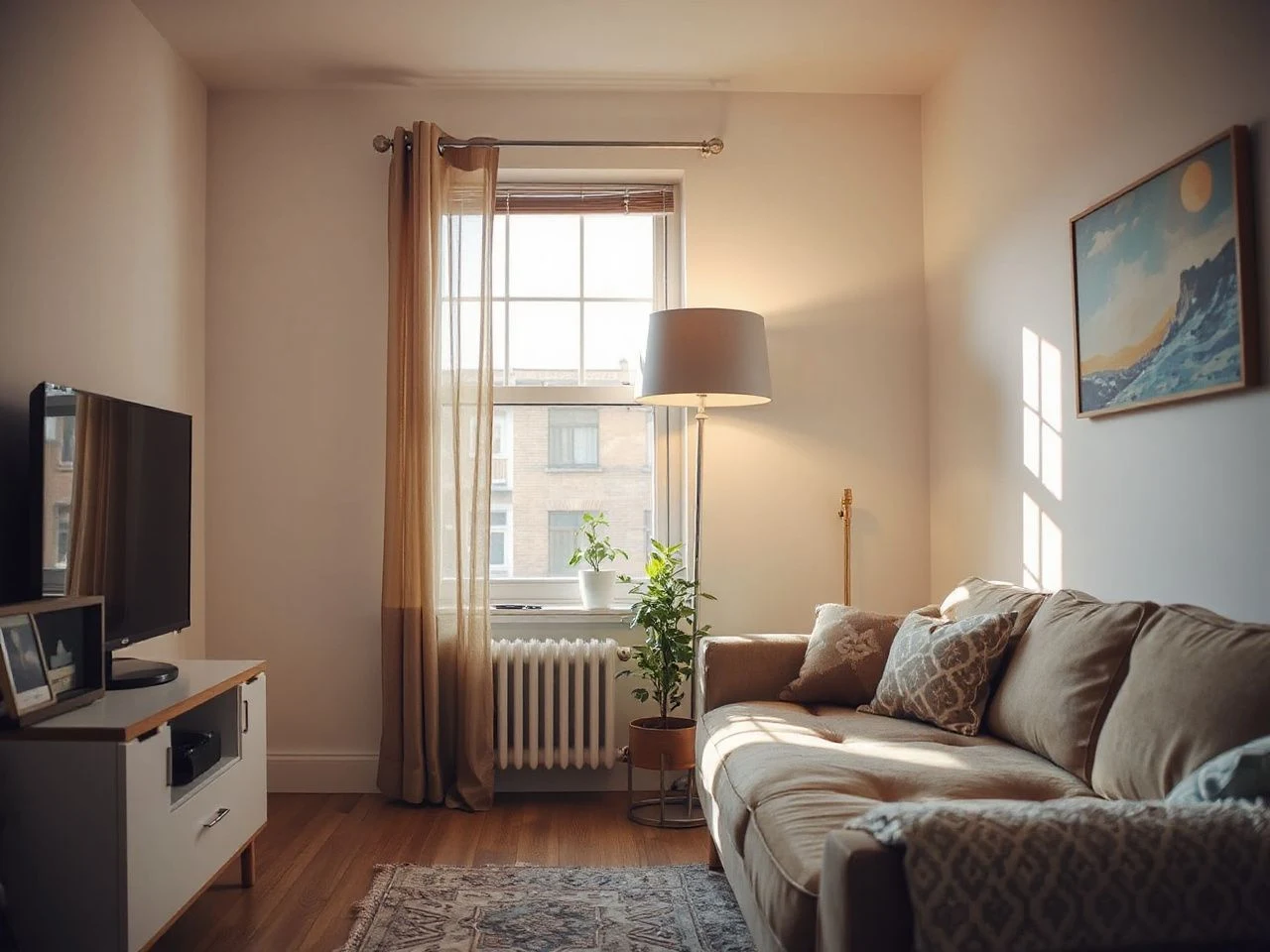
The right size is proportional to surrounding furniture and the room itself. A narrow lamp beside a large sofa can look visually lost, while a broad arc lamp may crowd a compact seating area. Compare the lamp with the sofa arm, chair back, side table, and nearby wall rather than judging it against an empty floor.
A tall pole with a small shade may suit a spare corner, but it can look disconnected beside substantial furniture. A lower lamp with a broad shade may feel more settled near a sofa, provided the shade does not interfere with sightlines or movement.
Floor lamp size should relate to the nearby furniture and the room’s scale. Proportion is a practical check because it affects both appearance and placement.
Understand shade shape and light direction
A fabric shade softens and diffuses illumination. A metal shade directs light toward particular areas, which can be useful for reading but less forgiving if the beam points toward a reflective screen or a person’s eyes. A diffuser can soften the source and spread light, but its condition and fit still matter.
Look at the top and bottom openings of the shade. A shade that is open upward supports more upward spread, while a shade that opens downward sends more light toward the floor or a nearby chair. The bulb’s position inside the shade also matters. A visible bulb can create glare even if the lamp itself looks elegant.
Fabric and paper shades should not touch hot components. Check the clearance around the bulb and socket, and follow the lamp’s instructions rather than selecting a bulb solely for its appearance.
Assess the base and arm for tip-over risk
A weighted base can improve stability, but the base still needs a sensible position. A long arc lamp arm places more of the lamp’s visual and physical reach away from the base, so its placement deserves extra care. Keep the arm and shade clear of routes where someone may brush against them.
Children, pets, open walkways, and furniture that is often moved all increase the importance of a stable arrangement. A lamp that stands securely in an empty corner may be poorly placed beside a busy passage. Check the floor beneath the base as well; an uneven or cluttered area can make a stable-looking lamp easier to disturb.
Route the cord before you commit to placement
The lamp cord should run away from traffic paths, door openings, and places where furniture may pinch it. Avoid hiding a cord beneath a loose rug or pressing it tightly behind a heavy piece of furniture. The electrical plug should reach the outlet without strain, and the connection should remain accessible for inspection.
Check the cord for fraying, damaged insulation, or a loose connection before use. The U.S. Consumer Product Safety Commission provides consumer safety information about electrical products and damaged cords. A cord problem is a reason to stop using the lamp until the issue has been properly addressed.
Intermediate: Match the Electrical Parts
Style can be assessed from across the room. Electrical compatibility requires a closer look at the label, socket, bulb, plug, and controls.
Match the bulb to the socket and permitted load
The bulb must be compatible with the socket and the lamp’s permitted electrical load. Read the lamp label and instructions before fitting an LED bulb or any replacement bulb. Do not use a higher-load bulb simply because it fits the socket; physical fit does not prove electrical suitability.
An LED bulb can reduce electricity use compared with a bulb that draws more power, but the relevant figure is the bulb’s stated electrical consumption and the amount of time the lamp is switched on. The manufacturer does not provide a universal electricity cost for every floor lamp, so estimate use from the bulb label, your local electricity rate, and your own pattern of use rather than from the lamp’s appearance.
A bulb that fits a socket can still be unsuitable for the lamp’s permitted electrical load. Compatibility is a label-checking task, not a guess based on shape.
Check the socket, shade, and heat clearance together
The socket holds the bulb, but the shade controls how close the bulb sits to fabric, paper, metal, or a diffuser. Check that the bulb is fully seated and that the shade does not press against the socket or bulb. A loose shade can shift during cleaning or movement, changing the clearance around the light source.
Inspect the diffuser for cracks, discoloration, or a poor fit. The exact replacement depends on the lamp’s design, so keep the original instructions and identify the part before ordering anything. A replacement shade may change how much heat and light remain around the socket, which is why size and attachment style matter.
Pair a dimmer with the complete system
A dimmer switch must be compatible with both the bulb and the lamp’s wiring. An LED bulb that is not designed for dimming may flicker or fail to respond properly when connected to a dimmer. The lamp instructions and bulb packaging should be read together.
Some lamps use double pull chains to provide two brightness levels without a separate dimmer. That arrangement can be useful when the lamp needs a simple change in output, but the bulb and socket still need to match the lamp’s permitted electrical load.
If a lamp flickers, starts and stops, or becomes unusually warm, switch it off and inspect the bulb, socket, cord, plug, and control. Do not keep changing bulbs while ignoring a loose connection or damaged wiring. For information about consensus standards and electrical product safety practices, the ASTM organization explains how voluntary standards are developed; the lamp’s own instructions remain the direct guide for its permitted components.
Understand the difference between common lamp types
- Standard floor lamp: A general form with a vertical pole and shade that may provide ambient or task lighting, depending on the bulb and shade.
- Torchiere: An upward-facing form designed to send light toward the ceiling for broad room illumination with reduced direct glare.
- Arc lamp: A lamp with an arm that extends outward, often positioning the shade over a sofa or chair instead of keeping the light directly beside the base.
These labels describe structure and direction, not a guarantee of suitable light. A torchiere may leave a reading chair underlit, while an arc lamp may create glare if its shade points toward a screen. Judge the actual path of the light.
Advanced: Placement, Care, and Long-Term Ownership
The final decision belongs to the room’s daily pattern. A floor lamp has to look right from several seats, remain clear of movement, and stay serviceable as its small parts age.
Place the lamp around furniture and traffic paths
Begin with the chair, sofa, or reading position. Then trace the route from the room entrance to the seating area and around nearby tables. The base should stay outside that route, while the shade and arm should not project into it.
A lamp behind a sofa can support ambient lighting, but the cord must still reach an outlet without crossing a walking route. A lamp beside a chair can support task lighting, but the base should not compete with the chair’s foot space. The common mistake is choosing a corner first and forcing the furniture to work around the lamp.
A floor lamp should sit beside the activity it serves without occupying the path used to reach that activity. This simple rule resolves many living room placement problems.
Clean each part according to its material and role
Switch the lamp off and allow its components to be handled safely before cleaning. Dust the base and pole with a suitable dry or lightly damp cloth, keeping moisture away from the socket, plug, cord connections, and dimmer. A shade should be cleaned according to its material and construction; aggressive rubbing can mark fabric, paper, or a delicate finish.
Remove dust from the bulb only when it is cool and stable. Clean a diffuser gently and check that it is correctly seated before switching the lamp on again. Never use a wet cloth on an energized lamp, and never pull the cord to move the fixture.
Consider replacement parts before buying
Long-term ownership can depend on the parts that are easiest to replace. A bulb is usually the first item to inspect, but the shade, diffuser, socket, cord, plug, and dimmer switch can also affect whether a lamp remains useful. A design with a difficult-to-identify shade attachment or an unusual control may be harder to maintain.
Keep the manufacturer’s instructions, the original bulb information, and any label on the socket or base. Before buying a replacement part, match its description to the lamp and confirm that the replacement does not change the permitted electrical load or the required heat clearance.
Use electricity information realistically
Electricity use depends on the bulb’s stated power and how long the lamp operates. A dimmer may reduce light output, but the exact energy result depends on the bulb and dimmer design, so use the information supplied with those parts instead of assuming every dimmer behaves alike.
A lamp with an integrated USB port can recharge devices without a traditional outlet, but that feature does not change the lighting requirements of the socket. Keep the charging connection and lamp cord arranged so they do not create a new trip hazard.
Preventive Checks Before You Switch On
A short inspection can protect the room’s layout and the lamp’s working parts. Make these checks whenever the fixture is moved, cleaned, or fitted with a replacement component.
- Read the label: Confirm the socket type, permitted electrical load, bulb instructions, and control information.
- Inspect the structure: Check that the base is stable, the pole or arm is secure, and the shade or diffuser is properly attached.
- Check the heat area: Confirm that fabric or paper does not touch hot components and that the bulb has suitable clearance.
- Inspect the electrical path: Look for fraying, damaged insulation, loose connections, or a plug that does not sit securely in the outlet.
- Review the placement: Keep the base, arm, shade, and cord away from traffic routes, children, pets, and furniture movement.
- Test the control carefully: If using a dimmer, confirm compatibility with both the bulb and the lamp wiring before operating it.
If the lamp stops working, begin with the simple checks: confirm that the bulb is seated, inspect the plug and cord, and read the lamp’s instructions. A persistent fault should not be treated as a bulb problem without inspection of the socket, switch, dimmer, or wiring.
For readers deciding between a standing fixture and a smaller option, this floor lamp versus table lamp comparison helps connect the choice to available floor and surface space. A smaller lamp may suit a crowded room, but the same rules for bulb compatibility, cord placement, and shade clearance still apply.
Frequently Asked Questions About the floor lamp buying guide
How do I choose between a reading floor lamp and one for general room lighting?
Choose a reading lamp when the light must reach a book, craft, or laptop without glare. A downward-facing bulb and a shade positioned at or beneath eye level can support focused task lighting. Choose a torchiere or upward-facing design for broader ambient illumination. If the room needs both roles, use layered lighting rather than forcing one fixture to cover every activity.
How tall should a floor lamp be beside a sofa?
There is no single height that suits every sofa, room, or shade. Sit on the sofa and check the shade’s relationship to your eyes and the screen or book in front of you. The shade should not expose a bright bulb directly to your view. Proportion also matters: the lamp should relate to the sofa and room rather than look detached from them.
Why does a floor lamp flicker or stop working?
Start by checking whether the bulb is seated correctly and compatible with the socket and permitted electrical load. If the lamp uses a dimmer, confirm that the dimmer works with both the bulb and the wiring. Then inspect the cord, plug, socket, and connections for visible damage or looseness. Stop using the lamp if the fault remains or the lamp becomes unusually warm.
Can I use any LED bulb in a floor lamp?
No. An LED bulb must match the socket and the lamp’s permitted electrical load, and the bulb must suit the shade’s heat clearance. If the lamp has a dimmer, the bulb must also be compatible with that dimmer. Read the lamp label and bulb packaging together. A bulb’s physical fit alone does not establish electrical compatibility.
How should I clean a floor lamp and its shade?
Switch the lamp off before cleaning, and keep moisture away from the socket, cord connections, plug, and dimmer. Dust the base and pole with an appropriate cloth, handle the bulb only when cool, and clean the diffuser gently. Follow the shade’s material-specific care instructions, since fabric and paper can be damaged by excess moisture or hard rubbing. Check the shade’s fit before switching the lamp on again.