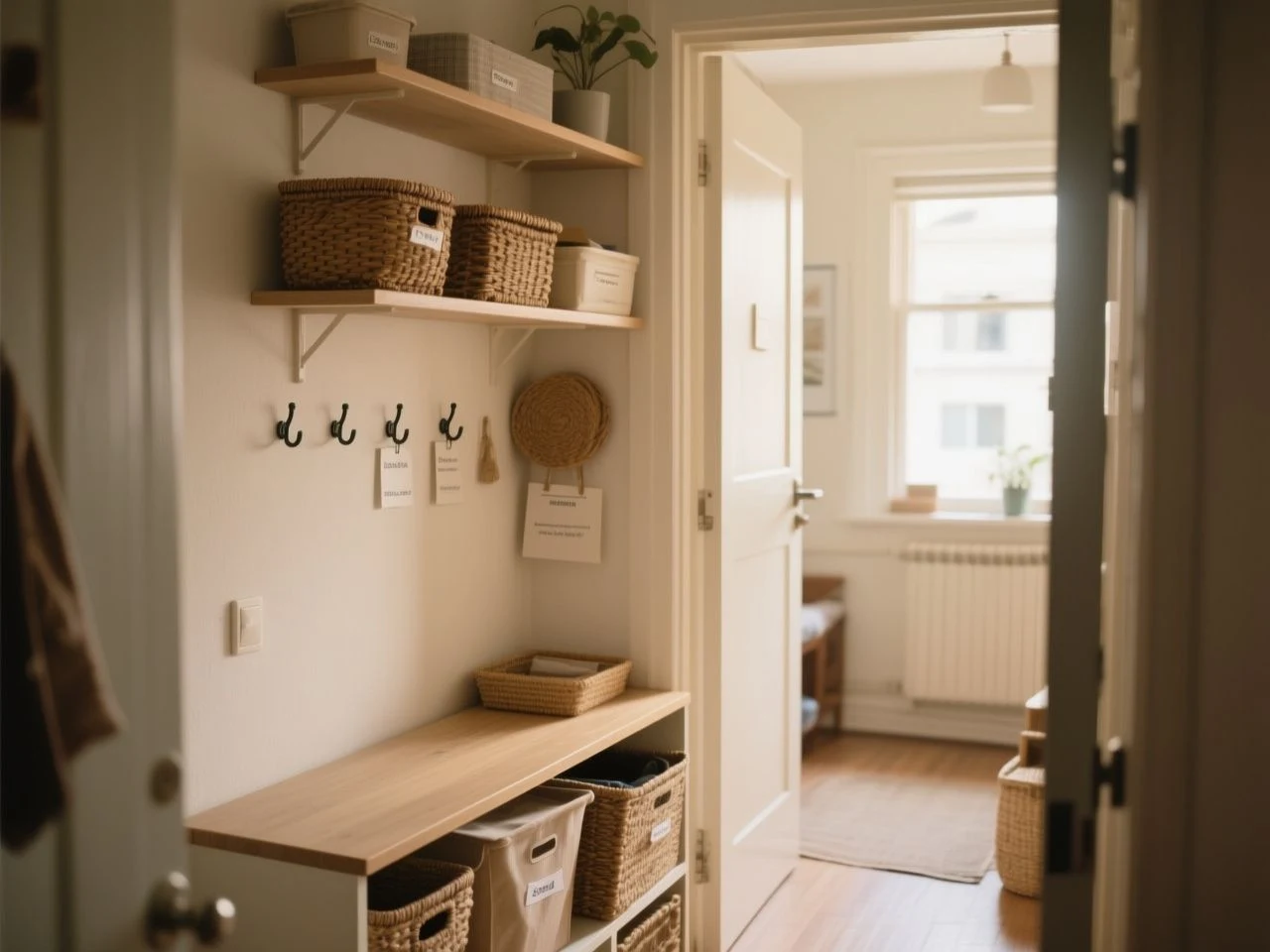
Clutter returns quickly when storage is chosen by appearance or price instead of by how a home actually works. The useful distinction in cheap home organization is matching each item to its frequency of use, point of use, and available vertical or hidden space before adding storage. A low-cost system should also be judged by its ongoing cost—replacement, cleaning, failed adhesives, wasted space, and maintenance—not just by what the materials cost initially.
That approach matters even more in a rental, where every solution must come off the wall cleanly. These cheap home organization ideas begin with measuring, sorting, and assigning a sensible home to each category before bringing in a container.
Key Takeaways
- Measure shelves, drawers, clearances, and container footprints before repurposing or buying storage.
- Use hidden, vertical, and point-of-use space first, but respect the stated limits of adhesives, rods, hooks, shelves, and anchors.
- Choose washable reusable storage for damp or busy areas, and keep cardboard, paper, and fabric away from moisture and heat.
Beginner: Match storage to the space and the habit
Step 1: Measure before you sort containers
Start with a tape measure and a short list of the spaces that cause trouble. Measure the inside width, depth, and height of shelves and drawers, then check door clearances, hinge movement, baseboards, and the footprint available on counters or floors. A container that fits the shelf but blocks a door is not useful storage.
Write down the largest object in each category before choosing a box or jar. A tall bottle, folded towel, pan handle, or cleaning tool can determine the shape of the whole system. Measure the container footprint as well as its height; a cheap container that leaves unusable dead space can cost more in lost capacity than it saves in materials.
Measuring shelves before selecting containers prevents dead space and blocked doors. The usable storage area is the space that remains accessible after a container is placed.
Step 2: Sort by frequency and point of use
Separate items into everyday, occasional, seasonal, and uncertain groups. Everyday objects belong close to the place where they are used, while occasional items can move to upper shelves, deep cabinets, or labeled boxes. Items that are rarely used should not occupy the easiest-to-reach storage.
A kitchen drawer beside the food-preparation area may hold the tools used there, even if a different drawer looks tidier. Bathroom cleaning supplies can remain near the bathroom rather than taking up space in a hallway closet. This simple point-of-use decision reduces the chance that a carefully arranged system becomes a dumping ground.
Step 3: Decide what deserves a container
Not every category needs a box. Open storage works for objects used repeatedly, while closed storage helps with small, loose, or visually distracting items. Decorative trays and lidded boxes can corral living-room remotes, chargers, or paperwork, but they should not become unmarked hiding places.
Decluttering belongs before organizing. Remove obvious rubbish, duplicates, and items that no longer belong in the room before assigning a container. If a category cannot be reduced, divide it by purpose rather than squeezing everything into one oversized box.
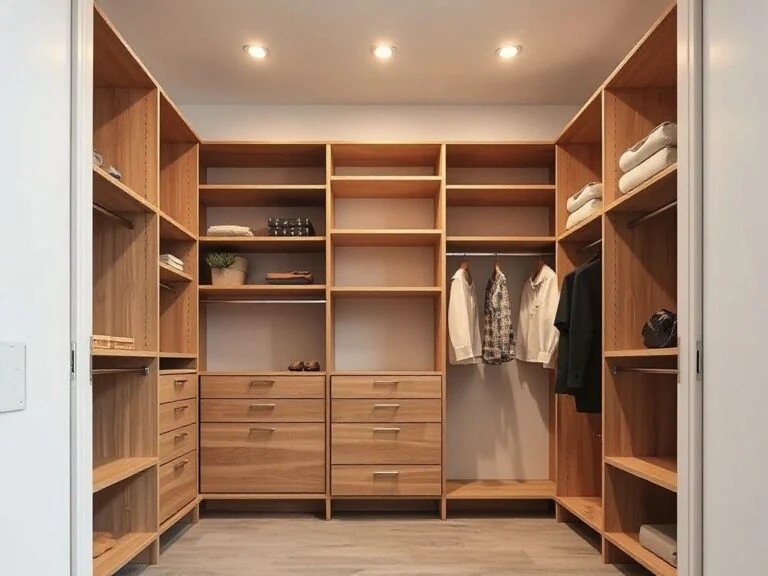
For a small walk-in closet, the same rule applies to clothing: keep regular-use pieces in the easiest reach and move occasional items higher or farther back. A separate guide to small walk-in closet organization can help with the layout stage, but the measurement-first method still comes first.

Intermediate: Repurpose materials without creating new clutter
Corrugated cardboard for temporary and dry storage
Corrugated cardboard is useful for sorting paperwork, grouping craft supplies, separating handbags, and creating drawer dividers. Cut pieces to the drawer’s internal dimensions, then label the category on the top edge so the contents remain visible when the drawer is open.
Cardboard belongs in dry, cool areas. Keep it away from under-sink cabinets, damp basements, garages with moisture, plumbing leaks, and heat sources. Paper fibers can soften or warp when exposed to moisture, and cardboard can become an attractive hiding place for pests. Replace a damaged box rather than trying to preserve a structure that has lost its shape.
Use cardboard as a trial system before spending money on reusable bins. If a category remains stable and the layout works, a washable container may justify its higher ongoing value; if the category changes often, disposable or repurposed material may prevent unused storage from accumulating.
Glass mason jars for visible small items
Glass mason jars can organize dry craft supplies, cotton items, hair accessories, clips, and other small objects that benefit from visibility. Group similar items, leave enough room to remove them without shaking the jar, and label the lid or front only when the contents are not obvious.
Glass needs a stable, low location in homes with children or pets. Keep heavy jars low and avoid unstable high stacks. A jar should not be placed where a falling object could create a hazard, and safety-sensitive supplies should remain accessible to the responsible adult rather than hidden in decorative containers.
Packaging as dividers and catchalls
Clean food boxes can become drawer dividers after the flaps are removed. Small cartons can group cables, spare stationery, or batteries, provided the category is labeled clearly and the carton stays dry. A shallow box can also collect items that need to leave the room, such as returns, donations, or objects that belong elsewhere.
The point of repurposing is to test a system, not preserve every package. When a box becomes stained, crushed, difficult to clean, or too small for the category, replacing it with a sturdier reusable container may be cheaper over time than repeated repairs and sorting.
Fabric bins and polypropylene storage bins
Fabric bins suit dry closets and open shelving because they hide visual noise and are easy to lift. Keep them away from damp floors, under-sink plumbing, and areas where spills are common. A fabric bin that cannot be cleaned easily should not hold toiletries, shoes with dirt, or anything likely to leak.
Polypropylene storage bins are a more practical choice for categories exposed to dust or occasional cleaning, but the manufacturer’s listing should be checked for the intended use and capacity. Place heavier bins on lower shelves and avoid filling a high bin so heavily that removing it requires twisting or pulling it over other objects.

Intermediate: Rental-friendly vertical organization
Adhesive hooks and 3M Command Strips
Adhesive hooks and 3M Command Strips can support lightweight rental organization without drilling, and Command Strips are described as coming off damage-free. That phrase is not permission to ignore the surface, load, or removal instructions. Adhesives can fail on dusty, damp, textured, freshly painted, or incompatible surfaces, and removal can still damage paint or wallpaper.
Clean and dry the surface according to the product instructions, allow freshly painted surfaces to cure as directed, and use only the stated load limit. Do not hang heavy pans, full bags, glass jars, or anything that could cause harm if the adhesive releases. A rental-friendly method is only renter-friendly if the wall and the household remain safe.
Adhesive strips should not carry loads beyond their stated limits. The actual wall finish, moisture, dust, load direction, and removal method all affect whether an adhesive system remains attached.
Pegboards and hooks
A steel pegboard with steel pegboard hooks can organize scissors, cleaning tools, craft supplies, and small kitchen equipment when the board is properly mounted. The IKEA SKÅDIS pegboard is an example of a named pegboard system, but the important question is not the brand; it is whether the mounting method suits the wall and the load.
Follow the manufacturer’s instructions for the board, hooks, and fixings. Lightweight hardware should not be used for heavy objects, and a board should not be loaded beyond its stated limit. If drilling is allowed, use appropriate wall anchors for the wall type and load. If drilling is not allowed, choose a lighter arrangement or use a freestanding surface instead.
Keep frequently used objects near the lower or middle portion of a pegboard, where they can be reached without stretching. Store sharp tools with their working ends protected, and consider childproofing if the board is within a child’s reach.
Wooden dowels and tension rods
Wooden dowels can divide a drawer, support rolled paper, or create simple horizontal sections inside a cabinet when cut to fit. A dowel is a spacer or divider unless the structure around it is designed to carry weight; do not treat a loose dowel as a shelf support for heavy objects.
Tension rods can create short-term divisions inside cabinets, under sinks, or in closets. Their safe capacity depends on the rod’s stated limit, its span, the contact surfaces, and how the load is distributed. Do not use a tension rod for a load beyond its stated limit, and do not rely on one above a bed, doorway, or other place where a falling object could injure someone.
A tension rod works best for light items that are already easy to remove, such as spray bottles or small accessories. Under a sink, check for leaks before placing paper, cardboard, or fabric nearby. A damp cabinet can turn a tidy system into a damaged one quickly.
Behind doors and above eye level
Door backs and upper shelves offer hidden space, but clearance must be measured with the door fully open. An organizer that is shallow on paper can still strike a wall, shelf, handle, or neighboring door. Keep the heaviest contents low and reserve higher locations for light, occasional items.
In a bathroom, the back of a door can hold lightweight personal-care categories if the mounting system is suitable for the door and the wall finish. In an entryway, a tray can collect keys and mail while a hook system handles frequently used outerwear. The goal is to keep the floor and primary walking route clear without turning the door into an overloaded panel.
Intermediate: Room-by-room systems that stay usable
Small kitchen organization
Store items close to where they are used. Keep everyday cooking tools near the preparation area, pans near the cooking surface if the storage is secure, and food containers near the place where leftovers are packed. A rack or divider should create access, not a second layer that requires moving several objects first.
Upper shelves can hold occasional serving pieces, backup supplies, and seasonal items. Label opaque containers on the front edge, not only on the lid, so the category remains readable when containers are stacked. Use a tray for small bottles or condiments so one movement gathers the group.
Countertop clutter usually reflects a missing point-of-use home. Before adding a hanging system, check the load, the surface, the door swing, and the distance from heat or water. Spray bottles should never be suspended from hardware that is not rated for their filled weight.
Drawers benefit from dividers made from clean cardboard during the trial stage. If the arrangement survives a reset, replace damaged dividers with a washable material suited to the drawer. Keep sharp utensils contained, and store heavier objects low.
Bathroom storage
Bathrooms need storage that tolerates cleaning and humidity better than cardboard or untreated paper. Use washable containers for small toiletries, keep labels readable, and leave plumbing access clear under the sink. Fabric bins can work in a dry linen area, but they are a poor fit beside a leak-prone cabinet.
Separate daily toiletries from backup supplies. Daily items should be visible or immediately reachable, while backups can occupy a higher shelf. This arrangement reduces the temptation to open a new item before the current one is finished.
Store medicines and safety-sensitive products according to their labels and away from children. The U.S. Consumer Product Safety Commission provides consumer safety information for household hazards; its guidance should take priority over a decorative storage plan.
Closet and bedroom storage
Use vertical space without creating unstable stacks. Folded items should be grouped by use, and rarely used items can move higher if they remain easy to retrieve safely. Keep heavy containers near the floor and avoid placing anything unstable above a sleeping area.
Hangers, shelf dividers, and fabric bins work only when the closet has enough clearance for doors and walking paths. A narrow gap may be more useful for a wooden dowel or a shallow box than for a deep container that consumes the entire shelf.
Closet systems should be reviewed whenever seasonal clothing changes. A category that repeatedly spills out has a sizing or volume problem, not a labeling problem. Reduce the category, change its location, or choose a container that matches the actual volume.
Living room and home office
A tray can collect remote controls, reading glasses, and small daily objects without scattering them across a table. Lidded boxes can hold cables, photographs, or paperwork, but labels should identify the contents precisely. A box marked “miscellaneous” usually delays the next decision rather than solving it.
Old photographs and important papers should be sorted before they are boxed. Keep paper storage dry and away from direct heat, and create a clear category for items that need scanning, filing, donating, or discarding. For a calmer desk layout, these home office space ideas can complement a point-of-use approach without adding wall damage.
Advanced: Prevent systems from failing
Respect load limits and mounting conditions
No shelf, adhesive hook, tension rod, or pegboard should carry more than its stated limit. A load limit is not interchangeable between products, and the same hook can behave differently on a dusty wall, a textured surface, or a damp door.
Use appropriate wall anchors when mounting storage to a wall, and follow the instructions for the wall material. If the listing does not state a capacity, treat the capacity as unknown rather than guessing. Keep heavy items low, avoid unstable high stacks, and never place a potentially falling object where a person could be struck.
For general consumer product safety information, consult the CPSC. For materials or products used around food, follow the manufacturer’s intended-use information and consult the U.S. Food and Drug Administration for applicable food-contact guidance rather than assuming that any repurposed container is suitable.
Keep low-cost materials clean and dry
Wipe washable bins with a suitable household cleaner according to the material and cleaner instructions, then allow them to dry before refilling. Do not place damp items into cardboard, paper, or fabric storage. A clean container cannot compensate for wet contents.
Use removable liners in areas where spills are likely, but keep the liner compatible with the container and easy to replace. Inspect under-sink and basement storage during routine cleaning. A small leak can damage a whole category when items are packed tightly together.
Label for retrieval, not decoration
Labels should describe what is inside and, where useful, how often the contents are needed. “Cables—current devices” is more useful than “technology,” while “guest towels” is more useful than “bathroom.” Labels on the front or side work better than labels visible only from above when containers are stacked.
Do not label every object individually. Label a category when the label saves searching time, and leave obvious open storage unmarked. A label that no longer matches the contents should be replaced immediately rather than treated as a permanent promise.
Set a reset rule and know when to stop repairing
Review each system after it has had enough ordinary use to reveal its weak point. A drawer that jams, a bin that overflows, and a hook that repeatedly loses adhesion each need a different response. Do not keep repairing a system that fails because the space, load, or category is wrong.
Repair is worthwhile when the material remains clean, stable, and suited to the job. Replace or retire the solution when it is damp, cracked, warped, unsafe, difficult to clean, or dependent on repeated adhesive failure. A sturdier reusable container may cost more initially, but repeated replacements and wasted space can make disposable boxes more expensive over time.
Low-cost organization works best when the system is simple enough to reset. If putting an item away requires several steps, the item will probably migrate to the nearest open surface. Move the storage closer, reduce the number of categories, or remove the container that adds work without adding access.
Frequently Asked Questions
How do I choose cheap home organization ideas for a small space?
Start with the items you use most often and measure the space around their point of use. Check shelf depth, drawer width, door clearance, and the footprint of any container before committing. Use vertical or hidden space for occasional items, keep heavy storage low, and avoid a container that blocks access to another category.
What can I repurpose instead of buying storage containers?
Clean corrugated cardboard can make temporary drawer dividers and category boxes in dry rooms. Glass mason jars can hold visible small items, while clean packaging can create short-term compartments. Keep paper and cardboard away from moisture, heat, basements, garages, and under-sink areas; switch to a washable reusable container when the material becomes damaged or hard to clean.
Are adhesive strips and tension rods safe for rental storage?
They can suit lightweight, low-risk organization when used within the manufacturer’s stated limits and on compatible, clean, dry surfaces. Adhesives may fail on dusty, damp, textured, freshly painted, or incompatible surfaces, and removal may damage paint or wallpaper. Tension rods also need suitable contact points and must not carry loads beyond their stated limits.
How often should I reset a low-cost organization system?
Reset a system whenever its contents spill out, labels stop matching, access becomes difficult, or the material shows moisture or damage. A seasonal review works well for clothing and occasional household items, while kitchens and entryways may need attention more often because their contents change quickly. Stop repairing a solution when repeated fixes do not address the underlying space or load problem.