A wicker basket hung from a Command hook is one of the classic rental-bathroom failures, and in a steamy room it tends to come down inside a week. Command adhesive is a pressure-sensitive strip, and pressure-sensitive adhesive softens as heat and humidity climb, so a basket loaded with three bottles of shampoo and a folded towel ends up held to the tile by glue that gets weaker every time the shower runs. None of that should be a surprise to an assembly-sceptic mind. Any temporary storage solution is better judged by its hardware than by its finish: the little metal pin, the sticker backing, the spring tension on a rod. Those are the parts that either hold for a year or send your towels crashing into the toilet at 2 a.m. If you’re figuring out how to add storage to a rented bathroom without losing your security deposit, the answer starts by unlearning the idea that one universal trick works everywhere.
The main mistake renters make is treating adhesive hooks and tension rods as universal solutions, not load-bearing ones. A heavy wicker basket will peel off a Command strip in a humid bathroom, while a lightweight plastic caddy on a tension rod holds for months, and the difference is not luck: adhesive strips carry a stated weight rating, and steam works on the bond in a way a dry hallway never does — the trick is to match the storage weight to what the temporary fix can actually support, and to prep the surface with rubbing alcohol before sticking anything. It’s not about avoiding damage entirely, but about knowing which surfaces and products let you walk away with zero clues at move-out. And if you’re also juggling a washer in the same footprint, small bathroom with laundry layouts add another layer of constraint worth planning around.
Key Takeaways
- Lease agreements almost always ban drilling, painting, or replacing fixtures — so every storage choice must be fully reversible.
- Adhesive strips and hooks fail on textured or painted drywall; they hold best on smooth, non-porous tile, glass, or sealed metal.
- A tension rod’s realistic weight limit sits around 15 to 20 pounds total when installed on clean, parallel surfaces.
- Surface prep with isopropyl alcohol is non-negotiable for any suction cup or adhesive to survive bathroom steam.
Step 1: Read the Lease, Probe the Surfaces, and Know What You Cannot Touch
Renters skip this step because it feels like homework. That is a costly mistake. Your lease almost certainly includes a clause about permanent modifications — drilling into tile, painting over wallpaper, swapping out the vanity mirror. Read that clause before you buy anything. A wall-mounted corner shelf that requires three masonry screws might seem smart, but one hole in a rental bathroom tile can cost you an entire deposit when the landlord repaints or reglazes.
The surfaces in your bathroom dictate which hardware can even work. Run your hand over the wall near the shower. Rough, textured plaster? Any adhesive strip will peel paint when you remove it. Glossy ceramic tile or a sheet of glass? Adhesive and suction have a fighting chance. Enamel paint over drywall? That is the riskiest surface of all — the paint film tears off with the sticker because the underlying drywall paper gives way first. The 3M Command hook weight limits on the packaging assume a clean, smooth, non-porous surface, which rules out half of older rental bathrooms.
Check for hidden towel bars and medicine cabinets
Before adding anything, look up. Many rental bathrooms built before 1990 already have a recessed medicine cabinet or an old towel rail behind the door. If those exist, they’re permanent storage you don’t have to buy. A painted-over towel bar can hold folded towels as long as the bracket screws are tight. A medicine cabinet with a broken hinge can be rigged with a simple magnetic catch for a few dollars and zero drilling.
If the bathroom has no built-in towel storage, do not default to purchasing a door-mounted rack. The hollow-core door in a rental can sag under a wet towel load, and the top hooks often scratch the paint off the door frame. Get into the habit of probing what the room already offers.
Step 2: Match the Storage Weight to the Temporary Fix That Can Actually Carry It
This is where my assembly-sceptic brain earns its keep. Every damage-free storage device has a real-world weight ceiling that is often lower than the number on the box. I ignore the marketing language and look at two things: the surface area of the adhesive pad or suction cup, and the leverage of the item being hung. A hook that holds a five-pound canvas bag on smooth tile will fail after three weeks if that same canvas bag gets wet and doubles in weight.
Adhesive hooks: trust them only for lightweight, dry loads
A standard medium 3M Command hook rated for 3 pounds will hold a loofah, a washcloth, or a small plastic mirror. It will not hold a wet bathrobe. That is not a product defect; that is physics. The adhesive degrades in humid air, especially when the bathroom door stays closed after a shower. The manufacturer’s humidity ratings exist for a reason: most strips are rated for damp locations, not standing water or continuous steam.
For anything heavier than 2 pounds — a full shampoo bottle, a folded stack of towels, a small wastebasket — skip adhesive entirely. Use a tension-mounted shower caddy or an over-the-door rack that transfers weight to the top of the door frame rather than a sticky pad.
Tension rods: the silent load-bearer when installed correctly
A tension rod placed between two parallel shower walls can hold a surprising amount, but only if you check two things: the surface is flat, and the rod is tightened until the rubber ends compress fully. Most failures come from installing the rod at a slight angle because the walls are not perfectly parallel. The rod slips, the baskets tilt, and the shampoo hits the tub floor. Before you buy, measure the gap at three heights: floor, waist, and shoulder. If the width varies by more than a quarter inch, skip the tension rod or use it only for a shower curtain, not a caddy.
How much weight can a tension rod realistically hold? When installed between clean tile walls at a perfect 90-degree angle, a standard 1-inch diameter rod with rubber end caps supports roughly 15 to 20 pounds. That is enough for two rows of small plastic bins or a single over-tub caddy with a few bottles. It is not enough for a hanging pot rack or a basket of wet towels. And never use a tension rod on a sloped ceiling or over a clawfoot tub without verifying the end caps grip the tub rim.
Over-the-door hooks: the workhorse nobody respects
An over-the-door hook rack with two or four metal arms costs almost nothing and requires no adhesive at all. The weight hangs over the top of the door, so as long as the door closes fully, the rack stays. The risk is the thin metal hooks scratching the door’s top edge or the door frame’s paint. Solve that with a strip of felt tape on the inside of each hook. Family Handyman’s guide to hanging without nails shows the same principle: friction and felt beat glue every time.
I keep two over-the-door hooks in my own rental bathroom — one on the bathroom door for robes and wet towels, one on the closet door for a grocery bag of laundry supplies. Neither has left a mark in three years.
Step 3: Prep Every Surface with Isopropyl Alcohol, Then Re-Prep Monthly
Surface prep is the boring step that separates a storage system that works from one that falls off in the middle of the night. Rubbing alcohol — specifically 70% isopropyl alcohol — removes soap scum, body oil, and mineral residue that form an invisible film on bathroom tile. That film is the number one reason suction cups and adhesive pads lose their grip after a week. A dry paper towel is not enough.
To prep a wall for any adhesive or suction mount, wipe the area with a cotton round soaked in isopropyl alcohol. Let it dry completely — about 30 seconds. Do not touch the area with your fingers afterward. Then stick the adhesive pad or press the suction cup firmly for 30 seconds. If you skip this step, you are effectively attaching your storage to a layer of shampoo residue rather than the actual wall.
Suction cups: re-apply every few weeks, never trust them for glass items
Suction cup shelves and shower caddies look appealing because they require no glue at all. But in a steamy bathroom, suction is a temporary seal, not a permanent one. The rubber degrades with heat and moisture exposure, and the seal breaks when the air inside the cup expands as the room heats up. You can re-wet the cup and re-press it, but the hold gets weaker each cycle. A corner suction shelf holding a shower gel bottle might survive a month. The same shelf holding a glass container of cotton balls will eventually slide down the tile and shatter.
Are suction cups reliable on textured shower walls? Absolutely not. The tiny air gaps in textured tile or pebbled flooring break the vacuum seal immediately. Suction cups work only on smooth, non-porous surfaces, and even then, you must reapply them after every deep steam cycle. If you want a no-drill shower storage that you never think about, use a tension corner caddy or a freestanding over-the-tub basket instead.
Towels with no towel bar: the three cheap ways that actually work
Half of my rental bathrooms have never had a towel bar within reach of the shower. That seems like a small annoyance until you are dripping wet and the only towel is folded on the toilet lid. The easiest fix is a freestanding towel ladder — a simple wooden or metal A-frame that leans against the wall. It holds four or six towels, needs no installation, and you take it with you when you move. If floor space is tight, a set of over-the-door hooks on the bathroom door handles wet towels as long as you let them dry before closing the door.
The third option is a tension rod placed high on the shower wall, above the water line. Hang towels over it with shower curtain hooks. The rod must be installed on clean tile and tightened fully, and you should rotate the towels daily so they don’t mildew. None of these solutions require a single hole in the wall.
Step 4: Over-the-Toilet Shelving, Corner Shelves, and Other Awkward Space Wins
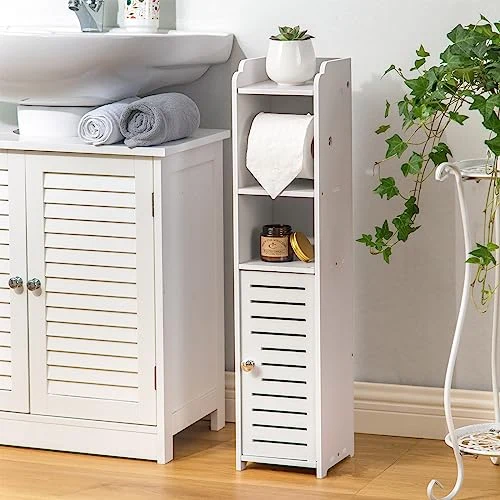
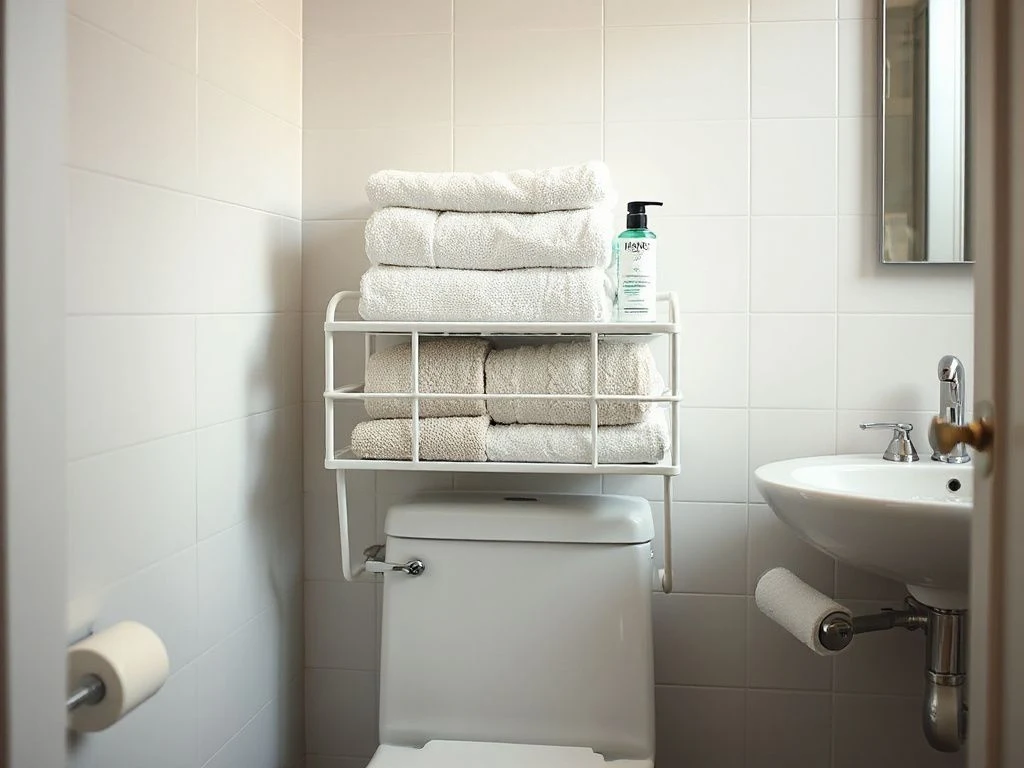
The space above the toilet is the most underused vertical real estate in a rental bathroom. A freestanding over-the-toilet shelving unit — the kind with two legs and a crossbar that rests behind the tank — requires no drilling and holds a remarkable amount of folded towels, toilet paper, and cleaning supplies. Check the width against your toilet tank before ordering: most units fit a standard 20-inch-wide tank, but a skirted toilet or a low-profile tank may not accommodate the legs.
Can you put a shelf over the toilet without leaving marks? Yes, but only the freestanding kind. Do not attempt to mount a floating shelf with adhesive strips, even the heavy-duty ones. A shelf that bridges the gap behind the toilet experiences constant downward leverage, and any adhesive will eventually peel or fail under the weight of a single shampoo bottle. The freestanding unit’s weight sits on the floor, not the wall, and you can shim the legs with felt pads to protect the floor tile.
Corner shelves: the tension-mounted version beats the glue version
A tension-mounted corner shelf uses a spring-loaded pole that presses between the floor and the ceiling, with triangular shelves that clip onto the pole. It fits into the unused corner of a shower or next to the vanity and can hold several pounds of toiletries. The key is ceiling height: most tension poles adjust from 7 to 9 feet, but you need a flat ceiling, not a sloped one. A sloped ceiling will cause the pole to slip at an angle, and the entire unit will lean over time.
If you prefer wall-mounted corner shelves, get the kind that uses damage-free adhesive strips rated for 15 pounds or more, and install them on polished porcelain tile only. Never on painted drywall. Justify the extra cost compared to a cheap suction corner shelf by asking yourself how many times you want to pick your razor off the tub floor.
When the corner shelf is full of small toiletries, a boho bathroom layout often uses woven baskets with handles to group items and keep the corner visually calm. I’m not one for decorative labels, but a storage basket with a handle beats a jumble of loose bottles every morning.
Shower caddies: plastic over metal, and rust is the enemy
A hanging shower caddy that loops over the shower head pipe works fine until the metal rusts and leaves orange streaks on the tile. Most caddies sold for under $20 are chrome-plated steel, not stainless. The plating wears off where the basket rubs against the pipe, and the exposed steel rusts within a month in a humid bathroom. If you’re on a budget, choose solid plastic caddies with drainage holes. They won’t rust, they dry faster, and a few small holes let water out instead of pooling in the corners.
How do you keep a metal shower caddy from rusting in a humid bathroom? You can’t prevent it forever, only slow it down. Dry the caddy after each shower with a quick shake, leave the bathroom fan running for 20 minutes, and remove the caddy from the shower head once a week to wipe down the contact point. Better yet, switch to a tension-pole caddy that does not touch any metal plumbing. The rust marks you see on many rental shower heads come from exactly this cheap plating failure.
One more rental-safe trick: a small storage basket with a handle hung from a tension rod across the shower wall. Fill it with loofahs, razors, and shampoo bars. It swings slightly when the rod flexes, which tells you exactly when the tension is loosening.
Step 5: Remove Everything Without a Trace — The Move-Out Protocol
Most people worry about installing storage and forget that removal is the test. The security deposit comes back only if the bathroom looks identical to move-in day. That means no adhesive residue, no paint chips, no holes, and no rust rings from a caddy that sat on the tub edge. Set a goal: every storage item you add should be removable in under five minutes with no tools beyond a hairdryer and a plastic scraper.
For adhesive strips, warm the strip with a hairdryer on low for 20 to 30 seconds. Do not overheat the wall — just enough to soften the adhesive. Then pull the tab straight down along the wall, slowly. If the strip snaps and leaves a foam chunk, soak the remnant with rubbing alcohol and roll it off with your thumb. A plastic scraper (never a metal one) removes any residual gummy bits without scratching tile or glass.
How do I remove adhesive residue from tile or glass? Soak a paper towel in isopropyl alcohol and press it against the residue for one minute. The alcohol breaks down the adhesive bond without damaging ceramic, porcelain, glass, or sealed stone. Wipe away. If the residue has been sitting for months, warm it with the hairdryer first, then apply the alcohol. Goo Gone works too, but it leaves an oily film that must be washed off with dish soap — and a landlord inspecting for damage will notice that oily sheen on the tile.
For tension rods, loosen the rod slowly at both ends. If the rubber end caps have left a dark ring on the tile, that’s just compressed rubber dust. A damp magic eraser removes it in seconds. If the rod itself caused the tile to flex or crack, that means the tile was improperly installed behind the wall — and you should document it with photos before moving anything.
If you’ve layered a few of these rental-friendly storage tricks and the room still feels tight, remember that layout matters more than hardware. Modern farmhouse bathroom designs show how open shelving and baskets can make a small room feel intentional without drilling a single hole. You adapt the same principle: group items by frequency of use, keep the floor clear, and let the space above the toilet and door do the heavy lifting.
Frequently Asked Questions
Will 3M Command hooks come off without ruining the paint?
Only if the paint is intact and well-adhered, and only if you remove the strip correctly by pulling the tab straight down along the wall after warming it with a hairdryer. On cheap matte paint or unprimed drywall, the strip can tear the paint film right off. Test on a hidden spot first, and if you see any paint lifting, avoid adhesive on that wall entirely and use tension or freestanding storage instead.
How much weight can a tension rod realistically hold in a shower?
Between clean, parallel tile walls at a perfect 90-degree angle, a standard 1-inch tension rod holds roughly 15 to 20 pounds total. That includes the weight of the caddy, bottles, and any baskets you hang. On painted drywall or a slightly angled wall, expect half that. Overloading a tension rod doesn’t make it fall suddenly — it slowly slips until the rod drops, so check the tightness every month.
What should I avoid using in a rental bathroom to protect my security deposit?
Skip permanent wall anchors, peel-and-stick wallpaper on painted drywall, suction cups on textured tile, and any metal shower caddy with a cheap chrome finish that will rust onto the tile. Also avoid heavy glass shelves mounted with adhesive strips, even the heavy-duty kind, because the constant downward leverage will eventually peel the sticker off or tear the paint. Freestanding units and properly prepped adhesive on non-porous surfaces are the safest bets.