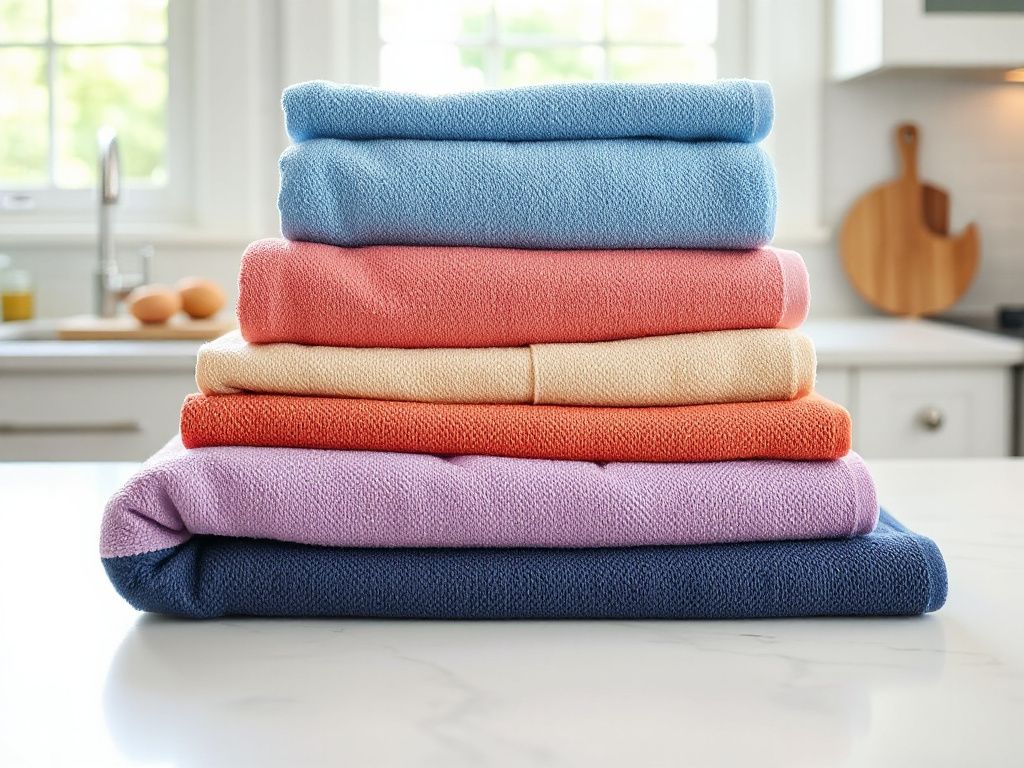
Why is it that the one room you use to get clean is also the room most likely to smell like a damp gym bag? Towels hang there for hours, sometimes days, holding moisture against themselves like a wet wool coat. If you have ever stood shivering in a bathroom waiting for a towel to dry, this quick dry towels buying guide is for you.
The fluffiest towel on the shelf is often the one that leaves a bathroom smelling like a locker room, because a deep pile holds water long after you are done with it. The key distinction between a quick-dry towel and a standard terry towel is not the fabric alone but the engineered weave designed to maximize air circulation and water evaporation. A quick-dry towel sacrifices maximum absorbency for faster drying, so a buyer must choose based on how they use it—a brisk beach dry versus a plush after-shower wrap. Additionally, the chemistry of laundering (especially fabric softeners and chlorine bleach) can quickly degrade the wicking agents and synthetic fibers, so the drying performance is not a permanent feature but a result of ongoing care.
That last part changed how towels are chosen. Towels are a small detail that sets the entire tone of a bathroom. If you are still attached to plush cotton, our bath towels buying guide compares traditional options with honest trade-offs. For now, let’s talk about what actually dries fast.
Key Takeaways
- Quick-dry towels move water across their surface instead of holding it deep in the pile, which is why they dry in a fraction of the time of terry.
- Fabric softener and dryer sheets are the fastest way to ruin the wicking channels that make these towels work.
- Waffle and honeycomb weaves promote airflow, but microfiber blends generally dry fastest of all.
- Buy for your actual use case: a travel towel behaves differently than a bathroom towel, and neither is a plush cotton replacement.
What Actually Makes a Towel Quick-Dry?
Most people assume a thin towel dries faster than a thick one. That is true, but only part of the story. A quick-dry towel is engineered to do two things at once: spread water across a large surface area, then let air reach every wet fiber. Regular terry cloth does the opposite. It traps water inside dense loops, which is why it feels plush but stays damp for hours.
The Science of Wicking vs. Absorbing
Absorbency means holding water. Wicking means moving water. A thick cotton bath sheet holds a lot of water but does not let it evaporate quickly because the loops are packed together. A quick-dry towel, whether microfiber or a waffle weave, uses capillary action to pull moisture away from your skin and spread it across the fabric’s surface. The water then evaporates from a much larger area, which is exactly why these towels feel barely damp after thirty minutes hung on a hook.
On paper, a good microfiber towel can air-dry in under an hour in a ventilated bathroom. A 600 GSM cotton terry towel, by comparison, might still feel clammy six hours later. That number—GSM, or grams per square meter—measures fabric density, not drying speed. A lower GSM quick-dry towel almost always dries faster than a high GSM cotton one, even if the cotton one feels more luxurious to the touch.
One self-contained fact worth remembering: polyethylene terephthalate (PET) polyester, the primary fiber in most microfiber towels, absorbs less than 0.4% of its weight in water, which is why microfiber dries so quickly. The water sits on the surface rather than soaking into the fiber itself.
Weave Patterns That Speed Evaporation
Not all quick-dry towels are microfiber. Some are made from cotton or bamboo, but rely on an open weave to let air through. The two most common patterns are waffle weave and honeycomb weave.
A waffle weave has raised, square cells that increase surface area and create channels for air. A honeycomb weave does the same with hexagonal indentations. Both work because air can circulate through the gaps, carrying moisture away. The waffle weave tends to feel slightly more structured against the skin, while honeycomb is softer and more flexible. Either one will dry faster than a flat terry weave, but neither will dry as fast as a microfiber towel because cotton and bamboo fibers still hold some water internally.
Hang a waffle-weave cotton towel next to a microfiber towel on the same rod after a shower and the gap shows within the hour: the cotton is still damp while the microfiber is nearly dry, because split microfiber filaments carry water to the surface where it can evaporate instead of holding it deep in the pile. That does not mean the cotton one is bad—it means you choose based on what you want against your skin.
Fiber Blends at a Glance
- Microfiber (polyester and polyamide): Dries fastest, holds the least water, but can feel grabby or scratchy on sensitive skin. Most common in travel towels.
- Polyester alone: Still quick-drying, but less absorbent than blends with polyamide. Often cheaper.
- Nylon blends: Nylon adds stretch and durability, but too much nylon reduces wicking speed.
- Bamboo viscose (rayon): Softer than microfiber, more absorbent, but dries slower than synthetics. Still faster than cotton terry.
- Tencel (lyocell): Smooth, cool, and quick-drying, but less durable when wet. Works well for bathroom towels if you hang them properly.
The key distinction between a quick-dry towel and a standard terry towel is not the fabric alone but the engineered weave designed to maximize air circulation and water evaporation. I keep coming back to that sentence because it prevents most buying mistakes. You cannot pick a towel based only on the word “cotton” or “microfiber” on the label.
Choosing the Right Quick-Dry Towel for Your Space
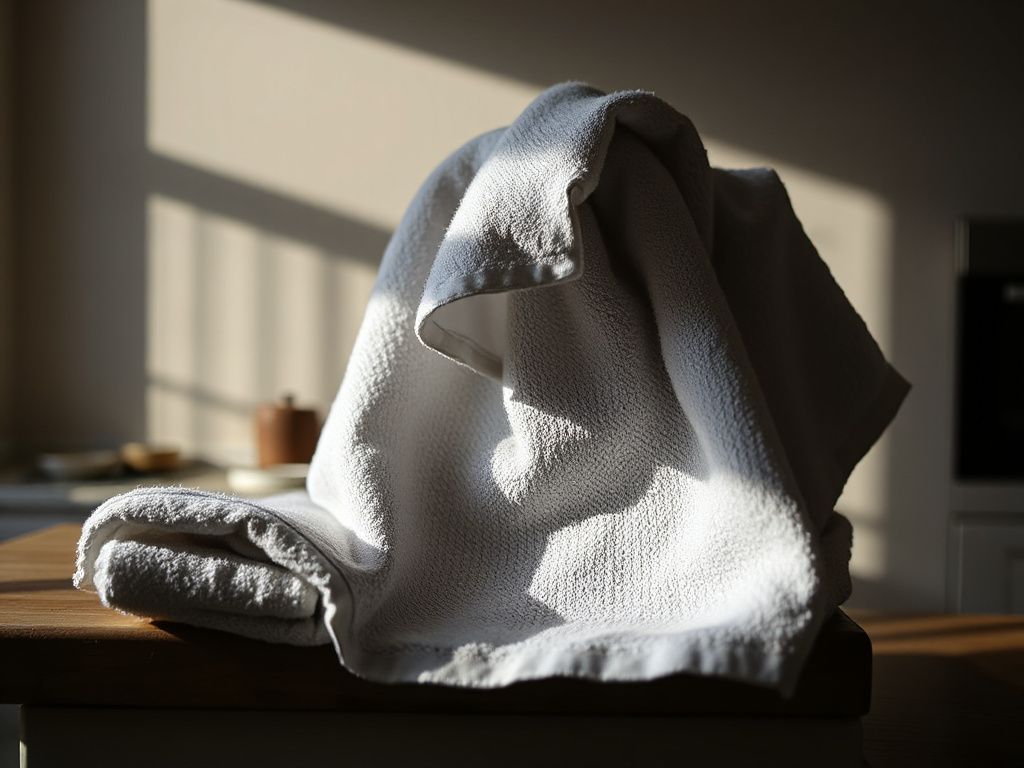
Where you hang the towel matters as much as what the towel is made of. A quick-dry towel in a steamy, windowless bathroom will still get musty. A thick cotton towel in a breezy, sunlit bathroom might dry adequately. Start with your room, then pick the towel.
Bathroom Towels vs. Travel and Beach Towels
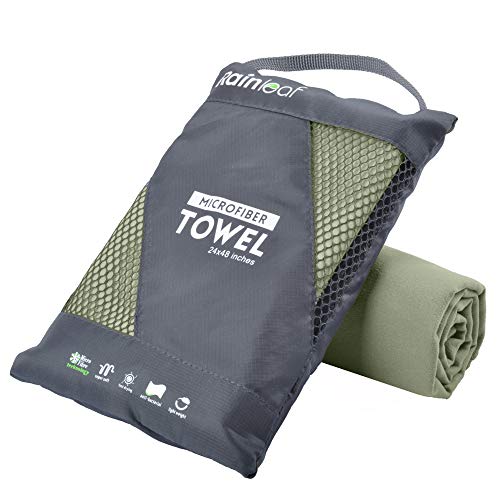
Quick-dry towels were originally developed for backpackers and travelers who needed to pack a wet towel every morning. Brands like PackTowl and Dock & Bay popularized the category by shrinking full-size towels into something that fits in a jacket pocket and dries in twenty minutes. Those towels work brilliantly for camping, gym bags, and beach trips where you shake off sand and move on.
But a travel towel is not a bathroom towel. Travel towels are often thin, slightly slippery, and not designed for the slow, plush ritual of a post-shower wrap. If you want a quick-dry towel for your home bathroom, look for a waffle weave or a thicker microfiber with a soft brushed surface. That gives you some of the absorbency of terry with most of the drying speed.
Our best bath towel sets roundup includes a few quick-dry options alongside traditional cotton, and the difference in hand feel is immediately obvious. You give up that deep, enveloping softness in exchange for a towel that never smells sour.
Microfiber vs. Bamboo vs. Tencel: Head-to-Head
I will say this plainly: microfiber is the fastest-drying material you can buy for a towel. It also feels the least like a traditional towel. If you have dry skin or eczema, a microfiber towel can feel like it is dragging across your skin rather than gliding. Bamboo viscose and Tencel offer a softer hand, but they absorb more water and therefore take longer to dry.
Bamboo viscose is produced by dissolving bamboo pulp and extruding it into fibers. The fiber itself is smooth and round, which feels nice against skin. But bamboo rayon holds roughly 60% more water than polyester, so a bamboo quick-dry towel typically needs two to three hours to air-dry in a bathroom. Tencel (lyocell) is similar in feel and drying time, though it is stronger when wet than bamboo.
If you shower twice a day and your bathroom has no window, get microfiber. If you shower once a day and value softness, get a waffle-weave bamboo blend. There is no perfect answer, only the right trade-off for your habits.
GSM and Thickness: Why Lower Isn’t Always Worse
GSM tells you how dense the fabric is. Bath towels range from 300 GSM (thin and quick) to 900 GSM (thick and slow). Quick-dry towels typically fall between 200 and 400 GSM. A 250 GSM microfiber towel will dry in under an hour in most bathrooms. A 400 GSM waffle-weave cotton will take two to three hours.
But do not chase the lowest GSM possible. A 150 GSM microfiber towel feels like a cheap gym rag and barely holds enough water to dry your body. Aim for 250 to 350 GSM for a travel towel, and 350 to 450 GSM for a bathroom quick-dry towel. The listing always states the GSM if it is a reputable brand; if the number is missing, treat that as a red flag.
Care and Maintenance: The Part Everyone Skips
Nobody ruins a quick-dry towel by using it. They ruin it in the laundry room. The wicking channels that make these towels dry fast are delicate. One wrong wash cycle and you are left with an ordinary, slow-drying rag.
The Fabric Softener Trap
Fabric softener works by coating fibers with a waxy lubricant. That coating makes cotton feel fluffy, but on a quick-dry towel it fills in all the microscopic channels that move water. After three or four washes with fabric softener, a microfiber towel stops wicking entirely. Water beads on the surface instead of spreading, and the towel takes hours to dry.
This is not a slow decline; it happens remarkably fast. The American Cleaning Institute has published guidance on how fabric softeners interact with synthetic fibers, and the takeaway is simple: fabric softener and performance fabrics do not mix. If you want softness, use a half cup of white vinegar in the rinse cycle instead. Vinegar rinses away mineral buildup without leaving a coating.
Bleach and Harsh Detergents
Chlorine bleach will degrade synthetic fibers like nylon and polyester, causing them to break down and dry slower. The bleach attacks the polymer chains, leaving the fibers rougher and less able to wick. Even oxygen bleach can be too harsh for bamboo viscose, which is less durable than polyester when wet.
Use a mild liquid detergent, preferably one without added fragrances or brighteners. Powder detergents sometimes leave undissolved residue in low-temperature washes, which can also coat the fibers. Wash quick-dry towels in cold or warm water on a gentle cycle. Hot water does not clean them better; it just stresses the synthetic fibers.
One wash per week is plenty. If you use the towel daily after a shower, that is about the frequency that prevents body oils and dead skin from building up. Wash with similar fabrics only—never with cotton towels, because cotton lint will transfer to the microfiber and clog the weave.
Drying, Storing, and Avoiding Mildew
Quick-dry towels can go in the dryer on low or no heat. High heat will melt the tips of polyester fibers, making the towel feel scratchy and reducing wicking. The listing usually states “tumble dry low” for a reason. Air-drying is always safe and often faster than you expect—a microfiber towel hung on a bar in a dry room will be ready to use within an hour.
The musty smell that appears after a few weeks is almost always from being folded and stored while damp. Even a fast-drying towel can develop mildew if you bunch it up in a hamper or closet before it is fully dry. Always hang it flat until it passes the “cheek test”: press it against your cheek and if it feels cool or clammy, it is still damp. Store it only after it feels completely dry to the touch.
Bathroom fans help, but they are not a replacement for a properly hung towel. If your bathroom has poor airflow, consider a small dehumidifier or at least leave the door open after a shower. The towel will not dry in a sealed, humid room no matter what the marketing claims.
Separating Marketing Hype from a Genuine Quick-Dry Label
Any towel can be called “quick dry.” There is no legal standard for the term. A thick cotton towel with a loose weave might be marketed as quick-dry because it dries faster than a denser cotton towel. That does not make it a quick-dry towel. You need to look at the material, the weave, and the GSM to know what you are actually buying.
Red Flags in Product Descriptions
- No GSM listed. Honest brands always list GSM because it is the single most useful number for predicting drying speed.
- Vague fiber percentages like “cotton-rich” or “microfiber blend” without specifying the actual fibers. A 50% cotton, 50% polyester blend will dry slower than 100% polyester because cotton holds water in its core.
- Claims of “instant dry” or “zero absorbency.” Water has to go somewhere. A towel that repels water entirely would be useless.
- No care instructions. A genuine quick-dry towel comes with specific washing and drying guidance, because the manufacturer knows the product only works if treated properly.
The quick-dry treatment or embedded finish can wear off after many washes, so the performance is not permanent unless the fabric itself is inherently low-absorbency (like microfiber). Some cotton towels are sprayed with a temporary water-repellent or wicking finish. That wears off in ten to twenty washes. Microfiber and waffle weaves do not rely on a finish—their structure is the mechanism. That is the difference between a towel that stays quick-dry for a year and one that stays quick-dry for five.
Certifications Worth Looking For
The Oeko-Tex Standard 100 certification is the one I check first. It tests for harmful substances like formaldehyde, heavy metals, and certain dyes. A towel with this certification has been verified to be safe against skin, which matters if you have sensitive skin or children. It does not tell you anything about drying speed, but it tells you the manufacturer takes textile quality seriously.
Another certification is bluesign, which focuses on sustainable manufacturing and chemical safety. It is less common in household towels but appears on some travel and performance brands. Neither certification guarantees quick-dry performance; they simply signal a lower likelihood of chemical irritants and short-lived finishes.
The Cost Question: Are They Cheaper Over Time?
A good quick-dry towel costs between $15 and $40 depending on size and material. A plush cotton bath towel from a mid-range brand costs about the same. Over five years, the quick-dry towel may save you money because you can wash it less frequently—it does not develop odor as quickly as a damp cotton towel. But the real savings is not financial; it is the absence of that sour smell and the constant need to run an extra laundry load of musty towels.
If you hang your towels properly and wash them without fabric softener, a quality microfiber quick-dry towel will last four to six years. A waffle-weave bamboo towel will last three to five. A plush cotton terry towel, by contrast, often needs replacing after two to three years if it is used daily, because the cotton loops mat down and lose both absorbency and drying speed. That is not a marketing claim; it is what happens to any looped cotton fabric after hundreds of wash and dry cycles.
A 300 GSM microfiber towel suits the bathroom for maximum drying speed and longevity. For softness, a 400 GSM waffle-weave bamboo blend is a good choice, though it requires more time to dry. Both choices are defensible. What is not defensible is buying a “quick dry” towel without checking the fiber content, the GSM, and the care label first.
Frequently Asked Questions
Do quick-dry towels absorb as much water as a thick terry towel?
No. A quick-dry towel typically absorbs 30% to 50% less water by total volume than a 600 GSM terry towel. That is the trade-off: you get faster drying but less water holding capacity. For a full-body dry after a shower, you may need to pat rather than rub, or use a second towel if you prefer to feel completely dry.
Can I put quick-dry towels in the dryer, or does that ruin them?
You can tumble dry on low or no heat. High heat will melt the tips of polyester and nylon fibers, making the towel feel scratchy and reducing wicking. Air-drying is always safe. If you use a dryer, check the lint trap—microfiber towels shed tiny plastic fibers that can accumulate.
Why do my quick-dry towels get musty after a few weeks?
Mustiness comes from folding and storing the towel before it is completely dry. Even a fast-drying towel can develop mildew if bunched up in a closed hamper. Hang it over a bar, not a hook, and store it only after the fabric feels completely dry and cool to the touch.
Are quick-dry towels scratchy, or can they be soft against the skin?
Microfiber towels can feel slightly grabby, especially on dry skin or after sun exposure. Bamboo viscose and Tencel quick-dry towels are much softer and smooth, closer to a traditional towel. Brushed microfiber is a middle option. If softness matters more than drying speed, choose bamboo or Tencel over plain polyester microfiber.
How do I tell if a towel is genuinely quick-dry or just a marketing gimmick?
Check the fiber content and the GSM. A genuine quick-dry towel will be at least 70% polyester or polyamide, or it will have a visible waffle or honeycomb weave. If the GSM is listed and is under 400, that helps. Avoid towels that claim quick-dry without listing any fiber percentages or care instructions. If you are still unsure, our Umbra wall art review includes accessories like towel bars that improve drying for any towel type—the right hanging setup can make a mediocre towel perform better.