A roll of vinyl wallpaper listed at 17.3 by 78.7 inches shows how quickly a decorative decision can become a planning decision in a small room. Half bathroom decor needs to balance close-range visual impact with limited wall and floor space: a dramatic mirror, wallpaper, or light fixture can define the room, while too many small accessories quickly create clutter. Because there is usually no shower, the moisture strategy differs from a full bathroom, but sink splash, condensation, cleaning chemicals, and access to plumbing still determine which finishes and placements remain practical. The strongest half bathroom decor and accessories are the ones that look intentional and come off the wall cleanly when the room needs repair, repainting, or a layout change.
Key Takeaways
- Choose one dominant visual feature, then keep supporting accessories quiet.
- Keep towel rings, toilet paper holders, art, and shelves clear of doors, plumbing, and splash zones.
- Coordinate the mirror, lighting, faucet, and cabinet hardware through a shared finish or shape.
- Use moisture-tolerant surfaces and mounting hardware that can be removed without unnecessary wall damage.
Causes: Why Small Powder Rooms Look Crowded So Quickly
A half bathroom offers a narrow visual field. Guests see the mirror, sink wall, toilet area, and floor in a short glance, so every object carries more weight than it would in a larger room. A single framed mirror or wallpapered wall can provide enough character; several small signs, baskets, shelves, and decorative containers can make the same room feel unfinished rather than layered.
Wall damage is part of the design equation. Adhesive hooks, screws, anchors, and brackets may leave different marks, while a heavy mirror or shelf can pull away from weak fixing points. A decorative choice is best judged first by its removal path: the cleaner the hardware can come off, the easier it is to refresh the room without turning a style change into a patching project.
Limited floor space changes the accessory plan
A pedestal sink preserves visual openness but usually offers little storage. A floating vanity can provide a stronger furniture-like anchor while leaving some floor visible, although the wall and plumbing arrangement must support the installation. A compact vanity with a cabinet may also give the room a place for spare tissue and cleaning supplies, but cabinet doors still need an unobstructed swing.
A pedestal sink works well when the room benefits from visual lightness and storage can live elsewhere. A vanity works better when daily supplies need to stay inside the room. Neither choice wins by itself; the correct choice is the one that preserves a clear path around the toilet, door, sink, shutoff, and cabinet access.
Moisture still matters without a shower
Sink splash can reach the wall directly behind a faucet, and condensation can affect mirrors, frames, paint, and paper goods. Cleaning chemicals add another reason to select surfaces that can be wiped without losing their finish. Moisture-tolerant paint, wallpaper, wood finishes, and textiles are sensible choices even in a room without a shower.
Wallpaper can be practical in a half bathroom if the paper and adhesive are suited to the room and the sink wall is protected from direct splashing. Peel-and-stick wallpaper can be removed, but removal does not guarantee a perfect wall; the condition of the paint, adhesive, and drywall still controls the result. Keep seams and lower wall areas away from repeated water contact, and use a washable surface near the basin when possible.
Door swings and service access are design boundaries
A decorative shelf that blocks a cabinet door is badly placed, even if the shelf looks attractive in a photograph. The same applies to an artwork frame that prevents access to a plumbing shutoff or a basket that catches the door. Measure by opening every door and cabinet fully, then check the position of the toilet, sink, and pipe access before drilling.
Plumbing access should remain reachable after every decorative item is installed. A polished room is easier to maintain when the shutoff, trap, and cabinet interior do not require removing artwork or a storage unit first.
Solutions: Build a Finished Look Without Visual Clutter
Step 1: Select one main visual event
Start with the wall or object that should attract attention first. A framed mirror can do the work in a restrained room. Wallpaper can supply pattern across a broader surface. A distinctive light fixture can provide a focal point above or beside the mirror, provided its placement does not create glare or interfere with safe electrical installation.
Do not give every surface equal emphasis. If the wallpaper has a strong pattern, keep the mirror shape simple and reduce the number of objects on the vanity. If the mirror is ornate, let the surrounding wall and accessories provide quieter support.
- Mirror-led room: use calmer wall color and limited countertop decor.
- Wallpaper-led room: repeat one quiet color in the towel, frame, or hardware.
- Lighting-led room: keep the fixture visually clear and avoid nearby objects that compete with its silhouette.
A powder room color scheme feels deliberate when the palette has a clear dominant color and a smaller supporting accent. Color can arrive through wallpaper, paint, ceramic tile, a textile, or a frame; it does not need to appear on every accessory.
Step 2: Coordinate the mirror, lighting, faucet, and hardware
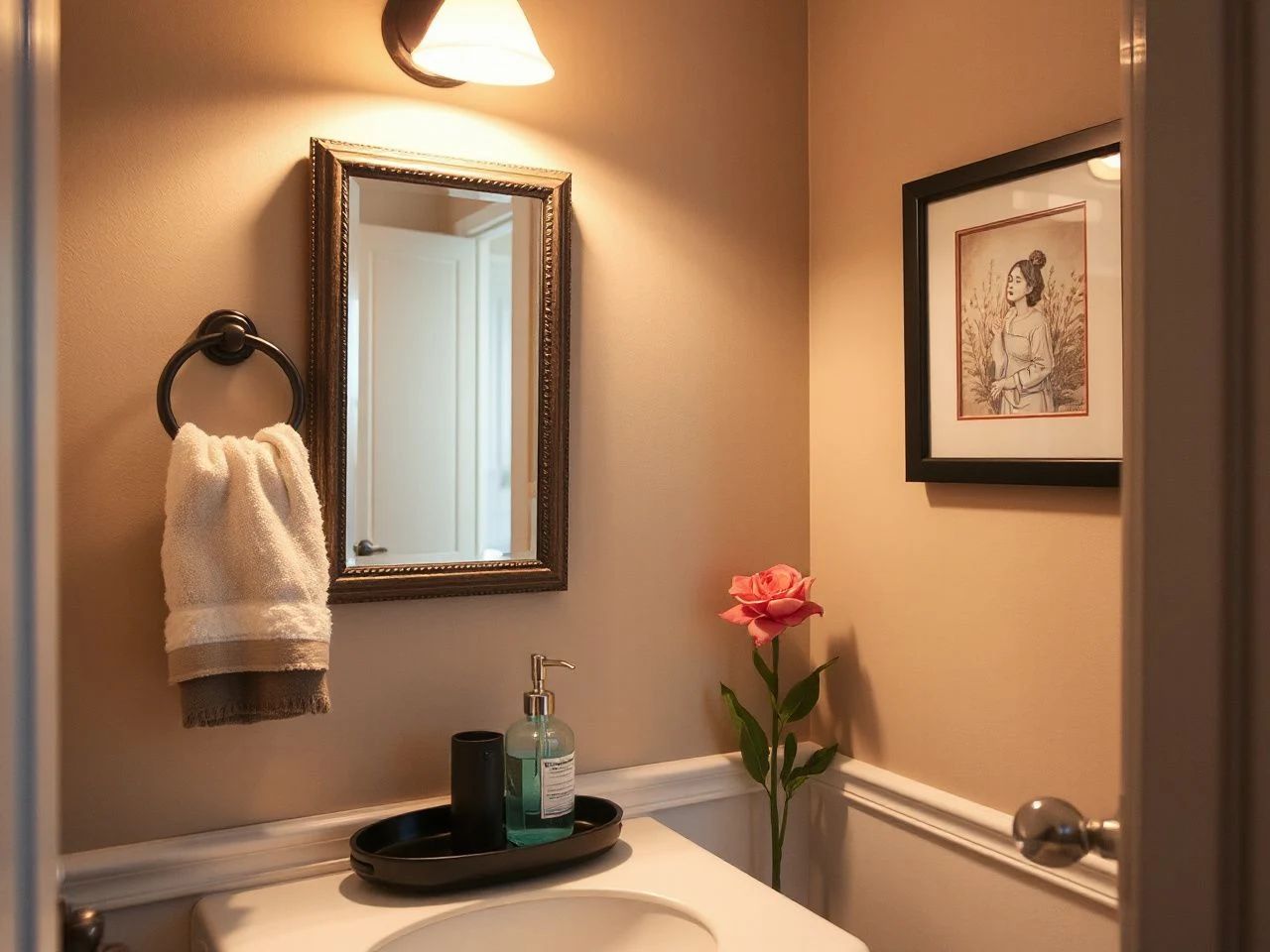
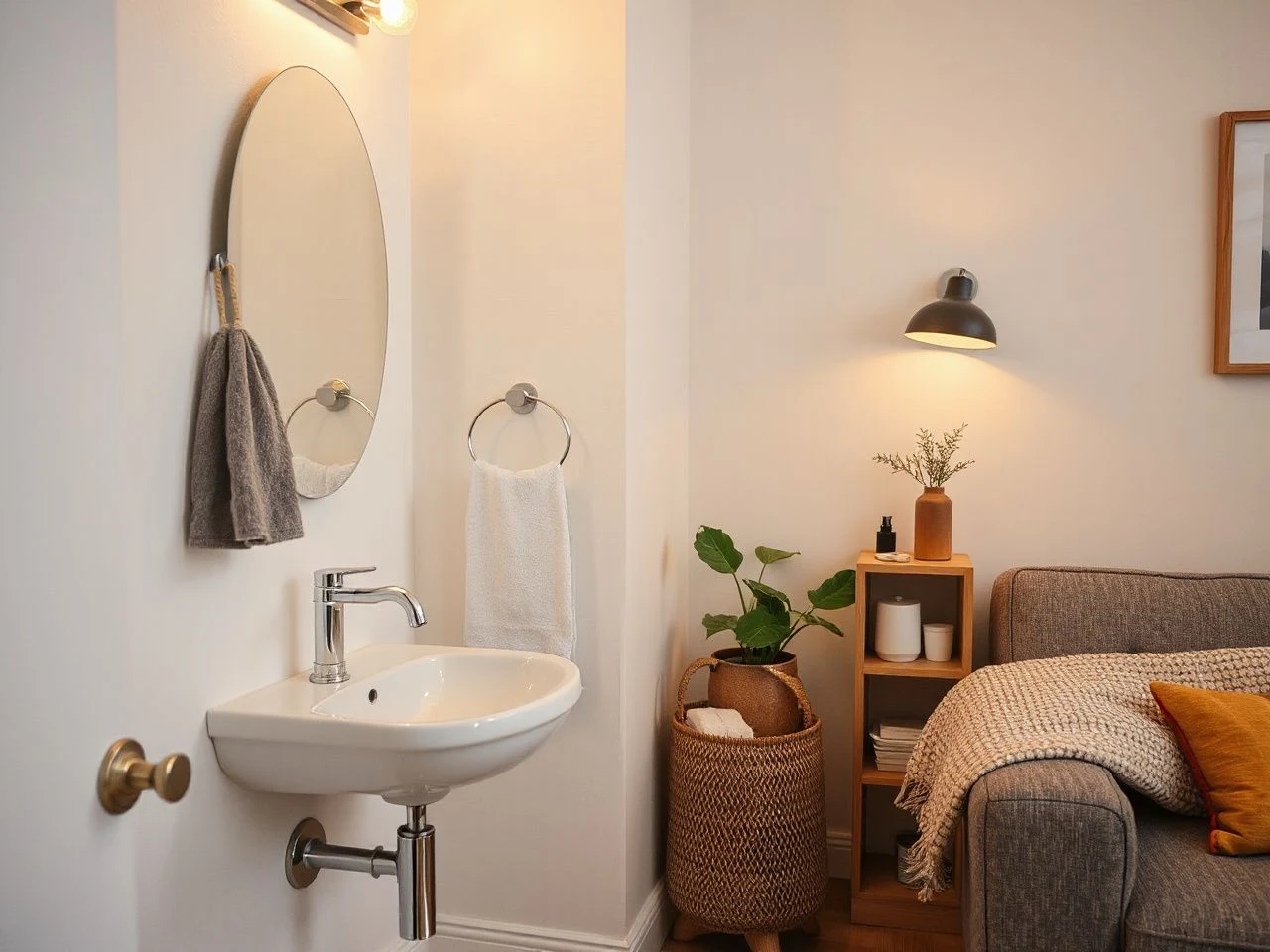
Coordination does not require every metal surface to match perfectly. It requires the shapes, finishes, or visual weight to relate. A rounded mirror can echo a curved faucet and a circular towel ring, while a rectangular mirror can support straighter cabinet hardware and a more linear light fixture.
Mirror lighting deserves more attention than decorative lighting alone. A fixture placed where the viewer sees its reflection can create glare, while a light source positioned poorly can leave the face in shadow. Check the mirror from the standing position, switch the light on, and look for reflected bulbs, bright hotspots, or dark areas across the face before finalizing the mounting position.
Electrical work belongs within the requirements for a damp bathroom environment. The U.S. Consumer Product Safety Commission provides consumer safety information for electrical products and bathroom hazards; use that guidance alongside local electrical requirements rather than treating a decorative fixture as ordinary room lighting.
Outlets and light fixtures should stay away from locations where splashing can contact them. A qualified electrician should handle wiring changes, especially when the proposed location differs from an existing fixture point.
Step 3: Place the towel ring and toilet paper holder by use, not symmetry
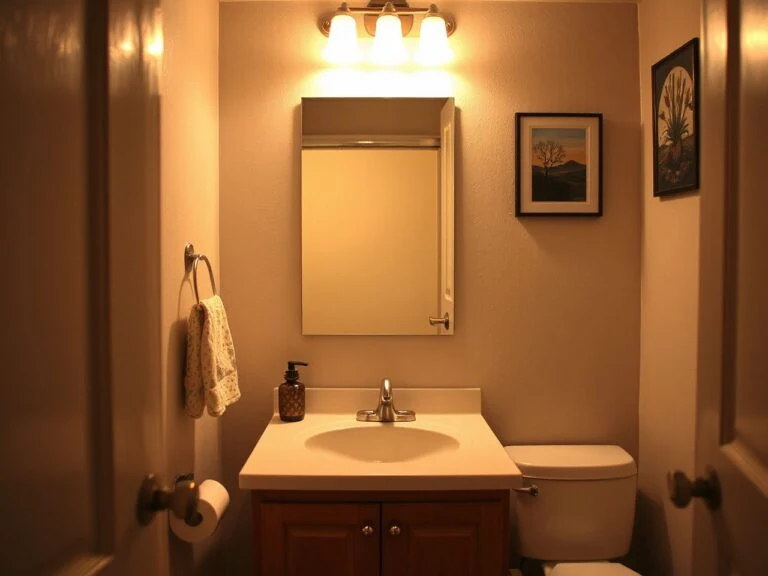
A towel ring belongs close enough to the sink that a wet hand does not need to cross the room. It should also remain outside the door swing and away from the faucet’s splash path. If the ring sits directly behind a door, the door may strike the towel or the ring may become difficult to use.
The toilet paper holder should be reachable from the toilet without forcing the user to twist around a vanity, basket, or wall projection. Confirm that the holder does not collide with the vanity door, toilet lid, or a person entering the room. The best position often looks slightly less symmetrical than a staged arrangement, but it serves the room better.
A towel ring is useful only when the sink, door, and ring work together as one movement path. Mark the intended location with removable tape, open the door, stand at the sink, and check the reach before making a hole.
Step 4: Add storage without turning the walls into a display board
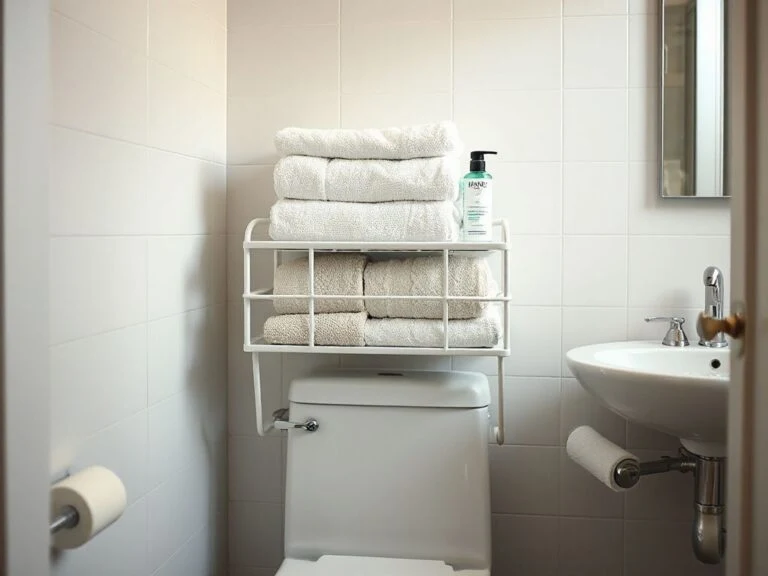
Storage should answer a specific need. A tissue box cover, spare toilet paper, hand towel, and cleaning cloth may be useful; a collection of unrelated containers rarely is. A freestanding unit can hold supplies, but its depth and position must leave the door and toilet clear.
For a broader look at how freestanding storage can fit into a bathroom plan, see this guide to a freestanding bathroom storage cabinet. The same removal test applies: a unit should be movable without trapping a shutoff, scraping the wall, or blocking a cabinet door.
Open shelves need a stronger reason than empty wall space. Place only items that are comfortable being exposed to dust, splash, and regular wiping. A shelf mounted near the sink should have a finish that tolerates cleaning and should not sit where bottles drip onto the wall or countertop.
Step 5: Choose surfaces that tolerate real use
Ceramic tile can create a durable visual field around a sink, but drilling into tile requires the right method and careful marking. Do not assume a decorative anchor will hold simply because the tile surface feels solid. The tile, substrate, anchor, screw, and item weight all matter.
Paint should be selected for a bathroom setting and for the amount of wiping the wall will receive. Wood finishes should resist the room’s moisture conditions, and textiles should be easy to remove for cleaning. Cotton tissue box covers can be cleaned in a washing machine, which makes a removable cover more practical than a fixed decorative object that cannot be refreshed.
The NSF provides information about standards and certification in products and materials used around homes; check the relevant product labeling and manufacturer instructions when a finish or fixture claims independent certification. Do not infer a certification from appearance alone.
Preventive Measures: Make Every Wall Choice Easier to Reverse
Check the wall before drilling
Use a stud finder where appropriate, identify the wall surface, and read the mounting instructions for the mirror, shelf, sconce, or holder. Drywall, tile, and a vanity side panel require different fixing approaches. A heavy mirror should not rely on a decorative hook that was chosen only because it matches the room.
Suitable anchors or wall framing give mirrors, shelves, and heavier fixtures a more reliable attachment than decorative mounting alone. The removal plan still matters: choose hardware that can be unscrewed, patched, or replaced without damaging a broad area of wallpaper or tile.
A mirror is only as easy to remove as its mounting hardware allows. Before drilling, confirm the fixing point, inspect for wiring and plumbing concerns, and make sure the item can be lifted or unscrewed without striking the faucet or countertop.
Protect wallpaper and paint from avoidable damage
Wallpaper creates strong close-range impact, especially in a compact room, but the sink wall deserves special care. Keep the faucet’s splash from reaching paper repeatedly, dry visible droplets, and avoid placing a soap bottle or vase where water can pool against the wall.
Peel-and-stick wallpaper is removable, which can suit renters or anyone who expects to revise the room. Test a hidden section if the manufacturer permits it, and plan around seams, corners, outlets, and the mirror rather than applying the paper first and cutting around every obstacle afterward.
For a calmer treatment, the principles in this neutral bathroom inspiration guide can help limit visual noise without making the room plain. A quiet base allows one patterned surface or colorful object to carry the design.
Control reflections and facial shadows
Look at the mirror from the approach to the sink, not only from the doorway. A bright fixture reflected in the glass may dominate the room, while a light positioned too far to one side can create uneven shadows. The goal is a clear reflection with comfortable brightness and no object placed where it visually cuts across the face.
Wall sconces can frame a mirror and make the wall feel balanced, but they need suitable electrical placement and enough clearance from water contact. A ceiling fixture can support the room’s general light while a separate mirror light handles close-up tasks. Keep decorative objects from touching or crowding the fixture.
Keep the palette edited
Pattern feels controlled when one pattern has room to breathe. A patterned wallpaper can be paired with a solid towel, a simple framed mirror, and restrained hardware. If ceramic tile already supplies a visible pattern, use paint or plain textiles to prevent competing grids and motifs.
Warm wood tones can soften a room with white fixtures, while darker walls can give a small room depth if the lighting remains comfortable. Boho bathroom details can work through texture and one or two organic shapes rather than a wall filled with signs and baskets. See these boho bathroom design ideas for ways to use texture without surrendering clear surfaces.
Plan for cleaning and replacement
Every object near the sink creates an edge where dust, water, or cleaner can collect. Fewer objects make wiping faster and reduce the number of things that need to be moved during cleaning. Smooth, washable surfaces are generally easier to maintain than heavily textured pieces with deep grooves.
Choose accessories that can be removed independently. A towel ring should not require taking down a mirror. A shelf should not hide the shutoff. A tissue cover should lift off the box, and a framed print should come down without disturbing the light or cabinet hardware.
Long-lasting style usually comes from stable choices: a well-placed mirror, a coherent light fixture, a clear color plan, and hardware that remains useful if the room is repainted. Trend-led accessories are easier to replace when they are not glued over wallpaper or installed in a way that damages tile.
Practical Layout Examples for Half Bathroom Decor and Accessories
A pedestal sink with a statement mirror
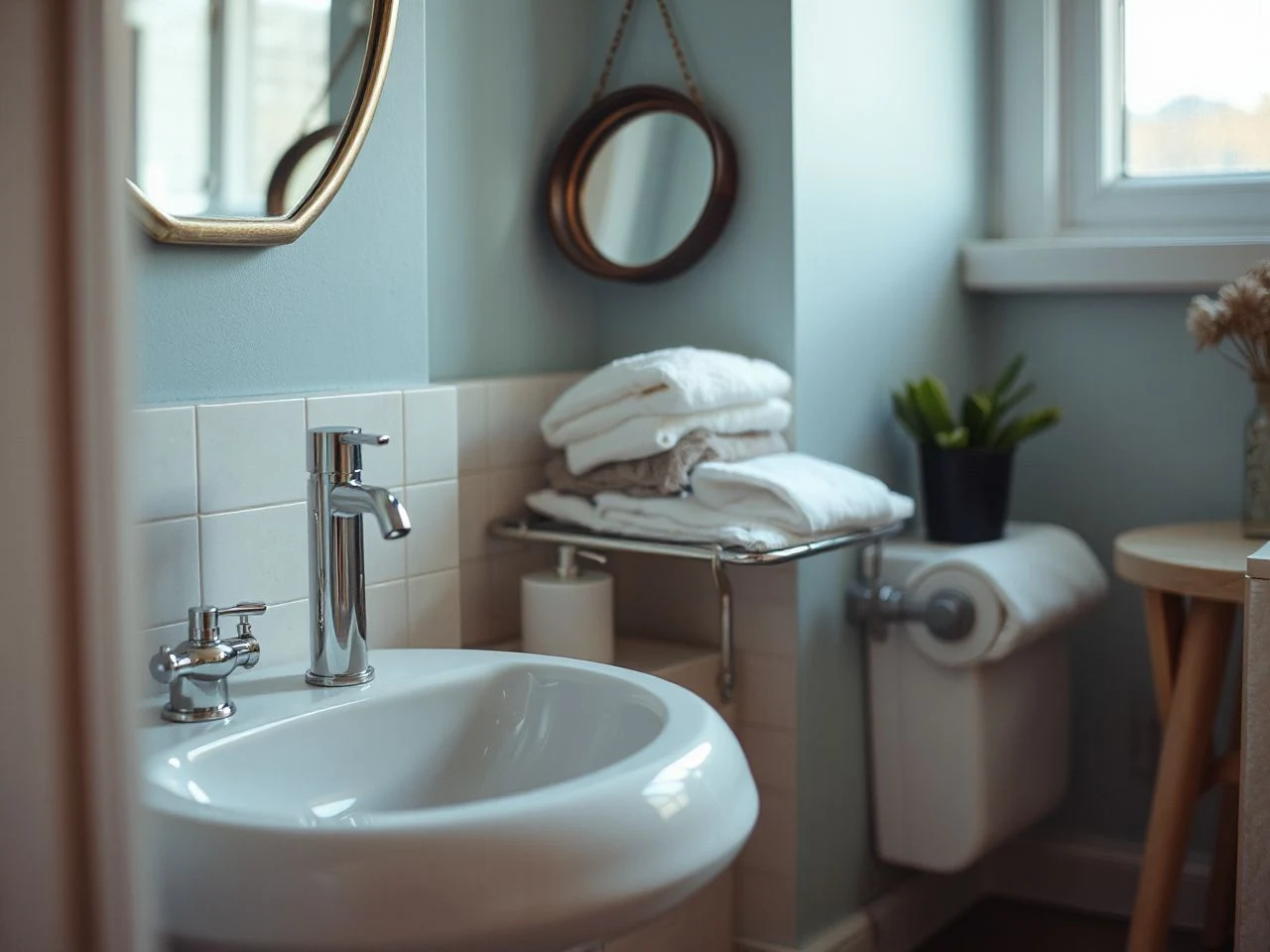
Use the mirror as the main focal point and keep the pedestal sink visually clear. A towel ring can sit near the sink but outside the door swing, while the toilet paper holder remains reachable from the toilet without competing with the basin.
A small framed print may work on a side wall if it stays away from splash and does not block access to a shutoff. Avoid filling the open space beneath the sink with objects unless they serve storage or conceal a necessary plumbing feature.
A floating vanity with restrained wall storage
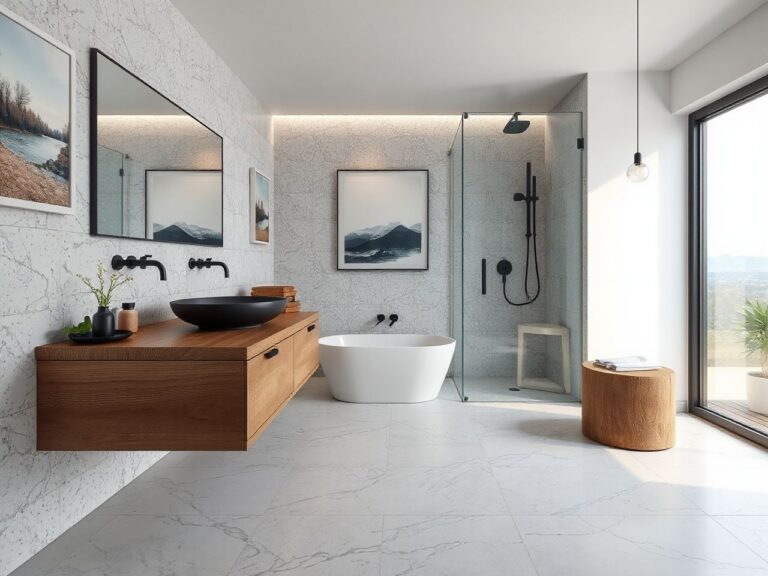
A floating vanity provides a strong horizontal line and can support a framed mirror above it. Use the vanity surface for only the items needed at the sink, then place spare supplies inside the cabinet or in a separate storage unit that does not interfere with the door.
Hardware coordination matters here. Repeat the vanity pull’s shape or finish in the towel ring and toilet paper holder, but do not add matching pieces simply to complete a set. The room should feel related, not packaged.
A wallpapered powder room
Let the wallpaper carry the pattern. Select a mirror with a clean outline and keep the faucet, light, and hardware visually quiet. If the paper is dark or highly patterned, check mirror glare and reflection carefully because bright fixtures can become more noticeable against a deep background.
Protect the lower wall near the sink from direct splashes, and make sure the paper does not cover access panels or prevent removal of a fixture. A removable paper option can simplify future changes, but the underlying wall still needs to be sound and clean.
Frequently Asked Questions
How do I make a small half bathroom feel finished without making it crowded?
Choose one dominant feature, such as a framed mirror, wallpaper, or light fixture, then limit supporting accessories to objects with a clear use. Keep the countertop mostly open, place the towel ring near the sink, and protect the door, toilet, cabinet, and plumbing access paths. A restrained palette often makes the room feel more complete than a large collection of small decorations.
Is wallpaper practical in a half bathroom with sink splashes?
Wallpaper can work when the selected material and adhesive suit the room and the paper is kept out of direct, repeated splash. Use a wipeable surface near the basin, dry visible water, and avoid placing bottles where they can drip onto seams. Peel-and-stick wallpaper can be removed, but the wall condition after removal depends on the existing paint and adhesive.
What works better: a vanity or a pedestal sink?
A pedestal sink suits a room where visual openness matters and supplies can be stored elsewhere. A vanity is more useful when spare tissue, hand towels, or cleaning items need to stay in the room. Check plumbing access, cabinet-door movement, and the clearance around the toilet before choosing. The better option preserves daily use and keeps maintenance access uncomplicated.
Good half bathroom decor and accessories do not ask the room to carry more than it can handle. Start with the wall that deserves attention, coordinate the mirror and lighting for a clear reflection, place functional hardware by reach, and make every installation removable without unnecessary damage. The finished room should look considered from the doorway and remain practical at the sink, toilet, cabinet, and service points.