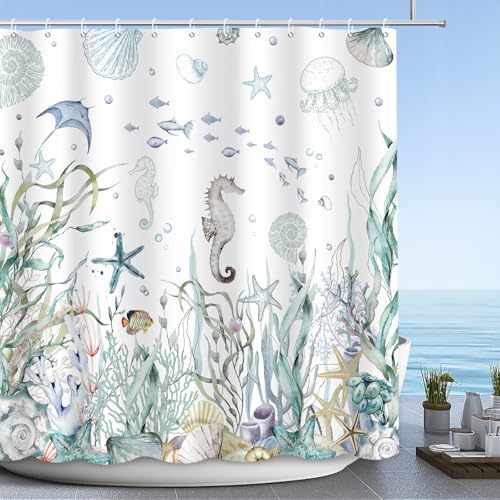
The most common bathroom mistake? Picking a shower curtain for its pattern, not its base material. That single choice decides whether you deal with mildew, water puddles on the floor, or that sharp chemical smell that hits you at 6 a.m. So let’s settle the fabric vs plastic shower curtain debate honestly for 2026.
If you want a waterproof barrier that’s ready to hang right now, the Mrs Awesome Clear Shower Curtain Liner with 3 Magnets is a top pick. It’s PEVA, chlorine-free, and the three weighted magnets keep the bottom in place. For a soft fabric look, the Aubliss 100% Cotton Fabric Squares provide the raw material to sew your own curtain — just know you’ll need a waterproof liner underneath and some patience with a sewing machine.
📌 This article contains affiliate links. As an Amazon Associate I earn from qualifying purchases, at no extra cost to you. Full disclosure.
CERTAIN CONTENT THAT APPEARS ON THIS SITE COMES FROM AMAZON. THIS CONTENT IS PROVIDED ‘AS IS’ AND IS SUBJECT TO CHANGE OR REMOVAL AT ANY TIME.
| Product | Best For | Buy Link |
|---|---|---|
| Aubliss 100% Cotton Fabric Squares | DIY fabric curtain projects | Check Price |
| Mrs Awesome Clear Shower Curtain Liner | Waterproof, low-maintenance barrier | Check Price |
How We Chose These Picks
We narrowed this shortlist by comparing published specifications against what actually matters in a shower curtain. What separates a good shower curtain here is the base material: cotton and polyester are washable but absorb moisture, while PEVA and PVC shed water but can harbor mildew if not ventilated. The deciding factors are the chemical composition (PVC can off-gas and contain phthalates, PEVA is chlorine-free), the presence of a waterproof liner or coating, and the quality of the grommets and weighted magnets. Buyers who pick a fabric curtain without a liner, or a plastic curtain with a cheap liner, end up with water on the floor or mildew buildup. We weighted material composition and waterproofing highest, then looked at maintenance demands. One thing you should always check before ordering: measure your shower opening and confirm the curtain width — especially for the Aubliss squares, because you’ll be doing the math yourself.
Aubliss 100% Cotton Fabric Squares (Fabric Shower Curtain DIY Starter)

Mrs Awesome Clear Shower Curtain Liner (PEVA with Weighted Magnets)

Aubliss 100% Cotton Fabric Squares (Fabric Shower Curtain DIY Starter)
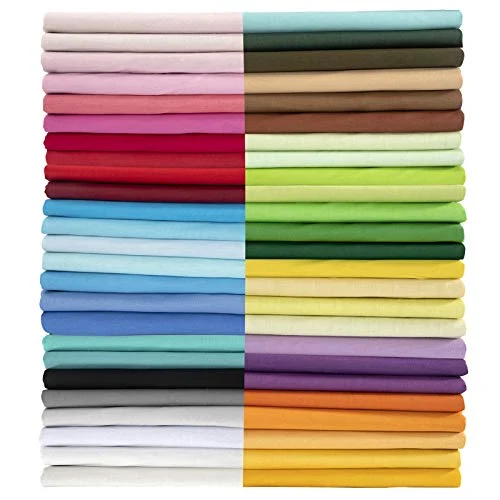
Quick take: This is not a shower curtain. It’s a bundle of fifty 10-inch by 10-inch cotton squares, pre-cut and ready to piece together if you want to build a fabric shower curtain from scratch.
The 100% cotton is soft and breathable, exactly what you’d expect from quilting fabric. Each square is a 10-inch by 10-inch pre-cut (sometimes called a layer cake square, not a fat quarter, which is a larger quilting cut), so to cover a standard 70-inch wide shower opening you’ll need at least seven squares across and about seven rows down — that’s 49 squares, nearly the entire pack, with no room for error. Cotton’s absorbency is both its charm and its curse: it will hold water on the surface, so a separate waterproof liner is non-negotiable.
If you can sew a straight seam, this is a weekend project. The pre-cut edges save measuring time, but you’ll still need to join 49 pieces, add grommets along the top, and probably hem the bottom. One honest annoyance: the listing never mentions whether the fabric is pre-shrunk. Cotton shrinks in a hot wash, and if you skip a cold-water pre-wash before sewing, your finished curtain could pucker or pull at the seams after its first laundry cycle. Compare that to a grab-and-go liner like the Mrs Awesome below — the effort gap is huge.
Pros:
- 100% cotton material — Soft, breathable, and machine washable, unlike vinyl or PEVA which trap heat and moisture.
- 50 pre-cut squares — No rotary cutter or measuring tape needed for the cutting stage; you can jump straight to piecing.
- Unique designs — The bundle typically includes a variety of prints, so you can create a custom pattern no store-bought curtain will match.
Cons:
- Not a finished curtain — You’re buying raw material. No grommets, no hem, no hanging hardware included.
- Requires a separate liner — Cotton absorbs water, so without a PEVA or waterproof liner behind it, your floor gets soaked.
- Shrinkage risk — Hot water or a hot dryer will shrink cotton. You must pre-wash in cold and air dry if you want the final size to stay accurate.
In a Nutshell
Best for: DIYers who already own a sewing machine and want a fully custom fabric curtain with coordinating prints. Skip if: You need something waterproof that hangs in five minutes — get a liner instead and pair it with a ready-made fabric curtain.
Mrs Awesome Clear Shower Curtain Liner (PEVA with Weighted Magnets)
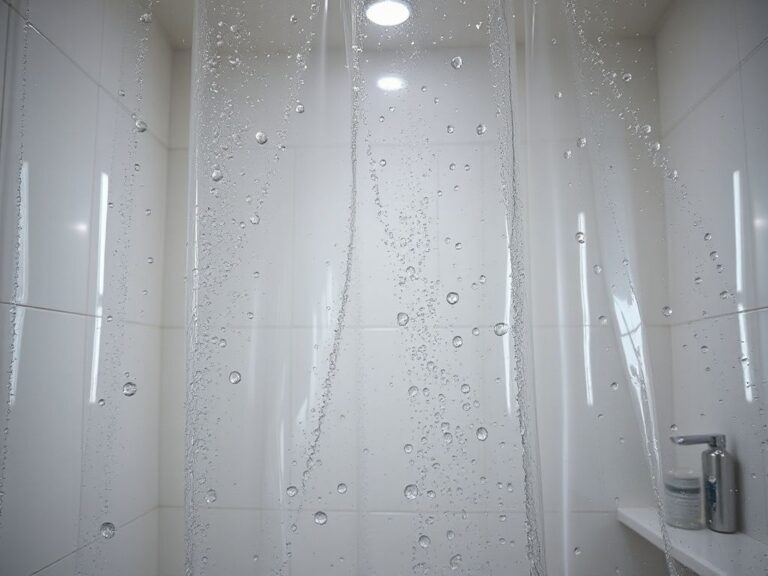
Here’s the deal: This is the plastic side of the fabric vs plastic shower curtain equation done right. A clear PEVA liner that actually stays put, thanks to three encased magnets at the bottom edge.
PEVA is the material to look for if you’re worried about that ‘new shower curtain smell.’ It’s chlorine-free, unlike PVC, which can off-gas volatile organic compounds and may contain phthalates. The liner is described as lightweight, which means it won’t tug on cheap tension rods the way heavier PVC liners do. But the real functional win is those three magnets — they snap to a cast iron or steel tub edge, stopping the billowing and water spray escape that plagues flimsy liners.
The magnets work great on an enameled cast iron tub, which is exactly what most older apartments and homes still have. On an acrylic or fiberglass tub, though, the magnets do nothing — no ferrous metal to grab — so the liner will float around like any other. Also, being clear, it shows every soap scum streak and water spot. That’s not a durability flaw; it’s an honesty flaw. You’ll wipe it down weekly, or it’ll look grimy fast.
Pros:
- PEVA material — Chlorine-free and free of phthalates, so no harsh chemical smell when you first hang it.
- Three encased magnets — Without them, a light liner blows inward and sticks to your legs mid-shower. These hold the bottom edge down on metal tubs.
- Lightweight design — At roughly a third the weight of a standard PVC liner, it’s easy to handle and won’t strain thin curtain rods.
Cons:
- Magnets useless on acrylic tubs — If your tub is fiberglass or acrylic, skip this one; the magnets will never attach.
- Needs regular cleaning — The clear plastic shows mildew and soap buildup quickly, so weekly rinsing is non-negotiable.
- Not decorative — It’s a liner, not a curtain. You’ll still need a fabric outer curtain for privacy and style.
Our Take
Perfect for: Anyone with a metal tub who wants a mildew-resistant, low-odor waterproof barrier that stays in place. Not great if: Your tub is plastic, or you hate cleaning — the clear surface demands upkeep.
How to Choose Between a Fabric and a Plastic Shower Curtain
Difference Between Fabric and Plastic Shower Curtain — The Core Trade-Off
Fabric curtains—like cotton or polyester—are washable and feel more decorative, but they absorb water. Plastic or PEVA liners shed water instantly but trap moisture behind them and need ventilation to prevent mildew. The core difference really comes down to breathability versus waterproofing. For most bathrooms, the smart setup is a fabric outer curtain with a separate waterproof liner. That’s why the Mrs Awesome liner pairs so well with any store-bought fabric panel.
Chemical Safety: PVC vs PEVA
PVC shower curtains are notorious for that sharp, plasticky smell that can linger for weeks. That’s off-gassing of volatile organic compounds, and many PVC formulas include phthalates. PEVA, like the Mrs Awesome liner, is a chlorine-free alternative that doesn’t release those compounds. If anyone in your home has asthma or chemical sensitivities, PEVA is the safer plastic choice. The EPA’s indoor air quality guidelines flag some phthalates as concerning, so avoiding PVC in a small, enclosed bathroom is a reasonable precaution.
Maintenance and Longevity
A fabric shower curtain can go straight into the washing machine on a cold, gentle cycle. Cotton in particular shrinks if the water is hot, so keep temperatures low and line dry. Plastic liners like the Mrs Awesome can’t be tossed in the washer with fabric; they need a wipe-down with a mild bleach solution or a spray of vinegar to kill mildew. In terms of raw lifespan, a well-cared-for fabric curtain can last five years or more, while a PEVA liner typically lasts one to two years before it becomes cloudy or brittle.
Hardware That Actually Works
Grommets on a fabric curtain should be rust-resistant metal, not painted plastic. For a liner, the bottom edge matters most: weighted magnets, like the three on the Mrs Awesome, are the difference between a curtain that stays put and one that billows into the shower and soaks the floor. If you’re installing a fabric curtain, pair it with rustproof hooks — our Amazon Basics shower curtain review covers a budget option that includes rust-resistant grommets. For something more premium, Simplehuman’s shower curtain review looks at heavy-duty alternatives. And if you want a deeper dive on fabric outer curtains, our Utopia Towels shower curtain review is worth a read.
Our Final Recommendation
For most bathrooms, the Mrs Awesome Clear Shower Curtain Liner is the better buy. It’s chlorine-free, lightweight, and the three magnets actually solve the water-spray problem on metal tubs. Pair it with any decorative fabric curtain and you have the best of both worlds. The Aubliss cotton squares are a fun DIY project and give you full control over pattern and size, but they are not a finished curtain — you’ll still need a liner and a sewing machine. If you’re after instant waterproofing without the plastic smell, grab the Mrs Awesome. If you enjoy a weekend of sewing, the Aubliss squares are a solid fabric starting point.
Frequently Asked Questions
Should I choose a fabric or plastic shower curtain for a small bathroom?
In a small bathroom, ventilation is usually worse, so mildew risk climbs. A plastic PEVA liner like the Mrs Awesome is easier to wipe down and replace, but it still needs air flow. A fabric curtain with a separate liner gives more style options and can be washed. The plastic liner suits tight spaces and minimal fuss, while pairing a lightweight fabric outer with a liner adds warmth and pattern.
How do I stop a plastic shower curtain from getting moldy?
After each shower, spread the curtain fully open so air circulates. Once a week, spray the inside with a 50/50 mix of white vinegar and water, then wipe down. For stubborn mildew, a diluted bleach solution works on PEVA, but rinse thoroughly and never mix bleach with vinegar. The real enemy is trapped moisture, so a bathroom fan or open window matters more than any spray.
Can I toss my fabric shower curtain in the washing machine without ruining it?
Yes, if it’s cotton or polyester and you use cold water on a gentle cycle. Hot water shrinks cotton, sometimes dramatically. Skip the dryer — line dry instead. Add a cup of white vinegar to the rinse cycle to kill mildew spores. Remove the curtain from any hooks before washing, and wash it alone or with towels to avoid tangling.
What’s the difference between PEVA and vinyl shower curtains?
Vinyl is another name for PVC, which can off-gas volatile organic compounds and may contain phthalates. PEVA is a chlorine-free alternative that doesn’t release those fumes and is generally considered safer for indoor air. Both shed water, but PEVA is lighter and less likely to smell like a pool toy. The Mrs Awesome liner is PEVA, which is why I prefer it over traditional PVC liners.