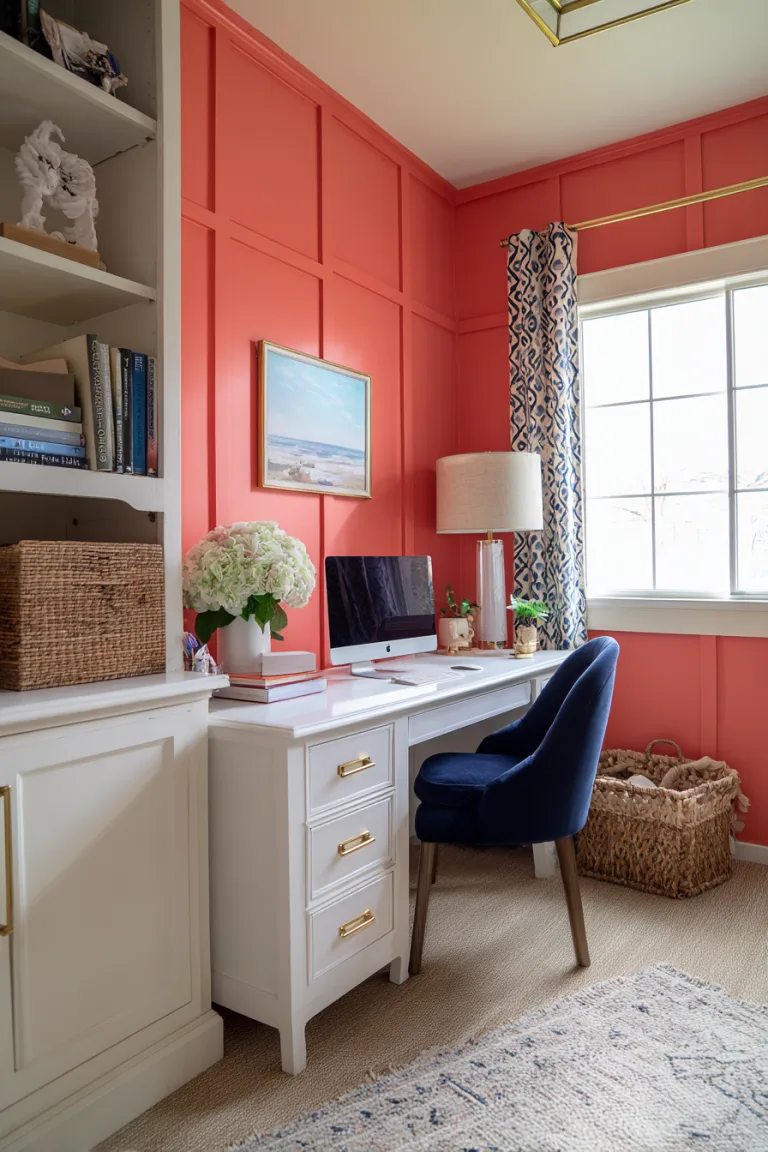
The canvas vs framed print decision trips up more renters than any other wall-art choice. Pick wrong and you’re left with a piece that glares under track lighting, weighs down flimsy drywall anchors, or looks like a cheap poster taped above the couch. The right pick, though, turns a blank wall into the room’s focal point without demanding a security deposit repair fund.
If you want a finished, personalized piece ready to hang, grab the Personalized Custom Canvas Prints (Framed 11X14) now—that’s the one I’d buy for my own rental. The ESRICH canvas boards are the better value if you plan to paint your own panels, but they require extra framing work.
📌 This article contains affiliate links. As an Amazon Associate I earn from qualifying purchases, at no extra cost to you. Full disclosure.
CERTAIN CONTENT THAT APPEARS ON THIS SITE COMES FROM AMAZON. THIS CONTENT IS PROVIDED ‘AS IS’ AND IS SUBJECT TO CHANGE OR REMOVAL AT ANY TIME.
| Product | Best For | Buy Link |
|---|---|---|
| ESRICH Canvas Boards for Painting | DIY painting projects | Check Price |
| Personalized Custom Canvas Prints (Framed 11X14) | Finished personalized wall art | Check Price |
How We Chose These Two Wall-Art Options
We narrowed this down to two products that represent the practical split most people face: a raw canvas surface you finish yourself, and a turnkey framed canvas print. Our picks come from comparing published specs—material, dimensions, primer type, and stretching method—against the factors that actually decide wall-art longevity: surface texture, acid-free backing, UV exposure, and weight. We weighted pure cotton over polyester because cotton holds pigment better and shows less plastic sheen. We also favored hand-stretched canvas over machine-stapled because that’s what prevents warping over time. Before you order, check whether the framed option includes any glass or acrylic glazing—that single detail changes how much sun your photo can survive.

Personalized Custom Canvas Prints: Photo On Canvas (Framed 11X14)

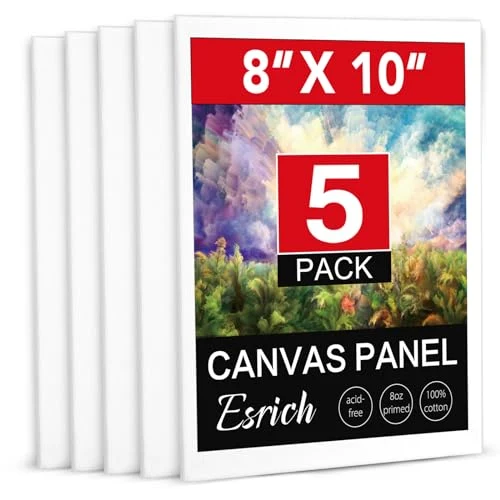
ESRICH Canvas Boards for Painting (5-Pack, 8×10)
Quick take: This 5-pack of blank 8×10 canvas boards is built for painters who want a smooth, rigid surface without the bounce of a stretched canvas.
The boards pair a pure cotton canvas face with a sturdy board core, which gives you a flat painting surface that won’t flex under heavy brushwork. The listing also promises a non-toxic, acid-free primer, and that matters if you want your acrylics or oils to stay true to color for years instead of yellowing from the board underneath.
At 8×10 inches each, five boards give you enough surface for a small series or a trial gallery wall without committing to a single large canvas. You’ll still need to frame or mount the finished pieces yourself—there’s no hanging hardware included, and the raw board edges look unfinished unless you add a float frame or mat. For renters, that’s actually a plus: two lightweight boards hung with removable strips won’t stress your walls the way a heavy framed print would.
Pros:
- Pure cotton surface — smoother than polyester blends and holds paint pigment more evenly.
- Acid-free primer — prevents yellowing and keeps colors true over time, a real concern on cheap boards.
- 5-pack value — five identical 8×10 boards let you experiment or build a cohesive series without buying individual canvases.
- Rigid board core — no flexing or drum-like bounce, which means your brush strokes won’t skip or smear on a wobbly surface.
- Non-toxic formula — safe for kids’ rooms or studio spaces where ventilation matters.
Cons:
- No hanging hardware — you must supply your own frame, adhesive strips, or clips, and the raw edges look unfinished bare.
- Single size only — 8×10 is limiting if you want a large statement piece; you’d need to buy multiple boards and create a grid instead.
Why It Stands Out
Best for: DIY painters, students, or anyone who wants to create custom art without paying for pre-stretched gallery wraps. Skip if: You’re looking for a ready-to-hang finished print—this is a blank surface, not a wall-ready piece.
Personalized Custom Canvas Prints: Photo On Canvas (Framed 11X14)
Quick take: This is the finished wall-art solution—a photo printed on canvas, hand-stretched over a durable frame, and fitted inside a ready-made frame so you hang it the same day it arrives.
The manufacturer highlights hand-stretching and a smooth, secure finish, which is exactly where cheap canvas prints fail: poorly tensioned corners develop waves within months. A properly stretched canvas keeps its flat profile. The frame itself isn’t itemized in the listing—no wood species, no mat board, no glass type—so if you’re particular about frame depth or color, ask before you order.
Personalization is the real draw. You supply a photo and get an 11×14 framed canvas that fits standard wall gaps and works as a gift or a piece of your own memory wall. Compare that to the ESRICH boards, where you’re painting from scratch, and the difference in effort is obvious. The one nagging gap: the listing never states whether the frame includes UV-resistant glass or acrylic, so direct sunlight will eventually fade the print unless you hang it out of the sun’s path.
Pros:
- Hand-stretched canvas — tighter corners and fewer waves than machine-stapled prints, which usually warp within the first year.
- Personalized photo option — turn a favorite moment into a wall piece sized for standard shelves or gallery clusters.
- Framed and ready — no extra purchase needed; the frame is included, so the total cost stays predictable.
- Smooth, secure finish — the listing specifies a finish that won’t peel at the edges, a common failure on cheap canvas transfers.
- Versatile sizing — 11×14 works in most rooms and pairs well with other frames without dominating a wall.
Cons:
- Unspecified frame materials — no wood type, mat board, or glazing listed means you can’t confirm the frame won’t warp or the photo won’t fade under light.
- Only one size offered — 11×14 is fine for a single accent piece, but if you need a large 24×36 above a sofa, you’ll have to look elsewhere.
Our Take
Best for: Anyone who wants a custom, finished wall piece without assembling or painting anything themselves. Skip if: You demand full material transparency before paying—the missing frame and glazing specs are a real reason to pause.
How to Choose Between Canvas and Framed Art for Your Wall
Wirecutter readers often ask us to explain the difference between canvas and framed print in plain terms. It boils down to surface, depth, and mounting. A canvas print—whether painted or photo-printed—sits on a textured fabric, usually cotton or a poly-cotton blend, stretched over wooden stretcher bars or glued to a board. A framed print is typically a paper or photo print mounted behind glass or acrylic inside a wooden or metal frame. The texture of canvas softens fine detail and gives a painterly feel, while framed paper prints show sharper edges but can suffer from glare if the glass isn’t non-reflective.
Material and Texture: Cotton Duck vs. Paper Smoothness
For canvas, cotton duck is the gold standard; it’s heavier and holds pigment better than polyester blends. The ESRICH boards use pure cotton, which means your paint sits on a surface with just enough tooth to grip without swallowing brush detail. A framed print on smooth paper or photo stock shows every gradient and fine line, but you lose the tactile dimension that canvas adds. If you’re printing a detailed family portrait, paper under non-glare glass might actually preserve more sharpness than canvas—something to weigh if your photo has a lot of tiny facial features.
Weight and Hanging: Renters Should Care About This
A stretched canvas print without a frame is lighter than a framed print of the same size, but add a wooden frame and the weight can nearly double. Our pick for framed canvas prints at 11×14 stays manageable, but a large 24×36 framed piece might need two anchors and a stud finder. If you’re in an apartment with flimsy drywall, err toward the lighter canvas board options or use removable adhesive strips rated for the total weight. The ESRICH boards weigh almost nothing; the framed personalized print requires a nail or hook but not a heavy-duty mount at this size.
Cost and Longevity: Where Your Money Actually Goes
You’ll pay more upfront for a framed print because you’re covering the frame, glazing, and mat board—if included. But that glass or acrylic adds real UV protection that bare canvas lacks. Canvas prints often use pigment-based inks with some UV resistance, but without a glass barrier, they fade faster in direct sun. For high-traffic hallways or sunny living rooms, a framed print with UV-resistant glass might outlast an unprotected canvas by a decade. In bathrooms or kitchens, skip both unless you spring for a sealed frame or a canvas with a moisture-resistant coating—humidity will wrinkle or warp either surface.
Our Final Recommendation
The framed personalized canvas print wins for most people because it solves the entire wall-art problem in one purchase: choose a photo, receive a hand-stretched, framed piece, hang it and move on. For budget-conscious DIY painters, the ESRICH boards offer a 5-pack of pure cotton, acid-free surfaces at a fraction of a finished print’s cost—but you’ll invest time and framing money later. Our overall pick is the Personalized Custom Canvas Prints (Framed 11X14), with the ESRICH set as the best value for creatives.
Frequently Asked Questions
Should I go with a canvas or framed print for a high-moisture bathroom?
Neither is perfect for constant humidity, but a framed print with sealed glass and a moisture-resistant frame will hold up longer than a raw canvas, which can absorb steam and develop mold or warping. If you insist on art above the tub, pick a small sealed acrylic piece or a metal print instead.
How do I clean a canvas print compared to a framed print?
Canvas prints should only be dusted with a soft, dry cloth—never water or cleaners, because the fabric will soak up moisture and potentially stain. Framed prints with glass can be wiped with a damp microfiber cloth on the glass only, keeping water away from the frame seams. For either, avoid direct sunlight to reduce fading.
Can I frame a canvas print myself if I bought an unframed one?
Yes, but it’s trickier than framing paper. A gallery-wrapped canvas with deep edges can sit inside a float frame without glass, letting the texture breathe. Standard-wrap canvases can go into a traditional frame, but you’ll need to ensure the frame depth clears the stretcher bar thickness—usually 3/4 inch or more. The ESRICH boards are thin, so almost any flat frame works.
What’s the real difference in weight between a canvas and a framed print of the same size?
At 11×14, a framed print with standard glass weighs roughly two to three times more than an unframed stretched canvas of the same dimensions. Glass and frame add 2-4 pounds, while a bare canvas panel might only weigh a few ounces. That weight gap matters on apartment walls where you can’t drill into studs.