Most bath mats fail silently. They look fine in the package, but the first wet morning turns them into a hazard you never saw coming. In a bathroom fitted for an elderly user, the two things that decide whether a mat holds are the floor’s surface texture and the mat’s backing chemistry, not the pile height or the aesthetics. Most people overlook that a non-slip mat is only as good as its contact area—a suction cup mat will lift on a pebbled tile, and a rubber mat on a vinyl floor can turn into a wet sled if the top layer isn’t absorbent. Trace the path into and out of the tub before buying, and judge where the slip actually happens—it’s not always the spot you think, because the riskiest moment is the step out, when one foot carries the whole weight and both are still wet. This buying guide for non-slip bath mats strips away the marketing and gets to the physics of staying upright.
Key Takeaways
- Backing chemistry beats pile height. A mat’s grip depends on how its backing interacts with your specific floor texture—not on how fluffy the top feels.
- Suction cups only work on smooth, clean, dry surfaces. Textured tile, pebbled fiberglass, or soapy residue renders them useless and creates a false sense of security.
- Mold survives where water lingers. A mat that never fully dries against the floor will degrade its backing and smell within weeks, so airflow and weekly washing are non-negotiable.
Before You Buy: The Basics Most People Skip (Beginner)
Walk into any home store and you’ll see a wall of bath mats labeled “non-slip.” That word means almost nothing on its own. The first thing I do when evaluating a mat is flip it over and look at the backing. A solid rubber sheet behaves differently from a grid of suction cups, and both behave differently from a woven fabric with a sprayed-on grip coating. Your floor decides which one works. If you haven’t measured the doorway before admiring the sofa, you’re already thinking in the right direction.
Backing Chemistry vs. Floor Texture
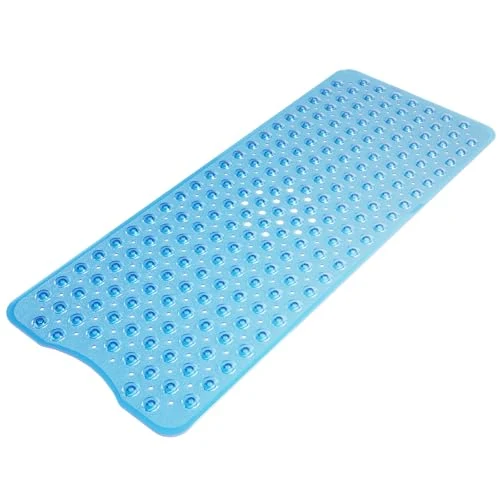
Here’s the core problem: a non-slip mat is only as good as its contact area. Contact area is the physical surface where the mat’s backing touches your floor. A suction cup mat has a hundred tiny circles of contact, each one sealed by a vacuum. That vacuum only forms on a completely smooth, clean, and dry surface. Put the same mat on a pebbled shower pan and the cups sit on the high points of the texture while air leaks in around the edges. No vacuum, no grip. The mat slides around and you blame the manufacturer, but the mat was never designed for that floor.
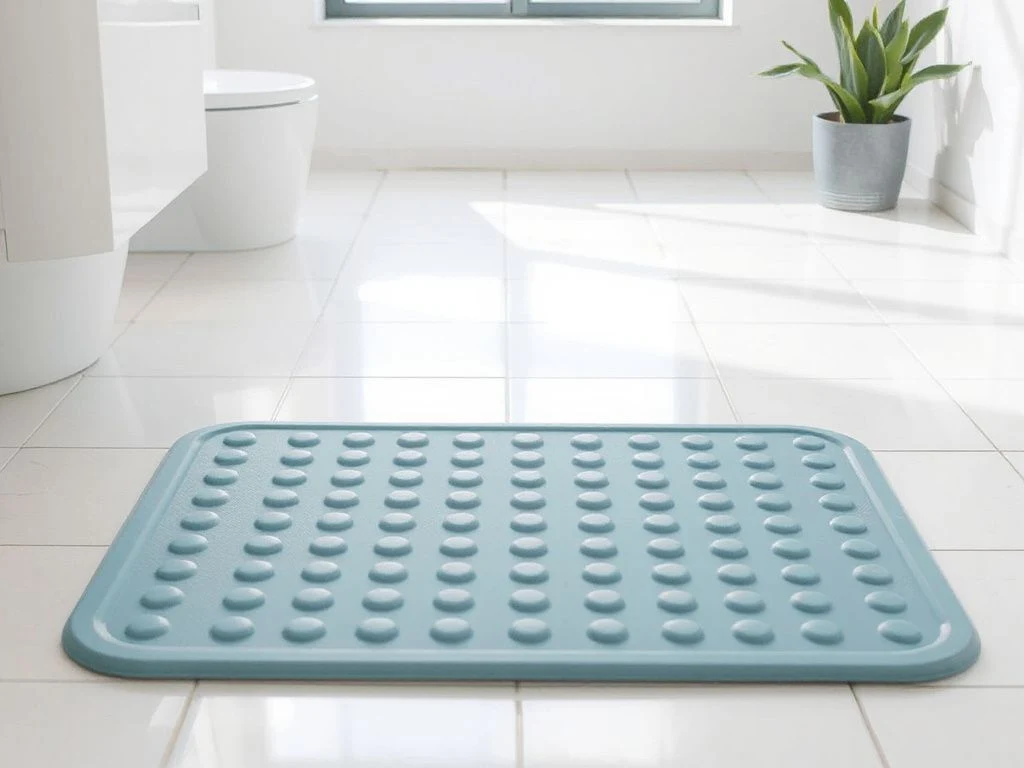
Solid rubber or TPE backings work differently. They rely on friction—the microscopic interlocking between two surfaces. ASTM E3090 is the standard test method for slip resistance of flooring and matting, and it measures exactly this kind of frictional force. A high-friction rubber backing can grip a slightly textured tile much better than suction cups can. But that same rubber on a vinyl floor can create a different problem. If the top layer of the mat stays wet instead of absorbing water, the whole mat can hydroplane across the slick vinyl like a wet sled. The top and bottom have to work together.
If you’re still sorting through general bath mat options, our broader bath mat buying guide covers the basics of sizing and placement before you narrow down slip resistance.
What “Non-Slip” Actually Means on the Label
No government agency verifies the phrase “non-slip” on bath mats. The manufacturer can print it on anything. That’s why you should look for independent test standards. DIN 51130 is a European standard that classifies slip resistance by ramp angle, and ASTM E3090 is its North American counterpart. A mat that lists either standard has been tested under controlled conditions, not just given a marketing promise. Without those, you’re buying a claim, not a property.
The term “grip” itself hides three different mechanisms. Suction creates grip through negative pressure. Friction creates grip through surface roughness and material softness. Mechanical interlock—like a textured bottom that catches on grout lines—creates grip through physical engagement. A mat labeled “grippy” could be using any or none of these. Ask which one before you hand over your card.
Bath Mat vs. Shower Mat: Two Different Jobs
People use these terms interchangeably, but they solve different problems. A bath mat sits outside the tub or shower, on the floor you step onto after you’re already out. Its job is to catch water dripping from your body and keep the floor dry. A shower mat goes inside the tub or shower, under your feet while water is actively running. The shower mat must grip the wet, often slippery tub surface, while the bath mat only needs to stop the dry bathroom floor from becoming wet. Using one for the other is the fastest way to create a fall.
Most falls in bathrooms happen during the transition—stepping over the tub edge with one foot in water and one foot on tile. That’s why I trace the user’s full path into and out of the tub before recommending anything. The spot where you slip is rarely where you’re standing when you fall. It’s the transfer point, where weight shifts and the floor changes from wet to dry.
Material Matters: Choosing the Right Surface (Intermediate)
Now that you understand backing mechanics, we can talk about the top surface—the part your bare feet actually touch. This is where comfort, drying speed, and mold resistance live. The right material depends on whether the mat sits inside the shower, outside on the floor, or both.
Rubber, TPE, and PVA: The Workhorses
Natural rubber has been the standard for shower mats for decades. It’s dense, high-friction, and naturally water-resistant. The downside is weight and smell—some rubber mats off-gas a sulfur odor for the first week. TPE (thermoplastic elastomer) is a synthetic alternative that offers similar grip without the rubber smell, and it’s often lighter. Both work well for shower interiors if the tub surface is smooth or lightly textured.
PVA (polyvinyl acetate) is a different beast entirely. It’s the material of many quick-dry stone or “diatomite” mats that have become popular. PVA mats absorb water into their structure and then release it through evaporation. They sit flat on the floor because they’re dense enough to not need suction cups. The catch: PVA mats get hard when they’re completely dry and soften when wet, which some people find uncomfortable on bare feet. But for a bath mat outside the shower, they dry faster than almost anything else.
Latex-free foam is a common backing for fabric-topped mats. It provides moderate friction and some cushion. The problem is that foam holds water against the floor if it doesn’t have drainage channels, which accelerates mold and degrades the foam over time. Look for foam backings with raised ridges or perforations that allow airflow.
Fabric Options: Microfiber, Cotton, and Bamboo
For bath mats that sit outside the tub, the top fabric matters for absorbency and drying speed. Microfiber is the performance pick—it absorbs several times its weight in water and dries quickly because the fibers are so thin. Cotton terry cloth is the classic choice: plush, absorbent, and machine-washable, but it dries slowly. A cotton terry bath mat left on a wooden floor can trap moisture for hours, which leads to warping and mildew underneath.
Bamboo activated carbon mats are a newer category. The bamboo fibers are naturally antimicrobial, and activated carbon helps absorb odors. The backing is usually a non-slip rubber or TPE grid. These mats dry reasonably fast and resist odor better than cotton, but they’re less plush underfoot. If you’re pairing a new bath mat with fresh towels, our guide to the best bath towel sets for 2026 can help you coordinate absorbency levels across the room.
Eco-Friendly and Hypoallergenic Choices
Natural rubber is biodegradable and comes from rubber trees, so it’s the most eco-friendly backing material if you’re avoiding plastics. TPE is recyclable but not biodegradable. Bamboo fibers grow quickly and require less water than cotton, making bamboo-topped mats a decent middle ground. If you have allergies or sensitive skin, avoid mats with added chemical antimicrobials—they can leach into bath water. Instead, look for inherently mold-resistant materials like bamboo or quick-dry microfiber that doesn’t stay damp long enough for spores to take hold.
Pacemakers and Safety Considerations
Some people worry that magnets or metal threads in bath mats could interfere with pacemakers. Most bath mats contain no metal at all—suction cups, rubber, and fabric are all inert. The only potential concern would be a mat with embedded heating elements or magnetic strips, which are rare and clearly labeled. If a mat’s listing doesn’t mention magnets or electronics, there’s nothing to interfere with a pacemaker. The U.S. Consumer Product Safety Commission maintains a database of bathroom-related injuries, and very few involve pacemaker interference from bath mats—falls are the real risk. Focus on slip resistance, not electromagnetic fields.
Keeping It Stable: Maintenance and Replacement (Advanced)
You bought a mat that grips on day one. Six months later it slides. What happened? Usually the answer is residue. Soap scum, body oil, and hard water minerals build up on both the mat’s backing and the floor underneath. That film acts like a lubricant, reducing friction and breaking the vacuum seal on suction cups. The fix is simple but time-consuming: weekly washing and floor cleaning.
Why Mats Lose Grip After a Few Months
A new suction cup mat has flexible, pliable cups that conform to the floor. Over time, heat from hot water and constant flexing cause the material to stiffen or take a set. The cups lose their spring, so they can’t maintain a vacuum. Washing the mat in hot water can restore some flexibility, but if the cups are cracked or flattened, replacement is the only real fix. Similarly, rubber backings accumulate a microscopic film of soap that you can’t see but can sure feel—your fingers will slide across the backing when it’s dirty. Scrub it with dish soap and a stiff brush to restore the friction.
Mold, Mildew, and Drying Time
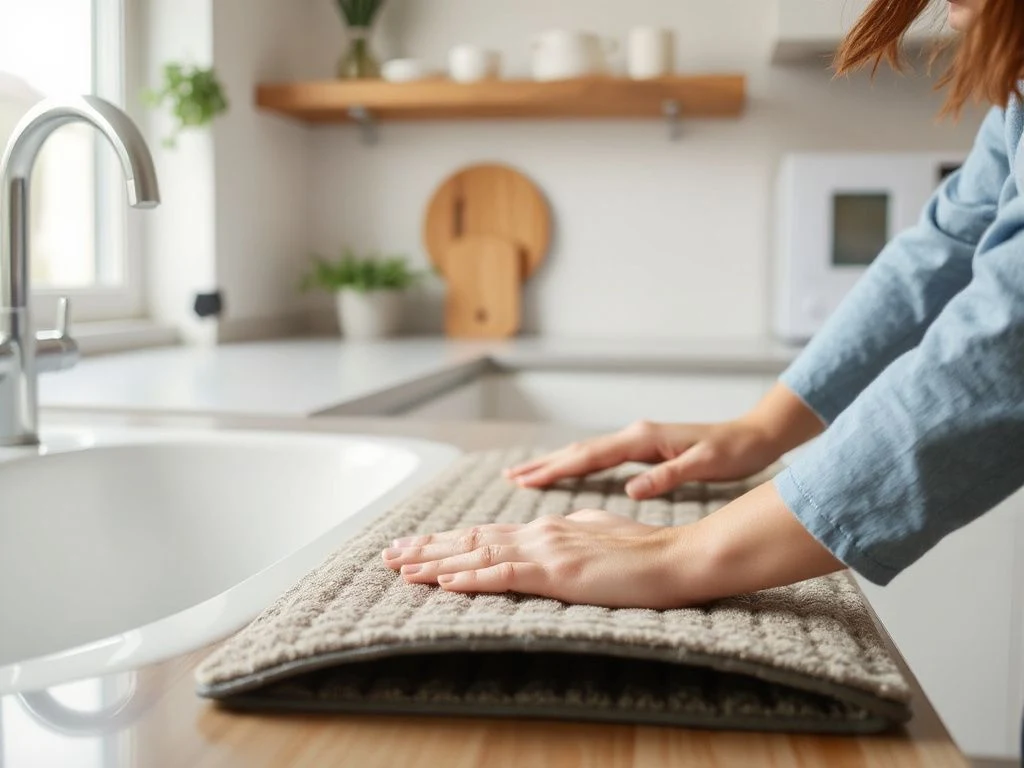
Bathroom mold grows where water sits for more than 24 hours. A thick cotton mat on a solid vinyl backing traps moisture between the fabric and the backing. The backing itself may be waterproof, which sounds good, but it means the water has nowhere to go except up into the fabric. Within three weeks of daily use, that mat can develop a musty odor and visible black spots on the underside. The solution is airflow. Hang the mat over the tub edge or a towel bar after every use, and wash it weekly in hot water with a cup of white vinegar instead of fabric softener. Fabric softener coats the fibers and reduces absorbency, which makes the mat stay wet even longer.
For shower mats that stay inside the tub, remove them after each shower and hang them to dry. A mat that lives in a constantly wet environment is a mold farm. If two people shower daily, you’ll need two mats in rotation, not one mat washed every two weeks.
Cutting a Mat to Fit: Is It Worth It?
You can cut some bath mats, but not all. Mats with a solid rubber or TPE backing can be trimmed with heavy-duty scissors or a utility knife, as long as the backing is not reinforced with fiberglass or metal mesh. Cutting a suction cup mat is riskier because you’re removing some of the cups that provide grip, and the remaining cups near the cut edge may lift. Fabric mats with a foam backing can be cut, but the raw edge will fray unless you seal it with a flexible fabric glue or a hot knife. If the mat is too large for your shower floor and you absolutely must cut it, sacrifice the side with the fewest suction cups or the least textured backing. But remember: a mat that doesn’t cover the standing area is a trip hazard, and a too-small mat that curls at the edges is worse. The best plan is to buy the right size from the start.
How Often Should You Replace a Non-Slip Bath Mat?
There’s no universal timeline, but three signals tell you it’s time to replace: visible cracks in the backing, a persistent smell even after washing, or the mat moving when you press it. For fabric-topped mats, frayed edges that shed fibers into the drain are another sign. Most quality mats last two to three years with proper care, but a cheap suction cup mat used daily on a textured floor might fail in six months. If the mat has lost its grip or its absorbency, don’t keep using it out of thrift—a hospital visit costs far more than a new mat.
On the subject of floor coverings next to the bathroom, our review of the Govee kitchen rug discusses a similar principle: a rug’s backing must match the floor underneath, or it becomes a slipping hazard in a high-traffic area.
Frequently Asked Questions
Why does my bath mat say “non-slip” but still slides on the floor?
Because the backing is not compatible with your floor texture. A suction cup mat needs a completely smooth, clean, dry surface to create vacuum seals. On tile with even slight texture, the cups sit on the high points and air leaks in. Alternatively, soap residue on the floor or the mat’s backing creates a lubricating film that reduces friction to near zero. Clean both surfaces with a degreaser and test the mat with a firm horizontal push.
Can I use a suction cup bath mat on a textured shower floor?
No. Suction cups require a glass-smooth surface. On pebbled fiberglass, slate, or any tile with surface variation, the cups cannot form a vacuum seal, so the mat will float and slide. Use a solid rubber or TPE mat with high friction instead. Those backings conform to the texture enough to grip without needing vacuum seals.
What is the difference between a bath mat and a shower mat?
A bath mat sits outside the tub or shower and catches water dripping from your body to keep the floor dry. A shower mat goes inside the tub or shower and grips the wet surface under your feet while water runs. Using one for the other’s job creates a fall risk—a shower mat on dry floor may not absorb water, and a bath mat inside the tub may float or slide.
How do I know if a non-slip bath mat will trigger a pacemaker?
Almost no bath mats contain magnets, metal threads, or electronics. Suction cups, rubber, TPE, and fabric are all magnetically inert. If a mat has heating elements or embedded magnets, the manufacturer must label it. Without such a label, there is nothing to interfere with a pacemaker. Focus your attention on slip resistance and drying speed instead.