Many people wonder why a new office chair can feel uncomfortably warm after a day of use, which leads to the question of mesh vs leather office chair materials. What looks premium in a showroom photo often fails after extended daily use. The YFO ergonomic chair reviewed below isn’t a glamorous pick, but it’s the honest one for most home offices, and the TP-Link mesh system sitting next to it solves the other half of the work-from-home equation: staying connected while you sit.
Out of the two products on this list, the YFO Home Office Desk Chair offers a thoughtful focus on support rather than style, which matters more than upholstery when you’re eight hours in. The TP-Link Deco X55 is suitable for anyone whose router can’t reach the far corner of the apartment, but it’s not a chair and is treated here as exactly what it is.
📌 This article contains affiliate links. As an Amazon Associate I earn from qualifying purchases, at no extra cost to you. Full disclosure.
CERTAIN CONTENT THAT APPEARS ON THIS SITE COMES FROM AMAZON. THIS CONTENT IS PROVIDED ‘AS IS’ AND IS SUBJECT TO CHANGE OR REMOVAL AT ANY TIME.
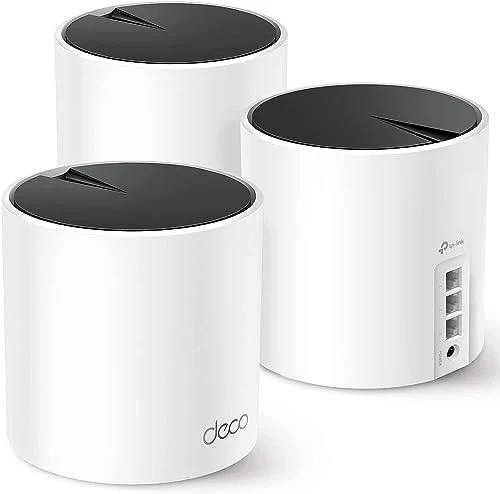
TP-Link Deco X55 AX3000 WiFi 6 Mesh System (Whole-Home Connectivity)


Comparison Table
| Product | Best For | Buy Link |
|---|---|---|
| TP-Link Deco X55 AX3000 WiFi 6 Mesh System | Whole-home connectivity | Check Price |
| YFO Home Office Desk Chair | Budget ergonomic seating | Check Price |
How We Chose These Home Office Picks
These two products came out of comparing published specifications, materials, and documented features against what actually decides whether a home office works: the chair you sit in and the signal that reaches it. For the chair side of the mesh vs leather office chair argument, we weighted seat dimensions, lumbar adjustability, and the honesty of the materials list. The YFO chair specifies a 22-inch seat width and 20-inch depth, which fits average builds without squeezing thighs against armrests — and the rubber casters are a detail most budget chairs skip. For the networking side, the Deco X55’s claim of up to 6500 square feet of coverage across a 3-pack means one unit per floor in a typical two-story house, which is what we look for in a mesh system. Before you order any chair, check the weight capacity and the BIFMA certification — many cheap chairs omit both, and that’s exactly where failures start.
TP-Link Deco X55 AX3000 WiFi 6 Mesh System (Whole-Home Connectivity)
Quick take: If your router dies in the hallway and your office sits three walls away, this mesh system fixes dead zones with Wi-Fi 6 speed — just don’t expect it to support your lower back.
The Deco X55 is a three-pack of white cylinders, each roughly the size of a small coffee mug, and that’s a blessing for anyone renting an apartment where a sprawling router with external antennas would look absurd. The AX3000 rating means it can push up to 2402 Mbps on the 5 GHz band when you’re close to a node, which is more than enough for video calls and cloud backups. The manufacturer claims support for up to 150 connected devices across the three units, so a household with smart bulbs, phones, and a work laptop won’t choke the network.
Real-world usability comes down to placement. Each unit needs to be within wired or wireless backhaul range of another, and the square footage claim assumes open layouts, not plaster walls from 1960. One honest annoyance: the system relies on the Deco app for setup and management, so if you hate configuring routers on a phone, this will test your patience. Compared to a single powerful router, the mesh approach trades raw peak speed for consistent signal everywhere, which is exactly what a home office needs when the video call freezes mid-sentence.
Pros:
- Wi-Fi 6 speed — AX3000 throughput keeps multiple streams moving without buffering even during a large file upload.
- 6500 sq ft coverage claim — spread three nodes across a two-story home and you’ll likely cover the garage and a corner bedroom too.
- Up to 150 devices — the hardware won’t fall over when your partner streams 4K while you’re on a client call.
- Compact, wall-friendly design — each node hides easily on a bookshelf without looking like a space station part.
- Easy app-based management — the Deco app lets you see connected devices and pause kids’ Wi-Fi without a networking degree.
Cons:
- Not a chair, obviously — if you searched for mesh vs leather office chair and landed here expecting two seating options, this product belongs in a different category entirely.
- Signal degrades through brick or concrete walls — the 6500 sq ft figure assumes drywall and open lines of sight, so older homes may need an extra node.
Our Take
Best for: Remote workers whose Wi-Fi drops in the home office and who already own a separate chair. Skip if: You only need a single router for a small apartment or you came here purely for chair advice — the YFO below is the seating pick.
YFO Home Office Desk Chair (Ergonomic Budget Pick)
Quick take: For a chair under $200, the YFO’s 22-inch seat and rubber casters are the two details that matter most, and they’re here.
The YFO’s frame is finished in a matte black that hides fingerprints, and the seat cushion uses a thicker sponge on the backrest — the listing specifically calls out increased back support compared to older models. The seat width of 22 inches gives your hips room to shift without grazing the armrests, and the depth of 20 inches is deep enough for a 6-foot-tall user to sit with knees at a comfortable angle. The armrest height of 8 inches above the seat aligns with standard desk heights for average builds.
From a durability standpoint, the rubber casters are the standout feature. Hard plastic wheels chew up wood floors within a year; rubber rolls quietly and resists marking, and the listing confirms suitability for wood, carpet, and marble. One honest annoyance: the listing never states the chair’s weight capacity or whether the backrest uses mesh or bonded leather, which is exactly the kind of information a materials comparison should include. A padded fabric back won’t breathe as well as mesh, so if you run hot, this chair will feel warmer than an Aeron-style mesh alternative — but at this price, that trade-off is expected.
Pros:
- Extra sponge on the backrest — more padding means less pressure on the lumbar region during long sits.
- 22-inch wide seat — roomy enough for most users without making the chair feel bulky in a small office.
- Rubber casters for multiple floors — wood, carpet, and marble all get a smooth, silent roll without scratches.
- 20-inch seat depth — long enough to support the full thigh without cutting off circulation behind the knee.
- Armrests at 8 inches — the correct height for most standard 29-inch-tall desks when paired with an average user height.
Cons:
- Material not specified — the listing refuses to say whether the covering is PU leather, fabric, or mesh, so breathability is a guessing game.
- No stated weight capacity or BIFMA rating — heavier users and anyone who cares about structural certification should ask before buying.
The Real Story
Perfect for: Budget-conscious buyers who need a supportive chair for a small apartment and don’t want to replace floor-protector mats. Not great if: You sweat easily or demand certainty about materials before spending money — the YFO hides its upholstery details, and that’s a real liability in a mesh vs leather office chair comparison.
Buying Guide: The Difference Between Mesh and Leather for Office Chairs
The difference between mesh and leather office chair materials isn’t about luxury versus utility — it’s about how each fabric responds to heat, friction, and time. Mesh wins on breathability because air moves through the open weave, but nylon and polyester mesh both rely on tension. Cheap mesh sags within eighteen months; good mesh, the kind rated by ANSI/BIFMA X5.1 standards, holds tension for several years. Leather comes in three tiers: full-grain, which breathes somewhat and ages well; bonded leather, which is shredded scraps glued to a backing and cracks after a year; and PU leather, a plastic-coated fabric that peels in sheets once the top layer separates.
Breathability and Long Sitting Sessions
If you sit for eight hours or more, mesh keeps your back cooler because sweat evaporates instead of pooling against the seat. A padded fabric or bonded leather chair traps heat against your shirt by mid-afternoon. The YFO chair’s unspecified covering means we can’t promise one way or the other, but the extra sponge padding suggests a fabric wrap rather than open mesh. For reference, a true mesh chair like a typical ergonomic model will outperform any padded chair on temperature control.
Durability: What Fails First
Mesh chairs fail at the webbing anchor points and the lumbar tension mechanism. Leather chairs fail at the seam stitching and the topcoat. PU leather is the worst offender — the coating peels within 12 to 18 months of daily use, especially if the chair sits near a window with direct sun. Full-grain leather can last a decade with conditioning, but it costs three to five times more than a budget mesh chair. For a small-space office, it is better to spend on a mesh chair with a BIFMA rating than on a bonded leather chair that looks good for one season.
Maintenance and Cleaning
Mesh chair backs collect dust and hair in the weave, but a vacuum with a brush attachment handles it in seconds. Leather needs a damp cloth and occasional conditioner to prevent cracking, and that’s a monthly chore most people skip until the damage is done. The YFO’s rubber casters make floor cleaning easier because they don’t grind debris into wood grain the way hard plastic wheels do — a small win for anyone who sweeps rather than vacuums.
Our Final Recommendation
The YFO Home Office Desk Chair is the overall winner for seating on this list because it nails the fundamentals — seat width, back padding, and floor-safe casters — at a price that leaves room for a decent standing desk later. The TP-Link Deco X55 earns its place as the connectivity pick for anyone whose home office suffers from weak Wi-Fi, but it’s not a chair and shouldn’t be judged as one. For the mesh vs leather office chair question, the honest answer is: choose mesh if you run hot and value breathability; choose leather only if you can afford full-grain and don’t mind conditioning it. Budget bonded or PU leather is a trap.
Frequently Asked Questions
Which chair material stays cooler when I sit for 8+ hours?
Mesh stays cooler because air circulates through the open weave, pulling body heat away from your back. Leather and PU leather trap heat and moisture against the skin, which leads to sweat stains on light-colored upholstery by the end of a summer workday. If your office has no air conditioning, mesh is the only sensible choice.
Should I choose a mesh or leather office chair for long-term durability?
The mesh or leather office chair decision hinges on the specific material grade. A high-quality nylon mesh with reinforced webbing will outlast bonded leather by several years, but a full-grain leather chair with proper conditioning beats a cheap polyester mesh. The failure mode to avoid is PU leather — it peels structurally, not just cosmetically, and no repair product fixes that.
How long does mesh tension last before it sags?
Expect two to four years of firm tension from a well-made mesh chair used daily. The frame anchors and the lumbar band are the first points to loosen, and once the weave stretches beyond re-tensioning, the chair effectively loses its ergonomic support. Cheaper chairs often sag within twelve months, which is why a BIFMA X5.1 certification matters.
Can I repair a leather office chair that’s starting to crack?
Only if the leather is full-grain or top-grain and the cracking is surface-level dryness. A leather conditioner applied monthly can slow cracking and restore some flex. For bonded or PU leather, once the topcoat splits, the only fix is reupholstering the entire chair, which costs more than the chair itself.
Does a mesh chair provide enough back support for long shifts?
Mesh support comes from the lumbar system and the frame’s tension, not from the weave itself, so a mesh chair without adjustable lumbar will feel flimsy after a few hours. Look for a chair that combines a mesh backrest with a firm, adjustable lumbar pad and a seat depth mechanism — that’s the setup that keeps your spine neutral during a 10-hour day.