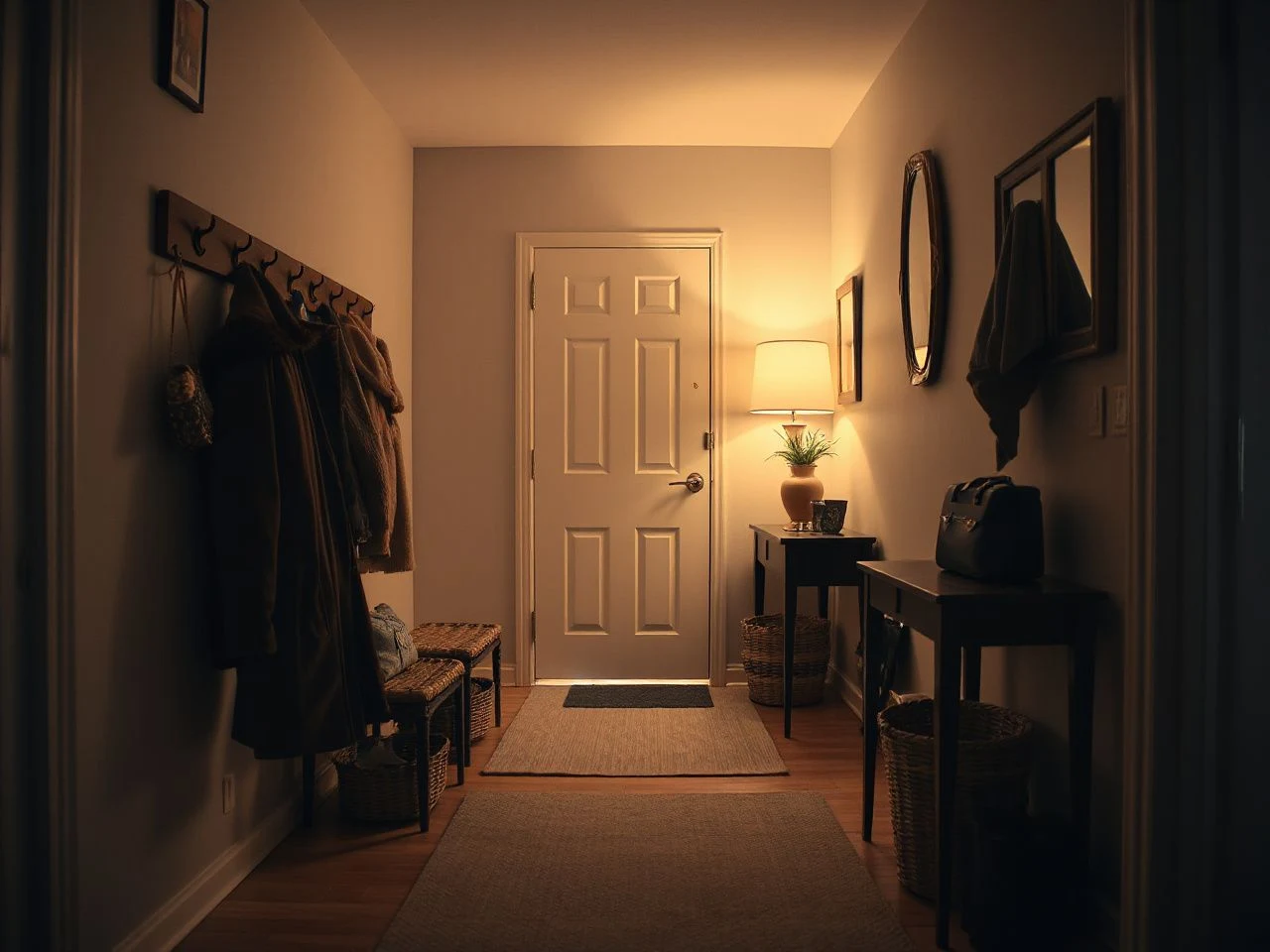
Coats land on chairs, shoes spread across the threshold, and keys disappear beneath yesterday’s mail. Effective entryway organization distinguishes a temporary landing zone for items used every day from storage for seasonal, spare, or rarely used belongings. The layout should follow the movement of people and the condition of incoming items, with ventilation, cleanability, wall support, and clear circulation treated as part of the storage solution rather than afterthoughts.
That is the practical meaning of entryway storage and organization solutions. The attractive cabinet matters less than its relationship to the doorway, the people using it, and the items arriving there. I check the doorway width before admiring the sofa, and the same rule applies to every shelf, bench, hook, and cabinet in an entrance.
Key Takeaways
- Separate daily drop-zone items from seasonal and rarely used belongings.
- Protect a clear route around doors, stairs, thresholds, and furniture.
- Match open or closed storage to moisture, dirt, reach, and household habits.
- Secure wall-mounted and tall storage before loading it with everyday gear.
Causes: Why Entryways Become Cluttered Again
Clutter returns when storage asks people to make too many decisions. A bag arrives in one hand, wet shoes in another, and keys need a visible place immediately. If the nearest shelf is reserved for decorative objects or the shoe cabinet requires several steps to open, the floor becomes the default.
An entryway is a transition zone, not a general-purpose storeroom. Items used on nearly every departure belong near the route out; spare linens, off-season accessories, and rarely used luggage belong elsewhere, perhaps in closet and wardrobe storage or a dedicated storage area.
Separate the daily landing zone from long-term storage
Start by observing what enters the home and where each item goes without assigning blame. Make two groups: immediate-use items and occasional items. The first group may include current coats, daily shoes, keys, bags, and an umbrella. The second group may include seasonal outerwear, duplicate bags, formal shoes, and equipment that does not need to occupy the doorway.
Daily entryway storage should sit within easy reach of the people who use the entrance. Seasonal storage should be farther from the threshold if moving it away keeps the passage open. A storage basket can hold small soft items, while a closed cabinet can hide occasional belongings from view.
- Keep current coats on coat hooks or a short rail near the arrival path.
- Use a key tray for keys and other small objects that need a repeatable landing place.
- Reserve upper shelves for light, occasional items rather than daily essentials.
- Move duplicate footwear and out-of-season clothing into closet storage.
Children and older adults need the same logic applied at a reachable height. People with limited reach or mobility benefit from storage that does not require bending around a bench, stretching toward a high hook, or stepping across loose shoes.
Follow the movement of people and incoming items
Draw the route from the outside door to the next room, staircase, or lift. Then mark where wet items pause, where shoes are removed, and where people turn. A useful layout places containment beside each action rather than grouping every storage piece against the most convenient wall.
Wet footwear should not sit inside a sealed cabinet while moisture remains on its surface. An umbrella stand belongs where an open umbrella can drain without touching a painted cabinet or blocking the threshold. Outerwear needs a ventilated place to dry before it is packed tightly away.
Moisture protection belongs beside wet footwear, umbrellas, and coats because damp items can damage furniture and flooring. A washable mat or tray can define the wet zone, while open air around damp items helps the area remain easier to clean.
Preserve circulation before adding capacity
Open doors, drawers, and cabinet doors need room to function without crossing the main walking route. A bench that looks useful on an empty floor can become a trip hazard when its edge meets the door swing or the bottom stair. The same concern applies to freestanding coat racks and umbrella stands.
Use cardboard, painter’s tape, or folded paper to mark the footprint of proposed furniture on the floor. Walk through the marked area while carrying a bag. Open the door, turn toward the stairs, and check the threshold. This simple test reveals circulation problems before a wall is drilled or furniture is assembled.
Solutions: Match Storage to Space and Household Habits
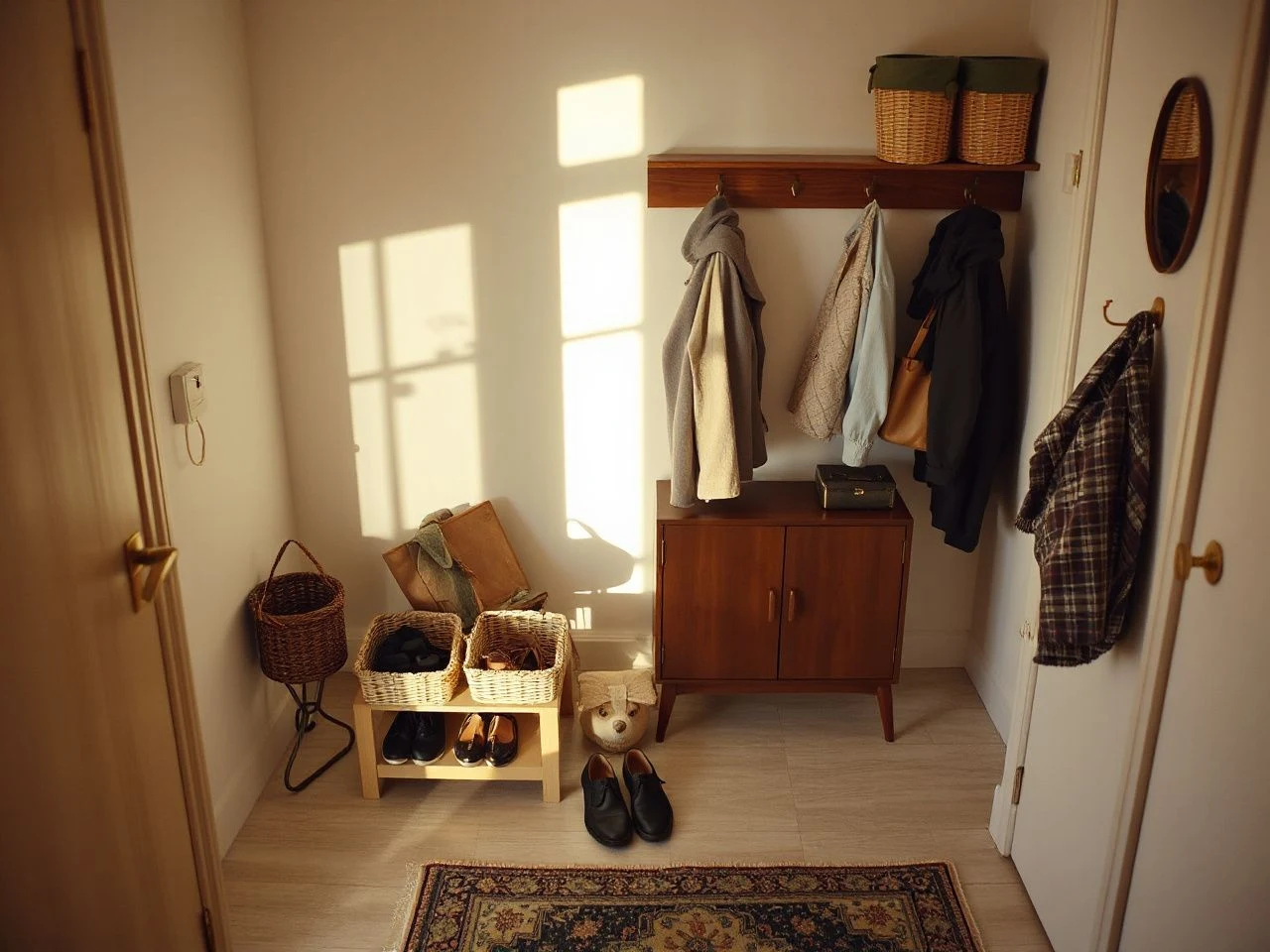
The right arrangement depends on entry width, wall construction, moisture, reach, and the number of actions taking place at the door. Small entryway storage and organization solutions should reduce movement rather than compress it. A narrow entrance often benefits from vertical storage, provided the wall can support the load and the lower section remains clear.
Hooks for immediate-use outerwear
Wall-mounted coat hooks work well when coats, bags, and keys need to be dropped quickly. Hooks keep daily items visible, which makes them practical for children and for anyone who benefits from a clear visual cue. They also expose wet fabric to room air instead of trapping it behind a closed door.
Hooks are less suitable for every household item. Loading a small row with heavy bags can pull on the fasteners, and a crowded wall can make each item harder to remove. Use separate zones for daily coats, bags, and occasional accessories rather than allowing every object to share one hook.
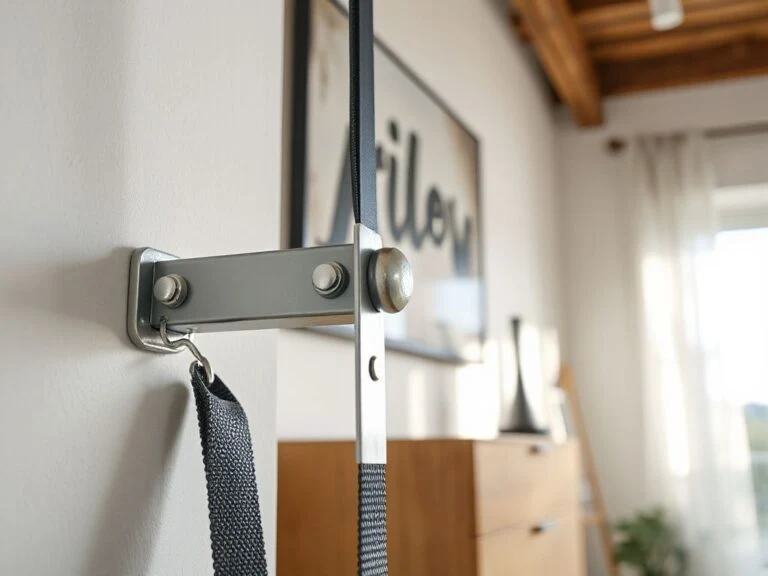
Wall-mounted hooks need anchors and fasteners suited to the wall construction and the expected load. A hook that feels secure while empty may not remain secure after repeated loading, so inspect the mounting plate, screws, and surrounding wall whenever movement appears.
Open cubbies for visible routines
Open cubbies make categories easy to see. One compartment can hold current shoes, another can contain a basket for gloves, and another can receive a bag. The arrangement works best when each compartment has a clear purpose and when items are removed as often as they are placed.
Open storage is more practical than closed storage when ventilation, speed, and visibility matter more than concealment. It is also easier for children and people with limited reach because there is no door to open. The trade-off is visual exposure: dust, pet hair, and uneven piles remain visible.
Keep heavier belongings in low compartments and avoid placing unstable objects above head height. A shoe cabinet can provide a cleaner appearance, but its doors should not open into the route, and wet shoes should dry before being enclosed.
Shelves, pegboards, and baskets for flexible organization
A wall-mounted shelf can hold a key tray, a small basket, or a small amount of seasonal equipment. A pegboard allows hooks and containers to shift as household routines change. Neither should become a catch-all surface.
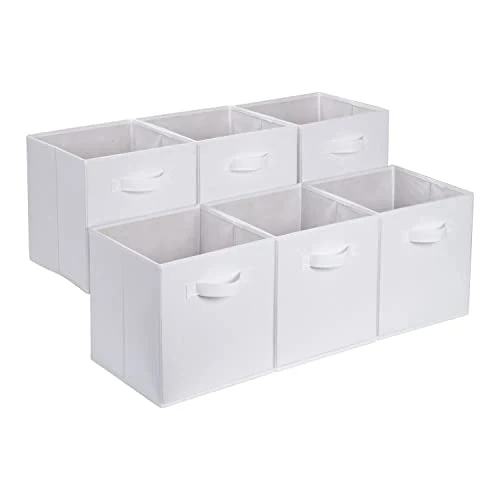
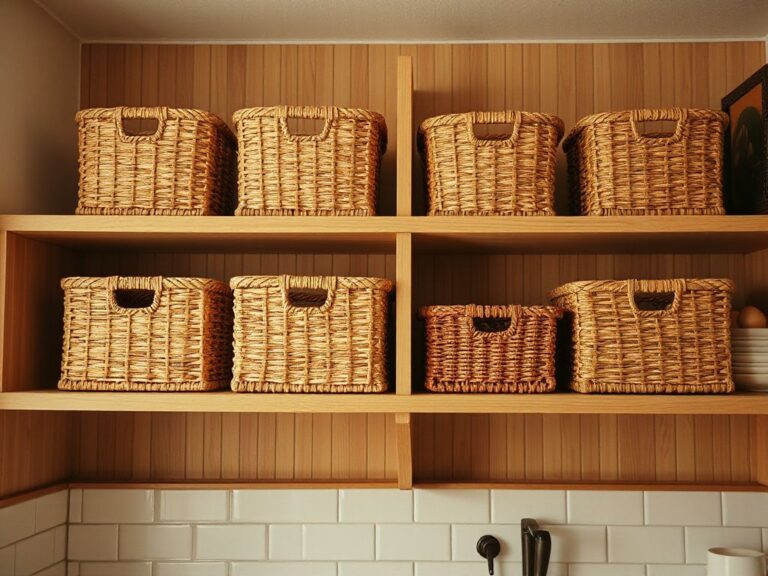
Storage baskets soften open shelving and gather small items, but baskets still need a defined purpose. A basket marked for current accessories is easier to maintain than one described only as miscellaneous. Closed containers are useful for spare items; open containers are more suitable for objects used on the way out.
For scale, a long shelf should be judged against the actual wall and route rather than against a photograph. One listed floating shelf measures 1.97 inches high by 74.81 inches wide by 10.24 inches deep and uses engineered wood. Those figures show why a shelf’s apparent slimness does not remove the need to check wall support, door clearance, and reach.
Benches and cabinets without blocked walkways
An entryway bench is useful when sitting down to remove shoes is part of the arrival routine. The space below can hold shoes in baskets or cubbies, but the bench should not become a permanent pile of bags. Keep the seating area distinct from the drop zone so both functions remain usable.
Closed cabinets help contain visual clutter and protect occasional items from dust. A cabinet with drawers can separate keys, accessories, and small household supplies, while a tall cabinet may hold coats or bags. Tall or freestanding storage can tip when heavily loaded or pulled, so stabilize it where necessary and keep it outside the circulation path.
A narrow console can provide a landing surface without the bulk of a deep cabinet. One listed stainless-steel console table measures 29 inches high by 64 inches wide by 12 inches deep. A piece with those dimensions still requires a doorway, wall, and walking-route check before placement.
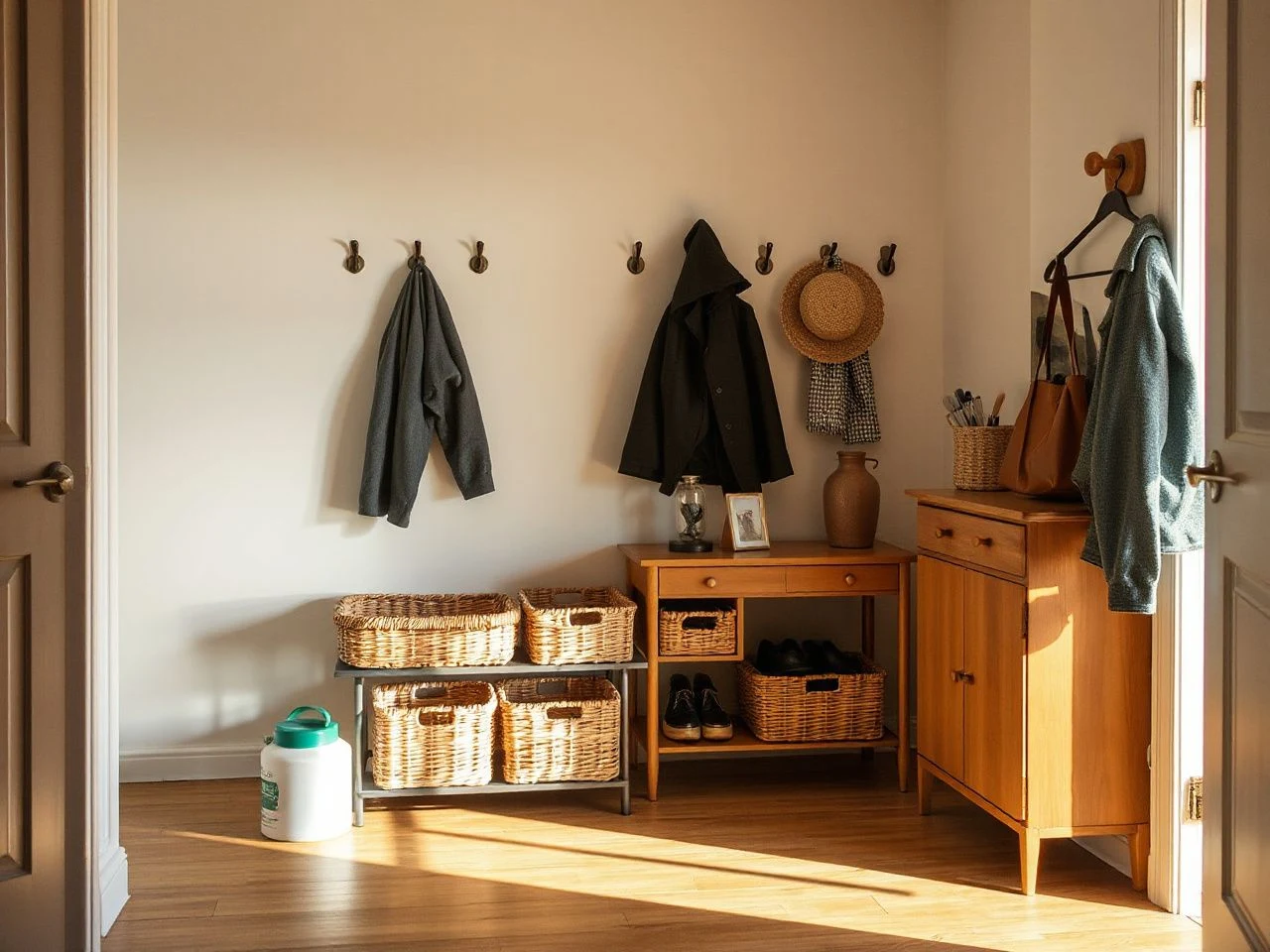
Step-by-Step Setup for Entryway Storage and Organization Solutions
Step 1: Map the entrance before choosing furniture
Record the door swing, threshold, stairs, nearby heating or ventilation equipment, and the path to the next room. Do not rely on a furniture photograph to judge fit. The doorway width and the assembled piece both matter, as does the space needed to bring the item into the room.
Mark the proposed footprint with removable tape. Test the route while wearing the shoes and carrying the bags normally used in the household. If the tape creates a pinch point, change the layout before considering finish, colour, or style.
A clear route through an entryway is a storage requirement because doors, stairs, and thresholds create unavoidable movement. This principle also applies to mudroom organization and small-space interior layout, where every obstruction affects more than appearance.
Step 2: Assign every item to a landing point
Make a short list of what arrives daily, weekly, seasonally, and rarely. Place daily items closest to the entrance. Give each category a visible home, then remove storage that does not serve an actual routine.
- Daily: current coats, everyday shoes, keys, bags, and an umbrella.
- Occasional: special footwear, spare bags, and accessories used during a particular season.
- Rare: duplicate items and belongings that should live in a closet, wardrobe, or another storage area.
Household decluttering routines work better when the entryway has a small reset point. Returning an item should require one action, not a chain of opening, moving, and rearranging. If a category repeatedly overflows, reduce the quantity stored there or move the category elsewhere.
Step 3: Choose open or closed storage by item condition
Use open hooks and cubbies for items that need quick access or drying. Use closed cabinets and drawers for clean, dry belongings that look untidy when exposed. A mixed arrangement often works: hooks for current coats, a bench or cubby for shoes, a tray for keys, and a cabinet for occasional items.
Open storage remains practical when the entry is damp, the household moves quickly, or children need independent access. Closed storage is better when visual calm matters and the items inside are dry. Ventilation should guide the decision whenever wet outerwear or footwear is part of the routine.
Step 4: Secure the structure before loading it
Read the installation instructions and identify the wall construction before mounting a shelf, hook rail, cabinet, or pegboard. Use anchors and fasteners suited to that wall and to the expected load. Do not assume that a solid-looking surface will hold a heavily loaded piece without suitable support.
If a wall-mounted unit starts pulling away, stop loading it. Look for a widening gap, loose screw head, cracked surrounding surface, tilted shelf, or movement when touched. Remove the contents, then have the fasteners and wall condition assessed before reinstalling it.
Freestanding storage needs attention as well. A tall coat rack, cabinet, or shelving unit can become unstable when loaded high or pulled from one side. Stabilize the piece where necessary, keep heavy items low, and avoid placing it where a person must squeeze past it.
Step 5: Create a wet-weather zone
Wet shoes, umbrellas, and coats need a place to drain and dry without touching vulnerable furniture. Position a washable floor covering or tray beneath footwear, keep an umbrella stand stable and easy to empty, and allow damp coats to hang with air around them before they enter a closed cabinet.
Moisture left on flooring can cause staining, swelling, odours, and surface damage. Dirt and salt also travel from shoes into the walking route, so cleaning access should influence the design. Furniture that must be lifted or moved for every clean is less practical than a layout with a reachable floor.
Wet footwear should dry before storage baskets, cabinets, or closed compartments contain it. If a damp smell develops, remove the items, clean the affected surfaces according to their care instructions, and improve airflow rather than masking the odour.
Preventive Measures: Keep the System Usable
Clean for the materials and the mess
Entryway storage collects grit, salt, moisture, and pet hair because it sits beside the outside world. Dust open shelves and baskets regularly, clear debris from cubby floors, and clean trays before residue spreads to nearby flooring. Follow the care instructions for wood, engineered wood, metal, fabric, and painted finishes.
Do not saturate wood or engineered wood while cleaning. Use the least wet method that removes the dirt, dry the surface afterward, and avoid leaving damp cloths inside a cabinet or basket. Metal hardware should be checked for looseness while the surrounding surface is being cleaned.
Build a reset that takes place at the doorway
A reset routine should happen where the clutter forms. Return keys to the tray, move current shoes into their assigned space, hang coats rather than draping them over a bench, and remove items that do not belong in the entrance. The exact schedule can follow the household; the important point is that the action is small and repeatable.
Limit the number of items allowed in the daily zone. When a basket fills, remove something before adding more. This prevents a flexible container from becoming an unmarked long-term storage area.
Review reach, safety, and independence
Storage should support the people who use it rather than force everyone into one height or movement pattern. Keep frequently used items within reach, heavier items low, and hazardous items secure. A child-accessible hook zone can sit below adult outerwear, while fragile or unsafe objects remain in a protected location.
Older adults and people with limited mobility may benefit from a stable seat, visible hooks, and storage that does not require twisting around a cabinet door. Keep the floor free from loose shoes and baskets that can slide into the walking line. Accessible home organization begins with a route that remains predictable.
Account for ongoing care and replacement
Every entryway arrangement has maintenance needs. Baskets may need replacement, hardware may need tightening, and floor protection may need refreshing. The cost is not only the original furniture; it also includes cleaning supplies, replacement containers, repairs, and the time required to move items out of the way.
Choose a layout that can be maintained with ordinary household effort. A decorative tray that cannot be lifted easily, a basket that traps wet debris, or a cabinet that hides an overflowing category will create work rather than remove it.
For general consumer product and furniture safety information, the U.S. Consumer Product Safety Commission provides guidance on hazards such as tip-over risks. For information about consensus standards and the standards-development process, the ASTM International website is a reliable starting point; installation still needs to follow the furniture and hardware instructions supplied for the specific piece.
Design Decisions That Hold Up in Real Homes
Small entrances
A small entryway benefits from vertical thinking, but height should not push daily objects beyond reach. Wall-mounted hooks, a shallow shelf, and a compact shoe cabinet can preserve floor space when their doors and contents do not interfere with the route. A mirror or decorative surface should never displace the place where keys and bags actually land.
For a focused treatment of compact layouts, see these small entryway storage solutions. The same principles apply to storage solutions for small spaces elsewhere in the home: assign a function, protect movement, and remove items that do not earn their footprint.
Wood and mixed-material arrangements
Wood can add warmth to an entrance, while metal hardware and washable trays can handle more demanding areas. Materials should be selected according to contact with moisture, dirt, and cleaning rather than appearance alone. A surface near wet shoes needs protection and access for wiping.
One listed solid alder coat rack is described as a five-hook design. The relevant lesson is not the product name; it is that hook count should follow the household’s actual daily load. A crowded rack encourages coats to spill onto chairs, while too many unused hooks occupy valuable wall space without improving the routine.
Modern and concealed arrangements
A modern entrance can remain calm without hiding every item. Closed cabinets reduce visual noise, while one open hook zone keeps current coats accessible. A wall-mounted shelf can hold a restrained drop zone, and a pegboard can provide adjustable storage when needs change.
Do not copy an arrangement labelled for a particular retailer or store system without checking the wall, doorway, and household habits. Names and styles vary, but the underlying questions remain stable: Can people reach the storage? Can damp items dry? Can the floor be cleaned? Can the route stay clear?
What to do when the system fails
Recurring clutter is evidence about the design. Shoes on the floor may mean the shoe storage is too far from the removal point. Bags on a chair may mean the hooks are occupied or too high. Wet coats in a closed cabinet may mean the drying stage is missing.
Change one condition at a time and watch where items settle naturally. Move the landing point closer, reduce the category, add ventilation, or replace a decorative surface with a functional tray. Good storage makes the preferred action the easiest action.
Frequently Asked Questions
How do I choose entryway storage for the way my household comes and goes?
Map the route from the door to the next room, then identify what each person carries, removes, and needs immediately. Put daily coats, shoes, bags, keys, and umbrellas near the relevant action. Keep seasonal and spare belongings elsewhere. Reach matters too: frequently used items should suit the people using them, while heavy or hazardous items need safer low or secured positions.
What works better in a small entryway: hooks, cubbies, shelves, or closed cabinets?
Hooks usually suit quick access to current coats and bags, while cubbies keep shoes and small containers visible. Shelves work for a limited drop zone, and closed cabinets contain dry, occasional belongings. The best combination preserves the route and matches moisture conditions. Open storage is preferable for damp items that need airflow; closed storage is useful only after those items are dry.
How can I organize shoes without blocking the walkway?
Place footwear storage beside the point where shoes come off, then keep the walking line free of loose pairs. A bench with contained storage below can support a sitting routine, while a shoe cabinet can hide dry footwear if its doors do not open across the route. Keep wet shoes in a ventilated, protected area until they dry before putting them into a closed compartment.
What should I check when wall-mounted entryway storage starts pulling away?
Remove the contents and stop using the unit until the problem is understood. Check for a visible gap, tilted shelf, loose screw, cracked wall surface, or movement at the mounting plate. The anchors and fasteners must suit the wall construction and expected load. Reinstalling over a damaged fixing point can repeat the failure, so repair or professional assessment may be necessary.
Why does entryway storage become cluttered again after it has been organized?
The storage may not match the actual route or may be holding too many categories. Daily items need immediate landing points, while seasonal and rarely used belongings should move out of the entry. A basket without a defined purpose becomes a miscellaneous pile, and a hook zone that is already full cannot absorb new arrivals. Reduce the daily quantity, improve reach, or relocate occasional items.