A cabinet’s listed size is not the same as its filing capacity. The key distinction is between a cabinet’s nominal outside dimensions and the usable filing space inside each drawer; a cabinet can fit the room while failing to accommodate the intended folders. The guide should compare vertical and lateral formats by paper compatibility, drawer access, clearance, stability, and total space used rather than treating one set of dimensions as universally standard.
That distinction matters more than a neat catalogue label. The phrase standard filing cabinet size describes a useful starting point, not one fixed object. Flat-pack storage should be considered for its hardware before its finish, so the file rails, drawer suspension, anti-tip interlock, and fasteners deserve as much attention as the cabinet’s width or colour.
Key Takeaways
- There is no single universal filing cabinet size; vertical and lateral formats serve different paper layouts.
- Measure the usable drawer opening, rail position, and full drawer travel rather than relying on outside dimensions.
- Plan the route into the room, the open-drawer zone, floor level, and anti-tip hardware before assembly.
What standard filing cabinet size actually means
Nominal dimensions are only the outside envelope
A filing cabinet’s nominal width, depth, and height describe the space occupied by the assembled case. Those figures help with office space planning, delivery routes, and the relationship between storage and a desk. They do not reveal the clear width of the drawer, the usable depth behind the front, or the position of the file rails.
External cabinet dimensions cannot confirm folder compatibility. A thick drawer front, side wall, folded metal edge, lock housing, or suspension hardware can reduce the space available to hanging file folders. The drawer may close while folders remain compressed, catch on the rail, or lean into the mechanism.
Read the outside dimensions as a boundary. Then ask the manufacturer for the internal drawer opening and the supported file orientation. If that information is missing, measure a comparable drawer or treat the specification as incomplete rather than assuming the interior matches the exterior.
Paper format sets the real requirement
Letter-size paper and legal-size paper require different drawer widths or orientations. A letter-width vertical filing cabinet usually stores folders from front to back, while a lateral filing cabinet generally presents a wider filing run across the drawer. Neither layout should be judged by width alone.
Hanging file folders need room to travel along their rails. They also need space above the contents so a folder can be lifted, moved, and returned without rubbing against the drawer top. A folder that technically fits but catches during movement is not a successful fit.
- Confirm whether the cabinet is intended for letter-size files, legal-size files, or both.
- Check whether the file rails are fixed, adjustable, removable, or supplied separately.
- Compare the rail span with the folder’s hanging points instead of comparing only the cabinet width.
- Look for the usable drawer opening, not simply the front panel’s visible width.
Useful reference dimensions, without pretending they are universal
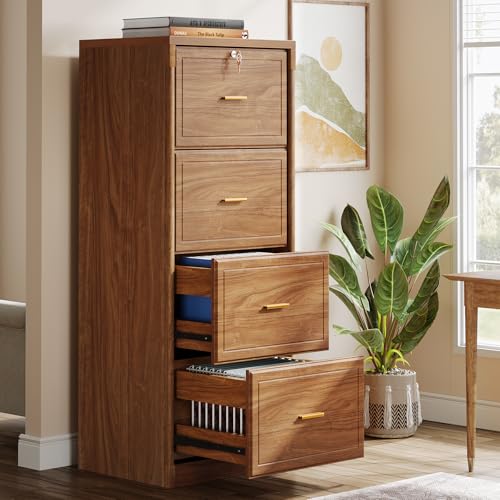
A typical four-drawer letter-width vertical file cabinet is often listed at 15 inches wide and 52 to 53 inches high. Those figures describe a familiar outside format, but they do not guarantee a particular drawer opening, rail system, or legal-file arrangement.
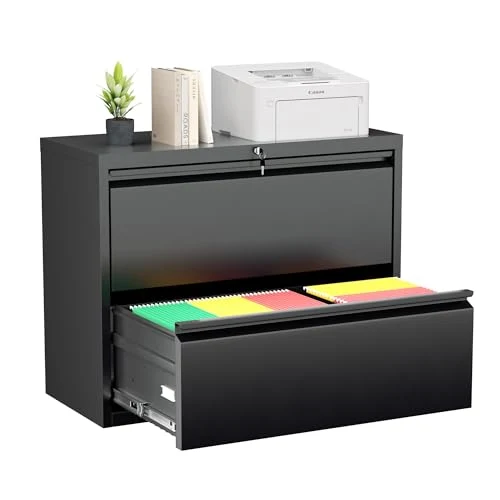
A frequently encountered two-drawer lateral file cabinet is commonly listed at 36 inches wide and 28 to 30 inches high. Its broad face can suit a low workstation layout, yet the internal rail placement still decides whether the intended folders sit correctly.
These dimensions are reference points, not a universal rule. Manufacturer construction, paper format, drawer suspension, and regional filing conventions all affect the usable result.
Vertical and lateral cabinets: compare the working space
Vertical filing cabinets use height to reduce floor spread
A vertical filing cabinet usually arranges drawers above one another and stores folders in a front-to-back direction. That arrangement can preserve floor width, which may help in a narrow office or beside a workstation. The trade-off is a taller case and a more limited filing reach in each drawer.
The familiar letter-width vertical format has a narrow outside profile, but its height becomes part of the room’s visual and physical planning. Check the relationship with shelves, wall art, windows, and ceiling-height furniture. A drawer that opens into a chair or walkway still creates a problem even when the cabinet itself occupies little floor area.
A vertical cabinet saves floor width by stacking filing levels upward. That benefit depends on stable placement, accessible upper drawers, and enough space for the drawer to open fully.
Lateral filing cabinets trade width for lower reach
A lateral filing cabinet places the filing run across a wider drawer. The lower profile can sit comfortably beneath a window or along a broad wall, and the top may serve as part of a room’s storage composition. Its width, however, affects delivery, wall planning, and the amount of uninterrupted floor space used.
Legal-size files may need a wider drawer or a specific rail arrangement. Some cabinets allow different paper formats through movable file rails; others expect one orientation. Ask for a drawing or internal measurement before relying on a general label such as lateral.
For a room where broad, easy-to-read filing is part of the workflow, the related guide to lateral filing cabinets for home provides a useful next step. The important point here is fit: a wide outside case does not automatically mean a wide, uninterrupted filing path.
Capacity is about usable filing length, not visual bulk
A tall case can contain several drawers without offering the right capacity for long folders. A broad case can appear generous while losing space to thick side walls, a lock assembly, or rails that occupy more of the drawer than expected.
Compare the usable drawer opening, the number of filing levels, and the orientation of the folders. Then consider how often the files are accessed. Records retention may favour dense storage, while an active filing system needs clear access and room for folders to move without snagging.
Mobile pedestals occupy a different planning category
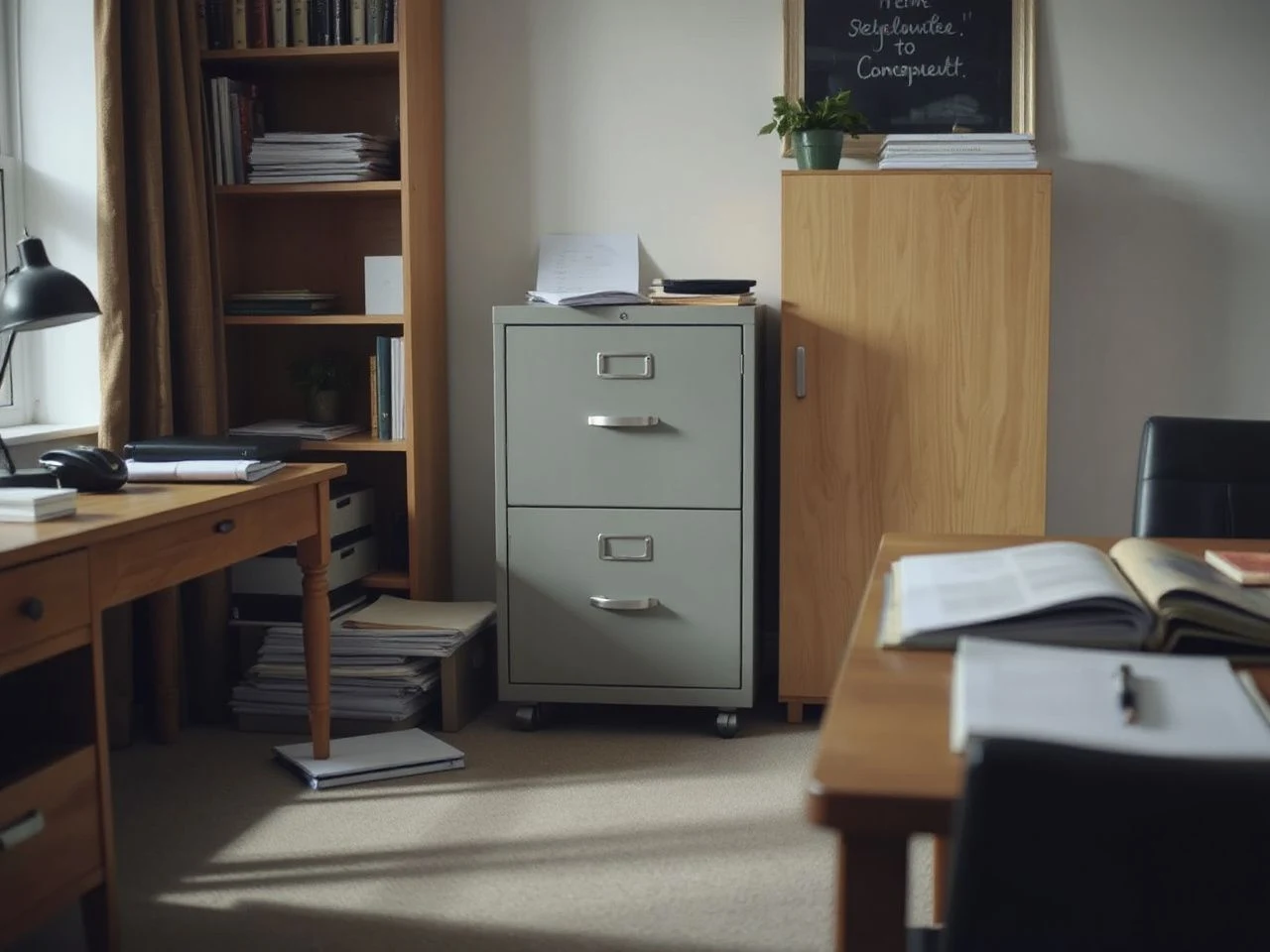
A mobile pedestal or under-desk file unit is designed around workstation proximity rather than room-scale records storage. Its compact footprint may suit active documents, but the manufacturer’s drawer opening and file support still need checking. Casters also alter how the unit behaves on uneven flooring and how much clearance is needed beside a chair.
Do not treat a mobile unit as a small vertical cabinet by default. Its drawer proportions, anti-tip arrangement, and available filing depth may follow a different layout. Match it to the workflow instead of the label.
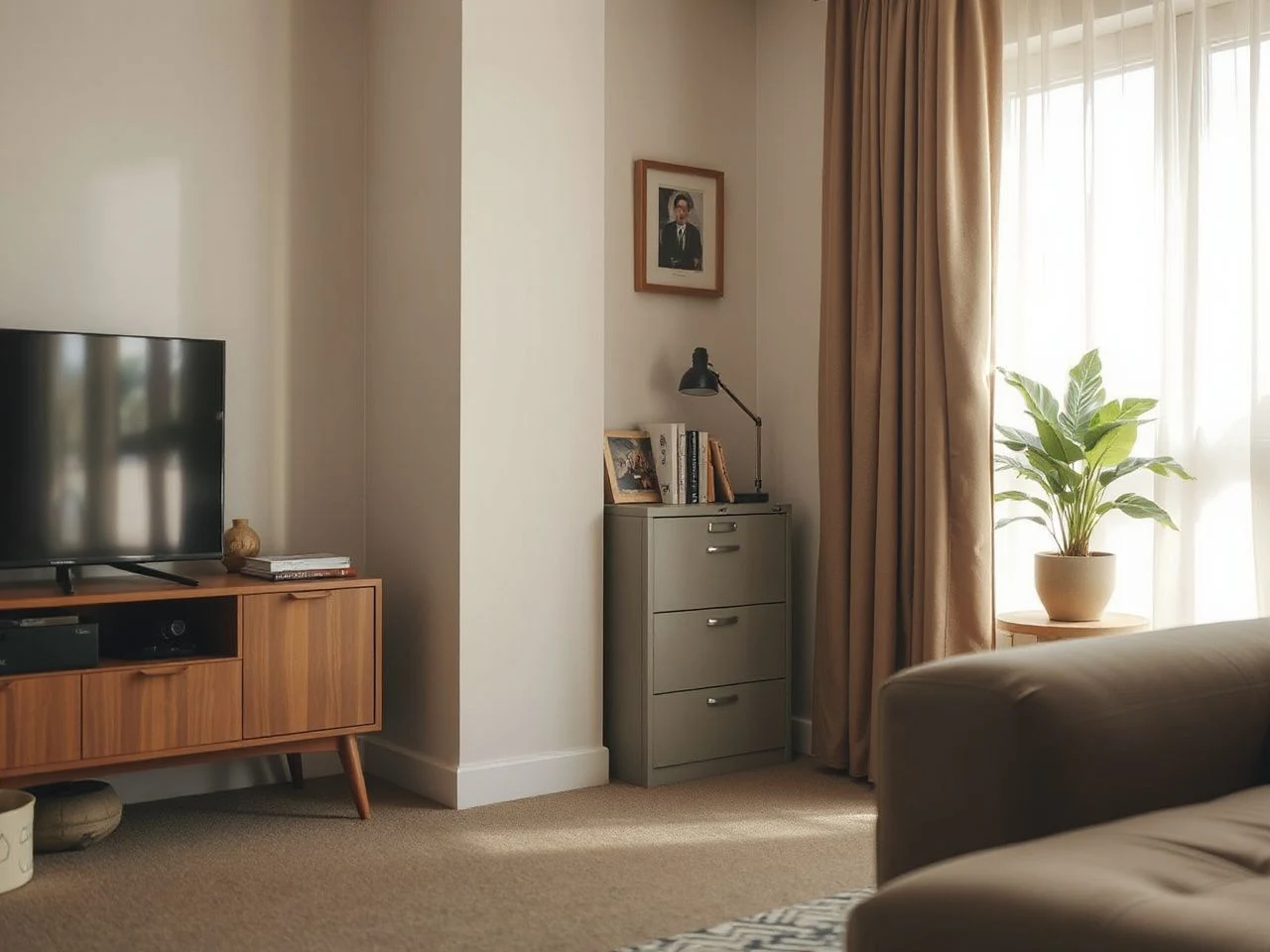
How to plan a filing area around real movement
Step 1: Map the cabinet’s route into the room
Measure the path from the delivery point to the final position. Doorways, corridors, lifts, skirting boards, corners, and changes in floor level can block a cabinet even when the stated cabinet dimensions fit the intended wall.
Include the cabinet’s assembled depth and the space needed to turn it through a doorway. A flat-packed case may travel differently from an assembled one, but that does not remove the need to check the assembly area. Keep the route clear of fragile furniture and plan where the cartons can be opened without blocking the room.
A filing cabinet can fail a space plan before it reaches the office. Doorway width, turning space, skirting boards, and floor transitions all belong in the measurement process.
Step 2: Mark the open-drawer zone
Place masking tape on the floor to show the cabinet’s footprint and the projected path of each drawer. Add the position of handles and the space needed for a person to stand in front of an open drawer. This simple layout exposes conflicts with chairs, desks, radiators, cupboards, and walkways.
Drawer extension is not always equal to the cabinet depth. A front panel, handle, or suspension system can project beyond the case. Use the manufacturer’s full-open dimension where available; otherwise, allow the drawer to open without striking nearby furniture and verify the result before fixing the cabinet in place.
Step 3: Check the floor and wall relationship
A cabinet should sit level on a sound floor. A sloping or uneven surface can change how drawers travel and may place stress on the case or anti-tip mechanism. Skirting boards can also hold the cabinet away from the wall, affecting both stability and the usable walkway.
Where the instructions call for anchoring, use the specified fixing method and inspect the wall or floor substrate before assembly. A floor anchor may be appropriate for the setting, but the correct method depends on the cabinet instructions and the building surface.
Step 4: Decide where files will be used
Place frequently accessed files close to the workstation and less active records in a location that does not interrupt daily movement. A filing cabinet beside a desk may support an ergonomic workstation layout, while a cabinet in a passage can create repeated drawer and walkway conflicts.
Document scanning and digital archiving can reduce the amount of paper that needs active access, but they do not change the requirement to store retained records correctly. Keep the physical filing plan aligned with the organisation’s records retention policy.
Hardware checks that matter more than the finish
File rails and hanging folders
File rails carry the hanging points of suspension folders, so their location determines whether folders sit squarely and move freely. A rail that is too close to a side wall can make folders rub. A rail in the wrong orientation can make a legal-size folder unusable even if the drawer appears wide enough.
Check whether rails are supplied, adjustable, or intended to be fitted during assembly. Read the diagram rather than relying on a photograph. The visible cabinet may look complete while the interior requires a specific rail arrangement for the chosen paper format.
Regional conventions can differ. UK filing cabinets use wider rails for suspension file support than US models, which commonly use narrower versions. That difference makes the origin and intended market relevant when matching folders and accessories.
Drawer suspension and alignment
Drawer suspension controls how the drawer is supported as it opens and closes. During assembly, inspect whether the runners engage evenly and whether the drawer front sits square with the case. A drawer that rubs, tilts, or needs force is a hardware issue to solve before loading files.
The majority of US file drawers have integrated bottoms, allowing different types of materials to be stored. That does not remove the need to check the manufacturer’s stated use or the drawer’s internal clearance. Loose materials can shift into the suspension path, so keep the drawer interior organised.
Anti-tip interlocks and uneven loading
An anti-tip interlock is designed to limit more than one drawer opening at a time on cabinets that use that mechanism. Its purpose is tied to stability, especially when drawers are loaded and extended. Never remove or bypass it to make the cabinet feel more convenient.
Load drawers so the contents do not pull heavily to one side. Uneven loading can change how a drawer runs and may affect the cabinet’s balance when a drawer is open. Keep the cabinet level, follow the assembly instructions, and use the specified floor anchor or other fixing where required.
Unevenly loaded drawers can affect filing cabinet stability. Level flooring, a functioning anti-tip interlock, balanced contents, and suitable anchoring all support safer drawer operation.
Locks, fasteners, and replacement parts
Check that the lock engages without forcing the drawer. A stiff lock may reflect a drawer that is not aligned rather than a faulty key cylinder. Fasteners should be seated as instructed, and missing screws, brackets, or rail clips should be replaced with parts intended for that cabinet.
Ongoing costs can arise from replacement drawer slides, file rails, locks, anti-tip parts, floor protection, and moving services. The amount depends on the cabinet and the repair, so do not treat a low initial price as the whole ownership cost. Hardware availability is part of the practical specification.
Maintenance without overcomplicating the job
Keep drawer tracks free of loose paper, clips, and dust. Wipe the cabinet with a suitable dry or lightly damp cloth according to its finish instructions, and do not force a drawer that has caught. Inspect the file rails and fasteners after moving the cabinet.
Locks and anti-tip mechanisms should operate as designed. If a drawer suddenly binds, sits out of square, or opens with unusual resistance, remove the contents and inspect the alignment before continuing to use it. Maintenance begins with finding the obstruction, not applying force.
Planning mistakes to avoid
Assuming one universal standard
There is no single universal standard filing cabinet size. Cabinet type, manufacturer, paper format, regional convention, and internal hardware all change the practical dimensions.
Use the familiar reference formats as a starting point, then verify the actual unit. A four-drawer vertical cabinet and a two-drawer lateral cabinet can both be described as standard in ordinary office language while occupying very different positions in a room.
Measuring the room but not the workflow
A cabinet may fit beside a wall and still block a chair, desk, corridor, or cupboard when its drawers open. Mark the full drawer zone and the person’s standing position before deciding that the available floor area is sufficient.
Storage planning should include access frequency. A cabinet used throughout the day needs a clear approach, while an archive cabinet may sit farther from the desk if records remain organised and retrievable.
Ignoring file orientation
Letter-size and legal-size folders may require different drawer widths or orientations. A cabinet intended for front-to-back letter files is not automatically suitable for legal files. The rail position, clear opening, and internal depth must support the folder type being stored.
For a wider look at arranging labels, categories, and active records, use this practical guide to filing cabinet organization. Good organisation cannot compensate for a drawer that physically restricts the folders, but it can prevent wasted space inside a correctly sized cabinet.
Trusting the finish before the fittings
A smooth finish can hide weak assembly instructions, poorly aligned runners, or unsuitable file rails. Open the specification and hardware diagram first. Look for the parts that control movement and stability.
Wood-look cases and decorative finishes can work well in a home office, but appearance should follow function. The guide to wood filing cabinets for home can help with the visual side; the cabinet still needs an internal layout that matches the documents.
Overlooking standards and regional requirements
Requirements concerning safety, construction, rigidity, and dimensions in the United Kingdom are addressed by BS 4438:1969 and BS EN 14073-2:2004; the British Standards Institution provides the relevant standards information through BSI. Australian filing cabinets are required to adhere to AS 5079, an adaptation of ANSI BIFMA X5.2-1997, with standards information available from Standards Australia.
Those references do not replace the manufacturer’s installation instructions or confirm that every cabinet sold in every region meets the same requirements. They do show why a cabinet’s market and documentation matter, especially for a workplace, shared building, or formal records room.
Skipping the move after assembly
Moving a loaded cabinet can stress runners, fasteners, flooring, and anchors. Empty drawers before relocation and check the instructions for the correct moving method. Re-level the cabinet at its destination and verify that the anti-tip mechanism still operates.
Floor protection also belongs in the plan. The right protection depends on the cabinet, the flooring, and the moving method, so check the manufacturer’s instructions rather than guessing from the cabinet’s finish.
Frequently Asked Questions
What is the standard filing cabinet size for a letter-size vertical cabinet?
A familiar four-drawer letter-width vertical cabinet is listed at 15 inches wide and 52 to 53 inches high. Those figures describe the outside case, not the clear drawer opening. Confirm the internal width, depth, file-rail arrangement, and full drawer travel before choosing it for letter-size hanging folders.
How can I tell if a cabinet holds legal-size files?
Check the manufacturer’s stated paper format and the internal drawer measurement rather than relying on the cabinet’s outside width. Legal-size files may require a wider drawer or a different orientation. Confirm that the file rails support the folders and that the folders can move without rubbing the sides or drawer top.
Is a lateral cabinet more spacious than a vertical cabinet?
Not automatically. A lateral cabinet often provides a wider filing run, while a vertical cabinet uses height and a narrower floor footprint. Compare usable drawer opening, rail placement, number of filing levels, and access space. The cabinet with the larger outside case may still provide less useful capacity for the paper format you need.
Why do folders catch or prevent a drawer from closing?
Folders can catch when the clear opening is narrower than the visible front, the rails are positioned incorrectly, contents rise above the usable height, or a drawer is out of alignment. Remove the contents, inspect the rails and suspension, and compare the folder dimensions with the manufacturer’s internal measurements. Do not force the drawer closed.
How much clearance should I leave around a filing cabinet?
Leave enough space for the drawer to open fully, for the handle to clear nearby furniture, and for a person to stand and move safely in front of it. The exact requirement depends on the cabinet’s full-open dimension and the room layout. Mark the drawer path on the floor before installation and check doors, desks, chairs, and walkways.
What happens if a filing cabinet is loaded unevenly?
Uneven contents can make a drawer run poorly and may affect the cabinet’s balance when the drawer is open. Distribute files sensibly, keep the cabinet level, and make sure the anti-tip interlock works. Use a suitable floor anchor where the instructions call for one. A damaged or binding drawer should be emptied and inspected before continued use.
How should I maintain drawer slides, rails, locks, and anti-tip hardware?
Keep tracks clear of loose paper and debris, check that fasteners remain secure, and operate locks without force. Inspect rails after moving the cabinet and stop using a drawer that rubs, tilts, or binds. Follow the cabinet’s maintenance instructions for any lubricant or replacement part; do not improvise hardware that changes the anti-tip function.
What ongoing costs should I plan for?
Possible costs include replacement drawer suspension, file rails, locks, anti-tip parts, floor protection, and moving. The amount varies by cabinet and location, so the useful question is whether parts and instructions remain available. A cabinet that cannot be repaired or safely moved may cost more to keep than its original finish suggests.