
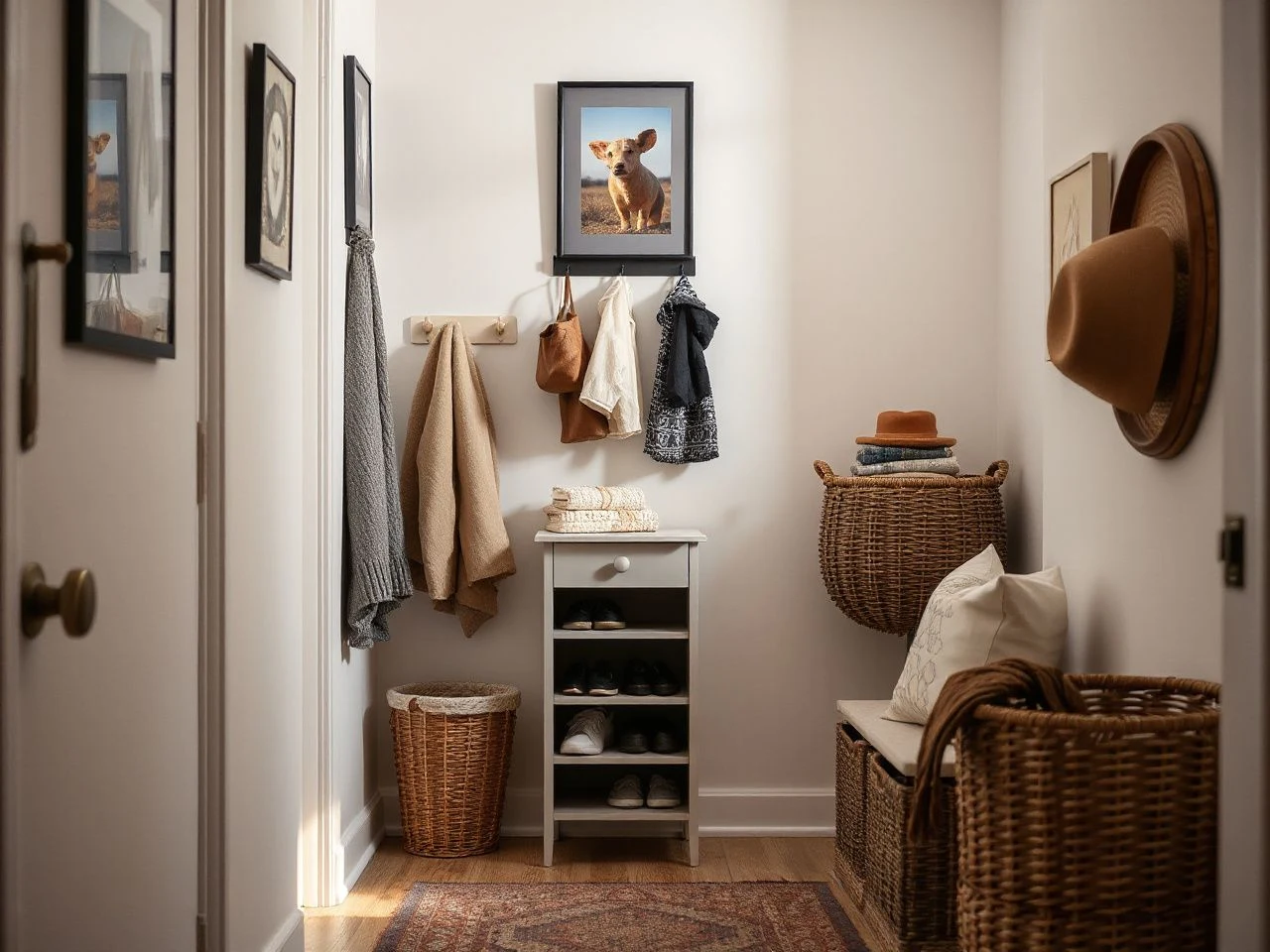
Light fixes cramped rooms before furniture does.
Small entryway storage works best when it separates quick-grab items from overflow storage instead of trying to make every possession fit beside the door. The practical distinction is between using vertical wall space for frequently used items and reserving enclosed, deeper, or less accessible storage for seasonal belongings, while preserving a clear route through the entry.
That approach gives small entryway storage solutions a clear job. Coats, keys, and the bag used today should be easy to reach; spare shoes, off-season outerwear, and occasional accessories can live elsewhere. A lamp, wall light, or carefully placed ceiling fixture then helps the arrangement feel intentional rather than crowded.
Key Takeaways
- Use vertical wall space for items collected and dropped every day.
- Keep benches, cabinets, and consoles outside the walking route and clear of doors and switches.
- Match hooks, shelves, and baskets to the size and weight of the items they must hold.
- Separate damp shoes and outerwear from enclosed storage so moisture and odors do not linger.
Beginner: Establish the entryway storage plan
Start with the route, not the furniture
Before choosing a hook, bench, or cabinet, identify the route people naturally take through the entry. Mark the swing of every door, the location of switches, and the space needed to enter, remove shoes, and continue into the home. Storage that technically fits against a wall can still make the room feel blocked if a door strikes it or if a person must turn sideways to pass.
A clear walking route is the foundation of a small entryway layout. A console table, storage bench, or slim shoe cabinet should sit outside that route rather than narrowing it at the point where people already pause.
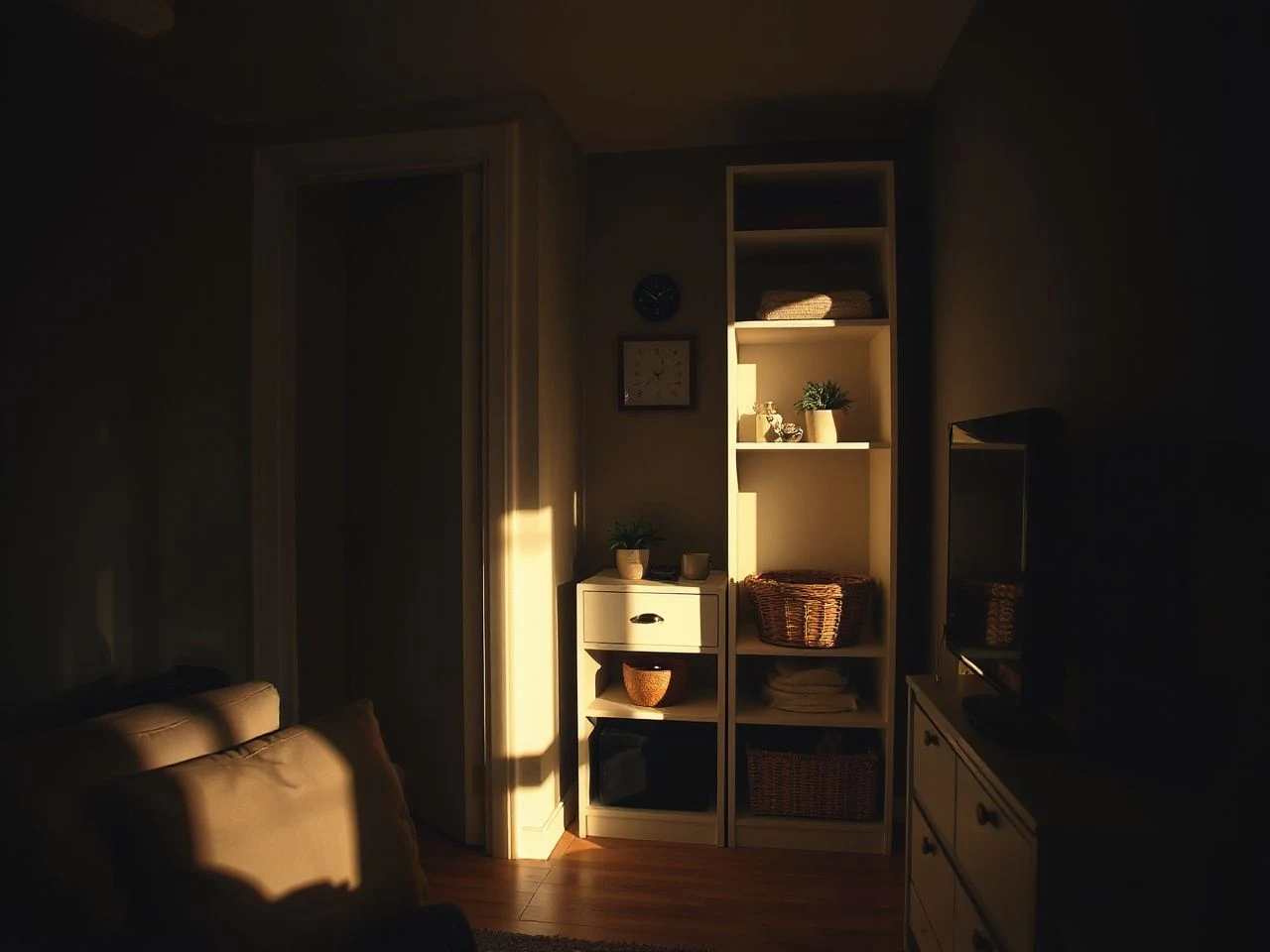
Light deserves attention at this stage. A dark corner makes shelves and baskets look heavier, while a lamp or wall light can make the same arrangement easier to use and visually calmer. I would fix poor illumination before adding another piece of furniture.
Sort belongings by frequency
Make three simple groups: items used each day, items used occasionally, and seasonal overflow. The first group belongs near the door. The second can sit on a higher shelf or inside a cabinet, while the third may belong in a closet, under-bed container, or another room.
Daily storage should be open or immediately visible. A wall-mounted coat hook for the current coat, a shallow floating entryway shelf for keys, and a small basket for items leaving the house create a direct sequence from arrival to departure.
Seasonal belongings should not compete with daily belongings for the same hook or shelf. Separating seasonal storage reduces the tendency to stack extra coats on one hook or turn a basket into an unsearchable pile.
Give every category a limit
Hooks, shelves, and baskets become cluttered drop zones when their placement and capacity do not match the belongings assigned to them. A hook intended for one coat should not become the storage point for every jacket, scarf, and bag in the household.
- Assign hooks to coats and frequently used bags.
- Use a shelf for small objects that can remain visible without spreading across the surface.
- Reserve baskets for flexible categories such as gloves, pet leads, or lightweight accessories.
- Keep shoes in a cabinet, rack, or bench compartment rather than allowing them to gather across the floor.
A labeled boundary helps more than a larger container. Once a basket is full, the category needs editing or a different home rather than another loose layer placed on top.
Use light as part of the storage design
Most rooms are fixed with lamps before the furniture is touched. In a narrow entry, lighting should reveal the hook, shelf, and floor without casting the storage into a dark recess.
A lamp on a nearby console can add warmth, while a wall light can preserve floor space. The exact fixture depends on the wiring and the room, but the design test is simple: keys should be visible, the floor should read clearly, and the storage should not form a heavy shadow across the passage.
A well-lit entryway makes daily storage easier to sort because objects do not disappear into visual darkness. That benefit matters more than adding decorative pieces that compete with the storage itself.
For broader planning across a compact home, Storage Solutions for Small Spaces: Getting It Right offers a useful framework for assigning belongings to zones rather than filling every available surface.
Intermediate: Choose the right storage type
Wall-mounted hooks, pegboards, and freestanding racks
Wall-mounted coat hooks make the clearest use of vertical space and keep the floor available for shoes or movement. They work well for daily coats and bags when attached to suitable structural support or secured with wall anchors compatible with both the wall material and the expected load.
A pegboard organizer offers more adjustable placement than a fixed row of hooks. That flexibility helps when the entry must handle changing combinations of bags, hats, pet accessories, or small umbrellas. The board still needs a clear capacity boundary; adjustable storage can become a dense display if every available point receives an object.
A freestanding coat rack changes the calculation. It does not require wall installation, but it occupies floor space and can narrow the walking route. A coat stand is designed to be self-standing and stands at a minimum of 150 cm (5 ft) in height, so its position deserves careful attention near doors, corners, and light switches.
Wall-mounted storage preserves floor area, while a freestanding rack offers placement flexibility. Long-term upkeep also differs: wall-mounted hardware may remain useful when hooks are replaced, whereas a freestanding unit can be moved but may eventually need replacement as its finish or structure wears.
Floating shelves and narrow consoles
A floating entryway shelf is useful for keys, mail, and small daily objects because it leaves the floor open. Keep the surface edited. A shelf that holds every delivery, receipt, and accessory becomes a horizontal pile rather than a storage system.
Shelf support needs to suit the shelf and the load. Home designers commonly limit shelf width to a maximum of 1.4 times the bracket width and 1.2 times the bracket height. For a long shelf, the gap between brackets should not exceed 4 times the shelf breadth. These figures are design limits from the verified guidance supplied here, not a substitute for checking the shelf and bracket instructions.
When attaching a shelf to a concrete wall, the screw depth should be at least one-tenth of the shelf width. The wall material and fixing method still matter, so an anchor compatible with concrete is necessary rather than a generic fastener.
A narrow console table can provide a landing surface, a lamp location, and lower storage, but its depth must not intrude into the route. Keep cords away from the walking line, and do not let baskets slide beyond the furniture edge.
Slim shoe cabinets and open shoe storage
Slim profiles are a common characteristic of flip-drawer shoe units. Their appeal is clear in a narrow entry, but the cabinet must still accommodate the footwear assigned to it. A cabinet that is too shallow can make shoes difficult to place, while a cabinet that is too deep can project into the route and make the entry feel compressed.
Flip-drawer units often contain between two and six shelves, with each shelf fastened at a right angle to vertical or diagonal supports and arranged in parallel layers. The number of shelves matters less than the relationship between the cabinet, the shoes, and the walking path.
Shoes and damp outerwear need airflow and moisture management. Sealed storage can trap odors and moisture, so wet footwear should not be pushed immediately into a closed cabinet. An open rack, ventilated area, or temporary drying location may be more appropriate before shoes return to enclosed storage.
Materials also affect where a unit makes sense. Wood, bamboo, and steel are commonly used for durable shelves, while plastic or glass can suit items with less weight. Choose according to the expected load and the wall or floor support rather than appearance alone.
Storage benches and baskets
A storage bench can hold shoes without blocking the walking path only if the bench sits fully outside the route and leaves its doors or drawers usable. The seat should not become a landing place for coats that prevent access to the compartments below.
Woven storage baskets soften a hard entry and can conceal flexible categories, but baskets work best when each one has a defined purpose. One basket for pet items, another for cold-weather accessories, or a third for outgoing objects is easier to maintain than a single container for everything.
Freestanding benches, cabinets, and consoles may need anti-tip protection, especially where children or pets can pull on them. The U.S. Consumer Product Safety Commission publishes safety information about furniture tip-over hazards at CPSC.gov, so check its guidance when a tall or freestanding piece is part of the plan.
Advanced: Install and organize for changing seasons
Find structural support before drilling
A wall-mounted hook or shelf is only as secure as its attachment. Use a stud finder to locate suitable structural support where possible. If a stud is unavailable, use wall anchors that match the wall material and the expected load rather than relying on a fastener chosen only because it fits the screw head.
Drywall, plaster, masonry, and other wall surfaces do not accept every anchor in the same way. Read the fixing instructions, inspect the wall condition, and account for the weight of the storage plus its contents. A hook for a light scarf does not face the same demand as a hook carrying a loaded bag.
ASTM International develops voluntary consensus standards for materials, products, systems, and services; its main site, ASTM.org, is a useful place to understand why product instructions and recognized safety guidance matter. Do not treat a general online suggestion as a substitute for the installation instructions supplied with the wall storage.
Suitable structural support or compatible wall anchors are necessary for wall-mounted storage because the load acts on both the storage and the fixing point. That principle applies to a small hook as well as a long shelf.
Handle rental-friendly installation carefully
Renters may prefer removable hooks, a freestanding rack, or an over-the-door organizer, but every option has limits. Removable hardware should be used only as directed for the wall surface and the expected load. Heavy bags, wet coats, or a crowded organizer can exceed what a temporary fixing was designed to carry.
An over-the-door organizer can borrow unused vertical space, yet the door must still close properly and the organizer must not interfere with the frame or handle. Keep it for light, flexible items if the instructions do not identify a greater load.
Heavy-duty double-sided foam tape may appear convenient for light decorative objects, but it is not a universal substitute for structural attachment. Do not use adhesive alone for storage that could fall onto a person, damage a door, or obstruct the route.
Build a seasonal rotation
Storage continues working when its daily zone changes with the season. Keep the current coats and shoes at hand, then move surplus items into enclosed or less accessible storage. The wall does not need to display every category throughout the year.
- Place current outerwear on the easiest hooks to reach.
- Move occasional coats to a higher shelf, closet, or separate room.
- Keep daily shoes in the most accessible section of the shoe cabinet.
- Use baskets for small seasonal accessories only while they remain easy to sort.
- Review the entry when a new season begins and remove items no longer in regular use.
This rotation also helps pets and children. Pet leads, hats, and smaller objects can remain within reach where appropriate, while fragile or rarely used items move higher or farther away.
Maintain each storage material
Shoe storage needs regular attention because dirt and moisture collect at floor level. Empty the cabinet or rack when cleaning, let damp footwear dry in an appropriate open area, and check that flip drawers or doors still open without striking nearby furniture.
Fabric and woven baskets can hold dust and crumbs, so remove their contents before cleaning them according to their care instructions. Avoid allowing wet accessories to sit in a closed basket, where moisture can linger against the fabric.
Wall-mounted organizers need a visual and physical check. Look for loose hardware, a shelf that no longer sits level, or hooks that shift under ordinary use. A changing sound, visible movement, or fresh gap at the wall is a reason to remove the load and inspect the fixing.
Freestanding furniture also deserves a floor check. A rug edge, uneven surface, or loose cord can turn a useful bench or console into a tripping hazard. The storage should support the route, not compete with it.
Compare upkeep before choosing freestanding or fixed storage
Freestanding storage is easier to move when the layout changes, and it can suit a rental or a home where drilling is restricted. Its trade-off is the floor area it occupies and the need to keep it stable, clear of doors, and protected from pulls that could make it tip.
Wall-mounted storage leaves the floor open and can make a narrow entry feel lighter. Installation requires more planning, and replacement may involve removing hardware, repairing the wall, or matching new pieces to existing attachment points.
Long-term cost is not only the purchase price. Consider whether the storage can be repaired, whether its hooks or baskets can be replaced separately, whether the wall will need attention, and whether the piece still suits a changed household. A simple system with replaceable parts may remain useful longer than a tightly fitted arrangement built around one season of belongings.
Small-space interior design works best when storage has a defined role and lighting supports that role. A lamp can make an open shelf feel finished; it cannot correct a blocked route or overloaded hook.
Prevent clutter before it returns
Create a short arrival sequence
Arrange the entry so the first action is obvious: coat to hook, keys to shelf, shoes to cabinet or rack, and outgoing items to one contained place. The sequence should require few decisions. If an object has no clear destination, it will usually remain on the nearest horizontal surface.
A small tray can contain keys and loose change, while a single basket can hold items that need to leave the house. Keep those categories separate from decorative objects so the useful surfaces remain recognizable.
Storage works when the destination is easier to use than the floor. The simplest route often beats a larger system with several hidden compartments.
Keep decoration subordinate to function
A rug can define the entry visually, but it must lie flat and stay outside the door swing. Art can add character above a console or beside hooks, yet it should not occupy the wall area needed for daily storage.
Plants, mirrors, and decorative objects need their own boundaries. A mirror may help the entry feel brighter, while a lamp can make it more useful at night, but neither should force hooks or shelves into the walking route.
Borrowing space from a nearby hallway, closet, or living area can be more effective than overfilling the entry. Mudroom organization principles apply even when the home has no mudroom: wet, dirty, and seasonal items need a place that can tolerate their condition.
Review the system when it fails
When the floor fills with shoes, first check whether the shoe cabinet is too shallow, too deep, or assigned more footwear than it can hold. When bags pile on one hook, check whether another hook is reachable and whether the placement matches the bags used daily.
If baskets overflow, edit the category before adding another container. If shelves look crowded, move seasonal items higher or farther away. If the entry feels dark, adjust the lamp or wall lighting before buying more furniture.
A storage system should make the next action visible. When the route is clear, the light is adequate, and each category has a defined home, a narrow entry can feel calm without hiding every possession.
Frequently Asked Questions
How do I choose storage that fits a narrow entryway without making it feel crowded?
Start by protecting the walking route, door swings, and switches. Use wall-mounted hooks or a shallow floating shelf for daily items, then place seasonal belongings in deeper or less accessible storage elsewhere. A slim shoe cabinet can work if its doors open without entering the passage. Lighting should be addressed early because a dark storage wall often feels bulkier than a well-lit one.
How do wall-mounted hooks, a pegboard, and a freestanding coat rack compare?
Wall-mounted hooks preserve floor space and suit a defined group of daily coats and bags. A pegboard allows the positions to change as categories change, but it still needs a clear limit. A freestanding coat rack avoids wall drilling yet occupies floor area and must remain stable and outside the route. Choose based on wall conditions, walking space, and the items used most often.
Can a storage bench hold shoes without blocking the walking path?
Yes, if the bench sits completely outside the route and its compartments can open without striking a door or requiring a person to step backward. Keep damp shoes from sealed compartments until they are dry, because enclosed storage can retain moisture and odors. Freestanding benches may also need anti-tip protection where children or pets can pull on them.
How do I install entryway storage safely when I cannot find a wall stud?
Choose wall anchors compatible with the wall material and the expected load, and follow the storage and anchor instructions. A stud finder can help locate structural support, but a failed search does not justify using a random fastener. Remove the load if the hook shifts, the shelf tilts, or a gap appears at the wall. Light temporary storage should not be treated as heavy-duty attachment.
Why do shoe cabinets become difficult to use when they are too shallow or too deep?
A cabinet that is too shallow may make shoes difficult to place or remove, while excessive depth can project into the walking route and make the entry feel compressed. Flip-drawer shoe units commonly use slim profiles and may contain between two and six shelves. Judge the cabinet by access, airflow, door movement, and route clearance rather than by its closed appearance.
How can I keep baskets, hooks, and shelves from becoming cluttered drop zones?
Give every storage element one clear category and a visible limit. A hook can hold a daily coat, a shelf can contain keys and mail, and a basket can collect a defined group of small accessories. When a category exceeds its boundary, move seasonal items elsewhere or remove duplicates. Adding containers without editing the contents usually spreads the clutter rather than solving it.
For homes where storage must be distributed beyond the entry, this practical look at decorating small apartments can help connect entryway planning with the rest of the floor plan.
