


Killing a houseplant feels like a personal failure. And staring at a shiny, obviously plastic fake plant feels like giving up. The debate between real vs faux plants isn’t about which is objectively better—it’s about which one you’ll actually keep alive and enjoy looking at.
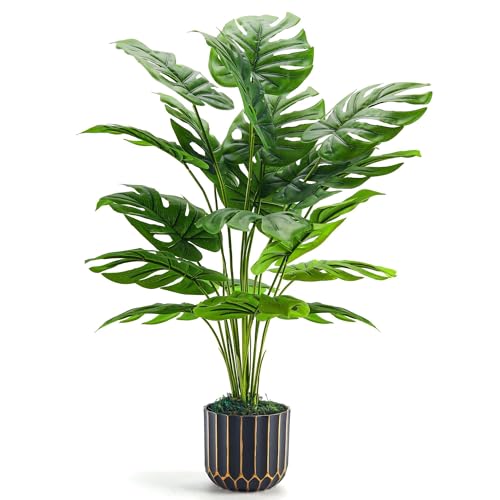
If you want a plant that looks good every single day with zero watering, zero leaf drop, and zero guilt, the Der Rose 28″ Fake Plants is our top pick. On the material realism front—the thing that separates convincing fakes from gas station decor—it does the job better than most at its size and price.
📌 This article contains affiliate links. As an Amazon Associate I earn from qualifying purchases, at no extra cost to you. Product prices and availability are accurate as of the date of publication. Full disclosure.
| Product | Best For | Buy Link |
|---|---|---|
| Real (Monstera deliciosa) | Living, growing greenery | Check Price |
| Der Rose 28″ Fake Plants | Zero-maintenance decor | Check Price |
How We Chose These Real and Faux Plants
These two picks came from comparing published specifications, materials, and documented features against what actually matters in this category. For a faux plant, that means looking hard at leaf material: polyethylene and polyurethane leaves with matte finishes and subtle color variation read as authentic, while glossy PVC and polyester look artificial. For a real plant, the critical spec is light and water tolerance relative to a buyer’s environment. A Monstera deliciosa, for example, needs bright indirect light and moderate watering, and fails if overwatered or left in low light. The common failure is choosing a fake plant with shiny, uniform leaves or a real plant without matching its care needs to the room’s conditions. Before ordering, check the faux plant’s leaf material if the listing states it—if it doesn’t, expect to gamble on that glossy sheen. And for a real Monstera, honestly assess your window light before buying.

Real Monstera deliciosa (The Living Plant)
Buy this if you have bright, indirect light and actually enjoy watering a plant once a week. A healthy Monstera is a showstopper, but it will punish neglect with brown edges and yellowing leaves.
A mature Monstera deliciosa has leaves that can reach 18 inches across, with a leathery texture and fenestrations (splits) that develop with age. That texture is nearly impossible to fake convincingly—the Der Rose faux plant mimics the leaf shape, but not the depth of a real leaf’s surface. According to the Missouri Botanical Garden’s plant finder, Monstera deliciosa grows best in bright, indirect light and well-draining soil. Direct sun scorches the leaves; a dark corner will slow growth to a crawl.
Overwatering is the number one killer of this plant—the soil should dry out a couple of inches down between drinks. You will see a yellow leaf now and then. You will go on vacation and come home to a droopy, dramatic mess. That’s the trade-off for something alive. The annoyance is real: a Monstera is a living thing with moods, and it shows them.
Pros:
- Grows over time — with proper care, a Monstera can double in size within a year, giving you a constantly evolving plant.
- Unique fenestrations — the splits in mature leaves are a sign of a happy plant and look stunning against a blank wall.
- Natural variation — no two leaves are identical, which is the ultimate realism that no faux plant can match.
- Adds humidity and oxygen — a real plant releases moisture through transpiration, which can slightly raise room humidity in dry climates.
Cons:
- Toxic to pets — Monstera contains calcium oxalate crystals, which cause oral irritation, drooling, and vomiting in cats and dogs. The ASPCA’s toxic plant list confirms this.
- Sunlight requirements — bright, indirect light is non-negotiable; a windowless bathroom will kill it within months.
- Ongoing care and cost — you need potting soil, fertilizer, possibly a moisture meter, and replacement if it dies, which adds up over a year.
Our Take on the Real Monstera
Best for: Plant lovers with a bright room and a consistent watering routine. Skip if: You travel often, have curious pets, or live in a dark apartment.
Der Rose 28″ Fake Plants (The Zero-Maintenance Pick)
This is the one to buy if you want the look of a Monstera without ever checking soil moisture. The DIY assembly of 18 separate leaves actually works in its favor—you can arrange them to look more natural than a pre-shaped fake.
The Der Rose comes as 18 individual Monstera leaves of different sizes, plus a pot with a plant rhizome and moss. You assemble it yourself, which means you control the leaf angles and overall fullness. The pot is small—4.9 inches tall and 4.3 inches wide—so the 28-inch plant will be top-heavy unless you add weight to the base or place it in a larger cover pot. The listing doesn’t specify whether the leaves are polyethylene or PVC, and that’s the single biggest gamble here. Polyethylene leaves have a matte finish and subtle texture that reads as real; glossy PVC screams fake from across the room.
Because it’s faux, it will never grow, never drop a leaf, never develop brown tips. That’s the appeal. But it will collect dust—and because the leaves are textured and multi-piece, you’ll need to wipe them down every few weeks with a damp cloth or a quick blast of compressed air. The moss in the pot is decorative and can shed; expect a few bits to end up on your shelf.
Pros:
- Zero maintenance — no watering, no light requirements, no fertilizer; it looks the same in a windowless office or a sunny living room.
- DIY arrangement — 18 separate leaves let you customize fullness and shape instead of settling for a cookie-cutter fake.
- Pet-safe — no toxic calcium oxalate crystals, so if a cat bats at it, the worst outcome is a messed-up leaf arrangement.
- Consistent appearance — you will never see a yellow leaf or a drooping stem.
Cons:
- Unknown leaf material — the listing doesn’t state whether leaves are polyethylene or glossy PVC, which is the difference between convincing and cheap-looking.
- Top-heavy design — a 28-inch plant in a 4.9-inch pot will tip over easily without a heavier outer planter.
- Dust magnet — the multi-leaf structure has plenty of crevices; dust will show on dark green surfaces within weeks.
Final Thoughts on the Der Rose
Best for: Renters, pet owners, anyone in a dark apartment, or anyone who has killed every real plant they’ve owned. Skip if: You want the real thing, you hate dusting, or you’re bothered by the fact that faux plants do not improve indoor air quality.
Real, vs Der: Spec Comparison
| Specification | Real, | Der |
|---|---|---|
| 28 inches | — | Pots are 4.9” tall, 4.3” wide, monstera plants are 28” tall, our faux trees indoor are perfectly proportioned to fit any shelf or desk. Unique black and gold pot design adds premium beauty to your home |
| Package Content | — | Contains a pot with plant rhizome, 18 pieces of different sizes of monstera leaves, moss, this is a DIY style, according to your needs to assemble our plantas artificiales decorativas grandes. |
| Versatile Charm | — | Whether it’s a living room, office, or farmhouse decor, our faux plants indoor tall bring nature and aesthetics to any room, creating a warm and inviting atmosphere |
| Maintenance-Free | — | Enjoy the beauty of fake tree without the hassle of watering or sunlight. Won’t warp or fade, ideal for busy people or those with no gardening experience |
| Realistic Appearance | — | Our realistic looking floor plant mimic the look and feel of real office plants, allowing you to effortlessly decorate your home or office with year-round lush greenery |
Real vs Faux Plants: What to Consider Before You Buy
Choosing between a real plant and a fake one comes down to three things: your light, your habits, and your tolerance for imperfection. Here’s how to think through each.
The Biggest Difference Between Real and Faux Plants
A real plant is alive and responds to its environment—it grows, it needs water and light, it can get pests or diseases. A faux plant is static. That’s the core trade-off. The Der Rose will look exactly the same in five years as the day you assemble it; the Monstera will either be twice as big or dead. If you want a living, breathing piece of nature that changes with the seasons, real wins. If you want a predictable, permanent green accent, faux is the answer.
Light and Water Tolerance
The Monstera deliciosa needs bright, indirect light. Put it in a north-facing window or a few feet from an east or west window. Direct afternoon sun through a south window will scorch it. If your room gets less than a few hours of indirect light per day, the real plant will struggle, and no amount of watering will fix that. The Der Rose needs zero light—it thrives in a windowless bathroom just as well as a sunroom.
Material Realism in Fake Plants
For faux plants, the material is everything. High-end fake plants use polyethylene (PE) leaves with matte finishes and sometimes a mix of PE and polyurethane. Cheap fakes use glossy PVC or polyester blends that catch light and look plastic. The Der Rose listing doesn’t state the leaf material, so you’re taking a risk. If you can, look for product photos that show a close-up of the leaf texture—if it looks shiny, it’ll probably look fake in person.
Total Cost Over a Year
A real Monstera isn’t a one-time purchase. You’ll need a pot, potting mix, fertilizer, and possibly a moisture meter. If the plant dies—and many do—you’ll replace it. Over a year, that could cost two to three times the price of the plant itself. The Der Rose costs once, and that’s it. For budget-conscious buyers, faux is often the cheaper long-term option, especially if you’re new to plants.
Our Final Recommendation
For most people, the Der Rose 28″ Fake Plants is the smarter buy. It solves the most common pain point—killing plants—with zero ongoing effort, and the DIY leaf arrangement gives you a more natural look than most pre-shaped fakes. If you have bright, indirect light and genuinely enjoy caring for a living thing, the Real Monstera deliciosa is a beautiful, rewarding choice. But it requires commitment, and it will punish neglect. Overall, the Der Rose earns our top recommendation for its simplicity, pet safety, and consistency. The Monstera is for the enthusiast who won’t flinch at a yellow leaf.
Frequently Asked Questions
Should I choose real or faux plants for a dark room?
A dark room with no direct sunlight is a death sentence for a Monstera deliciosa. If you have less than a few hours of bright, indirect light per day, go with the Der Rose faux plant. No fake plant needs light, and the Der Rose’s 28-inch size will fill an empty corner just as well as a real one. For dark rooms, faux is the only realistic choice unless you add a grow light.
Are faux plants safe to have around pets?
Yes, faux plants like the Der Rose are generally safe for cats and dogs because they contain no toxic plant compounds. A curious pet might knock leaves off or chew on them, but there’s no risk of poisoning. Real Monstera deliciosa, on the other hand, contains calcium oxalate crystals that cause oral irritation and vomiting, so it’s a poor choice for pet homes unless placed out of reach. Always check the ASPCA’s list for any real plant you bring home.
How much upkeep does a real Monstera really need?
A real Monstera needs watering roughly once a week in summer and less in winter, plus a monthly dose of balanced liquid fertilizer during the growing season. You’ll wipe dust off leaves every few weeks and occasionally prune dead or yellowing foliage. It also needs bright, indirect light—no direct sun, no dark corners. If that sounds like a lot, a faux Monstera like the Der Rose is the lower-effort alternative.