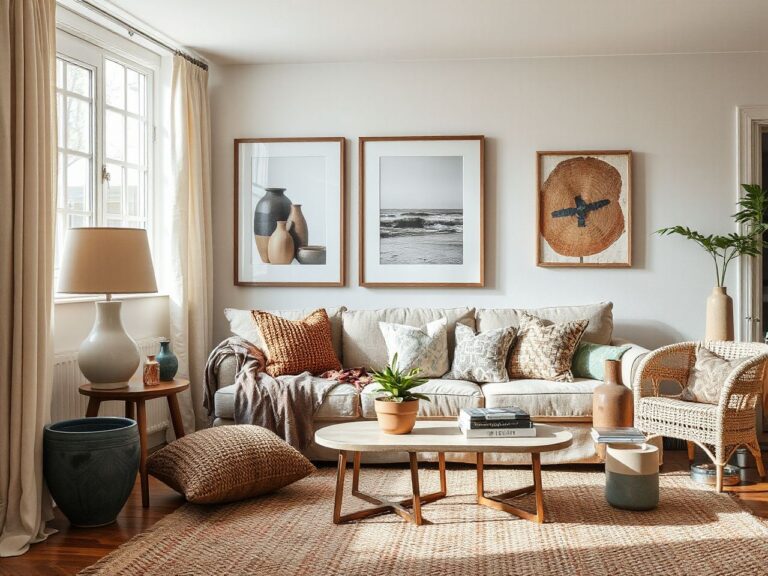
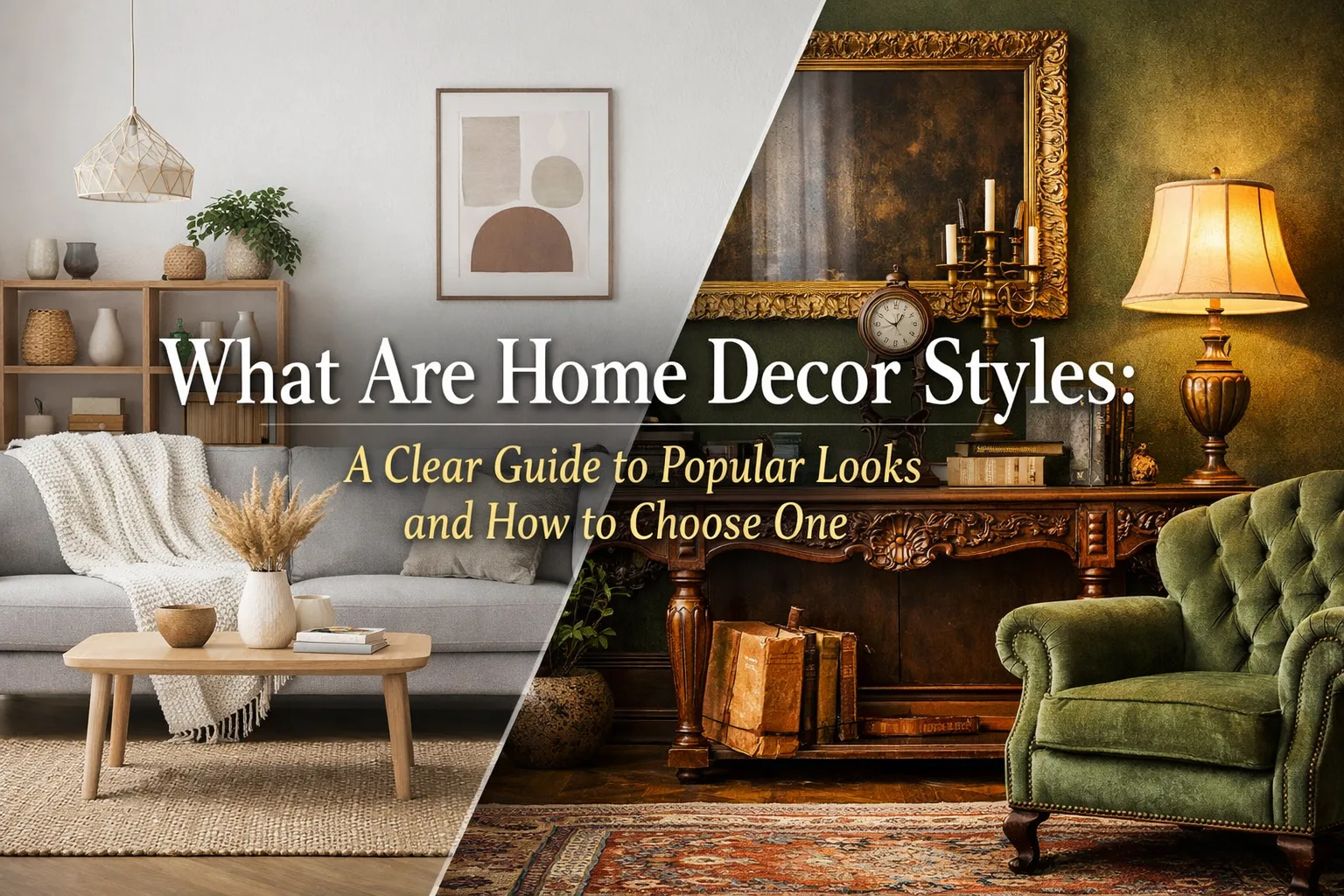
You might think home decor styles are just labels, but they actually describe how rooms look, feel, and function. They cover choices like color, furniture shape, materials, and layout so you can match your space to how you live and what you like. Home decor styles give you a clear shortcut to design choices that make a room feel cohesive and personal.
As you explore styles—traditional, modern, boho, minimalist, or mixes like Japandi—you’ll learn which elements create each look. That makes it easier to pick furniture, colors, and textures that work together and avoid costly mistakes.
Key Takeaways
- Styles show how design elements combine to shape a space.
- Recognizing key features helps you choose a look that fits your life.
- Mixing styles deliberately can create a unique, balanced home.
Understanding Home Decor Styles
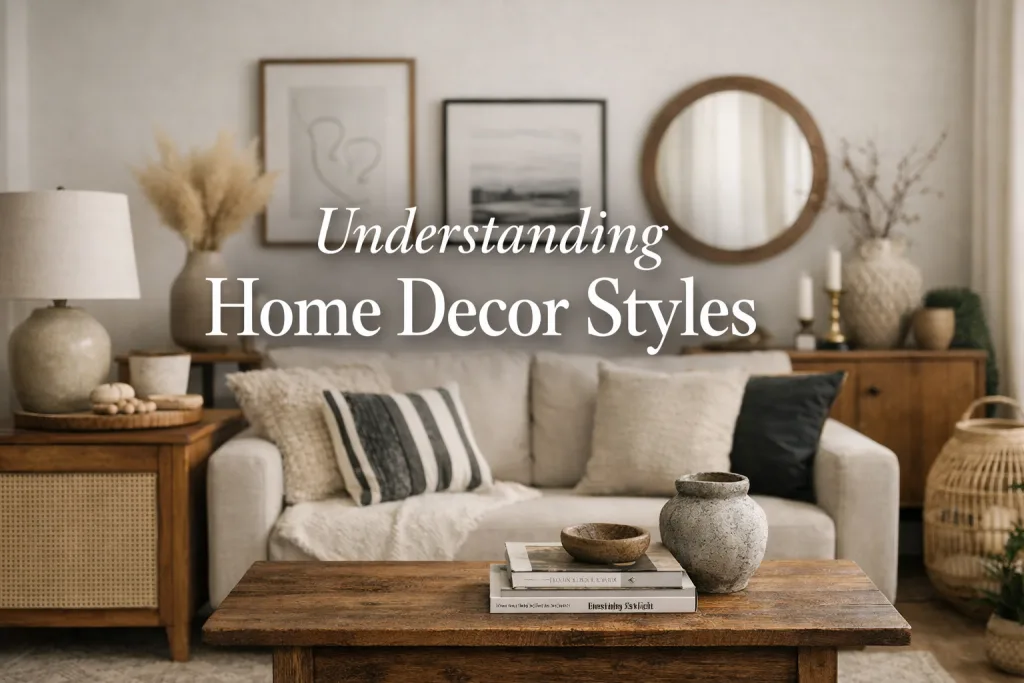
Home decor styles show how furniture, colors, textures, and layout work together to create a room’s mood. They help people choose items that match their tastes and make decorating decisions easier.
Definition and Importance
A decor style is a consistent look created by repeating visual choices like color palettes, furniture shapes, and materials. It gives a home a clear identity so each room feels intentional rather than random.
Knowing a style helps with practical decisions. For example, choosing lighting that suits a modern style (clean lines, cool tones) differs from picking fixtures for a rustic style (warm metals, exposed bulbs). That saves time and money when shopping.
Styles also affect daily life. A minimalist layout can reduce clutter and make cleaning simpler. A cozy traditional style can make social spaces feel inviting and comfortable for guests.
Influences on Interior Design
Cultural history plays a big role in style. Scandinavian design draws on Nordic simplicity and climate needs, while Mediterranean styles reflect sunny climates and local materials like terracotta. Recognizing that origin helps select authentic pieces.
Technology and manufacturing shape style choices too. Mass-produced furniture made certain modern looks affordable. Conversely, handcrafted or locally made items often define artisanal or rustic styles.
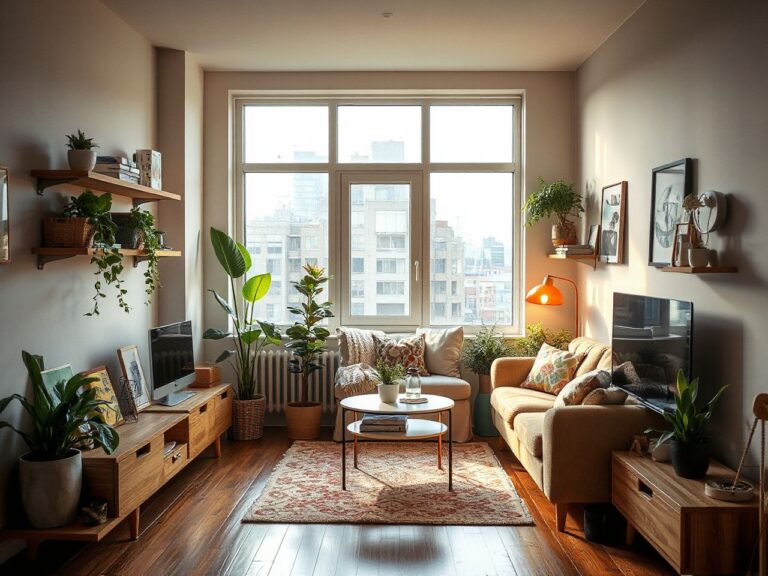
Personal lifestyle and space constraints influence choices. Families with young children might favor durable, stain-resistant fabrics and rounded furniture. Small apartments push toward multifunctional pieces and lighter colors to feel more open.
Key Elements of Decorating Styles
Color palette: Each style leans on specific colors. Minimalist designs use neutrals and contrast, while boho mixes saturated jewel tones and natural dyes.
Furniture and silhouettes: Look for distinct shapes. Mid-century modern favors tapered legs and organic curves; traditional prefers ornate details and solid wood.
Materials and textures: Styles combine materials for effect. Industrial mixes metal and raw wood; coastal uses light-washed wood, linen, and wicker.
Patterns and accessories: Rugs, throw pillows, and art reinforce style. Geometric patterns suit contemporary looks; botanical prints fit cottage or biophilic styles.
Functional layout: Traffic flow and scale matter. A formal dining layout differs from an open-plan living area meant for family activities.
Lighting: Task, ambient, and accent lighting must match the style. Sleek pendants work for modern rooms; lanterns or wrought-iron fixtures support historic or rustic themes.
Popular Traditional Styles
Traditional styles favor familiar shapes, rich materials, and balanced layouts. Expect layered fabrics, wood tones, and decorative trim that add warmth and a sense of history.
Classic Traditional
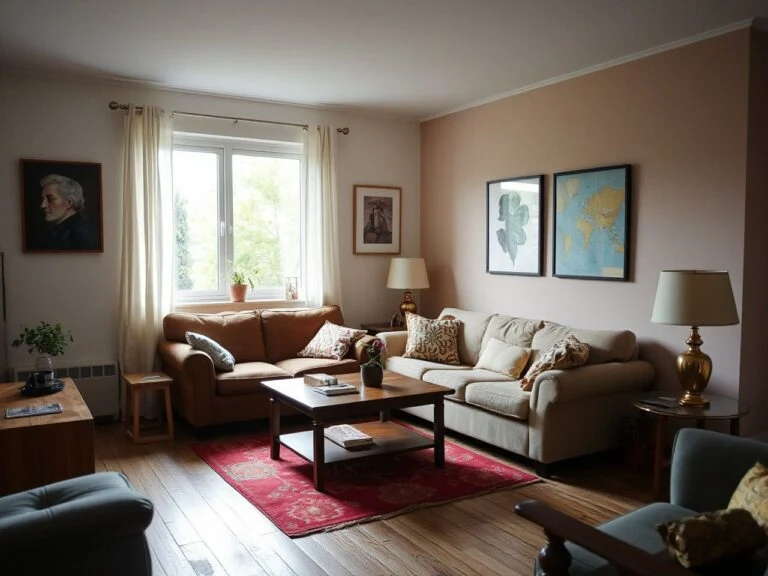
Classic Traditional centers on symmetry, dark wood furniture, and formal seating arrangements. Rooms often feature a focal point such as a fireplace or piano, with matching sofas or chairs placed opposite each other to create balance. Moldings, crown trim, and wainscoting appear on walls, while area rugs with traditional patterns anchor seating groups.
Color palettes lean toward warm neutrals, deep reds, navy, and olive. Fabrics include damask, jacquard, and velvet for upholstery and drapery. Lighting uses chandeliers and table lamps with fabric shades. Accessories are measured: framed art, porcelain, and brass accents placed deliberately rather than cluttered.
Quick reference table:
| Element | Typical Choices |
|---|---|
| Furniture | Mahogany, wingbacks, rolled arms |
| Fabrics | Velvet, damask, patterned rugs |
| Colors | Warm neutrals, deep jewel tones |
| Trim | Crown molding, wainscoting |
Victorian
Victorian style shows ornate details, curved lines, and a love of decoration. It favors carved wood, tufted upholstery, and high-backed chairs. Walls often sport patterned wallpapers, heavy drapes, and picture rails.
Color schemes can be saturated: burgundy, forest green, and gold are common. Fabrics include velvet, brocade, and lace for accents. Lighting comes from chandeliers, sconces, and lamps with fringed or beaded shades. Decorative items such as porcelain figurines, framed portraits, and layered textiles create a curated, collected look.
Small guide:
- Furniture: Carved mahogany or walnut
- Patterns: Florals, paisley, damask
- Accents: Fringe, tassels, brass hardware
French Country
French Country blends rustic farmhouse comfort with refined details from the French countryside. It uses lighter woods, distressed finishes, and soft curves in furniture. Open, functional layouts pair with elegant touches like turned legs and carved details.
Palettes favor muted colors: soft blues, warm creams, and faded yellows. Fabrics include linen, toile, and faded floral prints. Surfaces mix painted furniture with natural stone or wide plank wood floors. Decorative elements show in ceramic pitchers, woven baskets, and wrought-iron light fixtures.
Key features table:
| Feature | Description |
|---|---|
| Furniture | Painted oak, distressed finishes |
| Fabrics | Linen, toile, faded florals |
| Floors & Surfaces | Wide planks, stone, rustic tiles |
| Decor | Ceramics, baskets, wrought iron |
Modern and Contemporary Styles
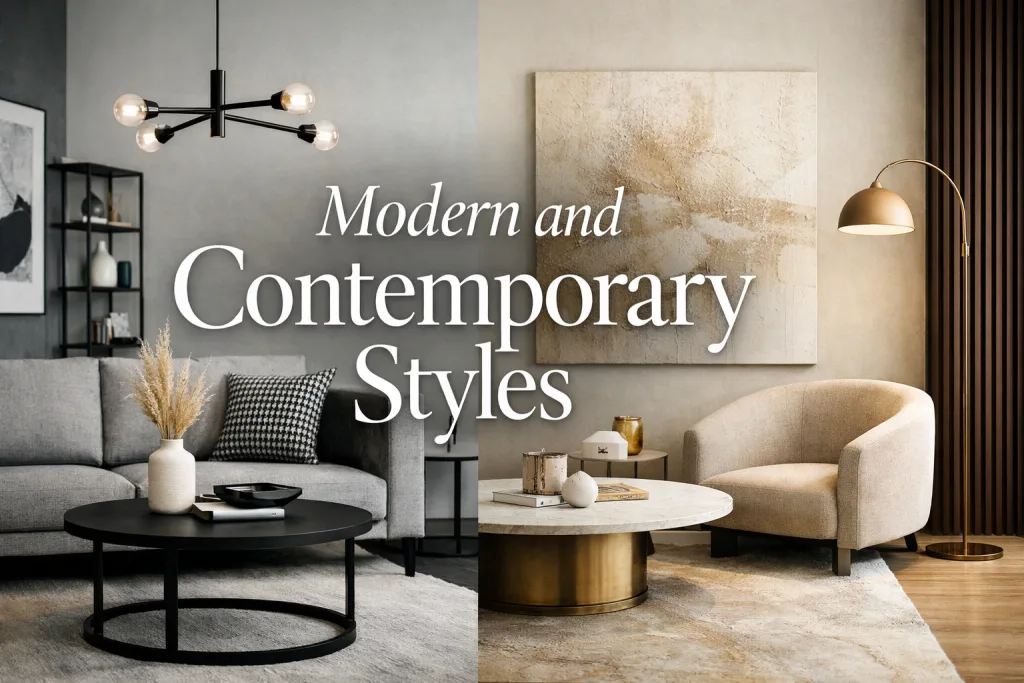
These styles favor clean lines, open layouts, and a focus on function. They differ in era and attitude: one has roots in the mid-20th century with classic pieces, while the other adapts to current trends and materials.
Mid-Century Modern
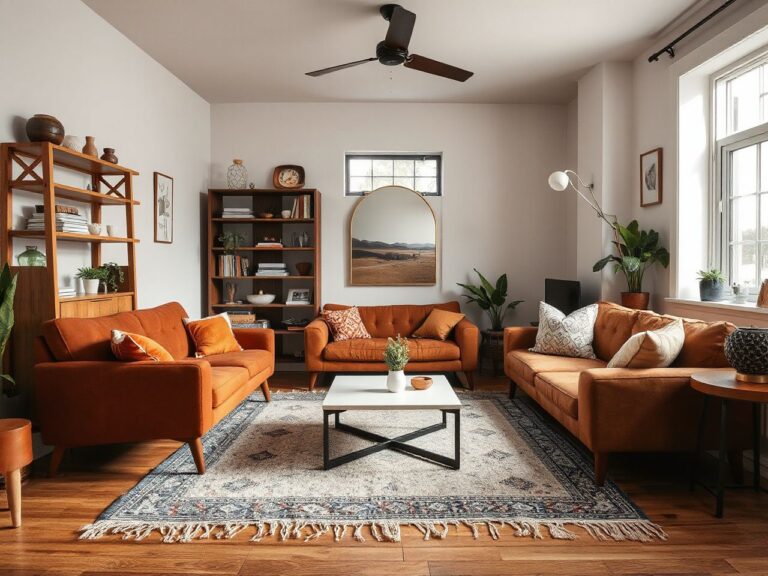
Mid-Century Modern centers on furniture with simple, sculpted forms and organic shapes. It often uses teak, walnut, and bent plywood. Iconic pieces like Eames chairs and Noguchi tables create focal points without clutter.
Color palettes mix warm woods with muted tones — mustard, olive, and teal appear alongside neutrals. Lighting is sculptural: pendant lamps, floor lamps with tripod legs, and globe pendants add character. Textiles stay subtle, favoring geometric patterns or solid colors.
Function matters: furniture is low-profile, with tapered legs and integrated storage. Rooms keep sightlines open to highlight each piece. For more history and examples, the V&A Museum and the Design Museum provide reliable references on iconic mid-century designers.
Minimalist
Minimalist design strips spaces to essentials and emphasizes function over ornament. Surfaces stay clear; furniture follows geometric, unadorned forms. Materials include smooth wood, metal, concrete, and glass.
Colors focus on whites, greys, and black with restrained accents. Decor is purposeful: one piece of art, a single plant, or a well-made lamp. Storage is hidden to maintain visual calm. Lighting is indirect and even, avoiding dramatic fixtures.
Minimalism values quality and proportion. When choosing items, prioritize multiuse furniture and clean hardware. Resources like the Minimalists and architecture journals show practical ways to apply the style without making rooms feel sparse.
Contemporary
Contemporary design reflects current trends and mixes elements from several movements. It embraces contrast — hard and soft textures, curved and straight lines — and often uses large windows and open plans to bring in light.
Materials pair natural wood with industrial elements like steel and concrete. Colors can be neutral or bold; designers use accent walls, large-scale art, or statement furniture to anchor a space. Curved sofas, sculptural lighting, and mixed metals are common.
Contemporary spaces prioritize comfort and adaptability. Smart-home tech and sustainable materials appear frequently. For trend updates and practical guides, check reliable sources such as Dezeen and Architectural Digest.
Eclectic and Unique Approaches
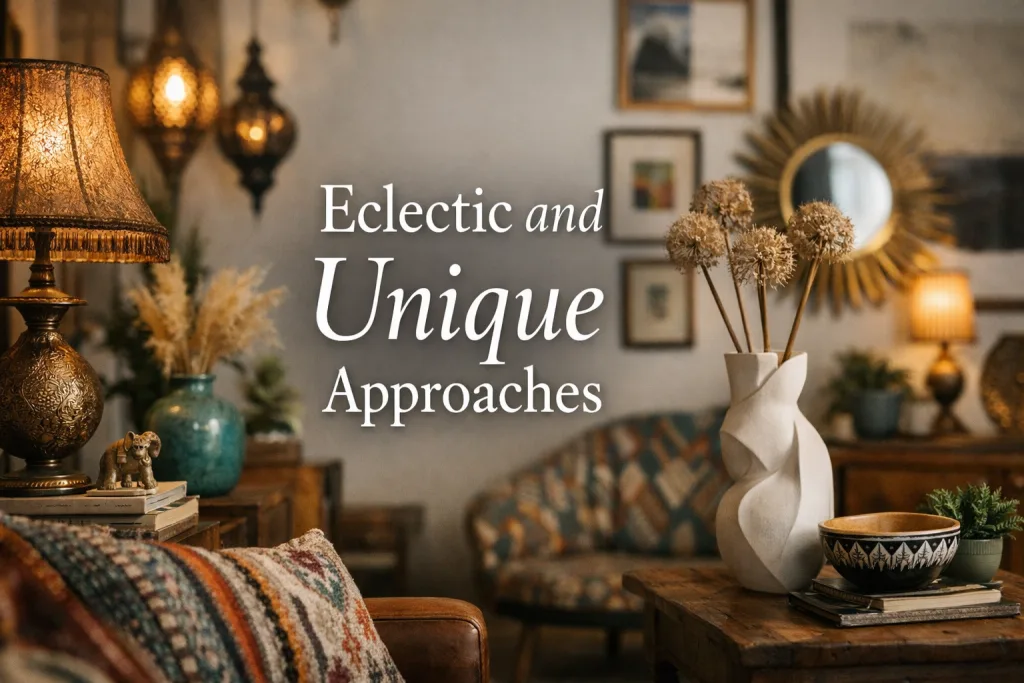
These styles prioritize personality and contrast. They mix materials, eras, and textures while keeping balance through color, scale, and purpose.
Bohemian
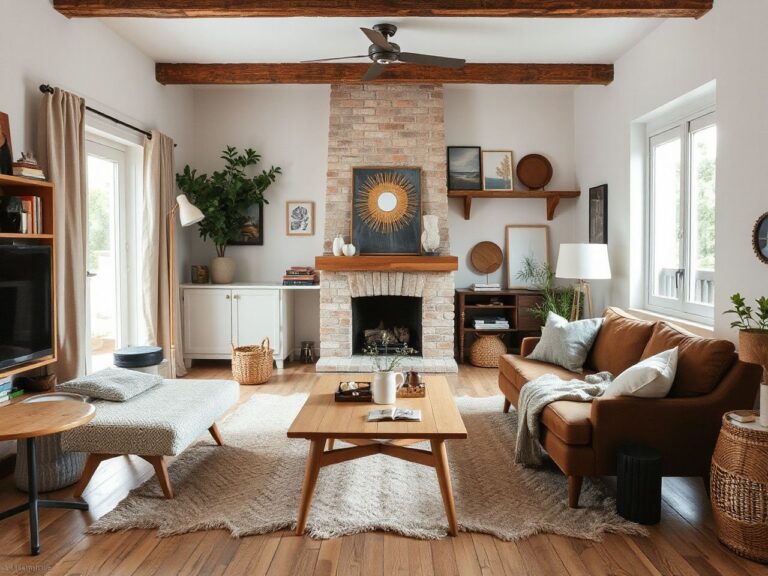
Bohemian style celebrates layered patterns, rich textures, and collected items from travel or thrift finds. It often uses warm jewel tones like deep teal, rust, and mustard, paired with natural neutrals. Rugs, wall hangings, and throw pillows create visual depth and a lived-in feel.
Plants and mixed materials—rattan, macramé, reclaimed wood—add organic warmth. Furniture can be low-slung or mismatched; comfort and expression matter more than matching sets. Lighting tends to be soft: table lamps, string lights, and lanterns that create cozy pockets.
To keep the space from feeling cluttered, repeat a few key colors and use negative space on walls or floors. Group smaller items on open shelving by color or theme to make displays look intentional.
Industrial
Industrial focuses on raw, functional elements inspired by factories and warehouses. Exposed brick, concrete floors, steel beams, and visible ductwork form the structural backbone.
Furniture favors metal and wood with simple, sturdy lines. A reclaimed wood dining table with black steel legs or a leather sofa with metal accents fits well. Lighting uses metal fixtures—pendants, cage lamps, and factory-style sconces.
Contrast heat-retaining materials like leather with softer textiles—wool throws, cotton rugs—to balance the cool, hard surfaces. Keep décor minimal and purposeful: clocks, metal shelving, and functional storage reinforce the utilitarian feel without unnecessary ornament.
Transitional
Transitional blends traditional shapes with modern finishes for a calm, approachable look. It pairs classic furniture silhouettes—rolled arms, paneled cabinetry—with cleaner lines and neutral palettes.
Color schemes lean on grays, beiges, and soft whites, with occasional muted accent colors. Textures—linen, velvet, and brushed metal—add tactile interest without dramatic contrast. Lighting mixes modern fixtures with traditional forms, such as a streamlined chandelier over a classic wood table.
Proportion and balance guide choices: pair a traditional sofa with a simple coffee table, or use modern artwork above a classic mantel. This keeps the space feeling tailored and cohesive while allowing for both heirloom pieces and current trends.
Regional and Cultural Influences
This section highlights how climate, local materials, and long-held traditions shape color choices, furniture forms, and room layouts. It shows specific features to look for when identifying or recreating a regional style.
Scandinavian
Scandinavian design favors light, airy rooms and simple furniture made from pale woods like birch and pine. Natural light is prioritized, so windows stay uncluttered and textiles are kept thin to let daylight through. Colors stay muted—soft whites, light grays, and pale blues—with occasional warm accents in ochre or muted green.
Function and comfort drive choices: compact sofas with clean lines, multiuse storage, and durable wool rugs. Textures matter more than ornament: sheepskin throws, linen curtains, and matte ceramic vases add interest without clutter. Plants are common to bring in life and balance the cool palette.
Lighting uses layered fixtures: a bright overhead for tasks, softer table lamps for reading, and warm pendant lights to create a cozy mood. Overall, the style emphasizes efficiency, calm, and a close link to nature.
Mediterranean
Mediterranean interiors reflect sunny coastal climates and use earthy, sun-warmed materials like terracotta, stone, and aged wood. Walls often appear textured or plastered in warm creams, sand tones, and sun-drenched yellows. Tile work—patterned encaustic tiles or ceramic mosaics—appears on floors, backsplashes, and stair risers.
Furniture tends toward sturdy, hand-carved wood and wrought iron, with cushions in rich blues, deep reds, or olive greens. Arched doorways, exposed beams, and courtyards or patios that connect indoor and outdoor spaces are common features. Fabrics include coarse linens and woven rugs that stand up to bright light and frequent use.
Decorative elements highlight craft and pattern: mosaic tables, patterned ceramics, and carved wooden chests. The feel stays warm, relaxed, and rooted in outdoor living.
Asian-Inspired
Asian-inspired design draws from several regions but often emphasizes balance, minimalism, and natural materials. Wood tones—from light bamboo to dark teak—mix with stone, paper, and lacquered finishes. Color palettes can be neutral with bold accents like red, indigo, or gold used sparingly for focal points.
Spatial layout values negative space and flow. Low furniture—platform beds, low-profile sofas, and floor cushions—creates calm sightlines. Sliding screens or shoji-style partitions control light and divide rooms without heavy walls.
Decor focuses on craftsmanship and symbolism: simple ceramics, calligraphy scrolls, bonsai or bamboo plants, and carefully placed lighting to highlight form. Textures are subtle—silk cushions, rice paper lamps, and woven mats—keeping the room serene and ordered.
Choosing the Right Style
A clear plan helps pick a style that fits how someone lives, the room’s size, and existing furniture. Practical choices like color, scale, and lighting make the difference between a styled room and a usable room.
Assessing Personal Preferences
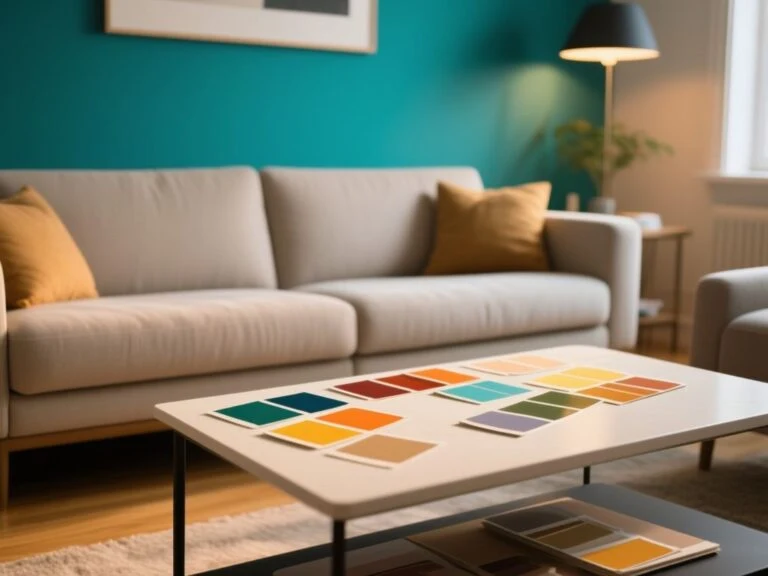
They should start by collecting images of rooms, colors, and furniture they like. Use a folder, online board, or printed swatches to spot patterns—do most images show clean lines, bold color, or layered textures?
Ask practical questions: how many people use the room, what activities happen there, and how often will they redecorate? Those answers guide choices like durable fabrics, storage solutions, and flexible layouts.
Rank priorities: comfort, low maintenance, formal look, or showpiece furniture. This list helps discard styles that clash with daily needs, such as fragile antiques in a high-traffic family room.
Matching Styles to Space
Measure the room and note ceiling height, natural light, and traffic paths first. Small rooms benefit from light colors, slim furniture, and raised legs to create a sense of space.
Large rooms can handle larger-scale furniture, darker paint, and layered rugs. High ceilings pair well with taller bookcases or vertical artwork to balance proportions.
Consider architectural features—exposed beams, moldings, or brick walls. Match the style to those features: modern furniture can contrast a brick wall, while traditional pieces suit crown molding.
Blending Multiple Styles
Start with one dominant style and add one or two accents from other styles to avoid visual conflict. For example, a modern sofa with a rustic wood coffee table creates balance without chaos.
Use a consistent color palette to link mixed pieces. Pick 2–3 main colors and repeat them across textiles, artwork, and accessories to create cohesion.
Maintain scale and rhythm: repeat shapes, materials, or lines in different items. If mixing metal finishes, distribute them evenly across the room rather than clustering one finish in a single spot.
Adapting Styles to Trends
Designers and homeowners update a style without changing its core. They add small, trendy pieces like rugs, lamps, or throw pillows to test a new look. This keeps a room fresh while staying true to the original style.
They mix materials and colors from current trends into classic frameworks. For example, a traditional living room can gain a modern edge with matte black finishes or curved furniture. These small swaps make a space feel current without a full overhaul.
Budget and timing shape how trends get applied. Quick updates use accessories or paint, while larger shifts might wait for the next renovation cycle. This staged approach spreads cost and reduces risk.
Practical rules help guide choices:
- Keep one dominant style and let trends play a supporting role.
- Choose trend elements that match the room’s scale and function.
- Replace inexpensive trend pieces first if tastes change.
They consider longevity and resale value when making trend-driven changes. Neutral foundations like wood floors or white walls remain versatile. Trendy accents then provide personality and can be removed or replaced easily.
FAQS
What are home decor styles?
They are sets of visual rules that guide choices in furniture, color, textures, and layout. Styles help people create a consistent look across a room or whole home.
How should someone pick a style?
They should look at favorite colors, daily habits, and the home’s architecture. Trying mood boards, photos, or small changes helps test a style before committing.
Can styles be mixed?
Yes. Mixing works when one style leads and others add accents. Balance matters: keep a consistent color palette and repeat key materials.
How much does budget matter?
Budget affects materials and whether items are custom or ready-made. Good style can be achieved with thrifted pieces, DIY, and careful prioritizing.
How long do styles last?
Some styles stay popular longer than trends. Classic styles like traditional or Scandinavian often endure, while trend-driven looks may change every few years.
How does one work with a designer?
They should bring images, a list of needs, and a clear budget. A designer translates preferences into a plan and offers choices that meet style, space, and cost goals.
Quick tips for starting:
- Pick one room to experiment.
- Choose three main colors or materials.
- Mix new and older pieces for depth.
Conclusion
Home decor styles give people a clear way to shape their living spaces. They help guide choices about color, furniture, texture, and layout so a room feels intentional.
People can pick one style or mix elements from several to match needs and tastes. Practical factors—budget, space, and lifestyle—should guide what they keep or change.
Design rules exist to help create balance and flow, but they are not strict laws. Small changes, like a rug or light fixture, can shift a room’s style without a full remodel.
A short checklist helps make decisions:
- Identify what feels most comfortable.
- Note which colors and materials repeat in pieces they already own.
- Start with one focal change, then build gradually.
They can work with a designer or use online guides for ideas and confidence. Testing choices in a single room first reduces risk and keeps the process manageable.
Bold choices work when balanced. Neutral foundations let statement pieces stand out. Mixing old and new can add depth without clutter.
Design is personal and practical. The best style matches how someone lives, not just how a room looks.